Nuan Nuan—the girl she once left behind in her youth—reenters her life as an assistant. Under the pressure of fame and public scrutiny, the two escape the city to join a rural reality show. Meanwhile, veteran manager Si Han and superstar Jiang Wan are locked in a fierce game of love and power, entangled in workplace rivalry and unresolved past feelings. Between tenderness and cruelty, sincerity and calculation, two GL love stories unfold against the unforgiving reality of the entertainment industry. (Source: GagaOOLala) Edit Translation
- English
- Русский
- Español
- Português (Brasil)
Cast & Credits
-
") Sun Yan QingWen Nuan NuanMain Role
Sun Yan QingWen Nuan NuanMain Role -
") Lu XinLin CanMain Role
Lu XinLin CanMain Role -
") Zhang Rui YiJiang WanSupport Role
Zhang Rui YiJiang WanSupport Role -
") Ke XinSi HanSupport Role
Ke XinSi HanSupport Role -
") Tang Cheng ZhiPresident ShenSupport Role
Tang Cheng ZhiPresident ShenSupport Role










Reviews

Review: Candy
What I LikedStrong emotional core
The biggest strength of Candy is its emotional sincerity. The series doesn’t treat its
romance as superficial fan service; instead, it focuses on how relationships can
become a source of safety in an unforgiving environment. The quieter scenes
between characters often feel more powerful than the dramatic confrontations.
Several moments in the show capture vulnerability surprisingly well. Characters who
initially appear distant or cold gradually reveal layers of fear, regret, and longing.
Because of this, the relationships feel more grounded and meaningful.
Two different romance dynamics
Another thing I appreciated was the presence of two GL relationships with very
different tones. One focuses more on warmth and emotional healing, while the other
carries a sharper edge shaped by ambition and past conflicts. This contrast helps
prevent the story from feeling repetitive and adds variety to the emotional landscape.
The second relationship in particular stands out because it explores the tension
between career, power, and unresolved feelings, which feels fitting for a story set in
the entertainment industry.
Industry atmosphere
The drama also does a solid job portraying the darker side of celebrity culture public
scandals, manipulation, and the pressure of maintaining a perfect image. Even
though the series is short, it effectively conveys how fragile fame can be and how
quickly public perception can turn.
What Didn’t Work as Well
Rushed pacing
With only eight episodes, the story sometimes moves too quickly. Major conflicts
appear and resolve rapidly, leaving little room for certain emotional developments to
fully breathe. Some character motivations would have benefited from more screen
time and deeper exploration.
Overly dramatic twists
At times the show leans heavily into melodrama. While emotional intensity is part of
the genre, a few twists feel exaggerated compared to the more grounded character
moments. These moments can slightly disrupt the otherwise intimate tone the series
builds.
Underdeveloped side characters
Some supporting characters play important roles in the narrative but don’t receive
enough development. A bit more depth in these roles could have strengthened the
overall story and made certain conflicts feel more impactful.
Overall Thoughts
Even with its flaws, Candy stands out because it focuses on emotional vulnerability
and complex queer relationships rather than simply using romance as decoration.
The performances carry much of the series, making the characters feel believable
even when the plot moves quickly.
It’s not a perfect drama, but it’s a memorable one especially for viewers interested in
character driven GL stories set against the harsh reality of the entertainment world.
⭐ Rating: 7.5–8/10
If you enjoy shorter dramas that mix romance with emotional character exploration,
Candy is definitely worth watching.
Was this review helpful to you?

This review may contain spoilers
I know a girl who's soft and sweet / She's so fine, she can't be beat / Got everything that I desire
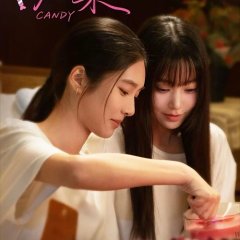
The web series Candy is a small and curious television production, which fits into the GL (girls love) rom-com genre. With its eight episodes of about half an hour each, it is easy to follow and manages to intrigue the viewer, even if it does not always fully explore its characters.The story focuses on the reunion between Lin Can, now an established actress, and Nuan Nuan, her school friend from years ago. The two girls had been very close in the past, but a scandal linked to their relationship and hostility from their families had led to a painful separation. When they meet again as young adults, their feelings for each other seem to have not faded at all: Lin Can appears determined and direct, while Nuan Nuan remains shyer and more cautious. Under the pretext of hiring her as a personal assistant, the two begin to live together, slowly reopening a relationship that had been left unresolved.
Alongside the main couple, another romantic dynamic develops between manager Si Han and famous actress Jiang Wan. This quartet of characters gives rise to a narrative made up of skirmishes, subtle jealousies and romantic moments, in which the drama alternates between light-hearted comedy and more melodramatic passages.
One of the most interesting elements is the frequent use of flashbacks, which gradually reveal the characters' pasts and the reasons for their break-up. These flashbacks also paint a rather critical picture of the adult world: autocratic fathers, possessive or violent men, and unscrupulous figures of authority represent the main obstacles to the women's freedom. In this sense, the series introduces, without fully developing it, an almost “social” dimension linked to the difficulties the young women have had to face in their lives.
Not everything, however, always appears perfectly harmonised. Some narrative developments – such as episodes of sudden violence or situations bordering on thriller – introduce stronger tones than the prevailing romantic lightness. Even the psychological construction of the characters sometimes remains barely hinted at: many emotions are suggested rather than fully explored, probably also due to the relatively short length of the series.
The urban setting, on the other hand, is interesting: modern, clean and almost futuristic cities, often shown with surprisingly empty streets. This visual choice creates a particular, almost suspended atmosphere, which contributes to giving the show a fairly recognisable visual identity.
The overall tone remains delicate, however. The scenes between the main characters are constructed with restraint and discreet sensuality, without ever slipping into vulgarity. The title itself, “Candy”, refers to a small recurring gesture between Lin Can and Nuan Nuan: the exchange of sweets to soften difficult moments, a simple but effective metaphor for their bond.
Of course, we are not dealing with works as structured as queer cinema classics such as “Desert Hearts” or “The Incredibly True Adventure of Two Girls in Love”. However, Candy remains a curious and enjoyable little series, capable of functioning exactly like the gesture of giving sweets: simple, discreet, but able to sweeten the viewer's experience. The ending is beautiful and compensatory.
7/10
Was this review helpful to you?