 Notícias
- Português (Portugal)
- 한국어
- 中文(简体)
- ภาษาไทย
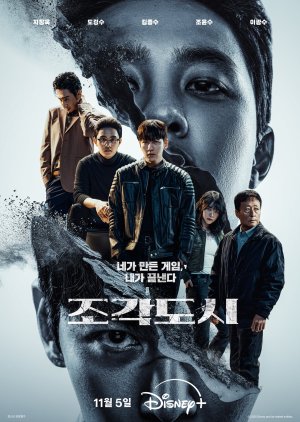
- Título original: 조각도시
- Também conhecido como: Carved City , Fabricated City , Jogakdosi , Sculpture City , Sculptured City , Jogakdoshi
- Roteirista: Oh Sang Ho
- Diretor: Park Shin Woo, Kim Chang Ju
- Gêneros: Ação, Thriller, Crime, Drama
Onde assistir Sculpture City



Elenco e Créditos
-
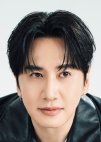
") Ji Chang WookPark Tae JungPapel Principal
Ji Chang WookPark Tae JungPapel Principal -
") Doh Kyung SooAn Yo HanPapel Principal
Doh Kyung SooAn Yo HanPapel Principal -
") Kim Jong SooNo Yong SikPapel Principal
Kim Jong SooNo Yong SikPapel Principal -
") Jo Yoon SooNo Eun BiPapel Principal
Jo Yoon SooNo Eun BiPapel Principal -
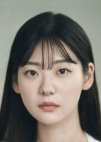
") Lee Kwang SooBaek Do GyeongPapel Principal
Lee Kwang SooBaek Do GyeongPapel Principal -
") Yang Dong GeunYeo Deok SuPapel Secundário
Yang Dong GeunYeo Deok SuPapel Secundário



Resenhas

Esta resenha pode conter spoilers
Watching the Machine Run
To me, The Manipulated feels like a KDrama approximation of a classic Tom Cruise production: glossy, efficient, and carefully tailored for international appeal. Disney clearly wants this to sell – and on an entertainment level, the series does many things right. The pacing is tight, the action relentless, the staging polished, and the performances well integrated. It is professional, routine, and undeniably effective.And yet, this is precisely where my problem begins. The series devotes an enormous amount of screen time to violence, cruelty, and the grotesque fantasies of a completely detached super‑rich elite – and at times, it seems almost to revel in them. Dehumanized games that have lost any connection to reality are not merely shown, but aestheticized, intensified, and actively hyped.
Of course, the protagonist is a victim. And of course, in genre‑typical fashion, he manages to navigate his way through this scenario. The suffering is real, but never existentially threatening to the narrative itself. In the end, what remains is exactly what it is: pure entertainment. Efficient, calculated, and easily consumable.
This kind of entertainment primarily caters to a Western‑oriented, largely male audience. Female fans, however, are also well served – not least because they get to experience Ji Chang‑wook as closely as possible. Once again, his performance is impressive: soft and hard, vulnerable and controlled, with a convincing transformation and undeniable presence.
Anyone looking for this kind of high‑gloss thrill ride will be thoroughly satisfied. For me personally, it goes too far. Or rather: too far in the way this particular form of “sickness” is placed on a pedestal – not out of narrative necessity, but for ratings.
A message beyond sheer impact?
For me: none.
The Manipulated delivers exactly what the global market demands: frictionless, high‑gloss action. Those seeking flawless entertainment will be served. Those looking for the emotional depth and cultural specificity that once defined K‑drama will find little more than a smoothly polished surface.
This is not a drama meant to be felt, but a machine designed to be watched – professionally choreographed, yet morally as hollow as the world of the super‑rich it portrays.
------------------------------------------------
Epilogue – Tracing the Cracks
Still, it may be worth taking a closer look at the motives of the detached super‑rich, the antagonist, and the actual perpetrators. Especially within the context of KDrama – a format that often subverts even seemingly stereotypical structures with irony or emotional depth – one might ask whether these figures are merely projection surfaces for escalation, or whether they unintentionally reveal more about power, alienation, and responsibility than the series explicitly articulates.
The elites’ violence games are so exaggerated, so completely severed from any sense of humanity, that they verge on caricature. They can be read as a mirror of a fully commodified society, in which even cruelty becomes a product – consumable, aestheticized, and emptied of meaning. In this reading, the emptiness of the antagonists is not accidental, but symptomatic: power without accountability, wealth without responsibility, play without consequence.
Perhaps whatever social critique the series may contain – if any – lies less in its plot than in the contrast between its glossy surface and the inner devastation of its characters. Between immaculate presentation and moral void, a space opens in which Western thriller clichés are adopted yet inadvertently exposed. The tongue‑in‑cheek notion that “KDrama simply can’t help itself, even when it wants to be Western” could be read as a quiet comment: the form may be imported, but the emotional emptiness remains visible.
Whether these fractures are intentional or merely byproducts of a production optimized for maximum impact remains unclear. The Manipulated does not actively invite reflection – but it allows it in retrospect. The final question is therefore less about the series itself than about its context: is this pure consumer product, or does it – perhaps unintentionally – reflect the social emptiness from which it emerged?
Esta resenha foi útil para você?

Esta resenha pode conter spoilers
It launches like a blockbuster but crash-lands in the final act
This drama feels heavily manipulated at times, and even the title adds to that impression. Still, it’s a strong “comeback-in-action” project for Ji Chang-wook—one fans have been waiting for. The story starts off incredibly promising. The opening is intense, suspenseful, and heartbreaking, with a solid buildup that had me excited to see how things would unfold. But then the tone shifts. Suddenly, the plot turns into An Yohan’s psychopath-style game, almost like a Squid Game-inspired setup with a huge prize. After that, it swerves into Fast & Furious territory. Eventually, the story centers on the protagonist, Park Tae-jeong, as he fights to escape and prove his innocence. I agree—he is innocent and clearly trapped by Yohan. But the way Tae-jeong, an ordinary deliveryman with no special background, suddenly develops the physical strength and skills to take on gangsters in prison, wealthy elites, and a corrupt governor feels… questionable. I know it’s fiction, but it still left me feeling a bit uncomfortable and awkward.Now, let’s talk about the villain, An Yohan. He is absurdly overpowered—I genuinely don’t think I’ve ever seen a villain this OP in all of K-dramaland. He’s essentially just a boy, yet his actions, skills, and influence stretch far beyond what makes logical sense. His motivations are murky, almost as if he were written to be “born evil” without any real psychological grounding. Even if we accept that, he remains unrealistically dominant until the very end. And speaking of the ending, his arc gets no real closure; it’s deliberately open-ended, practically hinting at a second season. But credit where it’s due: Do Kyungsoo delivers an incredible performance. His expressions are bone-chilling—every time he does something cruel or unhinged, it’s impossible to look away. And interestingly, this villain never spits out trash talk or loud threats. Only in the final moments does he mutter a few words, which somehow makes him even more unsettling. As for the blind nanny—she simply vanishes by the finale with zero explanation. How did she leave Yohan? She was his mother figure, essentially his only family. My best guess is that she saved him, faked his death, and helped him escape so he could set the stage for yet another round of revenge against Tae-jeong.
On the brighter side, I loved No Yongsik ahjussi. His pure kindness and fatherly affection toward Tae-jeong were heartwarming. I’m relieved he survived, and I’m equally happy for his stubborn daughter, No Eun-bi. Their little family ending—finally living together and opening Tae-jeong’s long-dreamed-of cafe—was one of the most satisfying parts of the drama. However, I do think Tae-jeong’s three friends were wasted characters. In the movie version, they play significant roles in helping him, so I expected the same here. Instead, the drama relegated them to minor side characters with barely any impact. The entire story revolves almost exclusively around Tae-jeong, and that narrow focus weakens the world-building.
Overall, the drama differs quite a bit from the original movie. As someone who enjoyed the film, I still prefer its storytelling. The drama had many opportunities to create a strong, coherent narrative without losing its sense, but unfortunately, it didn’t fully deliver on that potential.
Esta resenha foi útil para você?