K-Drama


- contemporary romance c-dramas
- difficult family relations and issues
- seperation and reunion arc
(- pseudo step family trope)
- difficult family relations and issues
- seperation and reunion arc
(- pseudo step family trope)
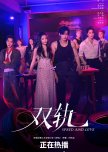
It's similar in many ways, such as the fake siblings trope, bad boy x good girl and many other things. The male lead is a police spy for a big case, which causes some misunderstandings, which is also one of the similar parts. The 6 years of parting before meeting again and realising that they never stopped loving each other. If you loved this, you might also love speed and love and vice versa.

Both are starring in MGTV's youth-themed dramas for the summer vacation season.
Their stories focus on youth, growth, and self-discovery.
The main leads gradually get closer as they spend more time together.
They slowly begin to understand each other beyond their first impressions.
Their relationship develops through shared experiences and mutual support.
As the story progresses, they help each other overcome personal struggles.
Both dramas feature emotional character development alongside a lighthearted youthful atmosphere.

love for you and endless summer are built on the same emotional blueprint : two people who fall for each other young, spend years living separate lives before fate throws them back together as adults. both dramas frame it as a healing process where the leads have to work through years of unresolved feelings, unanswered questions, and emotional baggage before they can actually be together.

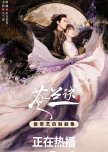
After her mother falls ill, Lin Yi Ran leaves her job in Beijing and returns to her hometown, where she takes the civil service exam and becomes part of the Economic Development Office in Taohua Town. There, she witnesses the decline of the traditional Xuan paper industry, once represented by the thousand-year-old Xuan family, now struggling to survive. Determined to help preserve this heritage, Lin Yi Ran launches new projects — from developing Xuan paper notebooks and securing wallpaper orders in Beijing to organizing a cultural festival celebrating the Four Treasures of the Study.
Through her efforts, Lin Yi Ran not only revitalizes the local Xuan paper trade but also rediscovers her own connection to her roots — growing from duty to genuine affection for her hometown. Along the way, she meets Xuan Lu, an innovative yet misunderstood Xuan paper artisan devoted to cultural innovation. Realizing they share the same ideals, the two join forces to forge a sustainable path for the future of Xuan paper and the culture it represents.
Through her efforts, Lin Yi Ran not only revitalizes the local Xuan paper trade but also rediscovers her own connection to her roots — growing from duty to genuine affection for her hometown. Along the way, she meets Xuan Lu, an innovative yet misunderstood Xuan paper artisan devoted to cultural innovation. Realizing they share the same ideals, the two join forces to forge a sustainable path for the future of Xuan paper and the culture it represents.

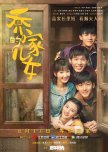
The similarity for this two Cdrama is that they both grew up in poverty and difficult childhood. Both father were either abusive/alcoholic.. the elder brother took up the responsibility of protecting, improvised and care for the younger sibling. The stories goes on showed how they grew up become. They remain tight bond, they make mistakes, they continue support and care for each other the rest of their life
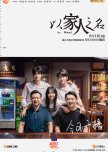

“Our Generation” features a similar dynamic between the leads, with a bond that starts as children and grows into something deeper that neither can move past. Both series also have a similar plot structure, with the beginnings of a romantic relationship in high school, followed by a sudden separation, and eventual reconciliation initiated by the FL not giving up the ML, who doesn’t want to tie down the woman he loves to a difficult life where he’s barely getting by.

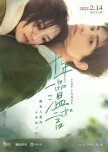
At 17, Wen Heng who was an adopted child, was finally found by her biological parents and brought back to the family home in Beijing. There, she tries to adjust to her new life with her new family but problems occur when her adopted sister felt threatened by her presence and started throwing tantrums. In an effort to keep the peace in the family, Wen Heng was asked to move into a family friend's house next door. There, Wen Heng meets Yan Xi and the two of them slowly start to grow closer as they live together and go to school together. But this happy life didn't last long when Yan Xi has to return to America to be with his sick mother.

havent watched love for you yet (gonna start it after the 2 dramas i am currently watching) but from reading the description, this really reminds me about the kdrama tree of heaven (2006).
literally the entire first paragraph of love for you's description is the EXACT SAME PLOT.
in both, the mls are grieving the death of their mums. in both, the fl and ml start living together because of their parents getting together and being in a relationship. in both, the ml really hates the fl and is cold at first but the fl is kind. in both, the parents die/disappear so its just the ml and fl lead depending on one another. im honestly so surprised how similar the 2 are?? surely they got some inspo from tree of heaven? or its just a crazy coincidence and im losing my mind hahahha.


It gives off the same vibe with the fake brother and sister trope. Haiyan and Chenyi share similar features, although they're very different. The way they care for the ML are similar, yet their personalities are so different. I think it's because of how they grew up; they grew up so differently. Haiyan grew up with his mom as the anchor, whereas Chenyi grew up on his own. Chenyi only knew how to live to protect someone when Miaojing came into his life but Haiyan has always been a breadwinner and protector to his own mom.

Both are youth-themed coming-of-age dramas.
Both follow the main leads over a long period as their relationship gradually develops.
The main leads slowly grow closer and come to understand each other.
Both couples support each other through difficult times and emotional struggles.
Past trauma and unresolved wounds play an important role in both stories.
The leads experience separation before finding their way back to each other.
Both stories focus on healing, personal growth, and chasing their dreams.
Romance develops naturally alongside the characters' individual journeys.
Both feature emotional relationships built on trust, mutual support, and long-term development.