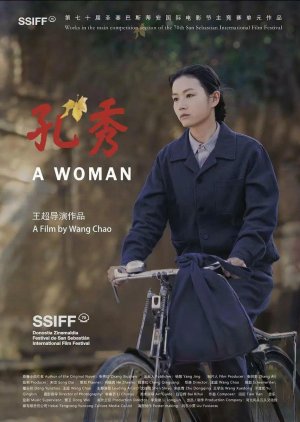
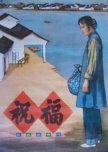
The story of Xianglin Sao, downtrodden by her in-law family and the towns people she worked for, reminds of the first part of Kong Xiu's life as the wife of a farmer whose family expects her to toil at home and in the fields, and give birth to male heirs. But the fate of Kong Xiu is kinder; there are no wolves to take away her son, she only has to give him up to the farmer's family, and be content with caring for a daughter. It's a hard life in both movies, but the fate of women does seem to have improved a bit since the 1956 adaptation of Lu Xun's tragic short story.
"A Woman" is the story of a woman storyteller who did not get the chance to go study, but was confined to factory work, until her talent gained her a second chance for life, leaving behind the shackles of dreary work and unwanted marriage and motherhood. As many "scars generation" stories it is somber, but tells of an indomitable spirit.
It does resonate with the heartaches of Fei Ni in the drama, when she is repeatedly rebuked and discouraged from wishing to become a student and read her fill of books.
Unfortunately, this Wang Chao movie may be difficult to find outside Chinese movies festivals featuring famous writer-directors work. It is based on a semi-autobiographical novel Dream (Meng, ?) by Zhang Xinzhen which still has not been translated into English or other languages.
A short trailer can be found on YouTube.
It does resonate with the heartaches of Fei Ni in the drama, when she is repeatedly rebuked and discouraged from wishing to become a student and read her fill of books.
Unfortunately, this Wang Chao movie may be difficult to find outside Chinese movies festivals featuring famous writer-directors work. It is based on a semi-autobiographical novel Dream (Meng, ?) by Zhang Xinzhen which still has not been translated into English or other languages.
A short trailer can be found on YouTube.