- Español
- Русский
- हिन्दी
- English
- Título original: 除恶
- También conocida como: Chu E , Evil Hunter , 除惡
- Director: Teng Hua Tao
- Guionista: Nie Cheng Shuai
- Géneros: Crimen
Dónde ver The Devil Between Us

Subscription (sub)
Reparto y créditos
-
") Ren Su XiHu Wen JingPapel principal
Ren Su XiHu Wen JingPapel principal -
") Wang XiaoCheng KenPapel principal
Wang XiaoCheng KenPapel principal -
") Cai Wen JingLi Xiao YaPapel principal
Cai Wen JingLi Xiao YaPapel principal -
") Li Ze FengCheng Xiao DongPapel principal
Li Ze FengCheng Xiao DongPapel principal -
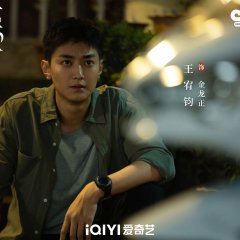
") Wang You JunJin Long Zheng [Municipal Narcotics Unit officer]Papel secundario
Wang You JunJin Long Zheng [Municipal Narcotics Unit officer]Papel secundario -
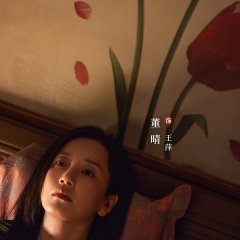
") Dong QingWang PingPapel secundario
Dong QingWang PingPapel secundario





Reseñas

a drug dealer-chasing tale (ft. people who needed to check in with reality more frequently)
I usually start drug-related dramas with mild enthusiasm only to drop them as they fall into the easy trap of being more public service announcement than entertainment. this one thoroughly held my attention throughout despite that bias. it does occasionally feel like a gentle PSA but is also a very well-crafted narrative that deftly avoids some easy tropes.set in a fairly small community, the ties between characters lend themselves naturally to a style where, as the story progresses, the through-lines begin to mesh and interlock. aided by a strong cast, these characters are adequately fleshed-out and engaging, with the exception of the Wang siblings, who are a necessary but somewhat irritating addition. the setup involves people trafficking, drug smuggling, and a sting operation that doesn’t go to plan. in the ensuing chaos, deaths ensue, and the drugs that the narcotics squad are searching for end up with neither the dealers nor the police but in the hands of a pressured single parent.
the trajectory of various individuals is predictable in direction if not in execution. Cheng Ken’s journey is less of a smooth arc than it is a series of step-wise falls from an everyday hero who tells his daughter wildly unbelievable stories so that she doesn’t worry about him, to a fractured man who no longer has the energy to maintain a façade of civility even for his child and is entirely focused on survival at all costs. others are similarly tripped up by their own hubris and inability to know when to stop.
the narrative uses small, evocative details to build relationships between the parties and then echoes them in perverse ways as evidence of corruption. the milk cookies that Cheng Ken’s daughter Jiajia loves are one such example. watching him make them in the early episodes is one of those domestic details that encapsulates his single-minded focus on his child, taking the time to make one of her favourite snacks even though his time and energy is limited by the stress of his status as sole caregiver.
one particular theme that I found interesting was the concept of being good enough. the drama deliberately characterises Hu Wenjing, a single mother to two mischievous boys, as a parent who accepts that she can’t be everywhere all of the time. while she clearly loves her children and is attentive when present, she is also ambitious and leans heavily on the children’s grandfather for their care. the teachers that she engages with just enough not to be seen as neglectful may have views on whether her parenting is sufficient, but she is clearly very conscious of her own limitations and relies on the metaphorical village to help raise her children.
the obvious contrast to Hu Wenjing’s parenting style is Cheng Ken, who does have family members but does not utilise them in the same way, exhausting himself to be all things to his chronically ill daughter. in a deeply ironic twist, he is not averse to calling on his brother to assist him in criminal acts, but he clearly sees parenting as some sacred task that only he can do. that quest for perfection does achieve some of his aims but leaves indelible damage. a less obvious foil but truly a pointless martyr is Wang Ping, whose charge is already an adult whom she could and should have set free from her obsessive parenting long ago. this just reinforces the message that self-care is not just optional but in fact a moral imperative: put on your own oxygen mask before trying to save others.
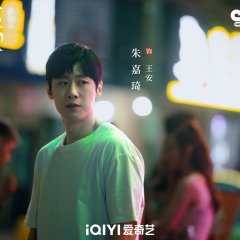
Wang Xiao’s performance is superlative. his mastery of a particular cluster of emotions is the key to understanding Cheng Ken, a man holding himself together by sheer force of will but whom you instinctively know is of the break-not-bend variety. the blank, obedient expression that he consciously puts on in the early episodes does little to cover the increasing mass of seething resentment visible in his eyes. his brittle confidence breaks off in shards, and he keeps trying to glue it back with fixes that are increasingly untethered from reality, until that reality delivers him a final, explosively destructive blow.
Ren Suxi delivers a lively, naturalistic performance that feels so lived-in that I will struggle to see her as another character for a while. her Hu Wenjing is pragmatic and hyper-intelligent and does not let perfect be the enemy of good, which gives her a solid but slightly irreverent realism. Wang Youjun (Jin Longzheng) surprised me, as I have not rated his previous performances particularly highly, but his attractively earnest, slightly heavy characterisation was perfect here in subverting a popular trope in a believable way. his choice of logic and rationality over a continued feud was refreshing and set him up as a sensible, likeable partner with keen observational skills.
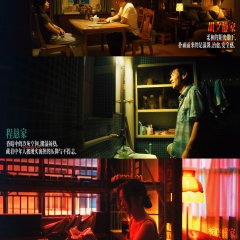
the cinematography is sharper than I'm used to in this format and is really appealing. It has retained much of that Light On aesthetic of recent years but ditched the trademark green filter along with the flashbacks, and it makes for a much sleeker, more modern-feeling watch. the lighting is outstanding. night scenes avoid the Netflix curse of being overly dark, with atmospheric choices such as the interior of apartments lit from outside by neon street signage. a scene where Cheng Ken is standing by the river is graced by the lights of the city on the other bank, and this gentle spotlight on his features tells a story all of its own. the locations also feel lived in without overselling the struggles of the protagonists.
the writer trusts the viewer to sit with and process their own reaction to the characters without drawing artificial distinctions between “good” and “bad” people. all of these characters are imperfect and the fluidity with which they can move between categories is realistic and allows you to make your own judgments. individuals can be corrupted or redeemed depending on their reactions to their circumstances. it’s a concept that some might find uncomfortable but I personally find oddly reassuring. a shocking last-second reveal hints at a second season and, while unnecessary as the story is wrapped up cleanly, this team has earned the benefit of the doubt.
¿Te ha parecido útil esta reseña?
This review may contain spoilers
Incredible cast
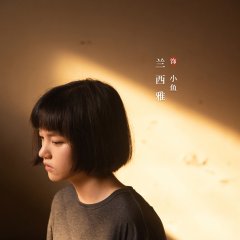
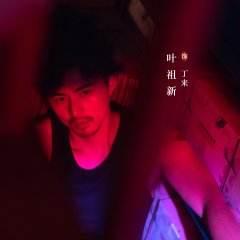
The cast is incredible. Ren Su Xi's acting is so natural as usual. I looked forward to Wang Xiao who did not disappoint. I was also curious about Ye Zu Xin. I don't think his voice is that suited for this role, it sounded like he was purposefully making his voice sound deep and low. But his acting is solid. Lan Xi Ya's role is very limiting, but she did a good job. I haven't watched any of Dong Qing's dramas, but her performance in this one really impressed me. Her breakdowns were really captivating even though it's another situation where the male counterpart can't keep up. During her highlight scenes, I didn't feel like her brother managed to act out his character's very complicated emotions. I'm confused if they purposefully wrote the brother the way they did.Otherwise, the only criticism I have of this drama is that: it's a drama that makes me feel like a lot is happening, yet nothing is happening at all. The suspense is definitely there, but somehow the plot feels like it's moving kind of slow. The open ending and how short the show was definitely contributed to this feeling. I think Chinese dramas should stick to their roots and film everything in one go. Please don't torture me with cliff hangers.
¿Te ha parecido útil esta reseña?