
 News


TABLE OF CONTENTS(cross-linked to the posts in the below Table) 1-GENERAL INFORMATION (when, where filmed 2- CAST AND CREW, character relationship chart, 3- the Yú family names, 4- how the lead actors prepared for the roles and some notable stories around the Behind The Scenes 5- MEANING OF THE TILE (+ author, relation to the earlier Republican era dram)a - 6 -TIMELINE : Historical relevance and fiction (warlords era timeline background of the era and what is left out) 7 - OST with some interesting stories about the 9 songs. 8 - "Heather Notes, a song with stories 9 - BGM and Period styles of music in the 1920s-1930s. 10 - Shooting from A category to S+, whys of the distribution strategy, reception Pictures from the MDL Photo section or Baidu, data from Wikipedia, the Net, social media notes and other sources, highlighted mentions lead to further information. |
Warning :
This is being re-cut from my earlier Notes, which apparently got scrubbed !! Re-wiring, synthesizing and adding info takes time, so bear that this will take at least a few days.
edited
1 - General information, Cast and Crew, Distribution strategy |
GENERAL INFORMATION
Original Title : 玉簟秋 Yù Diàn Qiū (Autumn on the Jade mat)
English Title : The Lament of Autumn
Republican era drama adapted from the eponymous novel by Líng Xī (灵希), in 40 episodes, filmed from October 31, 2025 → March 19, 2026 (~140 days) in 4 locations :
Héngdiàn (横店 ), where a purpose-built set was constructed for the Yú mansion, on over 1,000 m² and for 8 million yuan, sparing no expense for achieving period authenticity : Blue bricks were dismantled and shipped from old Qing/early-Republic houses in Jiangsu and Anhui, wth moss in the brick gaps transplanted from the old houses ; Floor tiles were recreated from 1920 Municipal Council blueprints ; real railway sleepers were laid under the film city Nanjing Road tram tracks.
Shànghǎi (上海), for European-style courtyards, hospital exterior, lakeside "all-night talk" scenes.
|
|


Hángzhōu(杭州), especially at the Guōzhuāng Villa (郭庄 ), No. 28 Yánggōngdī a century-old garden on Yánggōng Causeway by the West Lake : this was the location of the iconic "枫台" Fēngtái red-maple window scenes.
Níngbō (宁波) : Additional period street scenes.
The drama aired from October 12 to Nov..1, 2026 on Mango TV + Hunan satellite TV.
- o O o -
 Synopsis (adapted from Baidu) : During the warlord era of the Republic of China, young marshal Yú Chǎngxuān 虞昶轩 and female student Yè Píngjūn 叶平君 were caught in a vortex of love and hate after a chance encounter. Yè Píngjūn got involved in an assassination attempt while she was working in a hotel to raise money for her mother's medical expenses. Yè Píngjūn and Yú Chǎngxuān g made a ten-day bet to solve the case. Yú Chǎngxuān gradually developed genuine feelings for her. He arranged for her to work with Lán Qīng, 兰卿, a Chinese opera singer who performed at the hotel managed by Jīn Zhòngfāng 金仲方 (who had been a close friend of Yú Chǎngxuān 's elder brother, until he got killed in action some time before the story started.)
With Jiāng Xuétíng 江学廷 (Yè Píngjūn's fiancé) returning to the country, the young marshal was forced deeper into deceptions while Táo Zǐyí 陶紫宜 prepared their business marriage (intended to fund the Yú arsenal through her banker father). Píngjūn felt torn by her loyalty principles and by her inequality with the powerful young marshal who actively pursued her. A dramatic turnaround happened when she was nearly killed by banker Táo, just before her true origins were revealed. This put her on closer level to the young marshal, but caused deeper hatred from the Táo heiress and further rift from Jiāng Xuétíng who did not live up to Píngjūn's expectations.
In a dramatic incident, Pingjun's mother was tragically killed and she fell in a two year coma. When she woke up, her feelings were still mixed, although she finally accepted the marriage with Yú Chǎngxuān, slowly fitting into the Yú family which had other hidden traps embodied by the son-in-law. The reappearance of Jiāng Xuétíng and Táo Zǐyí almost pushed her to part ways and sail away to pursue her own path to save the nation. Years later, amidst the flames of war, Yú Chǎngxuān and Yè Píngjūn faced the revolutionary tide, joining hands to defend their homeland.
edited
2 - CAST AND CREW |
Directors and Screenwriter :
The philosophy of Director Jū Juéliàn was
a "no green screen, no heavy filters" policy: the color grade avoids the "big skin-smoothing or the white light" which are standard in C-dramas — the pictures of actors retains visible skin texture and natural light ;
designing the set as accurately as possible according to blueprints ( 8 million yuan were lavished over 1,000 m² to create the Yú mansion, with bricks brought from Republic houses in Jiangsu and Anhui, complete with real moss transplanted from the old houses into the brick gaps ; 1920s style floor tiles were recreated, some with Art Deco geometric patterns),
real railway sleepers under the tram tracks
4,000+ costumes were hand-made for the production throughout the cast: dresses, military uniforms... . Yè Píngjūn alone had 48 qípáo dresses, each costing over 10,000 yuan. The frog-button (盘扣) count changed with the character's emotional state; colors tracked her growth arc. One pearl qípáo took three days of hand-stringing. Her student uniform used cotton cloth discontinued 20 years ago, washed with corn starch (as was period practice)
The director's vision for the iconic mahjong scene was "a breathing oil painting" — the space is closed but power flows between the players through positioning and light.
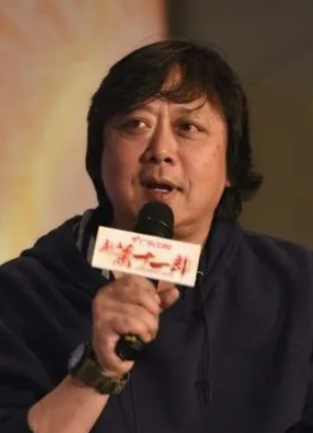
The 67 year old Hong Kong director has a long track record of dramas, especially wǔxiá and inspired by Jīn Lóng novels, and more, such as 2023 |
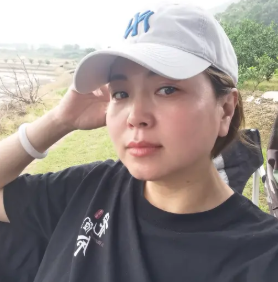
The 40 year old director also has a long track record, notably : 2021 Marvelous Women ; 2023 Scent of Time ; 2025 Feud, and Glory. |
The young director is as yet unknown on MDL. (Thus, the info here is from Baidu)
|


Cast
The actors chosen for the roles were both sufficiently well known to attract an audience, and not too expensive, since the costs have slumped after 2021 and most were not (yet) top-tier. Among the cast (see MDL cast list, Baidu or Dramawiki for more complete cast) are :
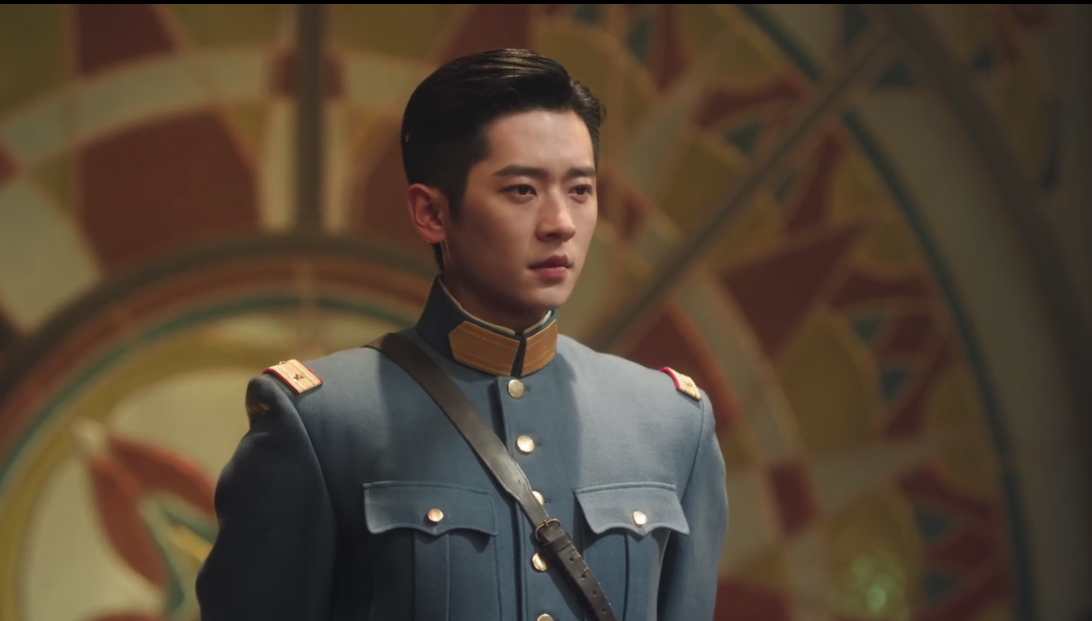
Born December 18, 1993 in Dōngguǎn, Guǎngdōng Province, he made his debut in a 2018 movie. - He plays as 虞昶轩 Yú Chǎngxuān. | Born February 27, 1998, in Xī'ān, Shaanxi, she was scouted by Jackie Chan in 2018 and entered showbiz by participating in his first literary film, "My Diary", as the heroine. - She plays as 叶平君 Yè Píngjūn. |
Born May 5, 1985, the actor almost retired in 2024, but a solution was found to allow his return to acting. He plays as Jīn Zhòngfāng 金仲方, the owner of the Xiāngxī hotel (back story in snippets, notably ep.31) | ||||||
Born July 16, 1999 in Shěnyáng, Liáoníng, China. She graduated from the Central Drama Academy. -- She plays as Táo Zǐyí 陶紫宜 |
Born January 9, 1994, in Chángshā, Húnán, he made his acting debut in 2016. - He plays as Jiāng Xuétíng 江学廷 |
Born December 16, 1998, graduated from Seoul Performing Arts High School. she plays as Lán Qīng, 兰卿 the Kūnqǔ Opera singer and actress. | ||||||
Born November 13, 1988 in Yákèshí, Hulunbuir of Inner Mongolia, she graduated from the Beijing Film Academy. -Plays as Yú Jǐnxuān 虞瑾萱 [Chǎngxuān's elder sister] |
-- Plays as Kuāng Bǐngwén 匡炳文 Husband with no love of Yú Jǐnxuān and accomplice of Chén Wǎnqiáo 陈晚荞 see -> |
--Plays as Chén Wǎnqiáo 陈晚荞 [the 3rd concubine of Commander Yú Zhòngquán], As the childhood "sister" of Kuāng Bǐngwén. She passed information to him, secretly planning to help him take revenge on the Yú clan. | ||||||
Plays as Lǐ Bórén 李伯仁 [Chǎngxuān's staff officer] |
Plays as Gù Ruìtóng 顾瑞同 / Director Gù [Chǎngxuān's trusted aide] |
Plays as Zhào Bǎorú 赵宝茹 [Yú Zhòngquán's eldest wife] | ||||||
-- Plays as Yú Qíxuān 虞琪萱 [Chǎngxuān's younger sister] | Plays as Yú Zhòngquán 虞仲权 [Nánhuái army warlord] | Plays in flashbacks Yú Míngxuān 虞明轩 [Yú Zhòngquán 's eldest son] |


edited
3 - CHARACTERS RELATIONSHIP, YU FAMILY NAMES |
 From Photo section, thanks to Marissa Danelle who translated the Character Relationship chart
NOTE ABOUT THE NAMES and family order addresses in the Yú clan :
The names follow the system of Family Name + given name + generation name component, so the elder generation used "仲" ( Zhòng) : Yú Zhòngquán 虞仲权 , whereas his sons were given 轩 (xuān) which carried the meaning of "elegant carriage, raised pavilion"; a classic marker of nobility and grace in classical Chinese; the girls too, but a different, homophone, character : 萱 (xuān) carrying meaning of "daylily" (萱草) from classical literature a symbol of a mother's love (北堂萱) and of forgetting sorrow. [The position of the generation component is usually last, although it is not a definitive rule, as shown by the names of the elder generation in the drama.]
[Coincidentally, Jīn Zhòngfāng 金仲方 the unrelated owner of the Xiāngxī hotel, also had same generation component as the elder Yú in his name. At times, some generation component were rather common, such as during the post 1949 years, when many people got a "mín" 民 i.e. "people" component in their names, such as Jiāng Zémín 江泽民 who served as President of China from 1993 to 2003. This marked them out as belonging to certain decades in Chinese modern history... Only old families did get less common generation names, based on their own traditions.]
Then the first character added a thematic thread within each gender group:
Sons: all light/day imagery — 明 (bright), 曜 (radiant), 昶 (long day). You can almost see them as a progression: brightness → radiance → the day that stretches on.
Daughters: both jade — 瑾 and 琪 are near-synonyms for fine/precious jade.
So the full scheme was: light for the boys, jade for the girls, all unified under the same-sounding xuān. Very typical of a well-to-do Republican-era family that cares about classical literacy. To sum it up:
Sibling | Name | Gen. char | First char meaning |
Eldest son | 虞明轩 (Míngxuān) | 轩 xuān | 明 = bright |
Second son | 虞曜轩 (Yàoxuān) | 轩 xuān | 曜 = radiant, shining sun |
Fifth son (MC) | 虞昶轩 (Chǎngxuān) | 轩 xuān | 昶 = long daylight, extended day |
Fourth daughter "Fourth miss" 四小姐 Sì xiǎojiě | 虞瑾萱 (Jǐnxuān) | 萱 xuān | 瑾 = fine (jade) |
Sixth daughter, "Sixth Miss" 六小姐 Liù xiǎojiě | 虞琪萱 (Qíxuān) | 萱 xuān | 琪 = beautiful (jade) |
3rd concubine Chén Wǎnqiáo's kid daughter, "Seventh Miss" 七小姐 Qī xiǎojiě | 婉萱 (Wǎnxuān) | 萱 xuān | 婉 = graceful (jade) |
The numbering of sons and daughters started with the eldest, but the line included both, so "Fourth Miss" came between "Second son" and "Fifth son" ; we may suppose that the unnamed "Eldest daughter" 大小姐 Dà xiǎojiě (who is not credited anyway) was also "Third Miss".
|
|
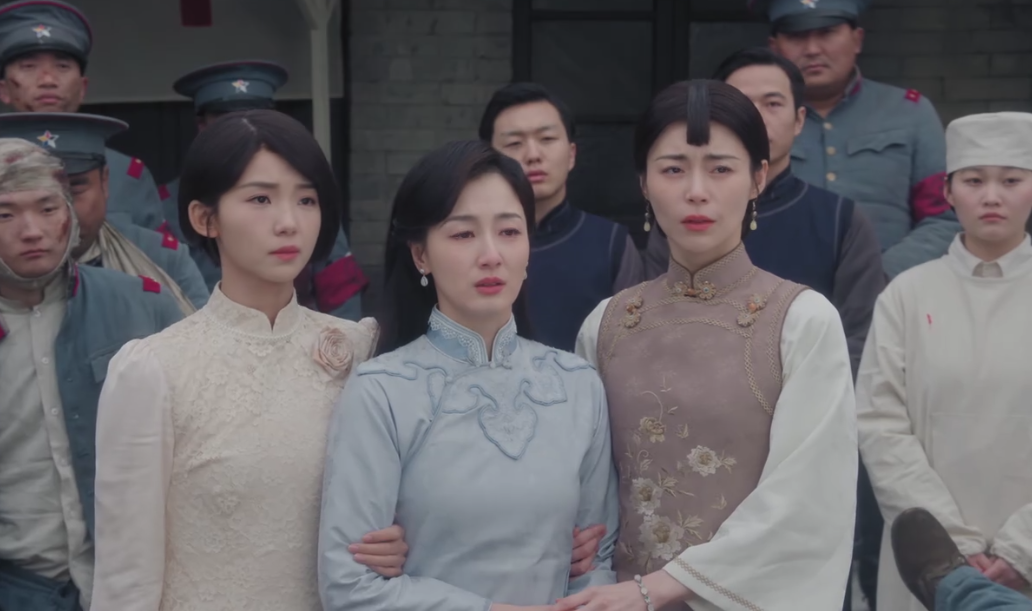
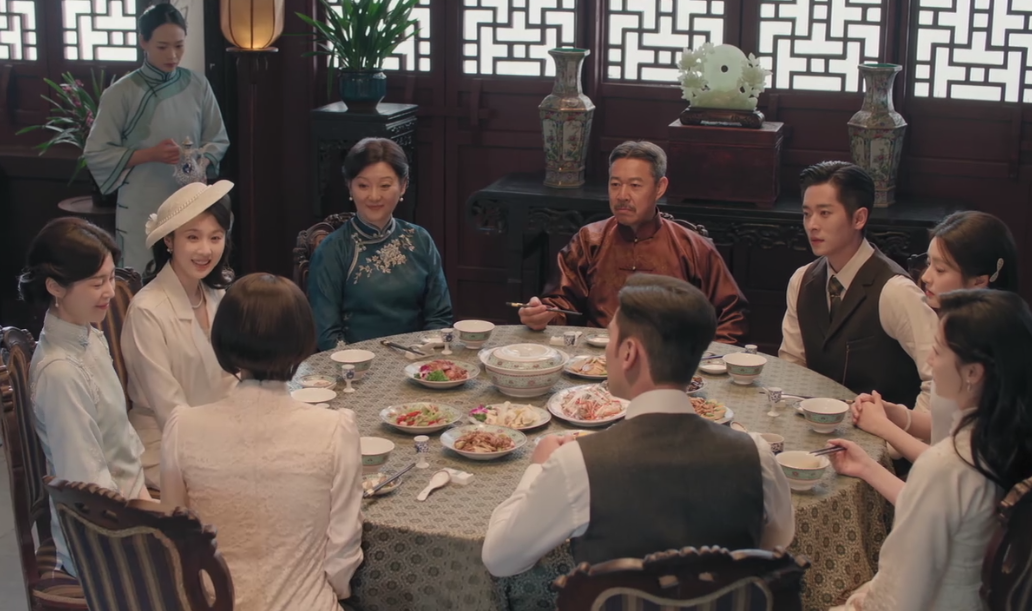
Some daughters-in-law and "cousins" appeared or were mentioned the drama : Jūn Dàití 君黛缇 , the younger sister of the daughter-in-law Jūn Mǐnrú,君敏如, titled "eldest young madam" 大少奶奶 , widow of Yú Míngxuān who died in battle when they had barely been married for two months. Mǐnrú has few scenes in the drama, but is recognizable by her forehead lock in early episodes, without the lock later, formal qípáo, pearl earrings.
Wives and concubines did not change names, although the principal, titular wife of a high ranking man (Zhào Bǎorú 赵宝茹 in the drama) might be ceremonially addressed as "fūren" 夫人 (Lady). In the imperial system 夫人 had been reserved for wives of first- and second-rank officials specifically, but in Republican era, it carried over to all powerful families. [Thus, Jiǎng fūrén 蔣夫人 was "Madame Chiang" in real History, although Chang Kaishek is not named in the drama].
Concubines, who were household members with contractual ties, usually were addressed by their number such as Èr nǎinai二奶奶 (Second Mistress). or in the drama : sān yítài (三姨太, "third concubine"), Chén Wǎnqiáo. Yítài (姨太) was the standard colloquial term for a concubine in Republican-era warlord households; the number 3 implied there were (or had been) other concubines before her.
Zhào Bǎorú and Chǎngxuān addressed Qíxuān by the nickname 小辣娇 (Xiǎo Là Jiāo : "Little Spicy/Fiery Girl").
edited
4 - STORIES FROM THE SHOOTING |
HOW THE LEADS PREPARED FOR THEIR ROLES
arrived 15 days early. She did table reads, researched qipao, and studied the novel before principal photography began.
She cut her hair — five years of length — for the role, wore period cloth shoes (布鞋) and practiced the character's gait until she wore her heels raw.
She covered her hotel room with old Life magazine (《良友》) photographs to stay in character
She also sketched Chéng Lěi as Yú Chǎngxuān on newspaper during breaks — finished in under a minute, then held a timed "auction" of the drawing on set.
Gained 5 kg for the warlord role. His bizarre method: eating boiled chicken breast at 2 a.m. in a poorly soundproofed Hengdian hotel. The landlady complained three times about the noise!
Adding some quirks to make his character memorable : he kept a scar on his collarbone from a previous role (足迹), deciding it was "the character's battle memory" and he designed a micro-gesture: when lighting incense at the Yu Mansion family shrine, his ring finger curls slightly — an unconscious tic he built into the character.
He perfected or learned new skills from scratch : training in horseback riding and combat ; and most importantly, learning mahjong, shuffling, dealing, pushing tiles — all learned on set through repetition,
For the mahjong scene (his most iconic moment), he had never played mahjong in his life. Shuffling, dealing, pushing tiles — he learned it all on set through repetition. The improvised line "胡太小了没意思,这把算我通赔三家" ("The win's too small, not worth it — I'll cover all three losers") went viral.
SHOOTING ACCORDING TO LOCATION
As usual in drama shooting, footage was taken according to where the location was available. Thus, it was not shot chronologically, but according to a book in which scenes at a given location had to be shot. The final episodes included, so the leads were not unaware about the final outcome although, of course, they could not express about it. Given it could be heavy, the actors relieved tension behind the scenes, becoming very friendly, and adding what they could to make the job a good memory.
Chéng Lěi also became the unofficial set photographer : he brought film cameras, digital cameras, and Polaroids to set and photographed Xú Ruòhán constantly in between takes. At the September 17 Zhāngjiājiè, Húnán, promo event, she displayed his photos to the press and confirmed they were all his. Fans noted the "diegetic echo" — the character Yú Chǎngxuān is obsessive about watching Yè Píngjūn and the actor was doing the same thing off-camera ! Furthermore, he won approval from the crew colleagues through voluntary service as all-purpose assistant : photographing, directing poses, fixing hair, handing water...
CINEMATOGRAPHY
The use of lighting was remarkable, from the very beginning in the smoking and playing mahjong scene in first episode. The russet tones of the furniture echoed the "autumn tragedy" unfolding. The rain scenes were particularly meticulous.
edited
5 - Meaning of the TitleAuthor, relation to the earlier Republican era drama, Historical relevance and fiction (warlords era timeline background of the era and what is left out) |
 LITERARY SOURCE OF THE TITLE
The 玉簟秋 title operates on three levels:
1. The classical source
玉簟秋 comes from 《一剪梅》, which is the most famous "ci" poem of Lǐ Qīngzhào (李清照 ):, a female poet whose life spanned about 70 years (1084-1155). 红藕香残玉簟秋。 轻解罗裳,独上兰舟。 ("The red lotus has faded, its fragrance gone; the jade mat carries the chill of autumn. Loosening my silk robe, I climb alone onto a little boat.") The poem is about separation— Lǐ Qīngzhào wrote it for her husband Zhào Míngchéng, 赵明诚 after their parting. Adapted from Wikipedia: "She had married him at 18, when she was already well-known, and although he was often away, they exchanged poems. But the Jin-Song wars between the Song dynasty and the Jurchens put an end to their happy life. The Northern Song capital of Kaifeng fell in 1127. Fighting took place in Shāndōng and their house was burned. Citizens including Lǐ and Zhào, endured many sufferings and fled south of the Yangtze River. The couple took many possessions along when they fled to Nánjīng, where they lived for a year. Zhào died of typhoid fever in 1129 on the route to an official post, and Lǐ never recovered. She wandered aimlessly after her husband's death, until settling in Hángzhōu. She proofread and edited his surviving manuscripts and finished the Jin Shi Lu book, which was finally published in 1132." |
Because of this single line, the 《一剪梅》 ci is also known by the alternative name 《玉簟秋》. NB. 玉簟 (yù diàn) = a bamboo mat so smooth and polished it's compared to jade. It's a summer object — cool, pleasant. The moment it feels cold, you know autumn has arrived without seeing a single leaf fall. |

2. The author's own explanation
The author of the novel, Líng Xī 灵希 explained the title on her blog (2011): "如玉一般的簟席渐渐地冷下来……簟席到了秋天,自然是无用的,要束之高阁,与秋扇见捐的意思差不多。人去席冷,曾经的一切繁华,都如过眼云烟,不过是一段往昔的记忆罢了。" Translation: "A jade-smooth mat gradually growing cold. When autumn comes, the mat is naturally useless — put away on a high shelf. (*) Same idea as 秋扇见捐 (the autumn fan being discarded). The person is gone, the mat is cold. All the former splendor is like passing clouds — just a memory." 秋扇见捐 is itself a famous allusion to Ban Jieyu (班婕妤), the Han dynasty consort who compared herself to a fan cast aside when autumn came — the ultimate metaphor for a woman discarded by the man she served. |
She started writing novels in 2006 in varied writing style. She had a comprehensive creative transformation in 2010. Her youth novels are represented by "Garden of Eden", her martial arts romance is represented by "The Fallen Rain", and her Republican novels are represented by the Republican Warlord Trilogy 《绯雨倾城》which comprises :《倾城之恋》 "Love in the Fallen City"、《玉簟秋》 "Autumn Jade Gu"、and 《芙蓉锦》 "Hibiscus Brocade". (Sources ; https://www.kanunu8.com/files/writer/242.html and Douban) |
3. Why it fits the drama
Layer | Meaning |
Physical | A mat that was warm in summer is suddenly cold — the love was alive, then it wasn't, and you only feel the absence when the temperature drops |
Emotional | 人去席冷 — "the person is gone, the mat is cold. Yè Píngjūn. leaves; what remains is an empty, cold space |
Fate | 秋扇见捐 — the woman is "discarded" by the season (by the era, by politics), not by choice |
Temporality | 秋 = autumn = the end of the growing season. The love had its summer; now it's the cold that follows |
There's also a secondary literary echo in Lǐ Qīngzhào (李商隐)'s 《房中曲》: " 玉簟失柔肤,但见蒙罗碧" ("the jade mat has lost the lover's soft skin; only green silk covers it." ) Same image: the mat as a stand-in for the absent body. So the three characters compress the entire drama's emotional arc into a single sensory moment: the instant you realize the mat is cold, and the person who made it warm is no longer there. |
4. More: the "autumn fan" allusion and Bān Jiéyú's Yuàn Gē Xíng
| 新裂齐纨素,皎洁如霜雪。 "Newly cut silk from Qi, white as frost and snow. Cut into a fan of togetherness, round as the bright moon. In and out of my lord's sleeves, waved to stir a breeze. I always fear autumn's coming, when cool winds steal the summer heat. Cast into a chest, affection severed midway." The genius is in the double time structure: the fan is currently in the emperor's sleeves (summer = favor), but it fears autumn (loss of favor) before it has happened. The abandonment is already inevitable at the moment of peak intimacy. |

Why the metaphor works on so many levels
|
How it was extended in later literature The allusion became one of the most recycled images in Chinese poetry:
The Berkeley dissertation on the topic notes that the image became a topos — so standardized that by the Song dynasty, any mention of an autumn fan immediately invoked Bān Jiéyú without naming her. |
Why 灵希 chose it for her novel :
The drama's title explanation explicitly equates 玉簟秋 with 秋扇见捐:
"簟席到了秋天,自然是无用的,要束之高阁,与秋扇见捐的意思差不多。"
Both images share the same logic: a summer object (mat, fan) that becomes useless in autumn, put away on a high shelf. The person who made it warm/needed is gone, and the object's coldness/irrelevance is the proof. For Yè Píngjūn., the "autumn" is the era — the war, the political upheaval — that makes the love impossible to sustain, not because either person failed, but because the season changed.
That's what makes it different from a simple "abandonment" story: the fan didn't do anything wrong. The mat didn't do anything wrong. The weather changed. And that's the drama's central tragedy — two people who love each other, destroyed not by betrayal but by the arrival of a season neither of them can stop.
edited
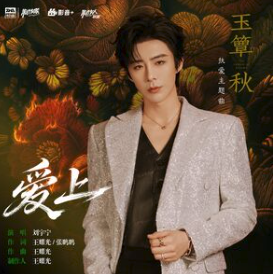
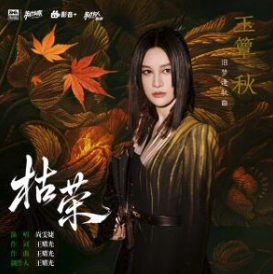
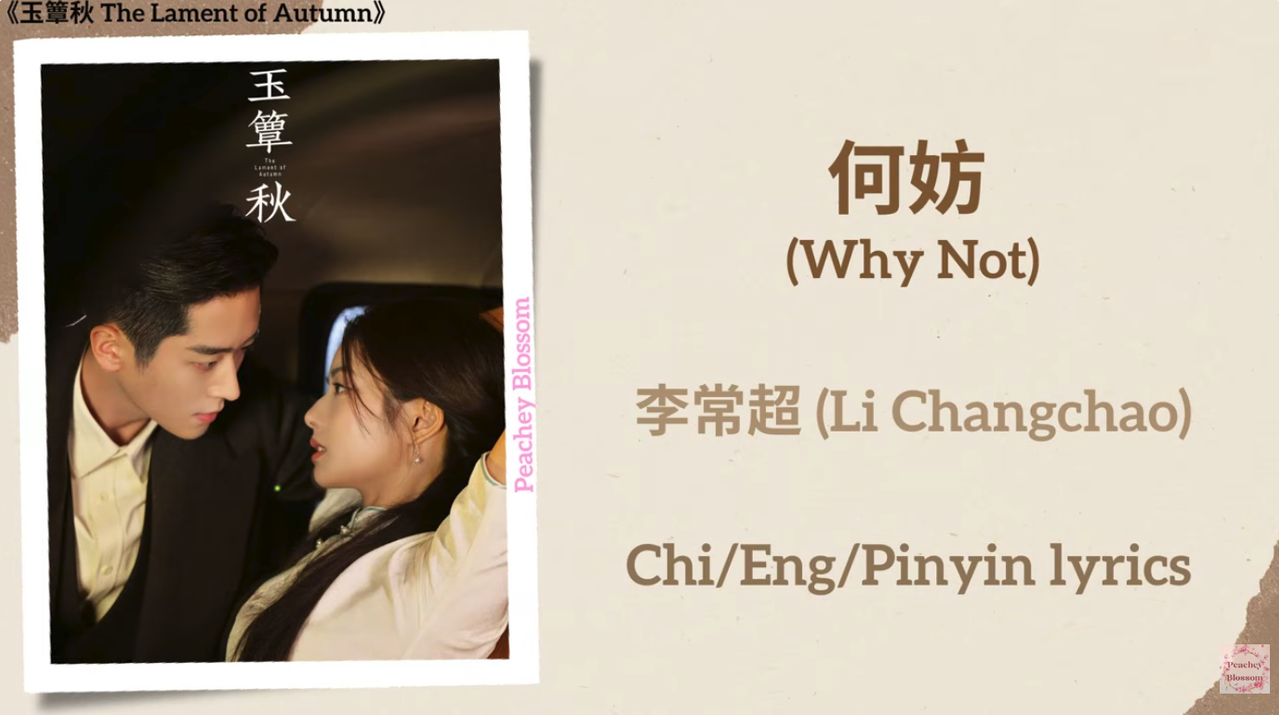
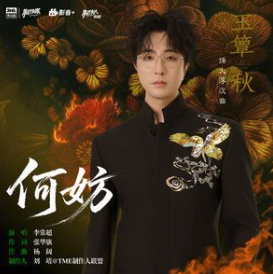
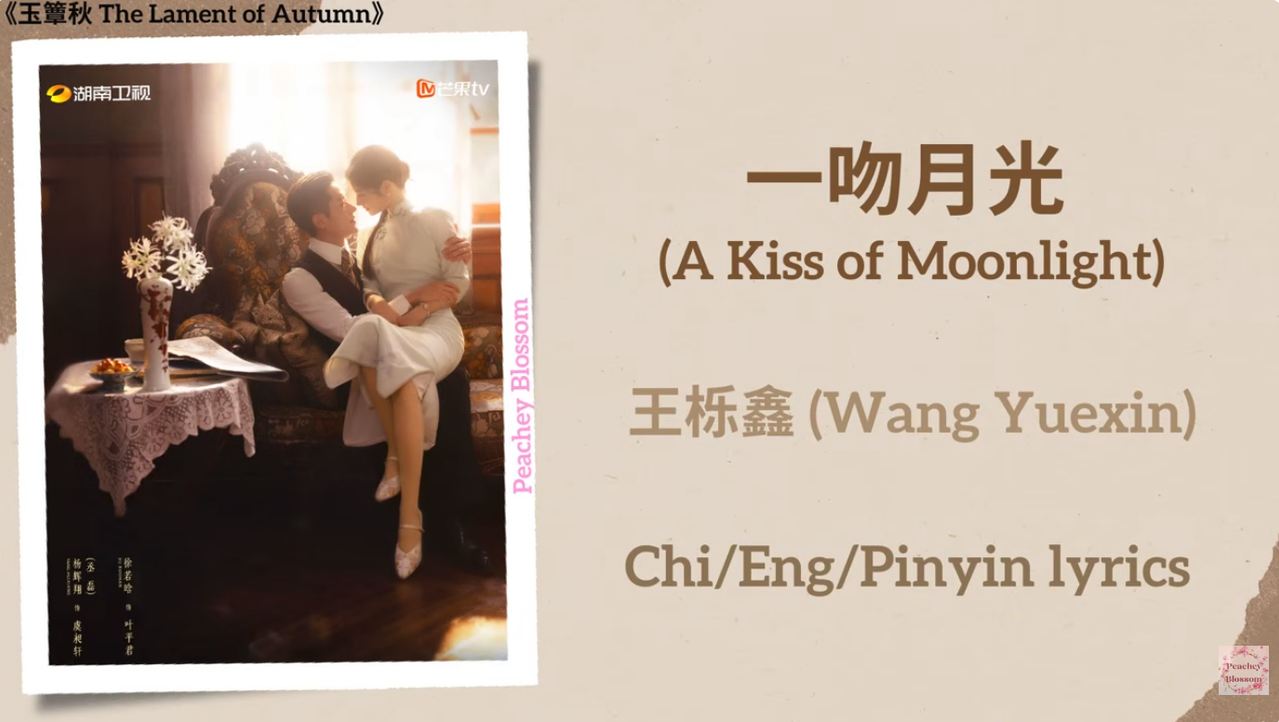
7 - OST : some interesting stories about the 9 songs. |
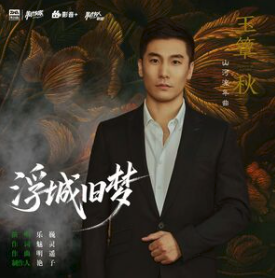
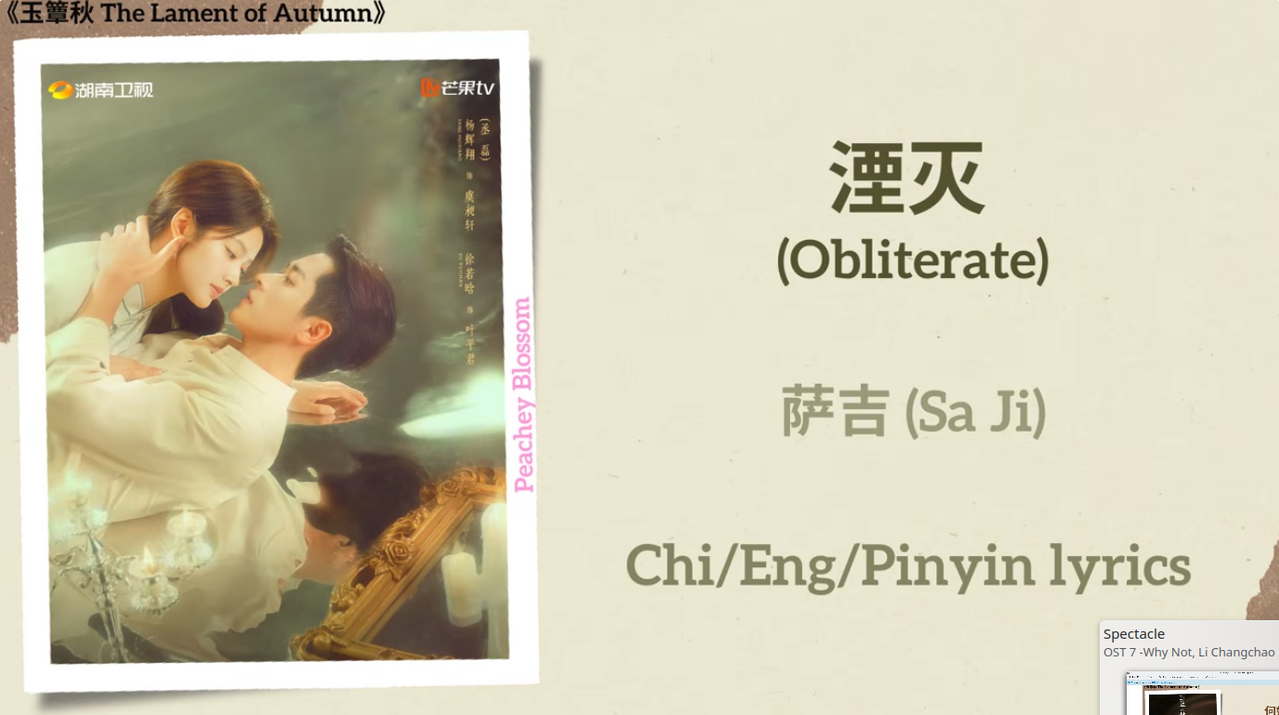
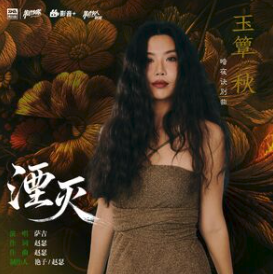
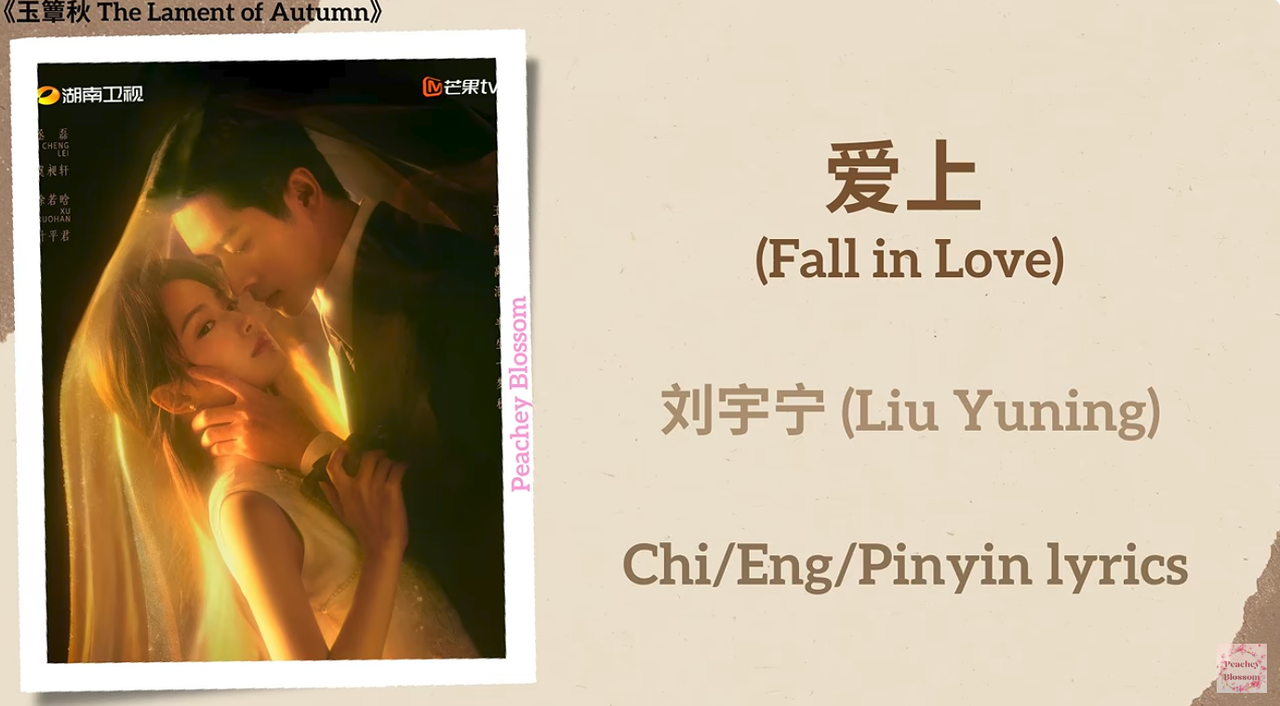
Original soundtrack of the film and television series "The Lament of Autumn"
Release Date: October 20, 2026
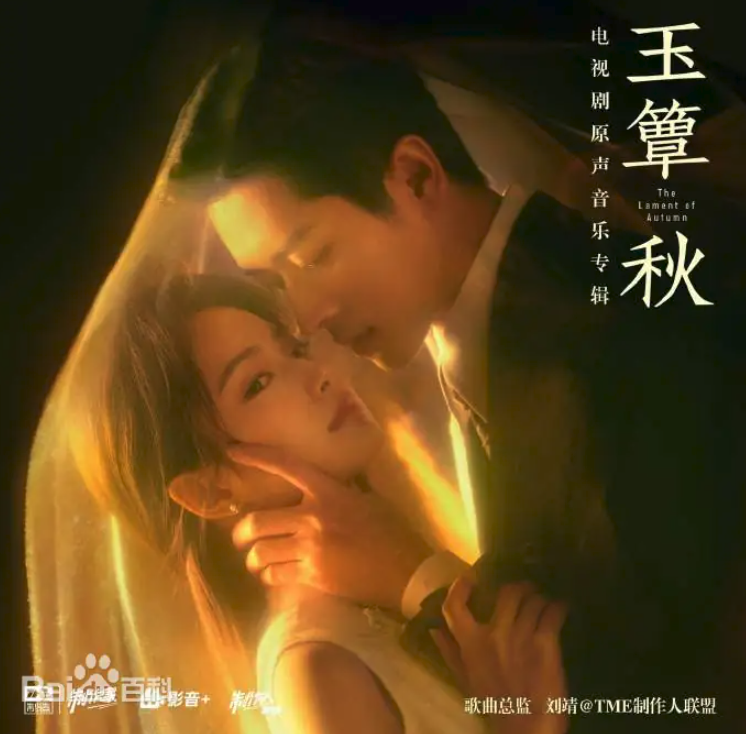
The full OST (9 tracks)
Netizens called the lineup "half the OST world" "半个OST江湖" because it pulled in 9 very different artists (pop, guofeng, rock-adjacent) for a single drama. That's unusual; most C-drama OSTs use 3–4 tracks.
The first version of this song was released in 2014, as a musical illustration) of the parallel between two literary stories (see more below after the song list) |
| ||
|
| ||
Composer 赵瑟, producers 艳子/赵瑟. |
Written specifically for the scene where the forced marriage collapses into rupture. | ||
Core imagery: "你像水上明月,我不敢摇晃, 怕一惊扰,凌乱了浮光" (You're the moon on water; I dare not sway, lest I shatter the floating light.) |
Composed by Wáng Yàoguāng 王耀光 with strings as the sole backbone (no percussion), described by critics as "a letter the male lead writes in wartime." | ||
旧梦逢秋曲 (Old Dream Meets Autumn) 枯 = wither, 荣 = flourish. The title maps the full arc of the love: blooming → dying. |
| ||
Ep.21: piano bgm version (hospital night scene) |
| ||
This version was re-orchestrated and two characters differ from the original, to underline the "doubts" which can be resolved, as opposed to the bleak first version. (see more, below after song list) |
It is highlighted in ep.19 when Chǎngxuān, after having "firmly broken with her" sends Píngjūn an umbrella to shelter her from a sudden rainfall. | ||
Pairs with Obliterate where 湮灭 = separation, 浮城旧梦 = reunion. |
The two titles together "write the whole story in four characters." | ||
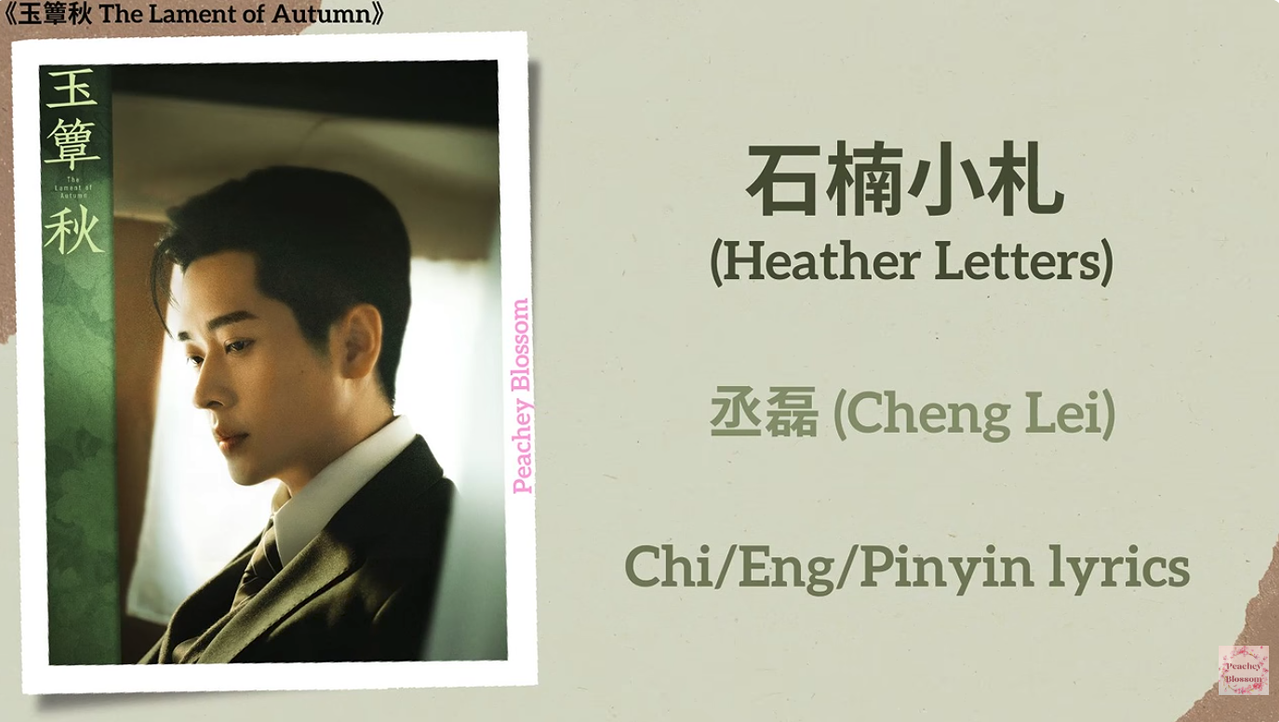
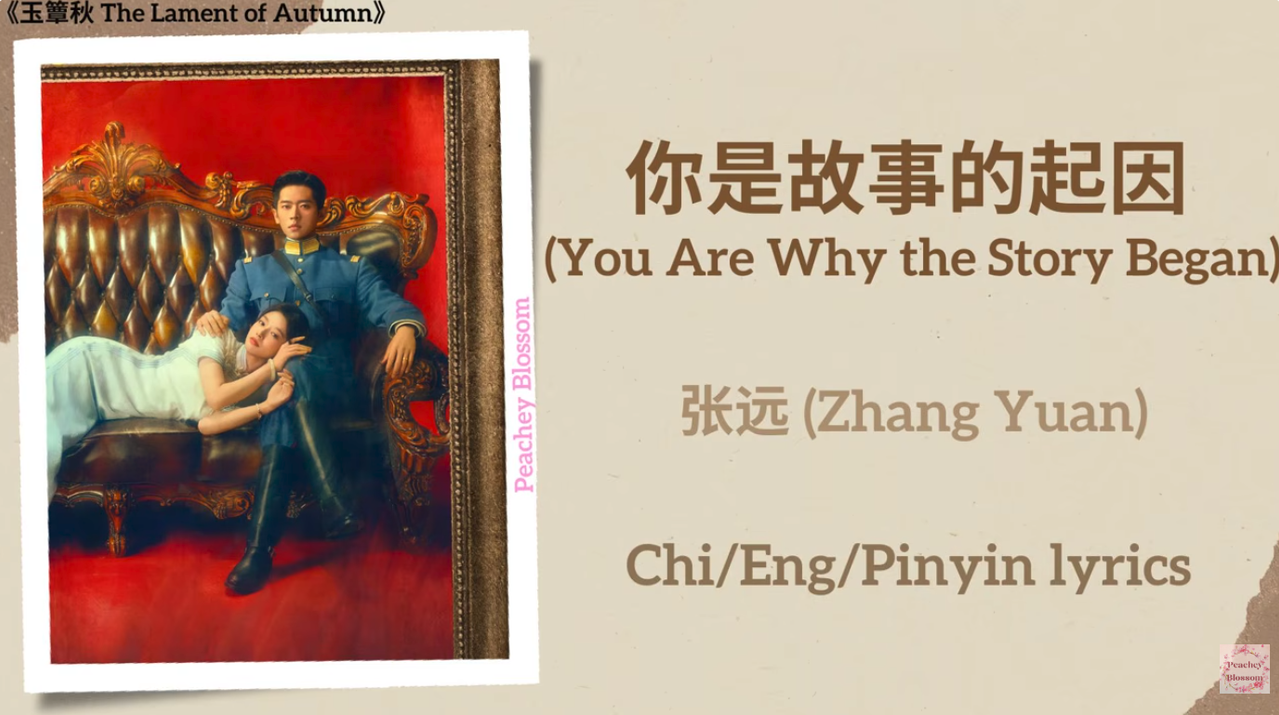
炽爱情深曲 (Blazing Love song) This the the song which accompanies the young marshals wet dream of bathing in a petal filled pool with his beloved before at long last consummating their marriage in bed (episode 30). NB. The given name of the singer has been mistaken on foreign sites, which often don't know the polyphonic characters like 栎 which can be read as lì (oak tree) or yuè (from a place name) which is the correct choice here, as confirmed by his Baidu Baike entry, his staff and himself. |
|
edited
8 - OST : "Heather Notes", a song with stories. |
 BETRAYALS, CONFUSIONS, MISLEADINGS
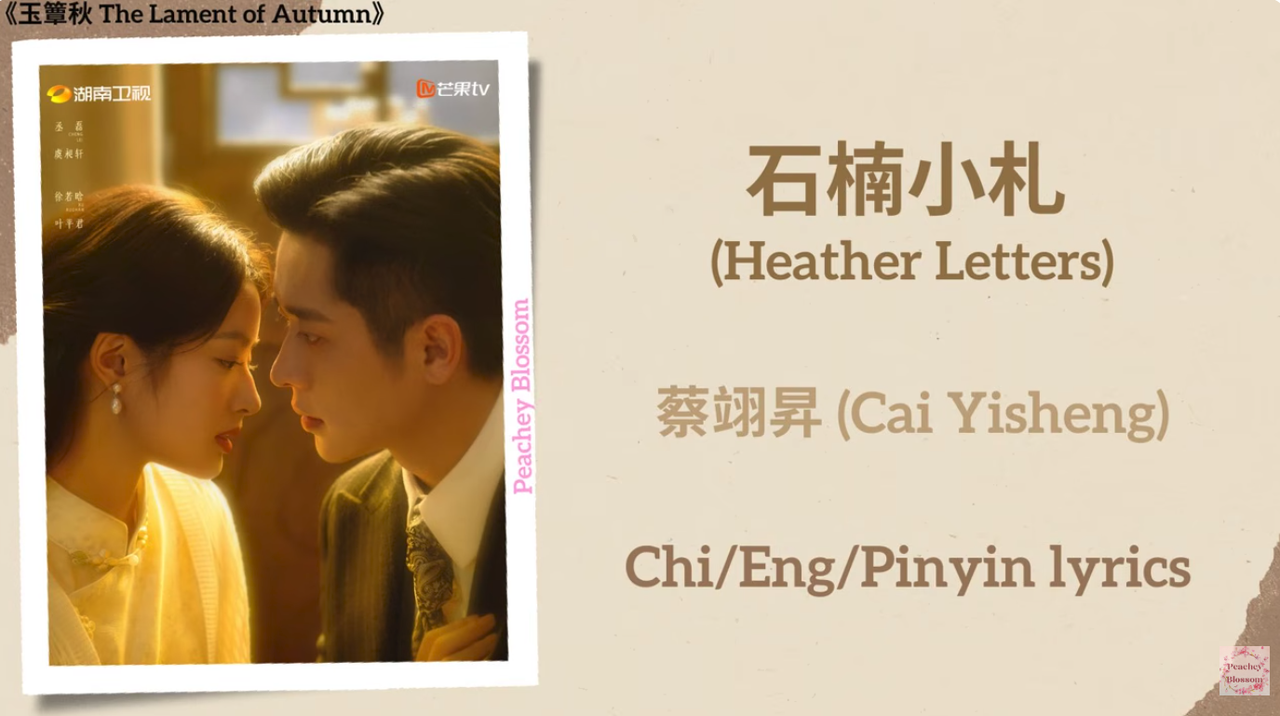
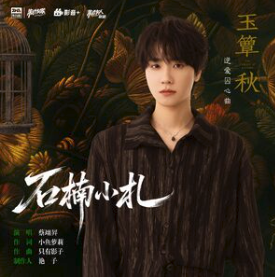
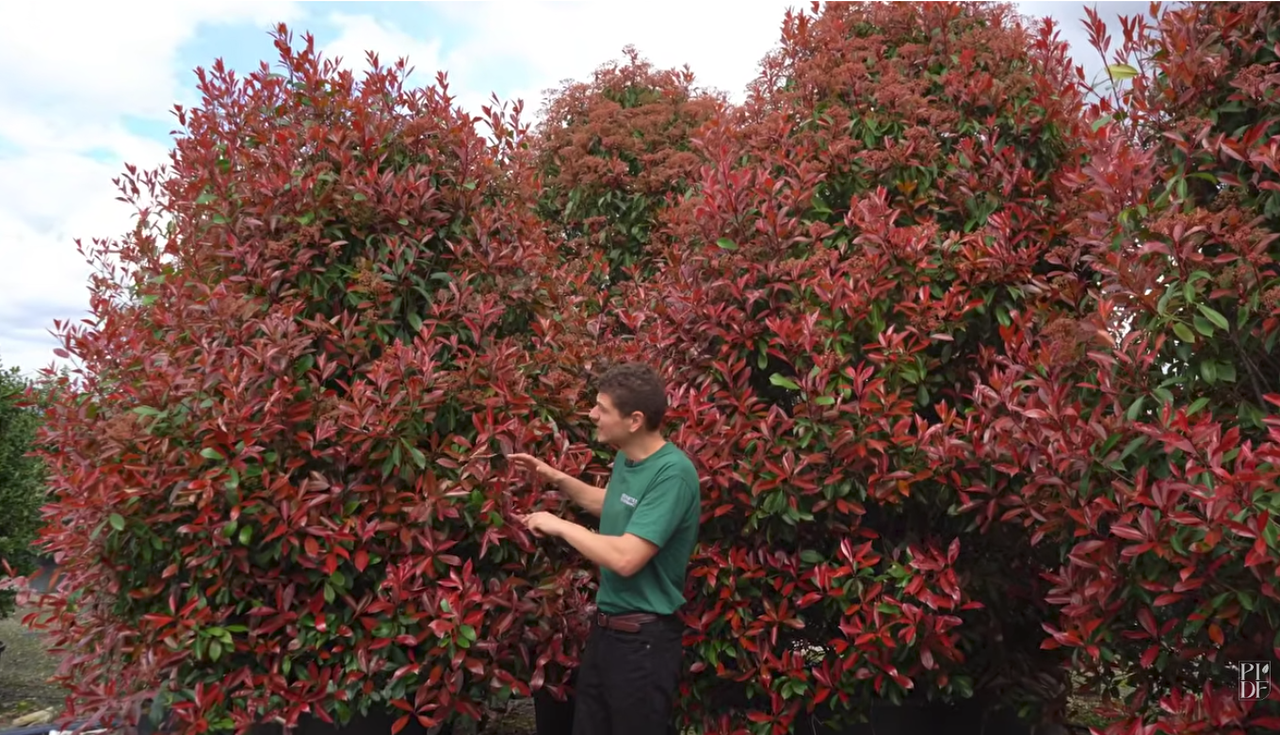
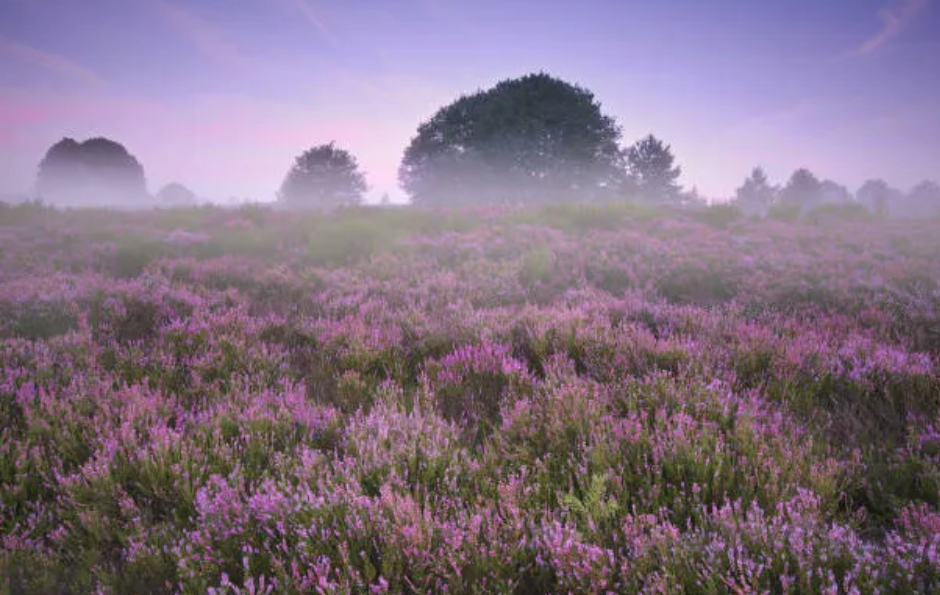
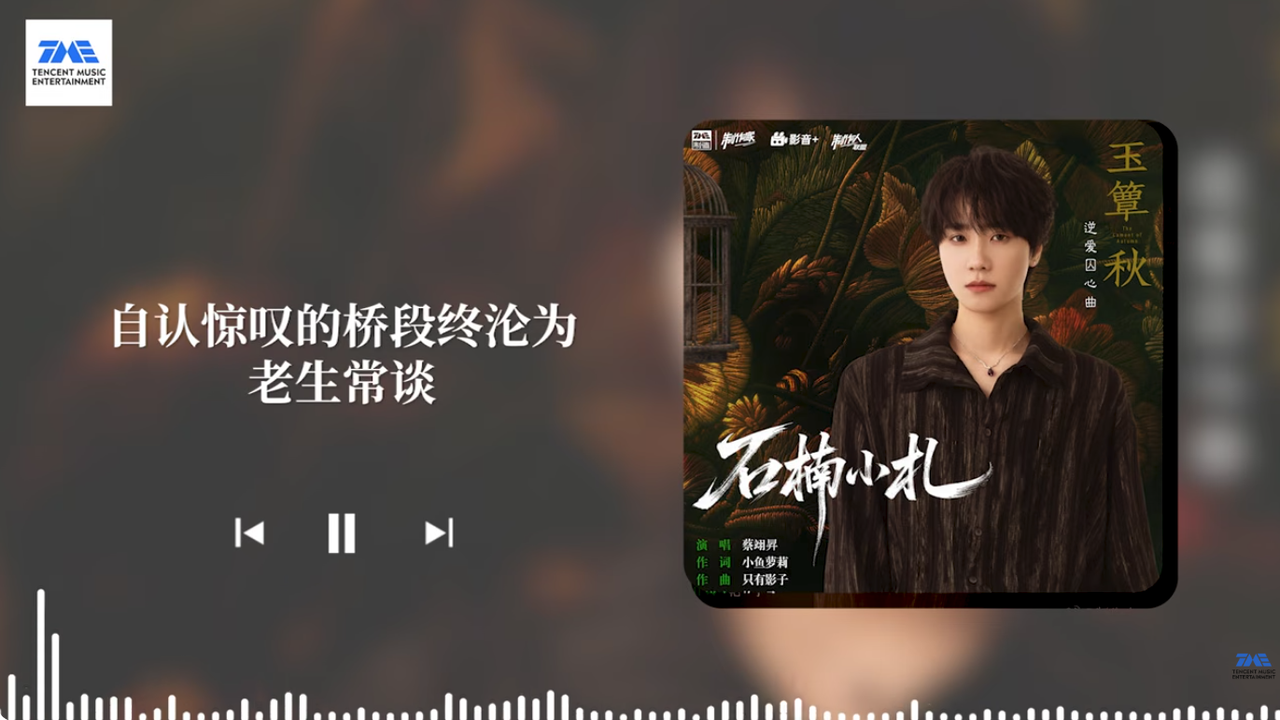
The song was at first intended as a homage by the lyricist to acclaimed novelist Eileen Chang , lamenting her doomed relationship to a collaborationist philanderer writer, Hú Lánchéng (a name which remains infamous in China to this day). The song was envisioned as a metaphor for a beautiful but fragile love, symbolizing solitude and betrayed love. There is a parallel between the stories, but the two lead characters in the drama, contrary to the song first models never actually betray each other. Their conflict comes from external pressures and mutual suspicion in a chaotic era, not infidelity. Therefore, the lyrics swap from 背叛 (betrayal) → 疑猜 (suspicion/doubt) from original version to the Chéng Lěi one, since the newer version with slightly different orchestration is intended as an illustration for a "pure love" story —The word "betrayal" would contradict the plot. THE CONFUSION - SHRUBS AND FLOWERS The story of the 《石楠小札》 song is interesting. It was both marketed as "Photinia notes" and "Heather Letters" in 2026, but actually, both the original lyricist, the singer songwriter 陈拾月 (Chén Shíyuè), composer, and original interpreter 贰婶 Er shěn (aka Cài Yìshēng 蔡翊昇) when they first released it on August 21, 2014 , indeed pointed out that if the Photinia is the botanically correct plant in the song, they intended the translation to be "Heather Notes", as they explicitly wanted their song to reflect their inspiration from Eileen Chang (1943 novella Love In a Fallen City) and Emily Brontë (classic English romantic novel Wuthering Heights).
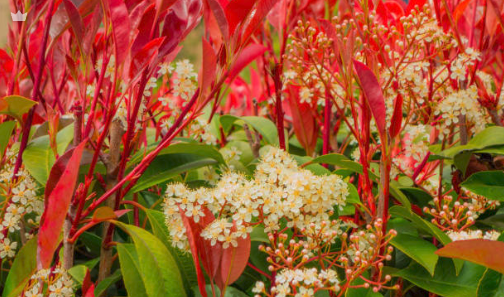
But, although the lyricist confirmed "heather" and the lyrics n English are explicit : 合上书中荒原每寸逆风的石楠 — "closing the book, every inch of wind-swept heather (read : photinia in Chinese!) on the wasteland" , there still was a confusion with the photinia, in particular about the small, brief-lived white flowers of that plant, although there's no mention of the color of the flowers in the lyrics, only the "permeating scent". In the context of the drama and the song, the white Photinia flower with its (slightly fishy!) smell symbolized the doomed love for Chinese listeners and readers. The flower in the song's metaphor is,for Chinese readers/ listeners the white photinia blossom 石楠 :
The confusion comes from Chinese nomenclature: the original character was 石南 (no wood radical), which was used for both plants for centuries. In 2004, botanist Wú Zhēngyìi 吴征镒 standardized the names — 石南 for Ericaceae (true heath/heather) and 石楠 (with wood radical) for Rosaceae (Photinia). So the English translation "Heather's Short Note" is a loose, somewhat misleading rendering of 石楠小札. Yet, the scent of the English heather in the Brontë novel, which is pink/purple on the moors, fits better the "subtle fragrance permeating (暗香弥漫)" in the lyrics . It is a deliberate double image — the 2004 botanical split (石南 = heather, 石楠 = photinia) is being poetically collapsed back together. The song is about a flower that is both at once: the Chinese urban tree with its brief white bloom and its notorious smell, and the moorland heather with its quiet, diffuse fragrance and its literary weight. The ambiguity is the point. But the intention of the author of the lyrics was clear from start in 2014 : "heather", as also translated at the time by "Iris L. & Joseph L." and referenced on the Baidu/Baike entry for the song. 🌿
Btw both original version and Chéng Lěi one are in the OST of this drama : the first male version of Cài Yìshēng 蔡翊昇 aka Er shěn as #1 (used as end-titles song) , and the second male version of Chéng Lěi as #7 in the original OST lineup, but now as #3 and #4 on the translated "full OST" compiled by Peachey Blossom. THE MISLEADING Nevertheless, the story doesn't end there as with a neat conclusion. The lyricist had claimed that her act of worship for Eileen Chang (who passed away in 1995) was inspired by a text "On Music" 《谈音乐》 in which the writer mentioned heather. But. That mention, spirited into articles and other entries, actually... did not exist! On the other hand Eileen Chang had written in 1963 a screenplay (which stayed on paper) about two families, an orphan, obsessive love, revenge, set in 1947 Beijing instead of the Yorkshire moors. Critics of her work call it "the Chinese Wuthering Heights." But the moors, the heather, the landscape — none of that was in her head. She got the plot, not the place. She did not obsess about moors, heather, photinia ; her flower world, as for most Shanghai women, was what she knew : roses (《红玫瑰与白玫瑰》), osmanthus, lotus, lily, crabapple. So here's how the story can be told on a cool Halloween night : Chang the literary spirit who wrote in 1963 a screenplay inspired from a novel she admitted she never read (she only watched a 1939 movie) didn't write that the moors were covered in 石楠, and she didn't write that the moors were covered in photinia, and she didn't write that the moors were covered in heather, because she didn't write about the moors at all in that essay. The whole "Chang mentioned the flower" premise is the load-bearing wall, and it's made of air. The ghost story writes itself: a dead woman (not nicknamed Heather or with such a pseudonym despite she had a dozen) is credited with a sentence she never wrote, about a flower that isn't in the text, in an essay about... why she doesn't like music ! |

edited
9 - BGM and STYLES OF PERIOD MUSIC IN THE OST |
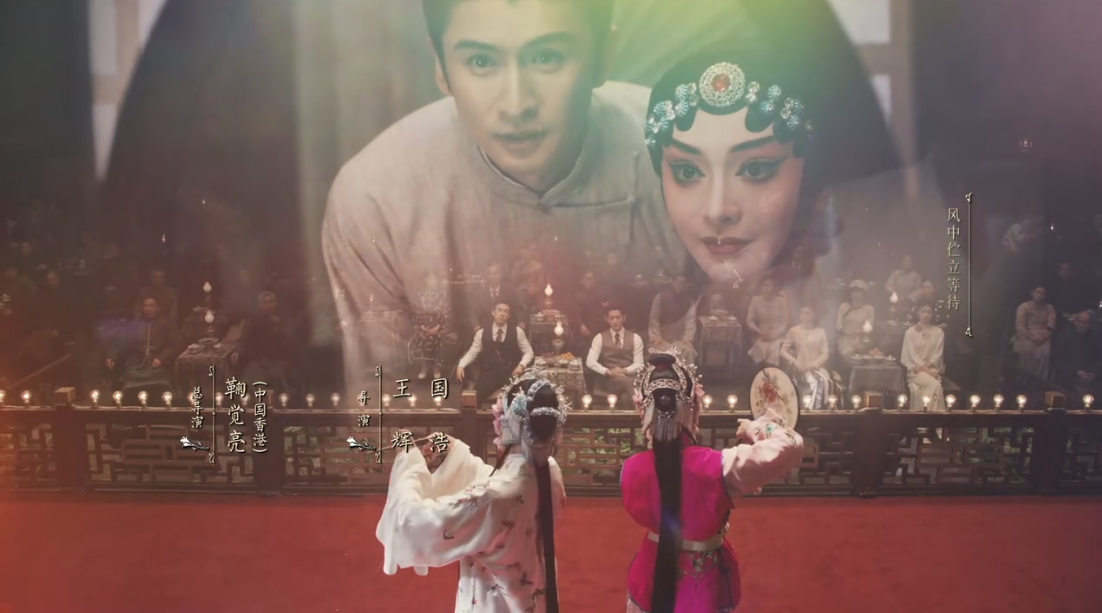
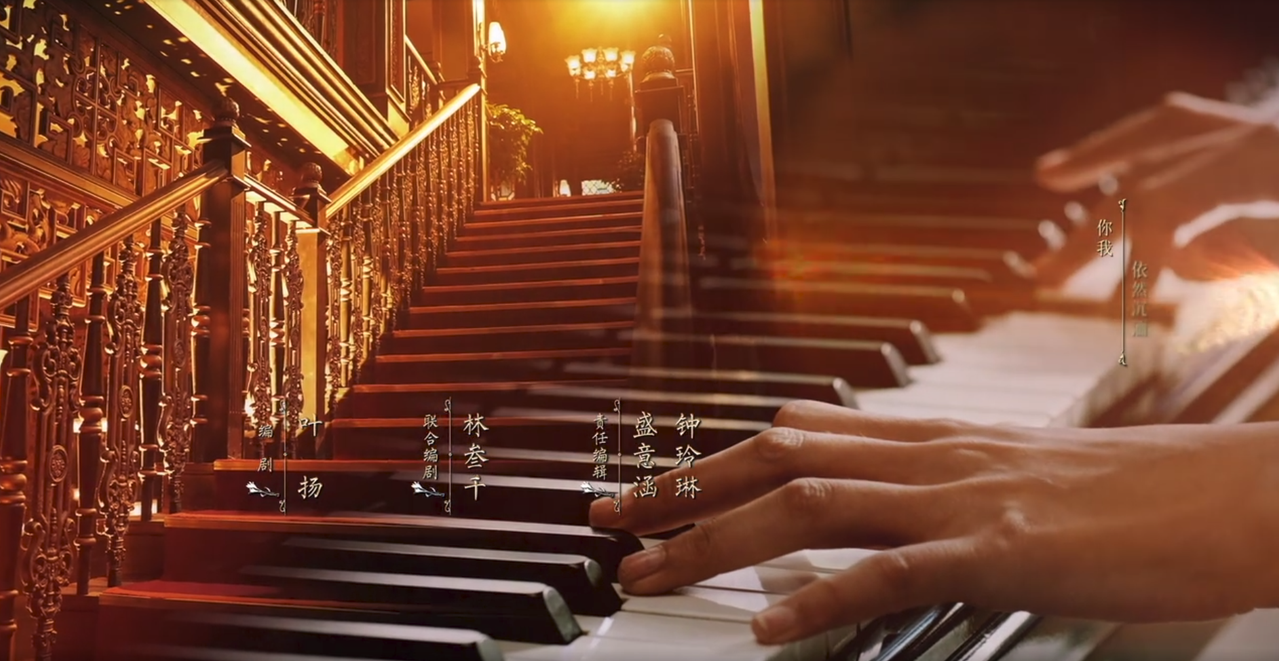 Above : screenshot from Title sequence with opening credits
BACKGROUND MUSIC: in this drama, it often conveyed the evolution of the feelings for the characters involved, such as the aggressive piano buildup to the scene when Píngjūn challenged Chǎngxuān to slap her. The music changed and transformed as she closed her eyes and he raised his hand ... to gently pinch her cheek while Liú Yǔníng's song took front auditory space. The music next suddenly changed to warning and disquieting notes played by string instruments while Xuétíng emerged on the stairs, showcasing the young Marshal's conflict about how to handle his annoying rival without Chǎngxuān revealing too early his full intentions. The instruments reverted to piano as the Marshal drove back to feed his canaries and scold them for not liking the cage, while string instruments joined in a tango tune when Táo Zǐyí came to his office to complain that Chǎngxuān did not take enough care of her ! (ep.9)
STYLES OF MUSIC HEARD IN THE DRAMA AND IN THE OST
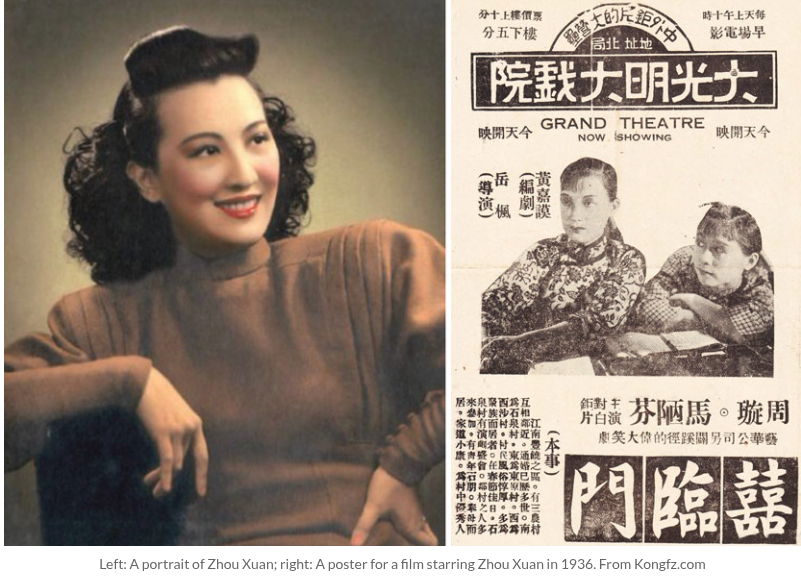
Th 1920s-1930s were a period when popular music took off in China, influenced by traditions as well as the new dance rhythms imported through movies and records heard over radios. This was the times of songbird actresses like Zhōu Xuán 周璇, (the first "Wandering Songstress" star) , Lǐ Xiānglán 李香蘭, and her colleagues, later grouped as the "seven great singing stars".
Those singers became icons, as opposed to the heavily painted traditional Chinese opera singers, often only remembered by the roles instead of their names. As the author of the article noted : "female stars had just gained their own legitimacy. Women were traditionally kept out of public view, and were largely excluded from stage performances or film productions, where they were usually portrayed by men, as per the traditional method of Chinese opera."(Article from 2020, with an audio snippet of a Zhōu Xuán song).
|
|
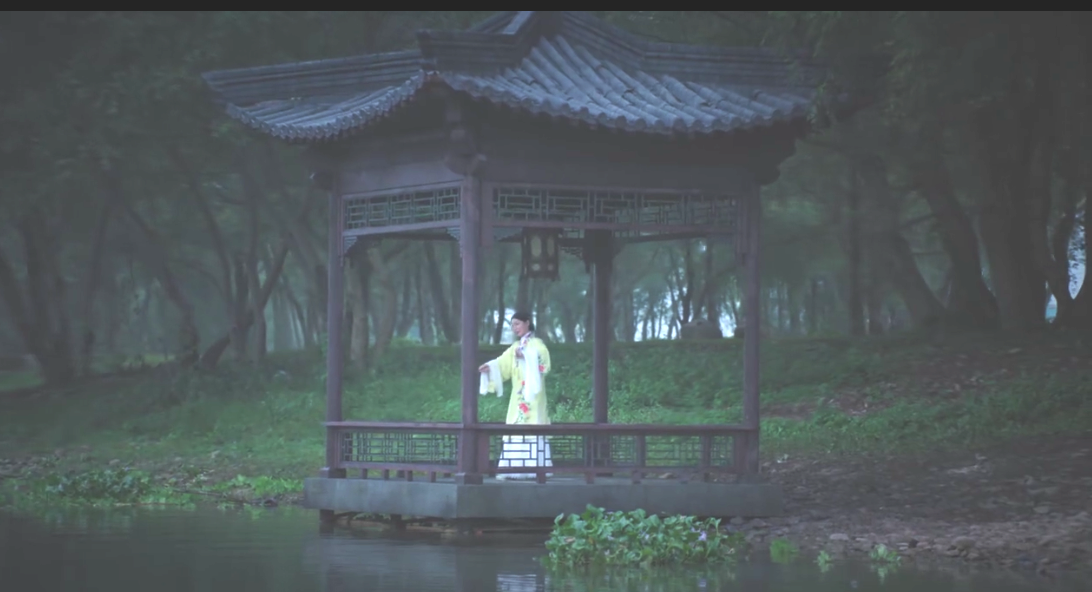
We can see this change in the "Autumn's Lament Song" when the young marshal goes with his men to be entertained by the Chinese Kūnqǔ Opera singer Lán Qīng, who is modern enough to be female, but illiterate and needs help to read and learn lyrics! Or when he took Píngjūn along to a secret meeting on the shores of West Lake, and they noticed from the boat a performer who was practicing a famous line from "The Peony Pavilion" (ep.4, while the "Why Not" OST tune blended in like a whisper before gaining full throat).
Or when he held back a tear while his soldier sang a line from an unremarkable folk song celebrating family and mothers' love on the battlefield when they were ambushed by the Qí Army (齐军) of rival warlord Móu Línsēn (牟林森),(ep.17)
On the other hand, foreign rhythms had already reached "high society" who mimicked foreigners in forgetting the ancient plaintive or shrill sounding instruments (the èrhú, the gǔqín, the pípá...) and now preferred imported pianos to complement sparkling wine and tobacco smoking with jazz tunes.
Tango was formally introduced to Shànghǎi society around 1913–1914 and quickly gained traction, becoming a significant cultural phenomenon throughout the 1920s and 1930s. In Shànghǎi, tango blended with local jazz and cabaret scenes, creating a unique hybrid entertainment culture during the city’s "Roaring" era. It was performed in major venues like the Astor House and became associated with modernity and sophistication among urban elites. The popularity was further amplified by Japanese tango musicians who migrated to Shànghǎi and Manchuria between 1920 and 1945, using the genre to promote emigration and political narratives, which increased the availability of tango music and scores.
This was shown for instance at the Xiāngxī fàndiàn (湘西饭店)hotel ballroom (ep.10), and when Táo Zǐyí sat down to play the piano with a guest (and next with Jiāng Xuétíng, in episode 31) : she started with a famous Hungarian dance from Brahms (the famous #5) and Xuétíng ended up changing the rhythm and tune to somber notes. The whole moment revealed how the haughty upper-class was totally disconnected from the other citizen, showing off but glued into a frame of "respectability and education" brought by foreign forced trade.
 These upper-class people (exposing their hypocrisy and lawlessness that would lead to the dog blood train wreck of the last episodes, already foreshadowed since the auction in first episode) would look down on the growing popularity of Shídàiqū, (時代曲, "songs of the era") genre in 1930s Shànghǎi, such as the famous Yè Shànghǎi 夜上海, which blends jazz and tango rhythms with traditional Chinese melody. That song became the single most representative song of old Shànghǎi, (gif excerpt above) but although the imaginary Nánhuái city (南怀城 )in the drama does use the same tram tracks as that of the Chinese metropolis, it did not use the famous Shídàiqū songs, even in the episodes which were clearly set in the 1930s.
edited

Details
- Title: The Lament of Autumn
- Type: Drama
- Format: Standard Series
- Country: China
- Episodes: 40
- Aired: Oct 12, 2026 - Nov 1, 2026
- Aired On: Monday, Tuesday, Wednesday, Thursday, Friday, Saturday, Sunday
- Original Network: Hunan TV, Mango TV
- Duration: 45 min.
- Genres: Historical, Romance, Melodrama
- Tags: Student Female Lead, Warlord Male Lead, Attempted Assassination, Attempted Murder, Wrongfully Accused, Chinese Republican Era, Poor Female Lead, Male Chases Female First, Marriage Of Convenience, Rich Man/Poor Woman
- Content Rating: 13+ - Teens 13 or older
Statistics
- Score: 7.9 (scored by 2,995 users)
- Ranked: #3078
- Popularity: #1513
- Watchers: 18,613
- Favorites: 0
Top Contributors


Popular Lists
Related lists from users
All Time Favorite Dramas
919 titles 2210 loves 40
Chinese Dramas That Aren't Out Yet
237 titles 805 loves 69


Which C-Drama Are We Watching Next?
753 titles 325 loves 37
Recently Watched By


