









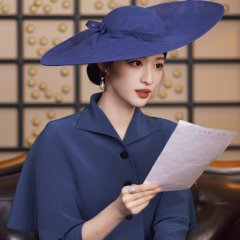


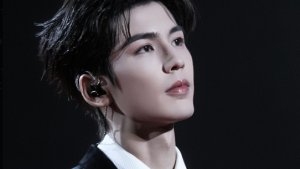
 Zhang Ling He hits 20+ brand endorsements, upcoming Chinese dramas gain reservations
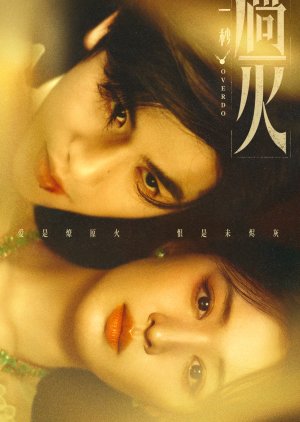
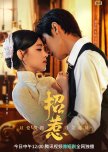
 Dans le Shanghai républicain, Murong Qing Yi, fils d'un seigneur de guerre échangé à la naissance, endure des années de tourments. Sa vie change lorsque Ren Su Su le sauve, mais une tragédie frappe sa famille à cause de cela. Alors que l'amour naît entre eux, Ren Su Su simule sa mort, laissant Murong Qing Yi le cœur brisé. Trois ans plus tard, elle revient en tant que future belle-sœur. L'amour, la haine, la trahison et les vieilles blessures refont surface. Alors que la guerre menace, les deux doivent défier le destin ensemble, mais l'amour peut-il survivre à la chute d'une nation ? (Source : Anglais = WeTV || Traduction = kisskh) ~~ Adapté du webroman "Ru Guo Zhe Yi Miao, Wo Mei Yu Jian Ni" (如果这一秒, 我没遇见你) de Fei Wo Si Cun (匪我思存). Modifier la traduction
- Français
- Русский
- Português (Brasil)
- English
- Titre original: 这一秒过火
- Aussi connu sous le nom de: Ru Guo Zhe Yi Miao, Wo Mei Yu Jian Ni , This Second Went Too Far , Zhe Yi Miao , Zhe Yi Miao Guo Huo , 如果这一秒, 我没遇见你 , 如果這一秒, 我沒遇見你 , 这一秒 , 這一秒 , 這一秒過火
- Réalisateur: Yi Jun
- Genres: Historique, Mystère, Romance
Où regarder Overdo
Distribution et équipes
-
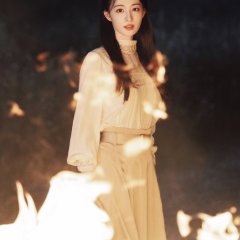
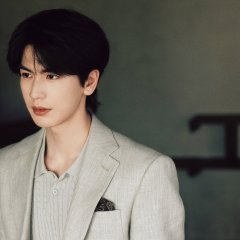
") Zhang Ling HeMurong Qing YiRôle principal
Zhang Ling HeMurong Qing YiRôle principal -
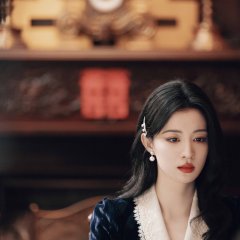
") Wang Chu RanRen Su Su / Fang Mu LanRôle principal
Wang Chu RanRen Su Su / Fang Mu LanRôle principal -
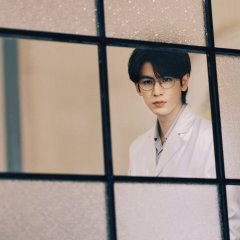
") Fu Xin BoMurong Qing YuRôle principal
Fu Xin BoMurong Qing YuRôle principal -
") Xu Zhen XuanLi Bo ZeRôle principal
Xu Zhen XuanLi Bo ZeRôle principal -
") He QiuYe Zhi HongRôle principal
He QiuYe Zhi HongRôle principal -
") Wang Si JieHai Tang QingRôle principal
Wang Si JieHai Tang QingRôle principal
Critiques

De bons ingrédients, mais le four a cramé.
Je suis extrêmement déçue. Je n'ai pas pour habitude de noter et commenter des drama que je n'ai pas fini.Le plus frustrant est que le drama avait tous les ingrédients pour réussir : un casting solide, un budget conséquent, un contexte républicain intéressant, une intrigue mêlant romance, espionnage et secrets familiaux, ainsi que des personnages dont le passé donnait envie d'en savoir plus.
Malheureusement, l'exécution est un échec à presque tous les niveaux. La réalisation est très faible, les effets spéciaux et les fonds verts cassent constamment l'immersion, la mise en scène est caricaturale, la musique est beaucoup trop appuyée et les scènes censées être intenses finissent souvent par paraître artificielles. Même le jeu d'acteurs, pourtant assuré par des acteurs que j'apprécie habituellement, m'a semblé desservi par la direction artistique.
Le scénario de base reste prometteur, notamment avec le réseau d'espionnes et le contexte politique, mais la forme prend constamment le dessus sur le fond. Au bout de cinq épisodes, je n'avais plus envie de découvrir la suite.
Bref pour qu'un drama me mette autant en colère c'est que le potentiel est gâché au dernier degré
Cet avis était-il utile?

Overdo: Too Much Pain, Too Little Payoff
Honestly, Overdo was not an enjoyable drama for me. Even though the drama had a cast with actors who have already shown strong performances in other projects, the story itself was full of flaws. The plot felt weak, overly negative, and emotionally exhausting. Many events happened in a way that felt forced rather than natural, and instead of creating meaningful tension, the drama often relied too much on sadness, stress, misunderstandings, and darkness.One of my biggest disappointments was the role given to Wang Churan. I personally think she shines much more in lively, clever, warm, and charming characters. In dramas like How Dare You, Are You the One, and Love Has Fireworks, her roles suited her much better. Those characters allowed her to show a fun, bright, energetic, witty, brave, loving, and kind side. She has a natural charm when she plays characters who are emotionally expressive, smart, playful, and full of life.
That is why Susu felt like such a poor fit for her. Susu was written as a dark, depressed, and emotionally heavy character who kept making wrong decisions. Instead of feeling deep or tragic in a meaningful way, her actions often became frustrating to watch. Her so-called love and care sometimes felt suffocating rather than touching, and her choices often caused pain for the person she loved. This made it very hard for me to connect with her character or support the romance.
Wang Churan is a talented actress, but this role did not highlight her strengths. In her better roles, she can be funny, smart, brave, sweet, and emotionally engaging. Here, however, the writing forced her into a gloomy and exhausting character who lacked the warmth and spark that usually make her so enjoyable to watch. It felt like the drama took away the qualities that make her stand out and replaced them with constant sadness and poor decisions.
I was also disappointed with the role given to Zhang Linghe. He has already shown in dramas like Pursuit of Jade and Story of Kunning Palace that he can handle strong, charismatic, and emotionally layered characters very well. In Pursuit of Jade, his performance had charm, intensity, and a natural heroic presence that suited him much better. He was able to show both strength and emotional depth, and his character felt far more engaging and believable.
In Story of Kuning Palace, he was even more impressive. His role had power, intelligence, emotional restraint, and a captivating kind of darkness. That character allowed him to show his strong screen presence and the kind of quiet intensity that makes his performances memorable. These roles fit him because they gave him complex, purposeful characters with emotional tension.
However, in Overdo, the character Murong Qingyi did not suit him at all. Compared to his previous roles, this character lacked impact, charm, and proper development. Instead of giving him a role that could show his strengths, the drama placed him in a poorly written character that felt flat and frustrating. Zhang Linghe is at his best when his characters have intelligence, emotional tension, dignity, and depth, but Murong Qingyi did not have enough of those qualities.
Another major issue was the writing. The story was full of plot holes and unnatural conflicts. The negative events felt excessive and sometimes unrealistic, as if the drama was trying too hard to be painful and dramatic. But darkness alone does not make a story deep. Without strong logic, believable character development, and emotional balance, it only becomes tiring.
The ending made everything worse. Instead of giving the story a satisfying or meaningful conclusion, it ended with a heavy feeling of sadness, frustration, and resentment. After watching so many stressful and painful events, the final impression was not emotional depth, but disappointment.
Overall, Overdo had potential because of its cast, but the weak writing, overly dark atmosphere, frustrating characters, and unnatural conflicts made it a disappointing watch for me. I would rather remember Wang Churan from her bright, clever, and lovable roles in How Dare You, Are You the One, and Love Has Fireworks, and Zhang Linghe from his much stronger performances in Pursuit of Jade and Story of Kunning Palace.
Rating: 4/10
Mostly for the actors, because the writing really did them no favors.
Cet avis était-il utile?