K-Drama


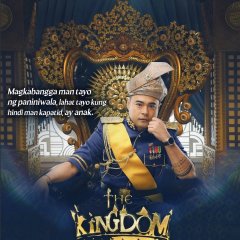
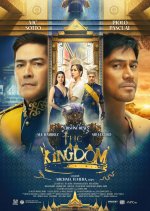
The story is set in the Kingdom of Kalayaan in the contemporary era. It is an alternate version of the Philippines where the island have never been colonized. It features the hierarchy of the Kaharian ng Kalayaan and Malayas. (Source: Wikipedia) Edit Translation
- English
- हिन्दी
- Português (Brasil)
- Español
- Native Title: The Kingdom
- Also Known As:
- Director: Michael Tuviera
- Genres: Action, Adventure, Drama
Where to Watch The Kingdom

Subscription (sub)
Cast & Credits
-
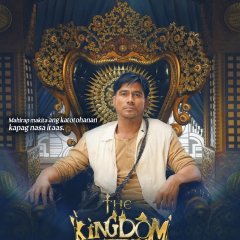
") Vic SottoMakisig NandulaMain Role
Vic SottoMakisig NandulaMain Role -
") Piolo PascualSulayman TagumMain Role
Piolo PascualSulayman TagumMain Role -
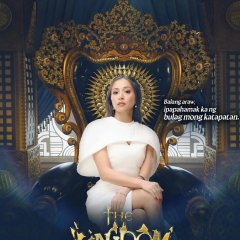
") Cristine ReyesMatimyas NandulaMain Role
Cristine ReyesMatimyas NandulaMain Role -
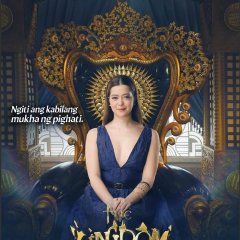
") Sue RamirezLualhati NandulaMain Role
Sue RamirezLualhati NandulaMain Role -
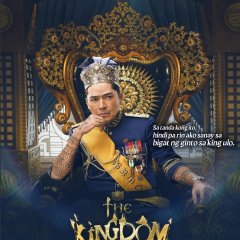
") Sid LuceroBagwis NandulaMain Role
Sid LuceroBagwis NandulaMain Role -
") Ruby RuizSilayan Hil-umSupport Role
Ruby RuizSilayan Hil-umSupport Role






Reviews

Malaya but Bound: The Illusion of Freedom in The Kingdom
I recently learned that The Kingdom, produced by MQuest Ventures in collaboration with APT Entertainment and MZet Television Productions, is set to continue as a series. That news prompted me to revisit the film on Netflix—and I realised I’d never actually written a proper review. So, here we are. Watching it again only reinforced how compelling its core idea is. The Kingdom is an alternate-history action drama set in a Philippines that was never colonised, instead emerging as a sovereign monarchy known as the Kingdom of Kalayaan. It’s a question many of us have quietly wondered about—what might the country look like had history taken a different turn—and the film leans fully into that speculative space.In this reimagined timeline, Lakan Makisig Nandula, a widowed king, faces a looming crisis of succession. With three very different children—Dayang Matimyas, Magat Bagwis, and Dayang Lualhati—he must decide who is worthy to inherit the throne, even as political alliances, forbidden love, and betrayal threaten to tear the kingdom apart. Into this fragile balance steps Sulo, a social outcast whose involvement with the royal family sets off a chain of events that will shape Kalayaan’s future. Directed by Michael “Mike” Tuviera, who won Best Director at the 50th MMFF, and written by Michelle Ngu-Nario (from a story she co-wrote with Tuviera), the film boasts an impressive ensemble: Vic Sotto as the weary and burdened Makisig; Piolo Pascual as the vengeful yet principled Sulo; Cristine Reyes as the ambitious and politically astute Matimyas; Sue Ramirez as the initially sheltered Lualhati; Sid Lucero as the volatile Bagwis; and Ruby Ruiz in a commanding role as the Punong Babaylan, the kingdom’s spiritual and moral anchor. Notable special appearances from Eula Valdez, Iza Calzado, and Cedrick Juan further enrich the world. (For context: Lakan means king, Dayang princess, and Magat prince.)
What stands out immediately is the care and conviction behind the film’s vision. Tuviera and Ngu-Nario’s world-building is confident, imaginative, and deeply considered. Even if the execution had faltered—which it doesn’t—I’d still admire the sheer ambition of reimagining the Philippines on its own terms. Thankfully, The Kingdom is far from a misfire. It’s a gripping political thriller, layered with compelling characters and ideas that resonate beyond its fictional setting. At its best, it functions as thoughtful speculative fiction: by imagining what the country could have been, it offers sharp commentary on what it is today.
Vic Sotto’s casting as Makisig initially raises eyebrows, given his long association with comedy, but his performance is one of the film’s quiet triumphs. This may be the least “smiling” role of his career, and it works. He portrays a man exhausted by power, constrained by ancestral laws and divine expectations, and slowly worn down by the weight of rule. Close-ups linger on the sorrow and fatigue in his eyes, revealing a king who doesn’t crave authority but feels trapped by it. It’s a refreshingly restrained performance—one that allows space for his co-stars and presents a ruler who is, quite unusually, tired of staying in power.
The film’s strength also lies in its texture. Visually, it blends the familiar with the imagined: drone shots of recognisable Metro Manila landmarks recontextualised by monarchist imagery; interiors that resemble ancestral homes; production details like floor patterns, textiles, and a redesigned flag that feel organic rather than gimmicky. The use of indigenous fabrics and designs is especially striking, suggesting a fashion and identity shaped entirely outside colonial influence. Language, too, is carefully considered—the dialogue leans into deeper, less Hispanised Tagalog, subtly reinforcing the film’s alternate history. Spirituality permeates governance, with babaylans guiding the royal family and ancient laws such as the Batas ng Tugmaan (Law of Retribution) shaping justice. These choices invite reflection on which cultural elements may have been diminished or lost through colonisation, making the film’s Gatpuno Antonio J. Villegas Cultural Award feel well earned.
Performance-wise, the ensemble largely delivers. Cristine Reyes gives Dayang Matimyas a commanding presence balanced by vulnerability, particularly in her fraught relationship with her father, and she easily owns the film’s most convincing fight scenes. Sue Ramirez brings nuance to Lualhati, even when the character’s naïveté grates—as it should. Sid Lucero is reliably intense as Bagwis, while Ruby Ruiz exudes authority and moral complexity as the head babaylan. Piolo Pascual, unsurprisingly, excels in the quieter moments as Sulo, conveying restrained rage and grief with precision, even if that intensity doesn’t always fully translate into the action beats. A standout sequence—the one-on-one confrontation between Makisig and Sulo under ancestral law—is genuinely gripping, elevated by the emotional stakes carried by the supporting cast. Iza Calzado, in a brief role, is particularly memorable, suggesting an entire unseen backstory through subtle gestures alone.
If the film falters, it’s mostly in pacing and clarity. Some action scenes could be cleaner, and a few narrative threads feel underdeveloped. Ironically, my biggest complaint is that I wanted more time in this world—the film could easily have been 20 minutes longer. Still, Jessie Lasaten’s score lends the story an epic sweep, and the overall experience remains engrossing. The Kingdom reminds us of cinema’s power to reimagine reality, to pose uncomfortable questions about governance, class, tribalism, and freedom. Kalayaan may mean “freedom,” and its people may be called Malaya, but the film makes it clear that corruption, inequality, and betrayal can flourish even without foreign rule. In the end, The Kingdom leaves us unsettled in the best way—asking whether freedom is simply the absence of colonisers, or something far more difficult to achieve. As a foundation for future stories, it’s rich with possibility, and as a film, it lands with a seriousness and ambition that lingers long after the credits roll.
Was this review helpful to you?

A World Where the Philippines Never Existed
«The Kingdom» (2024) is set in a world where the Republic of the Philippines was never conquered by Western imperialists. Instead, the archipelago stood united under a central monarchy—the "Kingdom of Kalayaan". ("Kalayaan" means freedom in Filipino.)It reimagines a version of history many Filipinos have long dreamed of—a world where our islands successfully repelled foreign invaders, preserving the values that once defined us: equality, equity, compassion, and respect for diversity and neurodiversity. A reality without anti-LGBT prejudice, without slavery, and where divorce is part of societal balance. Traditions and systems that Western colonisers erased or rewrote to fit their own narratives.
Now, this is a review, not a spoiler so let's get right into it.
Fight Scenes
Let's be honest: the fight scenes need serious improvement. Watching them felt like watching a slow-motion training reel rather than a life-or-death clash. Movements lacked weight, and the rhythm was too sluggish to sell the intensity of real combat.
The overuse of zoom-in shots did not help either (a common trick to hide the lack of impact by diverting attention to movement instead of connection). This was especially noticeable in the final battle sequence (no spoilers, of course).
That said, there is one exception. The second-to-the-last fight was slow for a reason and it worked. It carried a ceremonial tone, almost like a ritual dance between two warriors. That is where the pacing felt purposeful, not awkward.
If only the same level of attention was given throughout. A bit more budget and choreography refinement could have turned those duels into something memorable.
Spoken Language
Now, this part deserves applause. The dialogues were clean, properly structured, and beautifully delivered. The actors used the right words in the right places, avoiding the exaggerated diction often heard in teleserye (Philippine TV series).
As someone familiar with many of the older terms used, it was refreshing to hear those nearly forgotten words come alive again. It added authenticity, something rarely achieved in modern Filipino productions.
Names and Written Language
Here is where things start to so-so a bit. For a film set in a world untouched by Western colonisation, the names and scripts used felt oddly… foreign.
Why is there a character named Felipe? Why Dayang Lualhati instead of the native Dayang Luwalhati? And why is Latin script still the dominant writing system?
Think of how Korea, Japan, and China maintained their native scripts as cultural anchors. Even Thailand—which was also colonised—still uses its native alphabet proudly. If «The Kingdom» truly envisioned an uncolonised Philippines, it would make sense for Baybayin, or perhaps a modernised 21st-century version of it, to be the national script.
That detail alone could have elevated immersion tenfold. It would have grounded the Kingdom of Kalayaan as a civilisation distinctly its own, not just a Southeast Asian monarchy that "looks free" but still borrows its image from foreign cultures.
Even the palace design leaned more Thai or Indian than Filipino. Beautiful, yes, but a little detached from what the film's premise promised.
The Use of "Mabuhay"
This one caught me off-guard. In our real-world Philippines, "Mabuhay" carries deep national sentiment. It is a rallying word born from post-colonial pride, meant to uplift and celebrate Filipino identity.
But in a world where colonisation never happened, its symbolic weight would not have evolved in the same way. Hearing it used similarly in the film felt… out-of-place. It is a small detail, but a telling one. It hints at how even this alternate "Philippines" could not quite escape the shadow of our colonised history.
Verdict
Despite its flaws, «The Kingdom» remains an ambitious and heartfelt piece of alternate history. Its worldbuilding carries the kind of what-if many Filipinos quietly imagine: what if our history went differently? What if we never had to unlearn who we were?
For all its imperfections, the film delivers that spark of imagination.
8⭐ out of 10
It is not perfect, but it is meaningful, and that is what makes it worth watching.
Was this review helpful to you?
Recommendations
There have been no recommendations submitted. Be the first and add one.