Human and Thrilling
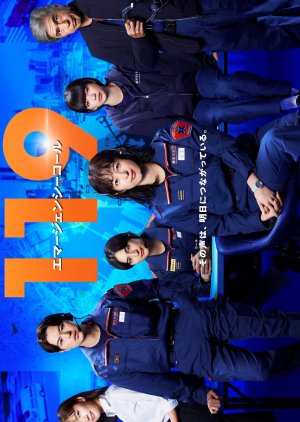
The story & concept are pretty intriguing. I loved this drama because it is a human procedural story. It doesn't focus on firefighters rushing into buildings or doctors in the ER; instead, it focuses on the Command Center, the invisible first responders who take the calls. And I must say the actors do a fantastic job with their respective characters.The story follows Yuki Kasuhara (Nana Seino), who makes a radical career change from a stable bank job to become an emergency dispatcher. Her motivation is deeply personal. As a child, she was trapped in a house fire and was kept calm and alive by the voice of a dispatcher on the other end of the line. She joins the Yokohama Fire Department’s Command Section 3 to be that voice for others.
The show thrives on the tiki-taka and friction between different philosophies of saving lives. Nana Seino has a "special skill": she never forgets a voice or sound once she hears it. However, she’s a bit of a maverick. She often gets in trouble for going to the actual scenes of the calls she took to check on the people, which is technically a "no-no" in her profession. On the other hand, we have Mutsuo Kaneshita (Koji Seto), her mentor and polar opposite. He’s a former firefighter who is incredibly strict and cynical, and he believes complacency is the biggest killer in their line of work. Their relationship starts off very rocky but turns into a deep, respectful partnership. And then there is Shinichi Dojima (Koichi Sato), the legendary dispatcher whom Nana admired in her past. He provides the gravitas and wisdom for the team when things get truly chaotic.
The reason this drama was a hit was that it chose authenticity over flashy TV tropes. For example, the production team worked with the Yokohama Fire Department to perfectly recreate a state-of-the-art command center. The set was so authentic. There are emotional stakes; the drama isn't just about the big or important calls (like the landslide in Episode 9 or the building explosion in the finale). It also addresses the silent calls, prank calls, and verbal abuse that dispatchers face daily.
Most importantly, it's the message the drama leaves us with: the chain of survival. As Nana realizes by the end, one person is incapable of saving lives on their own; it's about the connection between the caller, the dispatcher, and the rescue team. I highly recommend this drama, and I am excited for the follow-up (second season) 119 Emergency Call: 2026 Yokohama Blackout, which takes place a year later. It will be interesting to see how Nana handles a crisis in which she can't rely on the technology she mastered in the first season, and whether the chain of survival she built can withstand a total citywide collapse.
Was this review helpful to you?
This review may contain spoilers
Repetitive
This, to me, felt like a day in the life of a paramedic. Where you go and sit all day and watch what they do, to decide whether this is a career for you. I couldn't quite get the personalities of the emergency call workers. FL kind of had a savior complex. There were a lot of crank/wasteful calls that we had to listen to. A lot of yelling, which tends to happen in Japanese dramas, especially from bad actors. I think they think if they yell, their acting will be better.Was this review helpful to you?

Was this review helpful to you?