

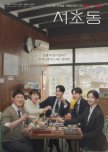
Notes from the Last Row

Juan Mayorga's 2001 play The Boy in the Last Row is a meta-theatrical drama that explores themes of voyeurism, class disparity, the ethics of storytelling, and the blurred lines between reality and fiction. It critiques modern education, middle-class complacency, and the voyeuristic nature of art and narrative. The play is structured in a series of interconnected scenes rather than traditional acts, alternating between the teacher's home, the classroom, and the imagined domestic life of a student's family. The main characters are:
Germán (Mun O): A jaded 55-year-old literature teacher, frustrated with his vocational high school students and obsessed with "proper" storytelling.
Juana (Hyeon Suk): Germán's wife, also around 55, who runs a struggling contemporary art gallery called "The Minotaur's Labyrinth." -----> (psychological counselor in this drama)
Claudio (Lee Gang): A silent, observant 17-year-old student who sits in the back row, channeling his isolation into increasingly invasive writing.
Rafa (Rafael Artola) [Se Yoon]: Claudio's 17-year-old classmate, from a middle-class family; affable but unremarkable.
Rafa's Father: A mid-level businessman in his 50s, basketball enthusiast, ambitious but insecure about his career. -----> (successful writer and Mun-o's college classmate in drama)
Ester: Rafa's mother, frustrated with her unfulfilled dreams (she abandoned law school for family); elegant but trapped in domesticity.
Supporting characters: Rafa's younger sister Marta (mentioned via toys and phone calls), the maid Eliana/Lula (Min-hui), and brief appearances by school staff and Claudio's absent parents.
____________________
Here is your full provided plot with the missing or incomplete details accurately filled in bold for clarity (additions focus on precise transitions, extra character reactions, literary critiques, gallery pressures, family tensions, and minor omitted beats from the play's flow):
Germán is sitting there in his classroom or wherever, reading through this huge pile of handwritten student essays with a red marker in his hand. He starts reading the first one and he actually laughs at first, but then it just enrages him. He slaps a big fat zero on it, tosses it onto the pile on the right, and grabs another one from the left pile. He reads one sentence, writes a massive zero, and moves it over. He's getting more and more pissed off when suddenly his wife Juana walks in.
Germán looks up and goes, "What? How did it go?"
Juana says, "You could have come with me."
Germán replies, "I haven’t gone to Mass since I was fourteen."
Juana tells him, "It wasn’t a Mass. It was a funeral."
Germán is like, "I didn’t think it mattered that much to you. He wasn’t a relative or a friend. Don’t tell me Bruno was a friend."
Juana sighs, "Just so I wouldn’t be alone. So I could talk to someone."
There's this heavy silence between them. Then Juana continues, "I met the twins. They’re exactly how Bruno described them. Should I change clothes and then we go to the movies, something funny?"
Germán tells her, "Don’t change, you look beautiful. But let me finish this. Take a look, this is what’s really funny."
He goes back to reading his students' papers. Juana starts flipping through the pile of graded ones on the right and she's muttering, "Zero. Three. Zero. Well, look at that - a five! Two. Zero…" She looks shocked and asks, "Are they really that bad?"
Germán, without even looking up from the paper he's reading, says, "Worse. Worst class of my life."
Juana points out, "You said that last year too. And the year before."
Germán writes a one on one paper, hands it to Juana, and grabs the next one. He's reading out loud in disbelief: “On Saturday I watched TV. On Sunday I was tired and did nothing.” Period. He gave them half an hour to write two sentences about forty-eight hours of a seventeen-year-old's life. Saturday: TV. Sunday: nothing. He writes a zero and hands it over. Then he picks up another and reads, “I don’t like Sundays. I do like Saturdays but this Saturday my dad didn’t let me go out and took away my phone.” He slams a huge zero on it.
He's ranting now: "I tried to explain the notion of 'point of view.' But talking to these people about point of view is like talking to a chimpanzee about quantum mechanics. I read them the opening of Moby-Dick, assuming they all know what I’m talking about, that they’ve seen the movie. I explain that the story is narrated by a sailor. I ask: 'And what if another character had told the story, for example Captain Ahab?' They stare at me in terror like I’ve asked them the riddle of the Sphinx."
He continues venting: "Fine, you’re going to write me an essay telling me what you did this weekend. You have half an hour.” And this is what they hand in. He’s like, what fatality led me to this job? Is there anything sadder than teaching literature in high school? I chose this profession thinking I’d live surrounded by great books. I’m only surrounded by horror. And the worst thing isn’t confronting day after day the most atrocious ignorance. The worst thing is imagining tomorrow. Those kids are the future. Who could know them and not sink into despair? The catastrophists predict an invasion of barbarians, and I say: they’re already here. The barbarians are already here, in our classrooms.
He picks up another sheet. Juana jumps in: "I didn’t know whether to give them my condolences. I was about to leave when one of them came up to me. I don’t know which one, I can’t tell them apart. She told me tomorrow they’re going to the gallery to 'talk about the future.' 'Talk about the future.' Are you listening to me?"
But Germán is completely absorbed in what he’s reading. Juana asks, "Is something wrong?"
Silence. Then Germán starts reading out loud from this essay: “Last weekend, by Claudio García. On Saturday I went to study at Rafael Artola’s house. ... To be continued.”
Silence. Juana asks, "Does it actually say 'To be continued'?"
Germán: "In parentheses."
He gives the essay a seven and takes another. Juana is shocked: "A seven?"
Germán defends it: "No spelling mistakes, and the vocabulary’s not bad. He’s no Miguel de Cervantes, but compared to the others… What grade would you give him?"
Juana says she’d take that essay straight to the principal. Germán is like, why? Because his classmate Rafa’s mother has blue eyes?
Juana wants to know who this kid is. Germán thinks he’s one of the ones who sits in the back row, but he’s not sure yet since it’s only the second week of class. Juana is pressing him: You give him a seven and just leave it at that? “To be continued.”
Germán offers to lower it to a six if that calms her down. He can’t give less than a six. Juana insists the kid is mocking him, mocking everything: you, his classmate Rafa, Rafa’s mother. She reads the line: “‘Claudio,’ I answered, holding her gaze.” She suggests making him read it aloud in class so Rafa might punch him. Or maybe this Rafa doesn’t even exist and it’s all fantasy.
Germán finds Rafa’s actual essay and reads it: “On Saturday morning I studied Math with my friend Claudio. ...” He gives it a five.
Juana is confused: A five? He sounds like a good kid. You give the other one a seven and this one a five. Germán reminds her it’s Language and Literature, not Ethics.
Later, Claudio is called in. "You wanted to see me?"
Germán tells him to sit down. He says it’s about that weekend essay and he’s concerned. Claudio thinks it’s about punctuation and semicolons. Germán says the punctuation is actually pretty good. Claudio mentions he’s better at sciences but wants to improve in Language this year.
Germán gets to the point: It’s the content. You talk about another student and his family. Someone might take it badly. Claudio asks if Germán takes it badly or if someone else read it. Germán hasn’t shown it yet but is thinking of giving it to the principal. Claudio says he didn’t write it for the principal... he wrote it for Germán.
Germán warns him about how Rafa would feel reading those lines about using him and the smell of a middle-class woman. What if he makes Claudio read it aloud? Claudio says he wrote it because Germán asked them to write about their weekend.
Germán tries to drop it. Then Claudio hands in the adjective exercise early. He did it in order, repeated "dark," and wasn’t sure about extra adjectives. Germán tells him he didn’t have to hand it in until Monday. Claudio leaves it anyway because he’s focusing on Math this weekend.
Later at home, Juana is packing up art pieces from the gallery. Germán helps her. She’s upset because the new owners called her work “art for sick people.” They’re giving her one month to make it viable or they close it. Germán mentions he talked to that boy. Juana wants details. Germán says the kid did the adjective exercise again, basically chapter two. “To be continued.”
Juana reads it: It starts with Claudio approaching Rafa again. He describes why he chose Rafa, because he’s normal, sees his parents holding hands, wonders about a normal family’s house. A dark woman opens the door. The mother is measuring walls with a tape, very concentrated. She kisses Rafa, mistakes Claudio’s name. There’s a photo of the Holy Family and a Chinese dragon. She offers snacks. The dark woman serves them. The mother floats like a ghost. “To be continued.”
Juana finds it repulsive. Germán is surprised she’s being moralistic, especially after her own edgy exhibitions. Juana wants him to talk to the principal, colleagues, and parents. She thinks the boy needs a psychiatrist and could be dangerous. Germán sees him as just an angry kid letting it out through writing.
The story keeps unfolding with more interactions. Germán gives Claudio books to read and critiques his writing, trying to guide him toward real literature - Chekhov, Dostoevsky, Cervantes. They discuss point of view, conflict, uncertainty. Claudio keeps delivering more chapters about infiltrating Rafa’s family, describing their banal middle-class life in detail while helping Rafa with Math.
Juana keeps reading the pages and getting more worried that it can’t end well. Germán is fascinated by Claudio’s talent but concerned. The narrative builds with basketball games, family dinners, business talks about China, renovations, and Claudio slowly getting closer to the mother Ester.
Claudio even jokes about stealing the Math exam so Rafa doesn’t fail and lose his access to the house. Germán is shocked. The writing gets more detailed, with Germán marking it up heavily for clichés and structure, pushing Claudio to improve. They debate titles like The Boy in the Back Row versus The Imaginary Numbers.
Juana gets frustrated with the slow pace and lack of real plot, while Germán sees potential in the kid. The gallery is under pressure with a “For Rent” sign already up.
So, back in Rafa’s house, Ester is still going on about the maid Eliana wearing her coat. She says, “Come on, Rafa, come on.” Rafa’s father is like, “I don’t know why you give it so much importance. You’d written it off as lost.” Ester insists, “It’s the principle of the thing, Rafa.” He tells her to talk to Eliana herself, but she wants him to do it. He says he’ll tell her after dinner.
Claudio writes that now the father can’t even enjoy dinner. He’s restless, goes into the kitchen to talk to Eliana, and when he comes back the meat is cold. At nine he turns on the TV for the news. Ester complains that the old TV looked better. The first image is French kids burning cars. Rafa’s father says, “Those kids have no future. All the doors have been shut on them. That’s how they express their anger against a system that excludes them.”
Claudio notes that Rafa is in Amnesty International, Ester is in Médecins Sans Frontières and some animal rights group her friend Concha got her into. After sports news, the father goes out to the terrace to smoke. Claudio follows him. He’s never seen the park from up there before. This summer he used to watch them eating dinner on the terrace from the park, and now he’s inside looking out. In the streetlights he sees the drunkard feeding ducks, the junkies, the Black people. Rafa’s father runs five kilometers every afternoon in that park, but now his eyes are looking all the way to China.
The father starts talking: “People are afraid of China. But China is our great opportunity. China…” Then a door slams and Ester comes out. She says, “But you saw it… Eliana. She left. With the suitcase.” The father is shocked. Ester says she left without saying goodbye, not even to Rafa. From the terrace, Claudio sees Eliana walking down the street with her suitcase. “To be continued.”
Germán reads this and asks, “All this about the coat, what does it add to the plot? If we take this scene out, what is lost?” He figures Claudio is trying to get closer to Rafa’s father. Claudio is surprised: “Me, getting close to that man?” Germán says this could create conflict for Rafa the son, who’s been a flat character so far. He tells Claudio he has a serious problem with this character.
Claudio thinks about it, turns toward Rafa, then starts writing new pages. In the new scene, they’re studying. Rafa is still upset: “It felt like being stripped naked. I’ve never felt so humiliated.” Claudio tries to focus him on math: “Concentrate on this and forget about that bastard. Seven x-squared plus sixteen y-squared equals one hundred and twelve…”
But Rafa keeps ranting about wanting to beat Germán up and burn his car. Claudio suggests he write an article for the school magazine La Antorcha instead. Germán is shocked when he reads this: “You encouraged him to write an article against me?” Juana asks if he’s going to publish it. Germán says it depends how it’s written, but everyone has the right to write in La Antorcha. Juana warns it could be problematic.
Claudio suggests titling the article “The Empty Blackboard.” Rafa likes it. Meanwhile, Claudio keeps sneaking around the house while “helping” Rafa. He goes through family photo albums, opens drawers in the father’s office, finds project folders about China, an X-ray of a spine, postcards from the sister Marta. He explores the marital bedroom, sees their self-help books, medicines like Lexatin, and tries on the father’s cologne.
Later, the parents come home. There’s tension about a parking ticket and the Chinese business deal falling through. The father spent a lot on a dinner with the client Juanito. Ester asks if they read too little. She also wants to call their daughter Marta for her birthday, but the father says she only calls Rafa.
Juana tells Germán that Ester isn’t doing well because of the Lexatin (an anxiety pill). Germán defends that lots of people take them. Claudio explains he’s now mostly interested in Ester’s secret. Germán says a scene is missing to show Claudio’s shift in feelings.
Claudio writes the terrace scene in daylight: Ester eating an apple, talking about her bad spine, surgery, how she can’t run or dance anymore. Claudio helps her when she has pain. He picks up the fallen apple, bites it, and gives it back to her. Germán criticizes it harshly for being too sentimental and symbolic - the apple, bare feet, yellow leaves. He compares it to bad art catalogue writing.
Then Germán talks to Rafa after class, trying to smooth things over awkwardly by lending him a book, Carta de Dublín, about a misunderstanding.
Juana shows Germán a new artist’s catalogue - a Chinese-American woman doing calligraphic work from a gender perspective. Germán is skeptical as usual. Claudio finishes the terrace scene and hands it in.
Later, Rafa’s article “The Empty Blackboard” comes out. Juana reads it and thinks Rafa has a point. Germán basically humiliated him publicly. Germán still defends his actions.
The story continues with more scenes: Claudio’s interior monologue during Philosophy class, more math help turning into overnight study sessions where Claudio sleeps over in the sister’s old room filled with broken Barbies. Rafa thanks him for being a real friend and talks about wanting to rebel like the French kids.
At night, while everyone sleeps, Claudio wanders the house like a ghost, covers Rafa, then goes to the parents’ room, strokes Ester’s feet. Juana is horrified when she reads this and tells Germán the boy needs to be stopped before he hurts himself. Germán tells Claudio he’s gone too far and to stop. Claudio says Germán started this by making them write the weekend essay, and now he can’t stop. Germán suggests writing about his own family instead, but Claudio wants to keep going with these characters.
Claudio keeps delivering pages anyway. More family drama: the father confesses he took the Chinese client to a club with women, which upsets Ester. She turns the TV up loud. Claudio sees his moment and slips Ester a poem: “Not even the rain dances so barefoot.” She cries. They kiss.
Juana hasn’t seen new pages for days and admits she secretly went to watch the family. Germán has to meet Rafa’s parents, who demand a public apology for humiliating their son with the blackboard incident.
Rafa confronts Claudio aggressively about seeing him with his father (Germán) through the window, threatens him, and says if anyone hurts his family, he’ll destroy them; that’s his philosophy.
Claudio tells Germán he’s quit everything. No more house, no more writing. He’s focusing on Math. Germán begs him to finish the story properly. Claudio gives him four dramatic ending options (elopement with Ester, murder, arson, etc.) and tells him to pick one and write it himself.
Germán starts rehearsing a public apology but struggles. Juana helps him. Meanwhile, in the family, the father admits he set fire to his boss Mariano’s car out of frustration. They talk about possibly losing everything but sticking together.
Then comes the ending Claudio actually writes: On the last day, he packs a suitcase, skips school, goes to Juana’s gallery “The Minotaur’s Labyrinth.” He talks to her, mocks the art, leaves the suitcase full of books at their house. Juana reads what he wrote. Germán finds the books returned to his library and the new pages.
Finally, Ester meets Claudio on the bench, returns the poem, gives him a maternal hug. Claudio cries. Germán arrives, they talk about the people in the windows, imagining lives in other houses. Germán returns the folder and tells Claudio the ending is bad and not to come near his house or wife again. Claudio admits he always wanted to see how Germán lives. Germán slaps him. Claudio says, “Now yes, master. It’s the ending.” And everything fades to black.


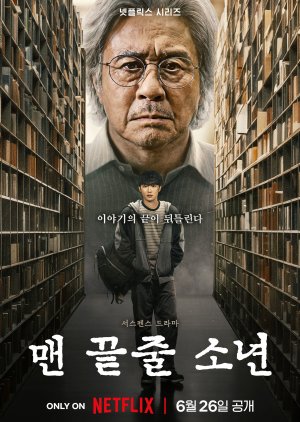
Details
- Title: Notes from the Last Row
- Type: Drama
- Format: Standard Series
- Country: South Korea
- Episodes: 6
- Aired: Jun 26, 2026
- Aired On: Friday
- Original Network: Netflix
- Duration: 1 hr. 3 min.
- Genres: Thriller, Mystery, Psychological, Drama
- Tags: Mentor-Mentee Relationship, Professor Male Lead, Adapted From A Play, Suspense, Mentee Male Lead, Jealous Friend, Disciple Male Lead, Student Male Lead, School Setting, Psychotherapist Female Lead
- Content Rating: 15+ - Teens 15 or older
Statistics
- Score: 8.0 (scored by 8,109 users)
- Ranked: #2817
- Popularity: #1386
- Watchers: 19,818
- Favorites: 0


Popular Lists
Related lists from users











Recently Watched By


