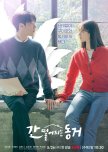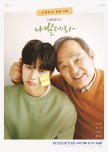





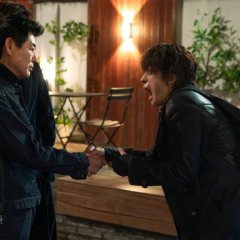
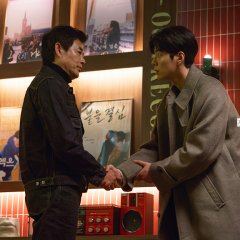
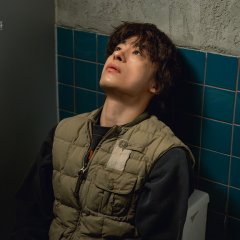


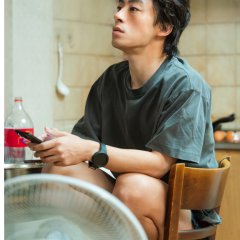

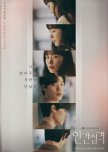
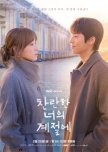


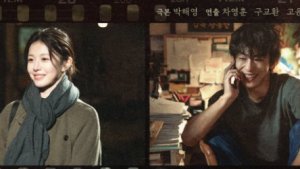
 'We Are All Trying Here' wraps up with heartfelt message and special poster
 Tras 20 años tratando de hacer su primer película, un aspirante a director toca fondo. Pero entonces conoce a una productora abrumada que le ayuda a redescubrir su valor. (Fuente: Netflix) Edit Translation
- Español
- Arabic
- Українська
- Русский
- Título original: 모두가 자신의 무가치함과 싸우고 있다
- También conocida como: Everyone Is Fighting Their Own Worthlessness , Modu Jasinui Mugachihamgwa Ssaugo Issda , Mojamussa , 모자무싸
- Guionista: Park Hae Young
- Director: Cha Young Hoon
- Géneros: Psicológico, Vida, Drama
Dónde ver Hacemos lo que podemos

Subscription (sub)
Reparto y créditos
-
") Gu Gyo Hwan Papel principal
Gu Gyo Hwan Papel principal -
") Go Yoon Jung Papel principal
Go Yoon Jung Papel principal -
") Oh Jung Se Papel principal
Oh Jung Se Papel principal -
") Kang Mal Geum Papel principal
Kang Mal Geum Papel principal -
") Park Hae Joon Papel principal
Park Hae Joon Papel principal -
") Bae Jong Ok Papel principal
Bae Jong Ok Papel principal
Reseñas

This review may contain spoilers
A Collection of Wounds, Not a Masterpiece
I completely understand why so many viewers connected with this drama. It is emotional, contemplative, and filled with wounded characters searching for meaning, recognition, and human connection.My problem is not with the emotions. My problem is with the structure.
The series constantly introduces new conflicts: abandonment, depression, alcoholism, failed careers, family resentment, infidelity, debt, lost children, artistic frustration, and industry politics. The result is a story that often feels less like a focused narrative and more like an accumulation of human misery.
Dong Man is the clearest example. After twelve episodes, he gains opportunities, support, recognition, an actor for his film, and even professional success. Yet he spends most of the series reacting rather than evolving. He suffers, wanders, shouts, and struggles, but rarely feels transformed by the journey. Meanwhile, Eun Ah receives the stronger arc. She makes decisions, confronts her past, changes her position in the story, and actively shapes her future.
The drama also introduces several ideas that never feel fully developed. Eun Ah's recurring nosebleeds are presented as an emotional symptom, yet the series never explains what they actually represent or how they function within its own world. The emotion-tracking watches are another example: an intriguing concept that is never explored beyond its symbolic value.
Many viewers describe this drama as profound, realistic, or even the best-written series of the year. I don't share that view. To me, it often confuses emotional intensity with depth. When every character is broken, frustrated, depressed, or emotionally wounded, the suffering eventually loses impact.
The finale reflects the show's biggest weakness. Most storylines are technically resolved, but few reach a truly satisfying emotional or dramatic climax. Several conclusions feel rushed, predictable, or underdeveloped.
In the end, I think this drama works better as a collection of emotions and damaged people than as a tightly structured story. I understand why others see a masterpiece. I simply never saw the same series they did.
¿Te ha parecido útil esta reseña?

Esta serie merece ser mas vista y con mas popularidad.
Primera vez en mi vida que veo un k-drama con este tipo de historias y la verdad ame y me encariñe con cada capitulo. esa sensación de que conectas con cada historia, del como cada pequeño detalle de esto nos haga entender situaciones que muchos nos pasan y la verdad simplemente la ame. ame cada momento que vi y amé cada parte del guion y como dice una parte… (Ojala pueda seguir viendote por el resto de mi vida, aunque nunca hagas algo grandioso contigo siempre es una comedia. Incluso si caminas directo al fuego es como comedia, historias oscuras, historias tristes, historias miserables, las tomas todas y las conviertes en comedia, podría verla siempre…) ✨¿Te ha parecido útil esta reseña?