Was this review helpful to you?

Was this review helpful to you?

Was this review helpful to you?

First let me talk about the plot. I know many people have issues with the body swap trope, but I loved it. It moved the romance along in a quick and organic way while adding humor to an otherwise sometimes slow plot. The swaps were silly and cute. I'll never forget how confused they both were or Joo Won's constant consternation about Ra Im's love for OSKA while trapped in his body. The times the plot was slow were fitting and beautiful though. The romance was built up slowly and naturally. I believed their love story fully. It was so refreshing to see JooWon be the one that head over heels for Ra Im. So often the girl pines after our male drama lead for the entire show until he grows an emotion and admits his love, but not Joo Won. Joo Won was smitten. Remembering it makes me happy. His silly antics and ridiculous posturing (the tracksuits and situps and distraction poem) were all so cute and endearing. Even the love triangle was less annoying than the usual fair. The plot, for all its twists and turns and random supernatural rules, was cute and straightforward. They love each other. It's that simple.
As for the characters what more can I say? Gil Ra Im was nothing short of amazing. She is a total badass but also very feminine and vulnerable. Perhaps my favorite thing about her is how focused she is on her career aspirations throughout the entire drama. She wants to achieve greatness in her field, to prove to Jong Soo that she is a stunt woman in her own right. And she succeeds. She is damn good at her job and everyone but her knew it all along. I also love how this is one of the major reasons Joo Won loves her. He is not intimidated by her in any way. He thinks shes fantastic despite her rough edges. Speaking of Joo Won I love how imperfect he is. He has it all yet he's bored and broken inside. While Ra Im definitely helps him through it all, in the end he takes care of his own issues. He overcomes his pain and trauma on his own and it shows his personal growth through his love for Ra Im. They both grow so much throughout the show and it's all due to their love for each other. Of course no discussion of Secret Garden is complete without OSKA. What a ridiculous human being. I love him. Any time the plot got slow or the romance seemed about to fizzle out Woo Yeong came to the rescue. The way he antagonized Joo Won and craved Ra Im's approval was so great. The fact that the body swap had the funniest effects on him also helped with his personality development; he went from hopeless washed up pop star to supportive family member and hardworking idol. His love interest and tortured history with her also added to his character as he became more than just a gag character. He was perhaps the most well rounded character on the show.
The side characters were also a great addition to the show as a whole. Yoo In Na is my favorite actress in dramaland. Knowing her better now than I did when I watched Secret Garden I really appreciate how great this role was for her career. She was her usual sweet self and i loved how excentric Ah Young was. Phillip Lee was also a huge win on this show. He was broody and moody and his hair was pantene commercial worthy. His character acted as the third of our love triangle but not even that could ruin him for me. As one final note let's talk about Tae Seon. First of all good on Secret Garden for making a gay character that was more than his sexuality (or for making a gay character at all. Korea is notoriously bad with gay anything so this was huge). Second can we talk about how cute he was?? Lee Jong Suk really played this character so well. I cried for Tae Seon but was also so happy for him.
Overall Secret Garden was a great experience for me. The show is the reason I continued to watch kdramas and I'm so happy I saw it. It is one of only two shows that has a perfect 10 rating from me and it deserves every bit of it. The show is a kdrama classic and it truly deserves the title.
Was this review helpful to you?

Was this review helpful to you?

what I loved about this drama is the solid cast and their performances, the lead actress is a surprising lead, you don't expect to see such a female character in K Drama, not appealing nor eye candy nor weak and vulnerable.
Hyun Bin as a lead was a brilliant choice, he played the character so well that I loved all of his scenes, every other cast member was outstanding as well.
the story is fun, heartwarming and heartbreaking as well, it remained attractive and had some unexpected twists, especially in terms of "Progression" of relationship between the lead couple and Hyun Bin and his cousin, the singer.
I don't care for the lead actress Ha Ji Won that much but she won me over.
Was this review helpful to you?

This review may contain spoilers
Secret Garden is my not so secret pleasure
I watched this when it was released back in 2011 and even though ten freaking years have passed, I still go back to rewatch this gem whenever I miss Hyun Bin (and Ha Ji Won).This drama is a must watch because:
- Hyun Bin - enough said. He’s a dream!
- Ha Ji Won - she’s a great female lead / actress.
- the sizzling chemistry that feels so good and feels so real
- swoony Hyun Bin - in the drama, he is so cute and handsome and funny - love!
- the story is fantastical and yet believable
- the supporting cast is great
- the music is so well composed and lovely to listen to
- rewatchable and one of the best ‘classic’ k dramas out there
The part that I didn’t like:
- male lead’s mother is crazy
This drama is wonderful! I love it. I love the leads! I love Hyun Bin!
Was this review helpful to you?

This review may contain spoilers
Sail to me Sail to me, let me enfold you
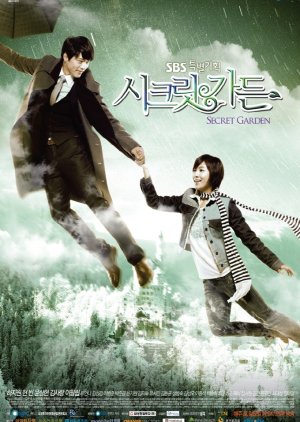
The accidental and magical encounter between two totally opposite worlds: on the one hand, Kim Joo Won (Hyun Bin, immense), the arrogant young heir to a wealthy business empire, accustomed to viewing reality through the lens of privilege, control and efficiency, deeply scarred by a trauma suffered during his youth. On the other, Gil Ra Im (Ha Ji Won, wonderful and iconic), a stuntwoman, an invisible worker in the entertainment industry, accustomed to putting her body at the service of cinematic illusion without receiving the recognition she deserves.Around them is a colorful microcosm that sums up Korean showbiz, made up of eccentric idols such as singer Oska (Yoon Sang Hyun, extraordinary and hilarious), stars in crisis – including personal crises – looking for a creative comeback, his ex, Yoon Seul (Kim Sa Rang, beautiful and perfect), a young heiress, music businesswoman and aspiring filmmaker, and the whole underworld of show business made up of artists seeking their fortune and an academy of stuntmen who risk their precarious lives every day in the name of cinema.
Between past traumas, crossing stories, despotic mothers, role reversals (and body swaps!), a magical contemporary fairy tale set in dreamlike scenarios, accompanied by a fabulous soundtrack, where fate and destiny inevitably intertwine, marking the lives of all the protagonists forever.
An extraordinary “social” melodrama capable of using fantasy as a magnifying glass for “reality”, Secret Garden stylishly transcends the limits of romantic fantasy, decoding the genre and cinematic language through a complex narrative structure, literary references (Andersen and Carroll, above all) and witty dialogue, deep and poetic, and unconventional choices that constantly revitalize a multi-layered story, suggesting that nothing is truly random and drawing the viewer into a whirlwind that ties the characters' destinies together, far beyond what appears on the surface.
Beyond the (beautiful) love story, Secret Garden immediately raises questions about themes such as the power of money, the concrete violence of social differences, and a moral dimension that is never pacifying or consoling, but rather raw, direct and unpleasant. But the drama also speaks to us of dedication to work, friendship and sacrifice, physical labour, and everyday life marked by the precariousness of an independence built more out of necessity than choice. It is not only a narrative device, but also a moral and social one, capable of undermining identities, roles and hierarchies, forcing the characters to look at the world – and themselves – from a radically different perspective.
A collision, an unlikely, jarring encounter/clash between two worlds that are inevitably destined not to understand each other: that of Kim Joo Won, made up of power, high status and a normative language where everything has a price, every relationship a balance of power (think of the dates planned for arranged marriages); the incredible urban complex where Joo Won and Oska live, with its modern, clean lines, might be reminiscent of Philip Johnson's Glass House or Mies van der Rohe's Farnsworth House because of their minimalist elegance, but, just like the houses of these architects, they are places that reflect a kind of detachment from the outside world. Places where Gil Ra Im “literally” gets lost.
And then there is Gil Ra Im's world, which does not deal with abstract principles but is concrete, linked to the body, work, effort, reactive and not programmatic; being a stuntwoman means replacing others, taking risks without receiving recognition, remaining invisible behind the spectacular performances of others (like the entire part involving the star Park Chae Rin). Joo Won can afford to theorise, Ra Im can’t.
One of the best aspects of the drama is the behind-the-scenes into the world of show business. It is not just a celebration of the seventh art; it is a tribute to the “craft”, to the artistic and practical work carried out by the “invisible” people. 'Hidden' work, often without romance, capable of showing its harsh side; of Gil Ra Im who falls, gets hurt and resists, unlike the “protected” body of Kim Joo Won.
Secret Garden uses dialogue not only to generate empathy, but also to create friction; Kim Joo Won often makes controversial statements openly and without filters, without hypocrisy; He does so with disarming lucidity; he is a privileged individual who explicitly states the unwritten rules of the system, using money as a criterion of value and love as a luxury, going so far as to define poverty, at least initially, as an individual fault or failure. The point is that he is often right from the system's point of view, and this is precisely what makes him disturbing, at least initially. Each of his “pills of quick philosophy” is actually an act of social positioning: he is not just talking to Gil Ra Im, but from a class position that he takes for granted as natural, inevitable, almost biological. It is one of the foundations of melodrama, as a space for class conflict. Secret Garden works on a classic principle: character is revealed through language, a truly sharp tool of unmasking that inevitably leads the viewer to take a stand.
It is in this context that Secret Garden introduces the element of fantasy, not as an escape from reality, but as a tool for questioning. The famous trick of the “exchange” is the key point. The fantastical ploy does not destroy the moral realism of the series. On the contrary, it allows ethical continuity to be re-established. Only by inhabiting the other's body does the male protagonist understand fatigue, pain and humiliation. The fantastical becomes a tool of human truth. Melodrama replaces “social conflict” with an “embodied” experience, in which understanding the other passes through the body that “works” ... The fantastical does not “deny” realism, it “translates” it onto the moral plane. In this unstable balance, “Secret Garden” reveals the profound workings of contemporary melodrama: not erasing reality, but “taming” it. Not a critique of the world, but the illusion that changing one's point of view – or body – is enough to make it right. This is the focus. The heart of the drama.
In this twist, even the “fairytale” element of Andersen's “The Little Mermaid” becomes a meta-narrative key; a metaphor for sacrifice, pain, unrequited love, but also for transformation and personal growth. The fairy tale is not just a love story, but a reflection on sacrifice and the idea of belonging to two worlds that never completely meet. The Little Mermaid gives everything for love, but does not get what she wants.
Although the drama does not simply follow the same trajectory as the fable, the dramatic “accident” marks a crucial moment of transformation; the concept of sacrifice is brought into play at more complex levels. The metaphor of invisible sacrifice, which runs through Ra Im's life as a stuntwoman, but also Kim Joo Won as a desperate lover, becomes even more tangible, forcing the characters to confront a situation that ends up being beyond their (im)possibility of control.
It is not just a plot twist, but a further, powerful narrative engine that drives the protagonists of the story towards a deeper understanding of themselves and others. At this point, the lines between fairy-tale imagination and the reality of their existence become blurred, and the series reaches a new emotional and symbolic dimension. A story that also expresses a genealogical and moral dimension; it is not just a story of love and class relations, but also of inheritance, of what is passed on – or denied – from one generation to the next. Mother and father are not secondary figures: they are active, almost allegorical principles.
Joo Won's mother is one of the most radical characters in the drama precisely because she does not change. And this, in a melodrama, is very rare. Park Joon Geum's extraordinary performance, intentionally over the top – almost Disney-esque – is a deliberate choice: she is an iconic villain, not psychological, she does not need to be explained, she embodies a principle. She is the ruling class that does not apologise. In her opposition to Gil Ra Im, she does not lie, she does not hide, she does not pretend to be polite, she openly says what often remains implicit: love is not enough when it challenges wealth, name and the continuity of privilege. Hers is a motherhood that is not emotional but dynastic. To morally “disinherit” Joo Won means punishing him not for who he loves, but for breaking the chain of social obedience. Power may lose a sentimental battle, but it never symbolically abdicates.
If Joo Won's mother is the power that preserves, Gil Ra Im's father is the sacrifice that transforms. He is not just any father; he is a saviour, a public servant, a worker ready to sacrifice himself to protect others: What he does for Kim Joo Won ends up being Gil Ra Im's “condemnation”. He creates a moral debt that runs throughout the series. The trauma of the lift, of enclosed spaces, is not simply a phobia, it is the “physical” sign of one life saved at the cost of another. A spirit-guide, an “invisible” director who “arranges” the exchange of bodies/souls; It is not an abstract deity, a random magic; it is a father's desire to redress an original injustice (and we know at what price); but destiny, as mentioned above, is often already mapped out and cannot always be rewritten... it is not always fair, but it is consistent. Here too, there are two extraordinarily antithetical figures: Joo Won's mother inherits, preserves, excludes, representing the world as it is. Gil Ra Im's father gives, sacrifices himself, tries to restore balance, even morally; he represents the world as it should be.
Oska and Yoon Seul, two extraordinarily intertwined characters; he, a Hallyu star, a “mature” idol, not only in terms of age, but also in terms of structure: rich, famous, but deeply insecure; he must fight to remain relevant, but at the same time, he experiences the entertainment industry as a cage. He is on his seventh album, i.e. at a stage where talent is no longer a promise but a “responsibility”. He does not have to prove he can sing: He has to prove he still has something to say. His creative block does not stem from a lack of inspiration, but from an excess of awareness. He knows how the market works, he knows what is expected of him, and that is precisely why every song risk sounding like a replica, or worse, plagiarism. The characterization of Han Tae Son, played by the young and charismatic Lee Jong Suk, is emblematically perfect. He is a rising talent, still “pure”, uncorrupted by the entertainment industry, capable of “reading” Oska's life and career, literally opening his eyes and mind.
Yoon Seul is “beautiful and rich”, but she never exploits these qualities for narrative gain. She does not ask for protection or a trivial social status, nor does she use love as a strategy. Her aspiration to find the right path in the entertainment world is not a whim: it is a choice of positioning within the cultural industry. She wants to stay behind the appearance, the image, not inside it; it is a rejection of the role assigned to her by her social position; she was Oska's “muse”, but she overturns the clichés of Korean dramas; a truly modern, independent figure, who nevertheless does not disdain clever tricks to win back her true love.
The perfect balance between the various narrative aspects, combined with the superb cast, is truly the key to the success of the series. The mixture of genuine emotion and pure entertainment, the inclusion of surreal situations linked to the “exchange”, enrich the drama with comedy and emotional tension, creating a unique multidimensional atmosphere. The two lead actors not only carry the love story forward, but with the swap, their bodies become the ideal playground for exploring emotions and relationships that go beyond appearances. The comical interactions become a vehicle for showing their vulnerabilities, but also a way to complicate the dynamics of their relationship with each other and with the other players.
The interplay between the characters, both in the beautiful interlude in Jeju (where literally anything happens) and during the stay at the golf course residence, allows for a series of unexpected situations to develop, exploring intimacy, jealousy and mutual understanding in new ways. But it also leads to more painful discoveries and moments of rupture in interpersonal relationships, such as in the rapport between Ra Im and her boss Jong Soo (Lee Phillip, excellent). The exchange becomes a tool for contemporary introspection, but also for cruelly selfish “emotional manipulation”.
A melodrama that does not sugarcoat reality, but makes it bearable only after showing it for what it is... The conclusion of ‘Secret Garden’, on the surface of the narrative, may appear reassuring: it is an ending that follows the rules of melodrama, offering the viewer a form of emotional pacification. But to stop there would be to misunderstand the deeper meaning of the story.
The real ending of ‘Secret Garden’ is not projected forward, but rather looks back. It is contained in a silent and devastating flashback, which retroactively reconstructs the fate of the central characters: the young Kim Joo Won, wounded and still in shock, goes to the funeral chamber of the firefighter who saved his life; there, in a gesture of absolute innocence, he lies down next to the young Gil Ra Im, devastated by the pain of losing her father.
In that image, stripped of rhetoric and devoid of words, ‘Secret Garden’ declares its fundamental premise: The love between Joo Won and Ra Im does not arise from a contingent choice, but from a shared original wound. Before becoming lovers, they were two young people united by death; before desire, there was sacrifice; before feelings, there was a moral debt inscribed in their bodies and lives. In the drama, destiny is not a romantic design, but a line drawn by pain, which the characters can only cross, not erase.
This is why fantasy, body swapping, trials and separations never seem arbitrary: they are stages in a journey already inscribed in the past. The final happiness does not erase the trauma, but integrates it; it does not resolve it, but makes it bearable. Secret Garden does not promise that love will save everything, but suggests that it can at least give meaning to what has been lost.
10/10
Was this review helpful to you?

Hyun Bin who played Kim Joo Won was convincing even when the actions called for the switch of a female. It was hard for me to watch BUT I laughed! But the best part about this young actor is that he can also sing besides acting. I researched him as I do other artists. My favorite song by Hyun Bin is "That Man". The song that played throughout the Kdrama was his singing except for once or twice it was a female singing it.
The storyline is cute and I laugh so hard for the first 3 episodes I thank the writers and the Secret Garden team which consists of the cast and everyone else. Watching this for the 5th time, I now get it. I'm happy with the ending. I don't know where my mind was when viewing this... but I get it.
Was this review helpful to you?
This show is brilliantly written...it is soo funny even b4 the body swap and after it just becomes awesome. Atleast the first 15 episodes u will die of laughter and lust.
The leads share incredible chemistry...like ufffff...:) and the bromance is amazing too.
For me, there are a few slow moments like the long walks and the day dreaming which is why I deducted half a star....but that is nothing...first watch u won't even notice it!
I love the writer of the show Kim Eun so much bcoz she has written some really gr8 stuff....and here too the characters are soo fun to watch..
Yumm show but after it ends be prepared for a hangover...Hyun Bin one...
Was this review helpful to you?

This review may contain spoilers
The ultimate classic
Ah, where to begin..? I have a lot of feelings about Secret Garden. Rewatching after ten years, however, made some of these feelings conflicting.First of all, the cast is amazing! Hyun Bin, Ha Ji Won, Kim Sa Rang, Yoon Sang Hyun, and even a guest appearance of my love, Lee Joon Hyuk. I adore every single one of them!
Their portrayal of the characters is real and relatable. While I love Kim Joo Won and Gil Ra Im, it is Oska and Yoon Seul who own my heart. Both times rewatching, they were my favorite plot line. Sure, the main plot is hilarious and dramatic and sweet, but it is Oska and Seul that I can relate to. Especially Yoon Seul, I adore her. When I first watched Secret Garden ten years ago, I was going through a tough time and her character actually helped me through it. And Oska is honestly the heart of the show.
The main pairing however, during my latest rewatch, made me a bit uncomfortable at times. I know it is normal in Kdramas for the men to drag the women around by their arms and yell at them for weird reasons, but somehow, Joo Won is on a whole other level. Especially the various scenes of him pushing her on some bed (and the one where he tries to break into her hotel room) had me shift uncomfortably in my seat. (Also, that really long forced kiss that she keeps hitting him during.) I guess the fact that Ra Im could throw Joo Won on his back and break his arm within seconds if she really wanted to, was somewhat consoling, but that doesn't mean I was a fan of those scenes.
The plot has some amazing climaxes and plot twists but it also has parts (entire episodes) where it really drags. I think the first switching should've happened sooner. Otherwise, some people (my sister) could already loose interest before it happens. Furthermore, the conversations between Joo Won and Ra Im and with Joo Won's mother felt quite repetitive after a while. In episode 17, the writers really redeemed themselves with a great creative plot twist but then I think they should've gone all the way with it or at least dragged it out. Instead, they introduce YET ANOTHER dramatic development and continue the same conversations with the mother. ugh
Despite these plot weaknesses and a basic lack of 'no-means-no', Secret Garden knows how to touch you in those moments when the plot is at a high. There are a lot of really emotional scenes that always touch me deeply and make me cry like a baby. Also, despite their flaws, you continue to root for the characters and suffer along every step with them. The emotions, of course, are intensified by the amazingly beautiful OST.
Secret Garden is definitely not the most eloquent drama out there, but you will scream laughing and cry your eyes out, plus it is the ultimate classic, brought to life by an outstanding cast. So, yes, you should definitely watch it.
Was this review helpful to you?

Trust me u will not regret it if u watch it.
This drama has everything the chemistry between main leads, and i think that is why this drama was soo populer.
acting\ Ha ji won was great as always, and Hyun bin was great too, everyone in this drama, was wonderfull, that is what make this drama great.
music\ This drama had the best OST, the best.
Rewatch\ I think i rewatch it every 3 months.
Was this review helpful to you?