1
1This review may contain spoilers
When Oranges Bloom Before They Fall
When Oranges Fall is a beautifully shot coming-of-age series that does an excellent job of capturing the innocence, excitement, and uncertainty of young love. While the story contains plenty of familiar clichés, it never feels repetitive or overused. Instead, it takes those familiar tropes and makes them feel like its own, creating a heartfelt story that feels both comforting and refreshing.One of the things I appreciated most was the amount of detail that went into recreating the 1990s. From the fashion to the manga the characters read, the household appliances, and even Yu-Gi-Oh! cards, every little detail helped immerse you in that period. Rather than simply using nostalgia as decoration, the series embraces it in a way that makes you feel like you’ve been transported back in time. If you grew up during that era, you’ll probably catch plenty of little Easter eggs that bring back fond memories.
Another aspect that really stood out to me was how the series develops relationships through simple glances and quiet moments instead of relying solely on dialogue. The lingering stares between the characters say more than words ever could, allowing you to slowly watch feelings develop and genuine connections form. It’s subtle, but incredibly effective.
The series embraces its comedic side when Krittin and Khanin begin school. With them constantly being assigned as partners in each subject feels almost as though fate, or the universe itself, is determined to bring them together, despite their attempts to avoid one another. The show subtly hints that the avoidance is largely one sided, while the other simply goes along with the situation to conceal their true feelings, creating a charming layer of dramatic irony.
The chemistry between the entire cast is another highlight. Nearly every interaction carries an underlying emotional purpose, whether it’s playful teasing, hidden curiosity, or emotions the characters themselves have yet to recognize. The contrast between Krittin and Khanin’s personalities makes their relationship especially compelling. Krittin is outgoing, expressive, and confidently unapologetic about who he is, never allowing the opinions of others to dictate how he lives. (He never seems afraid of how others might judge him, and I really admired that about his character). It is because of this he doesn’t realize the depth of what has been developing. Khanin, by comparison, is quieter and more reserved.
The pacing is another one of the show’s strongest qualities. The series gives every member of the friend group, Achi, Augar, and August, a meaningful role without making them feel like background characters or fillers. Each of them has their own story, their own struggles, and their own growth, yet all of their journeys tie back into the main narrative seamlessly. I especially loved the group’s dynamic because, although they’re all close friends, each of them has a unique personality that brings something different to the group. They feel like genuine friends rather than characters who only exist to support the main leads.
Another aspect the series handles exceptionally well is its portrayal of subtle emotions like curiosity, attraction, jealousy, and self-discovery. Rather than making these feelings immediately obvious, the characters experience them long before they fully understand what they’re feeling themselves. This understated approach makes their emotional growth feel remarkably realistic.
August’s storyline was probably one of the funniest parts of the series for me. After missing his opportunity and taking too long to act, he keeps witnessing more and more moments between Krittin and Khanin, almost as if the universe is intentionally teasing him. It was hilarious, but it also added another layer to the story by showing how timing can change everything.
The series also captures the awkwardness and uncertainty that comes with taking the first step toward a relationship. Every confession feels unique because each couple approaches love from a different perspective, with different fears, motivations, and expectations while still trying to understand their emotions. Instead of presenting romance as something simple or perfect, the show acknowledges that love often involves confusion, vulnerability, and learning as you go.
Another thing I really appreciate and consistently admire about Thai dramas is how well they balance comedy and emotion, and When Oranges Fall is no exception. The show can be incredibly goofy and funny one moment, but when the story calls for it, it isn’t afraid to become serious and emotionally grounded. Those tonal shifts never feel jarring because they’re handled naturally, making the characters and situations feel much more realistic instead of one-dimensional.
The series deserves a round of applause for how supportive the friend group was throughout the series. They were always there for one another, but they also weren’t afraid to call each other out when someone was making a mistake. That balance of support and honesty made their friendships feel authentic and added another layer of warmth to the story.
Episode 11 was easily one of the standout episodes of the series, perfectly capturing the uncertainty that comes with growing up and approaching adulthood. It explores the fears, pressures, and expectations placed on young people as they begin thinking about their futures and the paths they’re expected to take. Whether it’s choosing a school, planning for a career, or trying to live up to the expectations of those around them, the episode portrays these struggles in a way that feels both relatable and authentic.
The episode also emphasizes the importance of communication in a relationship. As the group of friends approach their final years of school, they begin facing the reality that their futures may take them in different directions. Distance, attending different schools, and the uncertainty of what lies ahead naturally create misunderstandings and emotional strain. Rather than forcing an easy resolution, the series allows them the time and space to reflect on everything that happened. Being apart helps them understand each other’s perspectives, making their reconciliation feel earned, heartfelt, and incredibly satisfying.
By the finale, the series brings nearly every character’s journey to a meaningful conclusion. Each storyline is wrapped up with care, giving both the main cast and the supporting characters satisfying endings that reflect how much they have grown throughout the series.
Overall, When Oranges Fall is a wonderfully executed coming-of-age drama that captures the beauty of first love, friendship, self-discovery and growth. Through its nostalgic setting, lovable characters, heartfelt relationships, beautiful cinematography, and its memorable soundtrack, it creates an emotional journey that feels sincere from beginning to end. While the story may borrow familiar tropes, it tells them with enough charm, heart, and authenticity that they never lose their impact.
Was this review helpful to you?

The Oranges Grew & Fell Flat!
Simply put, this is a series that is hard to dislike. It is sweet, genteel, a wonderfully relatable coming-of-age as well as coming-out saga. And frankly one of the few series that I literally ‘binged-watched’. Once one begins to watch this story, it is simply hard to let go of it, as it is so hypnotically entertaining and enticing. And its biggest asset is the protagonists who were all mostly around the age of the characters, which gave the personas a certain gravitas of vulnerability, depth, and realism that they otherwise would not have. Where this series fell, and frankly miserably, was the ending. It was awful, awkward, and artificial. Plus, completely unrealistic and incomplete. This series was certainly cute, enjoyable, fabulously entertaining, but not realistic and thus came across as feckless. It might have made us ‘feel good’ but is that really all these characters were supposed to do? It seemed to me that each had an indubitable story to tell and it was way deeper than to simply making me feel good.Was this review helpful to you?

This review may contain spoilers
A series about teenagers, fluff, and platonic bonds in the ripening days of youth.
It is a lighthearted show that is going to stay with me for a long time. It has its oranges—those bright, small, yet important concepts that I have energetically enjoyed.Ko Neung is such a playful leader. At first, it was easy to judge him as a bully—the one in the team who controls everything and has a say in everything. However, as the story proceeds, you see that he is just a young teen who thinks he is the leader and can say anything. He has a low-key leader mindset, yet in his actions, he is neither superiorly smart nor athletic. Unlike his friends—Augar, who is exceptionally active on the playground; Achi, who is a sweetheart and loves, or rather is disciplined, to study; and Ko Song, who is smart and has a goal to achieve—Ko Neung simply stands back and enjoys the present. You see that he does not particularly care for anything except oranges and his bored, chill, carefree childhood. That says a lot about him.
August is the same, but as they grow, his interest in comics grows with him, inspiring him to pursue the arts, which was endearing.
Should I call this a summer series? It has such a vast aesthetic of warm breezes and the basking energy of the sun. Though people said it is similar to Bad Buddy (likely due to the neighbors, enemies-to-friends trope, and the phone concept), I just do not see it. Each has its own distinct disparities, and calling them similar left me with an exclamation.
The era of no phones and a sprouting youth feels so soft and nostalgic. I do not think I will get enough of this series anytime soon. All of the relationships and friendships were woven in a very platonic way. The fact that they have all been friends for ages—growing up fighting, bickering, and supporting one another before becoming lovers—is so adorable.
I loved KenPaul from the Boys in Love series, and I was so happy they are getting so much appreciation. I was, and still am, a little skeptical about August and Tle; nonetheless, their young age covered it for me.
There is a very fine transition in Ko Neung’s character development. Even after he and Ko Song confessed and started dating, his character did not entirely shift to being mature and smart. He is still the same Ko Neung we met in the first episode—goofy, playful, and thinking he is the leader. Even during arguments (like when he and Ko Song fight after Ko Song gets his university seat), he does not show instant progression; he is still that same childish teenager. It was so reassuring how the script kept his character consistent and relatable. It portrayed the beauty of how young minds dislike the change they experience in their coming-of-age journey. It showed how teenagers crave a mindless, soft summer.
The fear and anxiety of choosing what you want to become and who you are becoming is palpable. It captures the heaviness of realizing that this day won't come tomorrow, and that your friends have their own lives. They cannot always choose you or choose to stay; sometimes they have to go. I think this series brought back that familiarity—the late afternoons spent worrying about nothing but what to play the next day, and the soft, blue evenings spent walking mindlessly through pleasant sights. These are days that can only be remembered, but never visited again.
I had a slight fear with Ko Neung as the exams neared and he had to choose a field. I wanted to pause the story and let it end right there. With him, I wanted no change—just summer and the childhood joy of savoring oranges. However, life is life and it has its own legs.
Watching Ko Neung get stuck choosing a field, feeling completely disinterested in whatever majors they presented, hit me in the gut. There is one scene where he explains how all fields feel boring, and he is asked whether the fields are boring or if he just has no interest in them. That moment highlighted the core concept of the high school theme for me. I have never felt more relatable to a character than Ko Neung—capturing that exact feeling of being unable to choose and unable to belong anywhere. I am grateful for such key themes to be represented in such a blissful way—one that can be revisited and felt again and again.
This series made me fall in love with the themes of childhood friendships, the importance of holding onto those bonds, and growing alongside them. Every ship is adorable and a favourite. I am totally in love with this series.
"The most beautiful thing about teenage love is finding someone who makes you feel lighter, happier, and a little more like yourself.”
Was this review helpful to you?
Young and in Love
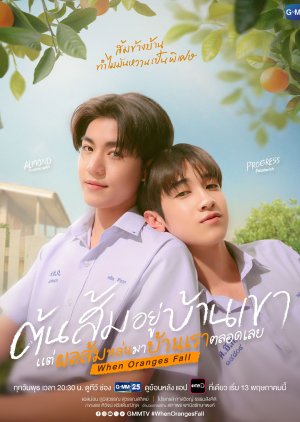
It really is refreshing to see Almond and Progress under GMMTV—they do deserve to be in a bigger project. Their chemistry feels natural, and they slip into the roles of young lovers with ease. What I liked most was how the series didn’t just stop at romance—it also touched on the growing pains, small victories, and the messy triumphs of youth, which made it relatable. That said, I did find myself wishing for more daring storytelling. Some arcs became predictable, and a few episodes dragged, which dulled the excitement. Still, the performances carried the show, and I never felt disconnected from the characters. Overall, I’d call it a solid 3.5‑star watch—enjoyable especially if you’re in it for the charm of Almond and Progress.Was this review helpful to you?

Heartwarming
Heartwarming series. I was even an infant in year 2000 but it made me feel the nostalgia like I was already a higschool student in that year. I love the comedic timing, it's so funny. I don't like angst so WOF got me hooked.I love AlmondProgress' chemistry. They're so cuteee!!! GMMTV, pls don't stop your highschool bl series.
Was this review helpful to you?

Feels like reliving high school
what a great series !When Oranges Fall is quite different from other high school series, it’s more of a slice of life type, spread over several years, which makes the story more interesting and realistic. we follow characters in their development : relationship, studies, friendship and confused feelings.
in terms of acting, both pairs are great, i must even say that i was rooting more for augar and achi than 2ko 🫢 their chemistry was really good ! i have to mention progress’ acting which is incredible, especially in that rainy scene.
overall i’m very glad to have watched this series, it felt like reliving high school again 😌
Was this review helpful to you?
reminds you of High School!
it takes you back to when being a kid or a high schooler of doing whatever you wanted to do and have fun, relationships were part of everything but being friends was the best part of growing up! how many of us went threw this kind of puppy love amongst each other? we had secret crushes and no one ever knew hahaha! when oranges fall, when oranges fall, when oranges fall, when oranges fall, when oranges fall, when oranges fall! hopefully they make a second season or follow up clips to keep us guessing as to who really fell in love with each other, who would ever dream of being in love with your best friend let alone your class mate? over its fictional but the story line is crazy real with today’s society and the title When Oranges Fall what’s the true meaning?Was this review helpful to you?

This review may contain spoilers
A gem
I had no expectations for this show when i watched pilot and trailer but i love Almondprogress thats why i started it and im so glad i did, it become one of my favorite series this year, the story is very simple yet the execution was very well done, the cast did incredible, ko song and ko neung relationship growing from neighbors to friends to lovers, i loved the communication between them, no conflit was mad for plot conveniences, everything made sense and felt real, loved the group of friend and their playful dynamic and bond, the production team did incredible, this is my favorite new serieWas this review helpful to you?

This review may contain spoilers
PLEASE watch this incredible show
Please don't listen to the bad reviews (aka the 3/1 star reviews) as it's people only talking about Justin (the actor for August) and how he was kicked from GMMTV, not about the show. When I first starting watching When Oranges Fall it was still airing (it had 9 episodes), OMG this show had me ADDICTED from the start! For starters, the color grading is to die for, just like the name, the show has somewhat of a nostalgic feel due to the orangish/yellow coloring, not really like the typical blue, light, refreshing colors you usually see. The acting was amazing, once you watch you'll truly feel connected with each character as they all have some sort of dept to an extent. This show handles comedy and angst very well!! Whenever an episode had some sort of sadness, you definitely were feeling bad alongside the characters, or, whenever a joke was made, you'll surely laugh along. When Oranges Fall takes place in the 90s/early 2000s, and is a romance story between Ko Song and Ko Neung. The ending did feel a little rushed and I was disappointed over that fact that Tle was not mentioned nor shown at all 🥲. If you haven't watched yet, please do!Was this review helpful to you?
This review may contain spoilers
A SWEET COMING-TO-AGE SERIES
I'm so glad I decided to watch this series. Honestly, I just intended to watch the first episode due to curiosity towards AlmondProgress and the whole series. Fortunately, I was hooked and got interested to follow the whole series. I never regretted doing so.It's a sweet coming-to-age series. It tackled young queer love set in the late 90's era, without complicating the storyline by adding homophobia. It's like young kids being afraid to ruin their friendship through confessing their romantic feelings. It also tackled identity crisis in terms of career path, which is relatable to most high school students about to enter college life.
Watching the gang or the characters made me reminisce my high school life and made me want to go back with the intention of changing the past in terms of falling in love as a queer individual. It made me miss my high school friends, too. I just miss my childhood.
The young actors portrayed their character well. AlmondProgress had good chemistry and had acted so well. KenPaul did so well, too. I hope they are truly having fun being in this industry and not feeling pressured to do kissing scenes with their pairings.
Overall, the series delivered well. Hoping to see the young actors in future projects soon. They have a bright future.
Was this review helpful to you?
a warm hug that smells like fresh oranges!
if you want to watch a series that will have you smiling ACROSS all episodes, then this is for you!it perfectly captures that feeling of young love, budding friendships, fear of change, being from a small town, and growing up.
the characters are such that you will relate to all at some point of time.
i didn't expect this much from this series.
AND. the way it's shot!! the colours, the locations.. SO GOOD.
Was this review helpful to you?

This review may contain spoilers
A Heartwarming Coming-of-Age Story That Stays With You Long After It Ends
When Oranges Fall is a coming-of-age BL drama that quietly captures the bittersweet feeling of growing up.Set in the 1990s, the story follows four high school friends whose ordinary school days gradually become unforgettable memories. While romance is at the heart of the series, it is equally a story about friendship, family, dreams, and the inevitable changes that come with adulthood.
The relationship between Kou1 and Kou2 develops naturally without relying on excessive drama. Instead, the series focuses on the small moments that shape a lifelong relationship. Their struggles after entering university feel realistic, reminding us that love doesn't stop growing simply because two people finally become a couple.
One of the strengths of the drama is the parallel relationship between Oga and Achi. Watching these two couples mature in different ways adds depth to the story and highlights that every relationship has its own challenges.
Visually, the warm colors and nostalgic atmosphere beautifully recreate the feeling of youth. The orange tree becomes more than just scenery—it symbolizes a season of life that eventually ends, yet is never forgotten.
The finale doesn't aim for a grand emotional climax. Instead, it gently reminds us that even after the sweet and sour days of youth are over, the memories remain, and love continues to grow. It leaves viewers with hope rather than sadness.
If you're looking for intense conflict or complicated plot twists, this may feel too gentle. But if you enjoy character-driven stories, nostalgic coming-of-age dramas, and soft, heartfelt romance, When Oranges Fall is well worth watching.
Recommended for fans of:
Coming-of-age stories
Friends-to-lovers romance
Slow-burn BL
Nostalgic youth dramas
GMMTV slice-of-life series
Was this review helpful to you?