





The Boy and I Who Will Break Up in 100 Days
25 people found this review helpful
This review may contain spoilers
One line from Itsuki stayed with me until the very end.He compared himself to "a tropical fish that feels too hot even in the water where it is supposed to live."
I interpreted it as someone who isn't weak or broken, but simply cannot survive comfortably in the environment they were born into.
Sometimes leaving isn't running away.
Sometimes it's simply a survival strategy.
This drama isn't about deciding who was right or wrong.
Yuma loved Itsuki's freedom at first, but later realized he couldn't live with it.
Itsuki wanted to be accepted exactly as he was, and eventually realized that Yuma could never truly understand that part of him.
Neither of them was a bad person.
They simply reached a point where neither could compromise on what mattered most.
That made me think about relationships in general.
I don't believe living together depends on understanding everything about another person.
I think it depends on whether you can accept the parts you'll never fully understand.
Empathy is wonderful, but it isn't always possible.
Acceptance may be even more important.
The director said she wanted to create a film that could change the world.
Can a story really do that?
If people could accept differences instead of trying to erase them, perhaps there would be fewer conflicts.
But at the same time, I don't think the world is ever that simple.
I only hope that, someday, both Yuma and Itsuki will find someone who can accept them for who they are.
Not every love story ends happily.
Some simply leave us with questions that stay long after the credits roll.
Was this review helpful to you?

This review may contain spoilers
MIX's tearful acting is the best
he finale of Only Friends : Dream On felt softer and more forgiving than the original series.While the first Only Friends was filled with jealousy, obsession, emotional destruction, and messy desire, Dream On focused more on what happens after people hurt each other — and whether love can survive that pain.
Jack and Dean’s relationship captured that perfectly.
Jack’s decision to say “Let’s go back to being friends” was heartbreaking, not because he stopped loving Dean, but because he loved him too much to continue hurting each other. That emotional hesitation felt painfully realistic.
At the same time, the series balanced multiple couples surprisingly well. Arnold and Thua’s quiet intimacy became one of the most comforting parts of the finale, while Rafi and Rome showed that love can slowly grow into partnership and trust.
I also loved how the drama used theater and Shakespearean themes throughout the story.
The series repeatedly returned to the idea that lovers across history have always struggled against society, family expectations, and fear — yet still continue to choose love.
And honestly… EarthMix carried this drama emotionally.
Mix’s crying scenes were devastating in the best possible way. There’s a vulnerability in his performance that makes it impossible not to sympathize with Jack’s feelings.
This season may not leave the same sharp emotional wounds as the original Only Friends, but it leaves behind something warmer: the belief that damaged people can still choose each other in the end.
Was this review helpful to you?

This review may contain spoilers
A Strong Story That Didn't Quite Reach Its Potential
PayBack had an ambitious story with revenge, corruption, the entertainment industry, and romance all woven together. It clearly had a solid budget and a strong supporting cast, making it feel bigger than many BL productions.What stayed with me most was not the revenge itself, but Sun's realization that he was never truly alone. Believing he had lost everything, he slowly discovered that many people genuinely cared about him. That emotional journey was the heart of the series.
Jay and Sun's relationship was also memorable. Their reunion in the finale was emotional, especially the scene where Jay tried to free Sun from his overwhelming guilt. It was one of the strongest moments in the drama.
However, the final episode felt rushed. Many conflicts were wrapped up in quick succession, while some important questions—especially Sunny's motivations and psychological background—were never fully explored. I also wished Sun had shown a wider emotional range. His quiet personality matched his tragic past, but a few more moments of emotional intensity would have made him a more memorable protagonist.
Overall, PayBack was an entertaining revenge drama with a satisfying ending, even if it didn't reach its full potential.
I have always liked FUAIZ, so it was a little disappointing that BANK never developed beyond being an unlikeable character. I hope to see him in a bigger and more memorable role next time.
Was this review helpful to you?

This review may contain spoilers
Dare You to Death (2025) – EP.10 Final
The final episode reveals that Fai, who was believed to be dead, is actually alive and behind the entire revenge plot together with her doctor boyfriend.Her motivation is undeniably tragic, and the confrontation scene forces Jay into an impossible moral choice. The emotional weight of Fai’s backstory adds depth, and the hostage sequence carries genuine tension.
However, the “Fai is alive” twist, while shocking, feels somewhat abrupt. A bit more foreshadowing would have strengthened the reveal and made the suspense feel more earned. The mystery elements — especially the “Truth or Dare” envelopes and the masked figure — had strong potential, but the overall structure feels slightly uneven toward the end.
After the case is resolved, the tonal shift to Kamon and Jade enjoying a romantic vacation feels very GMMTV — comforting for fans, though somewhat detached from the emotional aftermath, particularly for Jay.
As always, the chemistry between Joong and Dunk remains the highlight of the series. Dunk’s screen presence is undeniably strong — he looks effortlessly charismatic in this role. While some emotional scenes could have carried more nuance, his visual impact and natural pairing with Joong continue to anchor the show.
Overall, a decent finale with solid chemistry, though the suspense writing could have been tighter.
Was this review helpful to you?

This review may contain spoilers
Burnout Syndrome – Episode 10 (Final) Review | Spoilers
Despite its title, Burnout Syndrome is a story about people who have not burned out.No one here has collapsed completely.
They can still work, still love, still argue, still choose.
And that is precisely why this story is painful.
Ko’s attempt to digitize Jira’s art is not simply a technical mistake—it is an act that crushes an artist’s dignity.
The long-standing conflict between creation and production, haute couture and prêt-à-porter, is placed directly inside an intimate relationship.
Jira and Ko are looking at entirely different horizons.
Pheem, however, stands on the same ground as Jira.
To stay together hurts.
To separate is suffocating.
These are the kinds of couples people around us often whisper about:
“Why don’t they just break up?”
The ending appears calm, almost settled.
But I can clearly imagine Jira exploding and walking out again—many times in the future.
This is not resolution; it is simply where the camera stops.
That is why the title feels strange in hindsight.
This is a drama about people on the verge of burnout, not those who have reached it.
Burnout Syndrome feels less like a diagnosis of the characters and more like a quiet question directed at the viewer.
The story does not end.
The camera is simply turned off.
Was this review helpful to you?

This review may contain spoilers
The Real Story Begins After "Happily Ever After"
Unlike many BL epilogues that simply show a happy couple being sweet together, Peach and Me explores what it actually takes to protect that happiness after the ending.Peach and Tee come from completely different worlds. Tee was born into a powerful mafia family where everything could be obtained through wealth and influence, while Peach grew up with almost nothing except his own kindness. Their marriage doesn't erase those differences—it asks them to understand and support each other despite them.
What I appreciated most was that the story never relied on dramatic conflict. Instead, it focused on responsibility, friendship, family, and the quiet effort required to build a life together. Rome's succession, Mork's changing role from bodyguard to friend, and the brothers' heartfelt conversation all reinforced the idea that everyone was finding a new place in each other's lives.
Tee's love is almost overwhelming. Personally, I don't think I could ever handle someone loving me that intensely! That's why Peach impressed me so much. He accepts Tee's enormous affection without losing himself, making their relationship feel balanced rather than one-sided.
The special reenactments performed by other GMMTV couples were a delightful bonus. Watching Tay & New, Junior & Mark, Force & Book, Perth & Santa, and the others recreate iconic scenes was both hilarious and affectionate. They reminded us that no matter how talented they are, only Pond & Phuwin can truly be Peach and Tee.
For me, this wasn't simply a sequel about a married couple. It was a gentle story about discovering that a happy ending is not the finish line—it's the beginning of choosing each other every single day.
Was this review helpful to you?

Let Me Into Your Heart — EP.10 – Final
There were no subtitles for this episode when I watched it.Only Thai.
And yet — I cried.
That alone says something about how strong this finale was.
Jack’s debut stage was almost empty because of the scandal.
Only a few people were in the audience.
But he still sang.
I didn’t understand every word of the lyrics.
I didn’t need to.
The emotions were clear in his voice, in Jaa’s eyes, and in the way the troupe stood behind him without hesitation.
This series never relied on shocking twists.
Instead, it focused on effort, growth, and sincerity.
Jack didn’t impulsively abandon his idol career.
He earned his place in the Likay troupe.
He respected the art. He respected Jaa.
And in the final moments, Jaa loses his eyesight.
Yet he is not alone.
Jack stands beside him — and Jaa smiles.
It is not a tragic ending.
It is a quiet one. A tender one.
Is it idealistic? Perhaps.
But it feels earned.
Even without subtitles, the story reached my heart.
And that is why this ending stays with me.e series so far.
Was this review helpful to you?

This review may contain spoilers
Episode 10 (Final) – Finding a Place to Belong
At first glance, Peach Lover looks like a story centered around desire, sexuality, and performance.But by the end, it reveals something much simpler—and much deeper.
This is a story about finding a place where you truly belong.
Sasom appears to have everything:
wealth, status, and a successful career as an actor.
But behind that image is a cold family, where love is conditional and appearances matter more than feelings.
Even his success is used by his parents as a tool to expand their social connections.
The only person who ever stood on his side was his brother.
So it’s no surprise that Sasom longed for a place where he could exist without judgment.
And he created that place himself.
Peach Lover was not just a website.
It was a carefully constructed “safe space” where he could reveal his desires and be accepted—even if that acceptance was built on illusion.
Then Poe appears.
Unlike everything Sasom had known before, Poe offers something real:
trust, vulnerability, and genuine emotional connection.
At first, Sasom’s feelings are possessive.
He wants Poe to belong only to him.
But slowly, something changes.
What used to be his emotional anchor—the uploaded videos, the performance, the illusion—
loses its meaning.
Because reality becomes enough.
Being with Poe, sharing time, existing together—
that becomes his true sense of belonging.
And that is why the ending matters.
Sasom closes Peach Lover.
Not because he rejects who he was,
but because he no longer needs a constructed space to feel accepted.
Then, he does something even more important.
He publicly acknowledges his partner.
Not as a secret, not as a performance—
but as a real relationship.
A choice.
A declaration of where he belongs.
Final thoughts
This drama is not really about sex.
It is about the difference between:
performance and authenticity
illusion and reality
possession and love
And ultimately, about the human need to find a place where we can exist as we are.
It may not work for everyone,
but for me, it quietly stayed until the end.
Was this review helpful to you?

This review may contain spoilers
Shinyu no “Dousei Shite” ni “Un” te Iu Made (2026) – EP.10
This episode isn’t about big drama or plot twists.It’s about something much quieter — and much harder to keep.
Minato is constantly being led around by Wataru, yet he never really lets go.
That balance between irritation and affection is what makes them feel real.
Small moments stay with you:
“Don’t make that face when the camera isn’t on.”
Holding hands like children, swinging them without thinking.
Talking about what they will — or won’t — do years from now.
These are not dramatic scenes, but they feel deeply intimate.
This story reminds us that
finding someone you want to stay with is already rare —
and continuing to stay together is even rarer.
There is no grand conclusion here.
Just the quiet realization of what it means to love someone over time.
And maybe… that’s enough.
Was this review helpful to you?

This review may contain spoilers
Two Lonely Boys Standing on Opposite Sides
This is a quiet high school BL drama about two boys who seem completely different on the surface but share similar emotional wounds underneath.Shota is an outgoing, seemingly carefree boy who has lost his passion for soccer after being overshadowed by his talented younger brother and dealing with a past injury. Akira, on the other hand, is a quiet and introverted student from the advanced class who prefers solitude and old rock music played on a portable CD player.
Despite having almost nothing in common, they keep noticing each other. Their relationship slowly grows through small moments—meeting on the stair landing to the rooftop, sharing music, and spending quiet time together. Through these interactions, they gradually begin to understand each other's loneliness, insecurity, and hidden frustrations.
What this drama does well is portraying the emotional distance and gradual connection between the two boys. Their personalities create a strong contrast—one outwardly bright but internally empty, the other deeply withdrawn and negative—but that difference is exactly what draws them together.
However, there is one element in the story that personally didn’t work for me. A subplot involving an older character taking advantage of a younger boy’s emotional vulnerability felt uncomfortable and slightly undermined the otherwise delicate portrayal of adolescence.
Even so, the series succeeds in capturing the fragile emotional world of teenagers and the quiet way two lonely people can begin to understand each other.
The performances are strong, especially Atsuyo Akune, whose calm and beautiful presence adds depth to the role of Akira.
The series consists of 8 episodes and is currently available for streaming on FOD (Fuji TV On Demand) in Japan.
Overall, a thoughtful coming-of-age BL drama that focuses more on emotional healing than romance.
Was this review helpful to you?
This review may contain spoilers
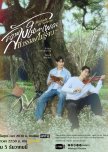
Title: Back to the Beginning — D.C.
For ten years, he lived as someone else.When Thontarn learned that the life he had been living as Photleng was never truly his own, he chose to walk away — even from Tankhun, the person who loved him the most. Not because he stopped loving him, but because he needed to find himself first.
What makes this finale powerful is not the resolution of the murder mystery, nor the answers to the long-buried secrets.
It is about identity.
Thontarn’s entire life had been shaped by other people’s sacrifices, lies, and desperate attempts to protect him. He carried guilt for surviving. He carried the weight of a name that was never meant to be his.
But when the truth finally surfaced, he also discovered something else:
He had never been alone.
Photleng tried to save him.
Mrs. Kang loved him as her own son.
His father committed an unforgivable act to protect him.
And Tankhun — from the very beginning — loved him as himself.
Not as a replacement.
Not as a shadow.
But as Thontarn.
The title of the final episode, “D.C. (Da Capo)”, means “back to the beginning.” It is not about returning to the past — it is about starting again, properly this time.
The previous episodes were heavy with revelations, almost overwhelming in their pace. But looking back, that density existed to clear the stage for this quiet, emotional restoration.
Tankhun does not rescue Thontarn.
He waits.
And that choice — to wait — might be the most romantic gesture in the entire series.
The lake that once witnessed tragedy now witnesses rebirth. The melody that once carried secrets now carries acceptance.
This drama was never simply about suspense. The murders and memory loss were mechanisms — painful ones — that forced the characters to confront who they truly were.
The ending is not a fairy tale. Loss remains. The past cannot be erased.
But Thontarn chooses to live as himself.
And that is enough.
Was this review helpful to you?
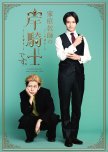
Review – I’m Your Tutor, Kishikishi
At first glance, this drama seems like a simple slapstick comedy. Toru is a typical delinquent high school student, and the story begins when his unusual private tutor arrives. The tutor’s name is Knight, but Toru affectionately calls him “Kishikishi,” which becomes a charming nickname throughout the series.Kishikishi has an elegant, almost aristocratic aura and works as a highly capable tutor who patiently supports Toru. In the early episodes, the tone feels rather chaotic and comedic, and it can honestly seem a little hard to keep watching.
However, if you stay with the series, it gradually reveals a surprisingly sincere coming-of-age story. Toru initially has no real goals in life, but through his interactions with Kishikishi, he slowly begins to develop curiosity and motivation toward learning. Eventually, Toru even reaches a point where he begins to think that he would like to become a teacher like Kishikishi himself. That development feels unexpectedly touching.
This is the kind of drama that becomes more rewarding the longer you watch. If you don’t drop it halfway, it slowly becomes a bit addictive.
And in the final episode, when Toru and Kishikishi split a single earring between them, it definitely gave me BL vibes.
This drama may not work for everyone, but viewers who enjoy character growth stories may find it surprisingly rewarding.
Was this review helpful to you?

This review may contain spoilers
kisskh Review
MANDATE The Series is a rare Thai drama that uses BL not as its core attraction, but as a lens to examine politics and power.Non, a dedicated rural doctor in his late 30s, has no interest in politics. His life revolves around saving patients in an understaffed medical system—until a tragic accident involving his sister forces him to confront the limits of medicine alone.
Motivated by a desire to protect rural healthcare workers, he steps into politics with the support of Ui, a sharp political strategist and the son of a party leader.
The first half resembles My Fair Lady: Ui refines Non’s blunt idealism and turns him into a viable local candidate.
As the story progresses, the tone darkens. Non is forced to accept political compromises, balancing party interests, regional benefits, and corporate pressures. The drama portrays these struggles with surprising realism.
By the final arc, Non chooses to remain in politics despite personal loss and responsibility for failure, while Ui moves to a rival party—an ending that rejects idealism in favor of harsh political truth.
This is not a romantic BL in the conventional sense.
It is a serious political drama that questions whether “clean politics” is ever truly possible.
Was this review helpful to you?

This review may contain spoilers
Final Episode – A Happiness Chosen, Not Calculated
This finale embraces what this series has always been at its core — a romantic comedy that values emotional resolution over perfect logic.Throughout the story, there were moments where the plot felt uneven or slightly rushed.
Some decisions didn’t always feel like the “best” ones from a rational perspective.
But in the end, this episode reminds us that love is rarely about perfect timing or perfect choices.
Pai’s conflict represents that idea beautifully.
Even when everything suggested that his relationship with Tim might not be the “optimal” path, his heart refused to let go.
And that emotional honesty became the true answer of the story.
North and Yuu’s wedding, with all its grand and overwhelming family expectations, contrasted nicely with the more intimate choice that followed — a wedding not defined by tradition, but by what felt right for them.
That shift from formality to sincerity captured the spirit of the series.
The visual symbolism in the final scenes — black tuxedos and white tuxedos — subtly reinforced the idea of balance, contrast, and coexistence.
Not one “correct” form of love, but multiple ways to be happy.
Is it a flawless script? Not really.
But as a romantic comedy, it delivers something just as important: a sense of warmth, closure, and genuine happiness.
Seeing all four characters reach their own version of happiness makes the journey feel worthwhile.
And honestly, that lingering feeling of “they’ll be okay” is what stays with you after the credits roll.
Was this review helpful to you?
This review may contain spoilers
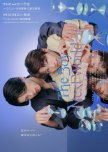
The Boy Next World 〜並行世界の恋人〜 (Episodes 9-10)
I finished this remake with mixed feelings.The core twist — that the “parallel world” premise was actually a lie born from long-time unrequited love — is bold. However, for me, the transition from SF mystery to emotional deception never fully landed. Even knowing the twist in advance (since I watched the Thai version), the narrative still felt structurally uneven.
What kept me watching until the end was Hamaya Takuto’s performance as Kaede. He portrayed confusion, vulnerability, and emotional conflict with sincerity. His soft expressions and tearful restraint added depth that the script itself sometimes struggled to provide.
The drama explores themes of obsession versus love, emotional dependency, and the need to choose one’s own heart. Those ideas are interesting on paper, but the execution felt somewhat difficult to emotionally connect with.
I appreciate the attempt at something different, but overall, this story simply wasn’t for me.
I am curious about the announced spin-off, though — especially since it seems to expand on the remaining parallel-world concept.
Was this review helpful to you?


