K-Drama


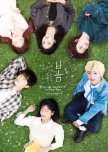
Un jour en cours, Kakeru Sorano, étudiant à l’université, remarque une jeune femme lisant seule, sans y prêter davantage attention. Lorsqu’un camarade de dortoir l’entraîne à une rencontre de classe, il la recroise : elle s’appelle Koharu Fuyutsuki et, bien qu’aveugle, elle affiche une joie de vivre lumineuse. Marqué par des expériences négatives passées, Kakeru a du mal à créer des liens, mais il se sent irrésistiblement attiré par Koharu. Il lui propose même de l’aider à réaliser l’un des rêves inscrits sur sa « liste des choses à faire dans la vie ». Au fil de leur rapprochement, une complicité naît, ouvrant la voie à la guérison et, peut-être, à l’amour. (Source : Viki) ~~ Adapté du roman "Tomeina Yoru ni Kakeru Kimi to, Me ni Mienai Koi wo Shita." (透明な夜に駆ける君と、目に見えない恋をした。) de Shin Nanigashi (志馬なにがし). Modifier la traduction
- Français
- Русский
- English
- Italiano
- Titre original: 透明な夜に駆ける君と、目に見えない恋をした。
- Aussi connu sous le nom de: Tomeina Yoru ni Kakeru Kimi to, Me ni Mienai Koi wo Shita. , Toumeina Yoru ni Kakeru Kimi to, Me ni Mienai Koi wo Shita. , とうめいなよるにかけるきみと めにみえないこいをした。
- Réalisateur: Matsuura Kenji, Kosasa Ryoma
- Genres: Romance, Jeunesse, Drame


Distribution et équipes
-
") Nagase RikoFuyutsuki KoharuRôle principal
Nagase RikoFuyutsuki KoharuRôle principal -
") Fujiwara TaiyuSorano KakeruRôle principal
Fujiwara TaiyuSorano KakeruRôle principal -
") Sono ShuntaNarumi Ushio [Kakerus roommate]Rôle Secondaire
Sono ShuntaNarumi Ushio [Kakerus roommate]Rôle Secondaire -
") Kawamura HanaHayase Yuko [Koharu's best friend / Kakeru's childhood friend]Rôle Secondaire
Kawamura HanaHayase Yuko [Koharu's best friend / Kakeru's childhood friend]Rôle Secondaire -
") Someya ToshiyukiMiura Itsuki [Koharu's attending physician]Rôle Secondaire
Someya ToshiyukiMiura Itsuki [Koharu's attending physician]Rôle Secondaire -
") Emi KuraraFuyutsuki Haruka [Koharu's mother]Rôle Secondaire
Emi KuraraFuyutsuki Haruka [Koharu's mother]Rôle Secondaire











Critiques

“Perdere qualcosa non significa azzerare tutto”
Più che un romance universitario è una delicata esplorazione di come la luce possa essere trovata anche da chi vive nell'oscurità, e viceversa. La storia intreccia le vite di Kakeru, un ragazzo introverso che si è volontariamente "chiuso" al mondo, e Koharu, una ragazza cieca la cui cecità non ha spento la sua gioia di vivere . Il senso profondo del drama risiede nello scambio di prospettive: Kakeru, pur vedente, è incapace di guardare al futuro, mentre Koharu, non vedente, sogna di vedere cose effimere come i fuochi d'artificio . La loro relazione non si basa sull'attrazione fisica, ma sulla capacità di "vedere" l'anima dell'altro al di là delle barriere sensoriali. Koharu non ha bisogno della vista per percepire la bontà di Kakeru, e Kakeru impara a guardare il mondo con occhi nuovi attraverso i desideri di lei. Il significato ultimo della serie è racchiuso nel suo titolo: l'amore più autentico fiorisce non sotto una luce accecante, ma nella trasparenza di un cielo notturno, dove ci si può finalmente mostrare per quello che si è, al buio, lontano dagli sguardi superficiali del mondo. Un inno alla vulnerabilità e alla forza silenziosa che nasce dall'accettazione reciproca.Cet avis était-il utile?
Cette critique peut contenir des spoilers
Sad Story
Positive:I like dramas like these, even though stories featuring blind characters have been told so many times before. First, I think the actors are pretty good, and the story was quite serious and not childish. That’s exactly how it should be with such a serious topic. The drama showed just how difficult it is for everyone involved to cope with this situation. I really had to fight back a few tears at some points. Another thing I liked was that the characters in Japanese dramas look like ordinary people – they aren’t dressed like models. It makes them more relatable.
Negative: It bothered me that the blind character couldn’t do many things for themselves and came across as really clumsy. I didn’t like that. Secondly, the romantic relationship developed far too quickly for my liking. In some places, the drama moved too fast, whilst in others it felt rather lengthy. I also didn’t like the fact that memory loss was brought up yet again. Yes, the story is sad, but throwing in clichés like that was simply unnecessary. It just felt very stereotypical.
Overall, I can still say that I enjoyed the story.
Cet avis était-il utile?