Celebrity


- Português (Portugal)
- English
- Français
- Español
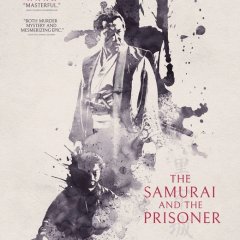
- Native Title: 黒牢城
- Also Known As: Kokurojo , Kokuroujou , こくろうじょう
- Screenwriter & Director: Kurosawa Kiyoshi
- Genres: Historical, Mystery, Drama, Political
Cast & Credits
-
") Motoki MasahiroAraki MurashigeMain Role
-
") Suda MasakiKuroda KanbeiMain Role
-
") Yoshitaka YurikoChiyoyasuSupport Role
-
") Aoki MunetakaMataemon ArakiSupport Role
-
") Miyadate RyotaSukesaburo InuiSupport Role
-
") Emoto TasukuShimohari SaikaSupport Role






Photos


Reviews

This review may contain spoilers
What is Honor to the Samurai
This film, directed by Kiyoshi Kurosawa is based on a novel which, in turn, is based on historical events in 1578, about a Samurai leader, Murashige Araki, whose castle is besieged by the ruthless Oda Nobunaga. Nobunaga has sent a strategist, Kanbei Kuroda, to negotiate. Murashige himself is presented as someone who is reluctant to kill even when the Samurai code calls for it. Murashige rejects Kanbei but rather than sending him back to Nobunaga or killing him, throws him into the dungeon. The film centers on the relationship that develops between Murashige and Kanbei as Murashige relies on Kanbei’s keen intelligence to help solve various murder mysteries arising in the castle and on its grounds. The acting is brilliant, both Masahiro Motoki and Masaki Suda are excellent in their respective roles, as Samurai Lord and strategist. The film is dialogue heavy, something that I appreciated as it allowed to characters to explore interesting issues surrounding Samurai honor and the value, or disvalue, of killing in Samurai culture. Murashige’s wife, Lady Chiyoho, played by Yuriko Yoshikata, is a character that I am less impressed with — though the actress did a fantastic job. She plays the usual emotionally disruptive female, though Kurosawa has given her an important insight. She knows that fighting isn’t any more likely to lead to paradise than running away. The film offers a view of a man who ends up abandoning what he is supposed to value. It seemed to me that one message in the film is that the Samurai code of honor is terrible, but also that when one is living within it the price of abandoning it may be terrible as well.My advice to viewers is to read the history before watching the film, as it will help one to follow and understand the plot dynamics. Unfortunately, reading the history also exposes the viewer to facts that do not reflect well upon Murashige Araki at all. The fate of those he left behind was unimaginably horrific.
Edit: I don’t know if the director was intending this, but one thing that struck me about the character of Murashige Araki is that even though he is reluctant to kill, that is, to directly kill someone, he does many things that will predictably lead to the deaths of others. Perhaps Kurosawa was pointing out that this kind of squeamishness within the Samurai code is actually far more destructive than operating under the code itself. In a society such as that one, no one with power can escape “dirty hands” since even opting out of the system harms innocents.
Was this review helpful to you?
Recommendations
There have been no recommendations submitted. Be the first and add one.