
 K-Drama




This review may contain spoilers
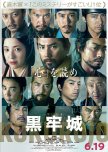
What is Honor to the Samurai
This film, directed by Kiyoshi Kurosawa is based on a novel which, in turn, is based on historical events in 1578, about a Samurai leader, Murashige Araki, whose castle is besieged by the ruthless Oda Nobunaga. Nobunaga has sent a strategist, Kanbei Kuroda, to negotiate. Murashige himself is presented as someone who is reluctant to kill even when the Samurai code calls for it. Murashige rejects Kanbei but rather than sending him back to Nobunaga or killing him, throws him into the dungeon. The film centers on the relationship that develops between Murashige and Kanbei as Murashige relies on Kanbei’s keen intelligence to help solve various murder mysteries arising in the castle and on its grounds. The acting is brilliant, both Masahiro Motoki and Masaki Suda are excellent in their respective roles, as Samurai Lord and strategist. The film is dialogue heavy, something that I appreciated as it allowed to characters to explore interesting issues surrounding Samurai honor and the value, or disvalue, of killing in Samurai culture. Murashige’s wife, Lady Chiyoho, played by Yuriko Yoshikata, is a character that I am less impressed with — though the actress did a fantastic job. She plays the usual emotionally disruptive female, though Kurosawa has given her an important insight. She knows that fighting isn’t any more likely to lead to paradise than running away. The film offers a view of a man who ends up abandoning what he is supposed to value. It seemed to me that one message in the film is that the Samurai code of honor is terrible, but also that when one is living within it the price of abandoning it may be terrible as well.My advice to viewers is to read the history before watching the film, as it will help one to follow and understand the plot dynamics. Unfortunately, reading the history also exposes the viewer to facts that do not reflect well upon Murashige Araki at all. The fate of those he left behind was unimaginably horrific.
Edit: I don’t know if the director was intending this, but one thing that struck me about the character of Murashige Araki is that even though he is reluctant to kill, that is, to directly kill someone, he does many things that will predictably lead to the deaths of others. Perhaps Kurosawa was pointing out that this kind of squeamishness within the Samurai code is actually far more destructive than operating under the code itself. In a society such as that one, no one with power can escape “dirty hands” since even opting out of the system harms innocents.
Was this review helpful to you?

The Snake Girl and the Silver-Haired Witch
0 people found this review helpful
A Good Bad Film
This is one of those films that is difficult to rate because it falls into a weird category: the good bad film. Some films that are bad by conventional standards nevertheless manage to be aesthetically pleasing, maybe because the filmmaker’s passion, or vision, or drive, comes through in spite of things like poor production values and narrative gaps. Western examples include cult classics like Ed Wood’s “Plan Nine From Outer Space.” “The Snake Girl and the Silver Haired Witch” has better production values than “Plan Nine” but still, by 1968 standards, is a bit sub par, with rubbery snakes that aren’t very frightening at all and some unconvincing special effects which still manage to convey a fun kind of wackiness, especially in some of the dream sequences which involve snakes, swords, and lots of swirling vortexes. It has heart, and that heart helps explain why it has a cult following. The story is focused on a young girl who has been raised in a religious orphanage but is finally reunited with her family once they figured out that she had been switched as a baby with another infant. What happened to the other infant, and how that relates to the girl, forms a central element in the plot. Don’t expect to really be frightened, but do expect a good time.One interesting fact is that a bit part, that of the taxi driver, is played by Umezu Kazuo who was a famous manga artist and who also wrote the short stories that inspired the film.
Was this review helpful to you?
Subtle Horror
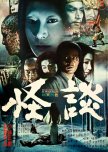
Kwaidan, directed by Masaki Kobayashi and released in 1964 is a gorgeous, stylized, film anthology consisting of four horror stories. It is based on stories from complications of Japanese folk tales by Lafcadio Hearn. The four stories in the film are:1. “The Black Hair,” about a faithless Samurai who receives a kind of eerie retribution,
2. “The Woman of the Snow,” my favorite, about a young laborer and his unusual marriage,
3. “Hoichi the Earless,” about a young blind musician at a Buddhist temple who performs for a group of ghosts, and
4. “In a Cup of Tea,” a story framed very interestingly — there is a story within the story that ends up creeping into reality.
All of the stories successfully convey a gentle, subtle, sense of dread that blooms into horror, though with the exception of the first story, it is subtle.
The sets are incredible. For the middle two stories they have almost a surreal quality to them: incredibly vivid colors, unnatural elements to the landscapes, such as a giant eye on the horizon, and a frozen forest. The film sets definitely have a staged appearance which adds to the atmosphere. They were very meticulously designed. They evoke some of the aesthetics of Japanese woodblock prints from the 19th century. This is especially obvious in the 3rd story, when a famous battle is recreated, the battle of Dan-no-ura. The faces of the Samurai warriors vividly recall these prints, with wild hair and exaggerated expressions. The acting is superb as well. I was especially impressed with Tatsuya Nakadai and Keiko Kishi of “The Woman of the Snow.” As the woman in the snow, Keiko Kishi had a smooth, unnatural way of moving across space that enhanced the eeriness of her performance. The film is, of course, a classic, winning the Special Jury Prize at Cannes in 1965.
Was this review helpful to you?
Beautiful and Difficult
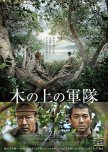
This film was inspired by events surrounding the Battle of Okinawa towards the end of World War II, and focuses on the experiences of two Japanese soldiers — one, a regular officer, and the other a very raw recruit, local to the island on which the film is set. After their island has been taken over by American forces they hide in a giant Banyan tree, waiting for reinforcements to arrive, not realizing the war has ended. The film explores their relationship and how they navigate the considerable differences in their social standing, life experiences, and expectations. Both actors do a great job. Shinichi Tsutsumi plays the older, embittered, officer and Yuki Yamaha the young recruit. I found Yamada’s character the most poignant — he saw so many of his friends killed. The film is largely structured in terms of the relationship between the two men who are forced into close confinement. An almost fatherly bond forms between the older officer and the new recruit. It raises larger questions of how difficult it is to navigate profound loss — not only personal loss, but loss of an identity that structured a person’s day to day life in Imperial Japan when old answers to questions about how to be a loyal citizen and a good person don’t seem to reflect reality anymore.The film has a strong anti-war message. I thought this was a very good film. I watched it right after having seen the Chinese film Dongji Island, about Japanese atrocities which also took place partly on an island. It was an interesting combination.
Was this review helpful to you?
This review may contain spoilers
Reflection on What Gives Life Meaning
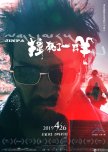
There have been a number of reviews of this wonderful film by Pema Tseden. Some reviewers note the fact that it has a kind of road trip movie feel to it. Two of the characters are named “Jinpa” — one, a truck driver — lives a life that recalls the Myth of Sisyphus. He drives back and forth across the Kekexili Plateau in Tibet. It also reflects the cyclic nature of life — his, the truck driver’s life — but also the cyclic nature of existence itself. We can infer from images in the cab of the truck various things about his life. He has a daughter, there is a lama he respects. He also likes “O Sole Mio”. He carries the meaning of his life with him as he travels.The truck driver picks up a hitchhiker, also “Jinpa” who is on a quest. Jinpa the hitchhiker is searching for his father’s murderer in order to exact revenge. It is given that he must do so since tradition demands revenge. But the film explores what it means to break away from the scripts we are given by tradition. We find significance and meaning through our own free choices.
This is a very moving film with a number of absurdist touches, such as Jinpa the truck driver feeling guilty for accidentally killing a sheep and then later buying part of a butchered sheep for meat. Philosophically very interesting. I highly recommend.
Edit: this film influenced director Jennifer Peedom to cast Genden Phuntsok in her biopic of Tenzing Norgay, “Tenzing”.
Was this review helpful to you?


