
 News




Subtle Horror
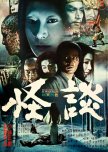
Kwaidan, directed by Masaki Kobayashi and released in 1964 is a gorgeous, stylized, film anthology consisting of four horror stories. It is based on stories from complications of Japanese folk tales by Lafcadio Hearn. The four stories in the film are:
1. “The Black Hair,” about a faithless Samurai who receives a kind of eerie retribution,
2. “The Woman of the Snow,” my favorite, about a young laborer and his unusual marriage,
3. “Hoichi the Earless,” about a young blind musician at a Buddhist temple who performs for a group of ghosts, and
4. “In a Cup of Tea,” a story framed very interestingly — there is a story within the story that ends up creeping into reality.
All of the stories successfully convey a gentle, subtle, sense of dread that blooms into horror, though with the exception of the first story, it is subtle.
The sets are incredible. For the middle two stories they have almost a surreal quality to them: incredibly vivid colors, unnatural elements to the landscapes, such as a giant eye on the horizon, and a frozen forest. The film sets definitely have a staged appearance which adds to the atmosphere. They were very meticulously designed. They evoke some of the aesthetics of Japanese woodblock prints from the 19th century. This is especially obvious in the 3rd story, when a famous battle is recreated, the battle of Dan-no-ura. The faces of the Samurai warriors vividly recall these prints, with wild hair and exaggerated expressions. The acting is superb as well. I was especially impressed with Tatsuya Nakadai and Keiko Kishi of “The Woman of the Snow.” As the woman in the snow, Keiko Kishi had a smooth, unnatural way of moving across space that enhanced the eeriness of her performance. The film is, of course, a classic, winning the Special Jury Prize at Cannes in 1965.
Was this review helpful to you?


