Editorials


# of Watchers: 43
Reviews: 1 user
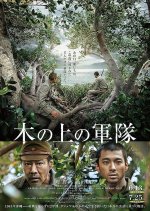
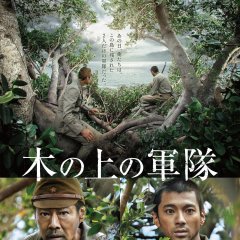
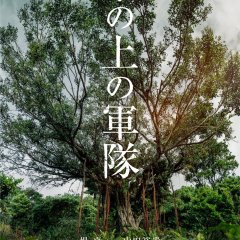
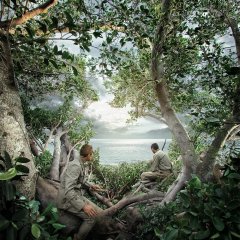
1945, the end of the Pacific War. On Ie Island, Okinawa, the Japanese army had taken devastating damage after a fierce battle with the US forces. Yamashita Kazuo, a senior officer sent from Miyazaki Prefecture, and a local Okinawan recruit, Agena Seijun, are cornered under heavy enemy fire and flee into the forest, where they climb to the top of a large banyan tree for shelter. The banyan tree, with its thick branches and lush foliage, provides the perfect hiding place, but the bodies of his comrades continue to pile up under the tree, and the enemy's position grows larger and closer by the day. With no means of communication, the two men endure a 'lonely war' in the tree for two years, waiting for reinforcements to arrive. However, what they did not know was that the war had already ended. And they find themselves in an extreme situation... (Source: JFDb) Edit Translation
- English
- Русский
- Français
- Español
- Native Title: 木の上の軍隊
- Also Known As: Ki no Ue no Guntai , Армия на дереве
- Genres: Military, Historical, Drama
Cast & Credits
-
 Tsutsumi Shinichi Main Role
-
 Yamada Yuki Main Role
-
 Itokazu Shogen Support Role
-
 Kawata Hiroki Support Role
-
 Shiroma Yayoi Support Role
-
 Yamanishi Atsushi Support Role




Reviews

Beautiful and Difficult
This film was inspired by events surrounding the Battle of Okinawa towards the end of World War II, and focuses on the experiences of two Japanese soldiers — one, a regular officer, and the other a very raw recruit, local to the island on which the film is set. After their island has been taken over by American forces they hide in a giant Banyan tree, waiting for reinforcements to arrive, not realizing the war has ended. The film explores their relationship and how they navigate the considerable differences in their social standing, life experiences, and expectations. Both actors do a great job. Shinichi Tsutsumi plays the older, embittered, officer and Yuki Yamaha the young recruit. I found Yamada’s character the most poignant — he saw so many of his friends killed. The film is largely structured in terms of the relationship between the two men who are forced into close confinement. An almost fatherly bond forms between the older officer and the new recruit. It raises larger questions of how difficult it is to navigate profound loss — not only personal loss, but loss of an identity that structured a person’s day to day life in Imperial Japan when old answers to questions about how to be a loyal citizen and a good person don’t seem to reflect reality anymore.The film has a strong anti-war message. I thought this was a very good film. I watched it right after having seen the Chinese film Dongji Island, about Japanese atrocities which also took place partly on an island. It was an interesting combination.
Was this review helpful to you?
Recommendations
There have been no recommendations submitted. Be the first and add one.