


Let's put ethical values in their proper place.
Basic premises:
● Cang Cang, an open-minded, healthy, pure-hearted character, devoted to noble goals.
● XH, a problematic, insecure character with fragile health and a morbid behavioral profile who constantly plays the victim.
1- CC is the only character who leads a transparent life, with ZERO hidden agendas.
2- She was admired for living a simple and altruistic life, grounded in her ideals and love for her people, never bothering or harming anyone.
3- Without aspiring to power, she stubbornly embraced the mere and legitimate ambition to fight injustice and corruption.
4- At one point, she is approached by XH, who used a false identity (a crime for any subject, except for the Emperor, who should strive for example), with the sole objective of expanding and consolidating his power.
5- His love for her was an unexpected accident, but her love for the fake BCF was true from the beginning.
6- Used as a pawn by her father and XH, CC was ensnared by both of them, as well as her adoptive brother.
7- In this circus of forged stories, much more to cover up the criminals (the Master, CC's father and brother) than to "protect" CC, the manipulations generated reactions totally in accordance with these forged stories.
CC, once a cheerful and active character, became spiritually ill after being forced to live in a den of falsehood and cruelty.
And now I ask:
Why did all the criticism fall precisely on the victim, CC, whose life was completely demolished by the deliberate manipulation exercised by XH? I answer: because she is a woman.
Why the enormous tendency to defend XH and consider him a martyr? You know the answer...
I conclude:
This type of narrative, in which someone who has power and authority over another uses that power to deliberately lie and omit information, provoking reactions entirely in line with those actions, only to ultimately throw in the victim's face "while you hated me, I protected you," is very dangerous because it inverts values and turns the perpetrator into a martyr, while the victim, who suffered from the supposed protection, is thrown into the swamp of completely undue remorse, since it was not given to her the opportunity to act and react within the context of the truth.
CC deserves to be admired. She cried very little in the context of the hospice where she was confined! The only one who deserves the weight of our criticism is the one who lies and chose to betray CC's trust, whom he claims to love, to cover up for CC's corrupt family and keep his word with a criminal who agreed to enslave and kill children.
XH led Cang Cang astray; she reacts to what she sees concretely. What fault is it of hers to be pushed into error? He seems to be a masochist. Theis kind of narrative is perverse because it leads the viewer astray as well, because the viewer sympathizes with XH and strongly condemns CC. Behind this lies the tendency to demand too much from women and act condescendingly towards men.
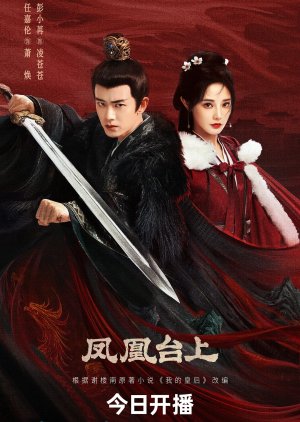
Details
- Title: Love and Crown
- Type: Drama
- Format: Standard Series
- Country: China
- Episodes: 35
- Aired: Nov 14, 2025 - Dec 2, 2025
- Aired On: Monday, Tuesday, Wednesday, Thursday, Friday, Saturday, Sunday
- Original Network: JSTV, Youku
- Duration: 45 min.
- Genres: Historical, Romance, Drama, Political
- Tags: Misunderstanding, Arranged Marriage, Adapted From A Web Novel, Emperor Male Lead, Empress Female Lead, Royalty, Political Intrigue, Love/Hate Relationship, Cold Male Lead, Cruel Male Lead
- Content Rating: Not Yet Rated
Statistics
- Score: 6.6 (scored by 1,738 users)
- Ranked: #12489
- Popularity: #3014
- Watchers: 7,420
- Favorites: 0


Popular Lists
Related lists from users










Recently Watched By


