

Swords into Plowshares

This poem was written by Bai Juyi (772–846 AD) during the mid-Tang Dynasty, a period marked by political fragmentation, warlordism, and court extravagance. Bai Juyi was considered one of China's greatest poets. His most famous poem is The Song of Everlasting Sorrow/Regret 长恨歌 about Yang Guifei. He was a master of the "New Yuefu" movement, which used poetry to critique contemporary social and political issues in a straightforward style.
The gist of the poem is:
- Taizong raised a righteous army at age 18, pacified the realm (capturing Wang Shichong, executing Dou Jiande, unifying after chaos).
- Ascended the throne at 29 and achieved great peace by 35.
- His rapid success stemmed from sincerity and trust in people ("pushing heart into others' bellies").
- Specific humane acts: burying war dead properly, redeeming sold children, releasing palace women, pardoning and winning loyalty from prisoners, personally tending to wounded soldiers (e.g., sucking poison from General Li Simo's wound), grieving ministers' deaths, etc.
- These acts moved hearts and secured lasting loyalty.
- After nearly 190 years (by Bai's time), the realm still sings and dances in memory.
The poem's core message is a sharp political critique cloaked in historical praise. Bai Juyi uses the glorious, virtuous, and unifying achievements of Emperor Taizong (Li Shimin, the second emperor of Tang) as a mirror to reflect the shortcomings of the Tang emperors of his own time.
The poem operates on two levels:
The Explicit Praise (The Mirror): The bulk of the poem meticulously recounts the stories behind Taizong's "Seven Virtues":
His ability to unite and inspire his diverse followers.
His personal bravery and leadership in battle.
His compassion for the common soldiers and the people.
His mercy towards defeated enemies, incorporating them into his state.
His respect for loyal ministers and acceptance of criticism.
His commitment to stability and frugality for the people's sake.
His military successes that brought peace.
The Implicit Critique (The Reflection): This is the heart of the poem. By glorifying Taizong's virtues, Bai Juyi implicitly condemns the later Tang emperors for:
Luxury and Extravagance: Turning court performances into empty spectacles divorced from meaning, wasting public funds.
Military Weakness and Internal Strife: Unlike Taizong who defeated external threats, Bai Juyi's era was plagued by rebellious military governors (jiedushi) and foreign incursions.
Disconnection from the People: Taizong cared for soldiers and peasants; later emperors were insulated by court politics and luxury.
Rejecting Honest Criticism: Taizong listened to his frank ministers; later courts were filled with flattery.
The poem concludes with a powerful, direct challenge. Bai Juyi states that the dance in his own time is performed with the same music and movements, but without understanding its original spirit. He then asks the climactic rhetorical question, effectively aimed at the current emperor:
"Since the founding of the dynasty, who is the true successor to Taizong's legacy?"
In essence, "The Song of the Seven Virtues" is not a celebration, but a reprimand. Its core message is that political legitimacy and stability are derived not from ritual or power alone, but from the ruler's moral virtue, martial competence, frugality, and profound connection to the welfare of the common people. Bai Juyi uses the golden age of Taizong to shame his contemporaries, urging a return to the foundational virtues that made the Tang Dynasty great. It is a masterful work of political commentary, using the past to critique the present.
The drama shortens the original poem and tones down the political critique but the message is there. It is significant that Zhao Kuangyin who later becomes the founding emperor of Song is thinking about this poem.
《七德舞》
唐 · 白居易
七德舞,七德歌,传自武德至元和。
元和小臣白居易,观舞听歌知乐意,
乐终稽首陈其事。
太宗十八举义兵,白旄黄钺定两京。
擒充戮窦四海清,二十有四功业成。
二十有九即帝位,三十有五致太平。
功成理定何神速?速在推心置人腹。
亡卒遗骸散帛收,饥人卖子分金赎。
魏徵梦见子夜泣,张谨哀闻辰日哭。
怨女三千放出宫,死囚四百来归狱。
剪须烧药赐功臣,李勣呜咽思杀身。
含血吮疮抚战士,思摩奋呼乞效死。
则知不独善战善乘时,以心感人人心归。
尔来一百九十载,天下至今歌舞之。
歌七德,舞七德,圣人有祚垂无极。
岂徒耀神武,岂徒夸圣文。
太宗意在陈王业,王业艰难示子孙。
The Dance of Seven Virtues, the Song of Seven Merits,
Passed down from Wude era to Yuanhe's days.
I, a humble servant of Yuanhe, Bai Juyi,
Watch the dance, hear the song, and grasp their true meaning,
And at the music's end, bow low to tell its tale.
Taizong at eighteen raised a righteous army,
With white banners, gold axes, secured the twin capitals.
Captured Wang Shichong, slew Dou Jiande, purged the realm,
At twenty-four, his mighty task was done.
At twenty-nine, he ascended the throne as Son of Heaven,
At thirty-five, he brought the land to peace and prosperity.
How was this triumph achieved with such godly speed?
Its speed lay in his opening his heart, placing it in men's breasts.
For fallen soldiers' scattered bones, silk was paid for their collection,
For starving men who sold their sons, gold was shared for their redemption.
He wept at midnight, dreaming of his critic Wei Zheng's death,
He mourned at dawn, hearing of loyal Zhang Jin's passing.
Three thousand pining palace ladies were released to go home,
Four hundred condemned prisoners returned to jail of their own will.
He cut his own beard to brew medicine for a meritorious general,
Making Li Ji sob, wishing to give his life in return.
He sucked the poison from a soldier's wound, tending the rank and file,
Making Ashina Simo cry out, begging to die for his lord.
Thus we know his success relied not just on skill in war or seizing the hour,
But on moving men's hearts, and thus winning their hearts' allegiance.
From then, one hundred and ninety years have passed,
Yet under heaven, to this day, they sing and dance this story.
Sing the Seven Virtues, dance the Seven Merits,
The sage-king's legacy descends, boundless and infinite.
Was this meant merely to display divine might?
Or merely to boast of sagely culture?
Taizong's intent was to proclaim the royal achievement—
To show his sons and grandsons how arduous is the path of kings.

Terrific background, thank you.
I have no Chinese, apart from handy phrases picked up from c-dramas like 'what fortunate breeze has blown you here' : ) but having fallen down the rabbit hole during Covid I started exploring original texts, poetry etc.(Joy of Life 2's hilarious poetry slam and many others). A reference that has been really useful to me is the 'Anthology of Translations of Classical Chinese Literature Volume:1 from Antiquity to Tang Dynasty' (Columbia). Translations will always be the back of the tapestry but still, better than nothing!
'Anthology of Translations of Classical Chinese Literature Volume:1 from Antiquity to Tang Dynasty' (Columbia).
John Minford is an excellent translator of Chinese classics. Even though the Wade-Giles for names etc can be confusing with current pinyin standard, his translations of many classics are still probably the most accessible for English speakers. That said, his approach is more interpretive than literal and often reflect his (deep) personal impressions of Chinese history and culture. And sometimes I don't agree with how he interprets certain aspects of Chinese culture or how he conveys certain characters. My pet peeve is his inclination to change Chinese names into something entirely unrelated to make it easy for Western audiences. But all of the authoritative Western translators do the same thing.
I personally prefer less well known Chinese translators that produce simpler, more precise literal translations that are more true to the beautiful simplicity of the original prose, recognizing it is much less helpful to general audiences. Western translators like Minford tend to make the sentences too verbose and flowery to the point it deviates from the original meaning. They try to say too much or over explain without understanding that the true beauty and efficacy of the Chinese language is in the power of the unspoken. Actually I have come across many fan or anonymously translated webnovels that are surprisingly good. Often produced by Chinese speakers trying to learn English - their translations capture the meaning and reflect the less long winded nature of the Chinese language.😅
Excellent feedback for me, much appreciated, thank you!
Interesting how translations vary with the cultural shifts over time in the literary fashions of a country. I do translations (Ita or Fr to English) and always start with the simplest literal take I can and then review for meaning and style.
And yes, you're right, I've often picked up more of the intent in Chinese text from online novel translations related to c- dramas as they are more 'honest'. Never not fascinating!
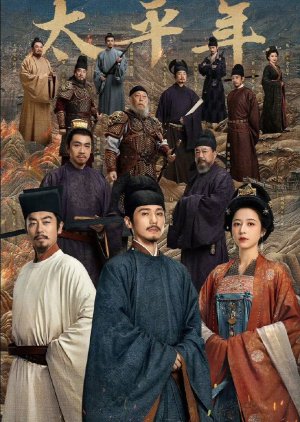
Details
- Title: Swords into Plowshares
- Type: Drama
- Format: Standard Series
- Country: China
- Episodes: 48
- Aired: Jan 23, 2026 - Feb 12, 2026
- Aired On: Monday, Tuesday, Wednesday, Thursday, Friday, Saturday, Sunday
- Original Network: CCTV, iQiyi, Mango TV, Tencent Video
- Duration: 45 min.
- Genres: Historical, War, Political
- Tags: Five Dynasties Ten Kingdoms, Righteous Male Lead, Multiple Perspective, Time Skip, Multiple Mains, Minister Supporting Character, Prince Male Lead, Mild Gore, Smart Male Lead, Rebellion
- Content Rating: Not Yet Rated
Statistics
- Score: 8.3 (scored by 500 users)
- Ranked: #1233
- Popularity: #5519
- Watchers: 3,107
- Favorites: 0


Popular Lists
Related lists from users

Recently Watched By


