News
News 


A high quality political historical drama
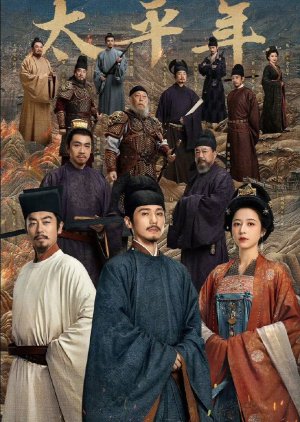
Grandeur in nature; this was a highly political historical drama of 48 episodes length based on real events (maybe not entirely but that’s up for discussion!) that occurred during the five dynasties and ten kingdoms. It focused mainly on the kingdom of Wuyue up until it surrendered peacefully to the Song Dynasty in 978 to spare its people from war.Song China has been one of the well-known dynasties due to its success but I love how the drama had given spotlight to a smaller but thriving kingdom in Wuyue who’s often overlooked in history. It showed us the rise and the changes within Wuyue, the problems it faced, the things they implemented for its success, and the events that led up to its surrender to Song. On the other hand, we were also given a peak of the chaos in the central plains along with the changing of dynasties that occurred. With only 48 episodes, I think the drama tried its best to cover all the events mentioned above (which was a pretty good feat!).
From the first minute of the first episode, you could tell immediately that this is a top-tier content. This may not be an easy watch with all the characters being thrown to the viewers throughout the drama. YES it was confusing at first, but as the story progresses, you will eventually get familiar with all the characters and the role they play. I believe neither of the characters were good nor bad, but rather they were simply focused on doing what was best for their state. The only characters that I disliked were the young successors who were easily manipulated or were too foolish to rule.
The performance of every single cast is nothing short of remarkable, with seasoned and stellar actors delivering nuanced portrayals of their characters. The delivery of their lines was brilliant, and you could feel the intensity in every word they drop. I came here for Zhu Yawen but ended up loving every cast, most especially Bai Yu. The portrayal of Bai Yu as Qian Chu was phenomenal. He was able to give the youthful energy that the young Hong Chu should have, and at the same time, he was amazing with depicting the older, weary King of Wu Yue. Zhou Yutong may have not a lot of scenes, but her portrayal as Sun Taizhen certainly deserved applause. I remember watching her in the beginning when she barely had any lines and yet her facial expressions were enough to convey the character’s subtext and complex emotions.
The drama also gave a dash of romance between Qian Chu and Sun Taizhen, but I love that it was not distracting to the plot at all! They may probably be my favourite couple despite barely having any scenes together. They met when they were kids, grew up together, went through adventures and challenges together, and built life and family together. Despite minimal physical intimacy, the audience could still feel the characters’ deep mutual understanding and affection.
The production demonstrated exceptional quality and artistry, particularly through its authentic set designs and costumes. The music was no less exquisite with it seamlessly matching each scene. The narrative primarily features ministers and officials engaged in discussions concerning state affairs, with dialogue taking precedence over action. I find these conversations interesting, offering substantial value and insight. The dialogues were well-written that I often find myself repeating a scene just so I could take in what has been said and understand its complexity in its entirety. I thought I would get bored at some point, but that point did not come when watching this. The plot moved rapidly as it involves multiple shifts in power, numerous deaths, and constant changes throughout. The drama started strong and it kept its audience engaged until the end.
Although this drama is well-produced, it may appeal mainly to history enthusiasts familiar with the era or have deep passion in learning history rather than casual viewers. That being said, please still do give this drama a try! This was a heavy watch but so so worth it in the end.
Was this review helpful to you?

The cycles of history
Set during the latter half of the chaotic Five Dynasties and Ten Kingdoms period, Swords into Plowshares endeavors to condense several decades of turmoil into a cohesive story. For the most part, it succeeds as a well-produced historical epic, anchoring the story around a few historical figures - Qian Chu of Wuyue, his wife Sun Taizhen, Zhao Kuangyin of Song and Guo Rong (Chai Rong) of Later Zhou.The first 12 episodes or so are some of my favorite - bold, devastating and moving in its depiction of the wanton slaughter and abuse of the common people as the Central Plains exchanged one ruler for another. There are also moments of human triumph some to arise out of that destruction and usher in a semblance of peace and order. But mankind is fickle, and human nature is not easily overcome. Until the final frame, our main characters face struggle after another in order to bring about a "year of peace."
A few historical figures are unfortunately whitewashed to fit an overall narrative of unifying the lands for peace, but the drama is overall still a respectable attempt to faithfully depict an often overlooked period of Chinese history. The script at its best waxes philosophical regarding varying viewpoints regarding human governance, and its strong use of classical Chinese is a much needed breath of fresh air in this age of idol dramas. It may too dense for some, but the cast deftly bring their characters to life, and one can simply follow their emotional journey fairly well even if much of the detail in the dialogue escapes them.
As a longtime enjoyer of historical dramas - from any country or language - I hope to see more in this vein from C drama land.
Was this review helpful to you?

 1
1Some dramas entertain. A rare few illuminate…
Set during the Five Dynasties and Ten Kingdoms period, this drama could easily have fallen into the trap of being another historical epic heavy on costumes and light on substance. Instead, it delivers something far more ambitious — and far more meaningful. It is breathtaking in its commitment to historical authenticity, not just in aesthetics but in its portrayal of governance, reform, and the fragile art of holding a state together during turbulent times.A Drama That Understands Governance
What has impressed me most — and what I reflected on in my recent Strategic Teams post — is how deeply this series understands the work of governance. It doesn’t romanticise leadership. It doesn’t flatten history into hero worship. Instead, it shows:
• the complexity of decision‑making
• the tension between moral ideals and political realities
• the weight of responsibility carried by those who choose to serve
• the quiet, unglamorous labour of reform
This is a drama that treats governance not as a backdrop, but as a living, breathing challenge — one that demands courage, restraint, wisdom, and sometimes painful compromise.
Historical Characters Brought to Life
The show’s greatest strength is how it brings actual historical figures to life with nuance and emotional depth. These aren’t cardboard cut-outs of “good” or “bad” officials. They are human — flawed, principled, ambitious, weary, hopeful.
The performances, especially from the Wuyue leads, are exceptional. Their portrayals carry a sense of dignity and restraint that feels true to the era, yet emotionally accessible to a modern audience.
A Visual and Emotional Feast
The production design is meticulous. The lighting — especially in the intimate indoor scenes — is atmospheric and painterly.
Ceremonial and wedding stills are rich with cultural detail. Ensemble scenes capture the scale and uncertainty of a fractured era. Every frame feels intentional, reinforcing the drama’s themes of unity, resilience, and the pursuit of stability in chaotic times.
Why This Drama Matters Today
What elevates Swords into Ploughshares beyond entertainment is its relevance. The governance lessons embedded in its storytelling resonate strongly with modern organisational life:
• the importance of ethical leadership
• the need for clear purpose during instability
• the value of steady, principled reform
• the power of listening, humility, and collective responsibility
It reminds us that good governance is not a slogan — it is a discipline, a practice, and often a struggle.
Final Thoughts
This is not a “slow” drama.
It is a thoughtful one.
It rewards viewers who appreciate depth, historical fidelity, and leadership stories that don’t shy away from complexity.
For anyone interested in history, governance, or simply beautifully crafted storytelling, Swords into Ploughshares is a standout of the year.
Was this review helpful to you?

vast in scope and audacious in ambition
set in the Five Dynasties and Ten Kingdoms period, this drama is a rare epic and gives many of us, particularly international viewers, some fairly deep insight into an era that we may be unfamiliar with. if you can survive the first few episodes, much like the people of that time, you may find your endurance adequately rewarded by the end – the citizens with a unified, relatively peaceful state; the viewers with a wealth of historical factoids and a solid cinematic journey.the first three episodes are a dizzying introduction to hundreds of characters, most of whom are narrative cannon fodder, and a nauseating introduction to the horrors of the never-ending wars. by the sixth episode, it has fully settled as characters are fleshed out and from then on, it develops into a layered and engrossing story as history is made human. the final arc demands that we accept something that is antithetical to many people’s worldview: that surrender is not necessarily failure. to this day, the economic legacy of this era where the leadership was focused on trade and uplifting the state, and a series of conscious choices to submit to more powerful allies rather than suffer damages from war, is reflected in the continued success of that little southeast corner of the nation.
one thing that is both appealing and intimidating about our main lead Qian Hongchu is the speed at which he makes massive decisions from a young age. he is a rare species, reactive but with impeccable moral logic, and he is fearless in delivering rapid-fire consequences when warranted. as he ages, you can actually see the tension increasing, with each decision weighing heavier, even though he knows it is the correct course of action. this progression culminates in his final decision, painstakingly made, and the heaviness of his steps as he makes his final journey out of Wuyue, tragically alone despite being surrounded by his clan.
Bai Yu’s portrayal of the middle-aged Qian Hongchu is where I found him most striking. he creates a strange tension which at first I questioned. compared with his usual more natural-feeling characterisations, he seemed to be visibly working hard, which is not a style that I favour personally. but with time, I came to realise that this was actually impressive work. that tension is within Qian Hongchu, himself playing a character playing a character. he is visibly suppressing his more natural fisherman prince persona in favour of the king he’s now required to be. his entire life has become a high-stakes bit.
in terms of some other members of the cast, Zhu Yawen is, as always, a study in charisma. his Zhao Kuangyin is magnetic, and not once did I question how he managed to garner support in any of his endeavours, even that most defining one. Zhou Yutong as Sun Taizhen is a light and somewhat odd-feeling presence early in the drama but comes into her own in her unfailing, mature, supportive role through the years despite her lean screen time.
the supporting characters were no less solid. a flawless performance by the evergreen Ni Dahong as Hu Jinsi, a man who does not shut up about how he is 90 years old and whose tenuous hold on patience is eventually broken. and Edward Zhang was a surprising winner for me, particularly in the later years where he thoroughly embodied the older version of Li Yuanqing, a grifting black hole of morality. criticism of the ageing makeup is justified. there are distracting discrepancies at both ends of the timeline. this performance, however, is not one of them.
there was one particular incident that I found jarring in how it was handled: the infamous 燭影斧聲 (candle and axe) scene. it reminded me of watching Empire of the Sun as a young teen after reading the book in literature class – astounded that the screen could bear so little resemblance to the vision I had created in my head. I feel like I would have preferred it to be a little more oblique instead of giving us a fictionalised version of what transpired inside the room.
there was a consistent and obvious attempt to humanise the characters which deserves praise. any habitual watcher of Chinese dramas likely knows to distrust joy, but space was made for people to be fully human and capable of joyful interaction, particularly within their families, which of course provided both occasional light relief as well as heightened emotional response to their fates.
the last few episodes could have done with a little more breathing space. the narrative was forced to coalesce very rapidly at this point and it felt like we lost touch with Qian Chu's world, both his internal world in terms of his decision-making but also externally, in terms of his relationship with his children particularly. in some ways though, it was entirely appropriate. his decisions had become slower, heavier, more loaded, and he found himself more isolated. it is unsurprising that we as viewers begin to lose our grip on his character at the same time but the sense of emptiness is hard to shake.
the occasional voiceovers were probably necessary but felt like a basic history lecture inserted because no one had any bandwidth left to show and not tell. working on this type of production must have been exhausting and even viewers might find themselves mentally overextended at times; nevertheless, it still feels like a suboptimal choice for storytelling.
the score is award-worthy. for me, this is Chen Xueran's master work. everything is well-calibrated, and it's rare to watch something with this level of care in the variations, which are then deployed with such meticulousness. throughout, the music was additive rather than intrusive.
with all that said, I am torn on how to rate this series. in pure enjoyment terms, I would probably give it 8.5/10. it is a monster of a drama, a multigenerational historical epic, and does occasionally falter of course. the core things that one would normally use to make a judgment – narrative, acting, pacing, special effects, direction – are solid. but it also deserves extra credit for sheer ambition. indeed, it is a breathtakingly ambitious production.
I eventually settled on a very creditable 9/10. strongly recommended for fans of this type of series but probably a hard avoid for anyone who watches dramas purely for light entertainment and would balk at reading the Wikipedia entries of twenty different emperors.
[TW: graphic scenes of war and other violence, executions, sexual violence, cannibalism. don’t eat while watching if you are squeamish or unaccustomed to this type of historical drama.]
Was this review helpful to you?
Politics at its peak
Swords into Plowshares is set around the 5 Dynasties and Ten Kingdoms period after the fall of the Tang Dynasty and thus set upon a time in medieval China where multiple general warlords ascending into royalty have become common as such is the turmoil spread all throughout. It follows the story of three prominent characters, Qian Hong Chu, Zhao Kuang Yin and Guo Rong and their experiences and tribulations throughout this period.The story and setting isn't the usual chinese costume drama. Its setting is based on actual history. The politics is heavy while presenting realistic themes and characters full of meaning and nuance. Genuinely, it has been a while since I've seen something of this caliber in chinese costume dramas and I am thankful this one caught my attention around here in MDL and gave it a try. If you ever get tired of idol dramas from modern to costume dramas and is seeking a quality inducing drama, then this is the start for you. It has everything you're looking for if you want a dynamic setting, characters and plot that by episode 18 above much has happened that it feels like its been many episodes.
I want more like this please
Was this review helpful to you?
Amazing series !
I first stumble on this series 7 months ago when i got a notification from huace. When i saw the trailer it looks amazing with star- studded cast. Then when it finally aired i was hooked. the cinematography, ost ,production , and all the actors is fantastic. This is the only series that i have to Google search about the Five Dynasty and ten kingdoms.Was this review helpful to you?

This isn’t just a historical drama—it’s a rare glimpse into the inner workings of a dynasty.
There’s something really satisfying about a drama like Swords into Plowshares—it doesn’t just tell a story, it quietly teaches you how a whole world functions.What stands out is how it zooms in on the “unseen machinery” of a dynasty. Not just the generals shouting orders on the battlefield, but the structure behind everything—how troops are divided, who reports to whom, how discipline is maintained. It makes you realize that war wasn’t just chaos; it was system, hierarchy, and careful planning.
Then there’s the focus on supplies—grains, logistics, provisions. The drama shows that victories aren’t only won by swords, but by whether soldiers are fed, whether roads are safe, whether storage is managed well. It kind of shifts your perspective… like, a single delayed shipment could be just as dangerous as an enemy army.
What makes it even more immersive is how it doesn’t forget the capital. While battles happen far away, life at the center doesn’t pause—it reacts. Politics tighten, resources get strained, decisions become heavier. You start to see that war isn’t just fought on the frontlines, but also in courtrooms, storehouses, and strategy halls.
That level of detail makes the world feel alive and believable. Instead of romanticizing history, it breaks it down into moving parts—and somehow, that makes it even more powerful. It’s like the drama is saying: this is how a dynasty survives… or collapses.
Was this review helpful to you?
 1
1A Drama That Turns History into Reflection, Meaning, and Message to Humanity
A historical drama rooted in real historical events is quite rare in the landscape of Chinese dramas. That’s why I feel truly grateful to have watched Swords into Plowshares. While watching it, I was reminded of the early wave of Hallyu, marked by remarkable Korean historical dramas such as Jewel in the Palace (2003), Jumong (2006), and Queen Seondeok (2009). It made me think that China should produce more works that explore its own history and culture and create a similar impact, helping the world better understand and appreciate the richness of Chinese society. As an international viewer, I can’t really take part in the heated debates about the more controversial aspects of this drama, but I genuinely appreciate it and thoroughly enjoyed watching it.The first thing I love about this drama is how intellectually challenging it is. It covers a full century of the Ten Kingdoms and Five Dynasties period in 10th-century China—an era after the fall of the Tang Dynasty that bridges the rise of the Song Dynasty. Watching the story, directly or indirectly, feels like learning history. There are so many events, all connected, forming a continuous chain that builds a coherent historical narrative. The storytelling is dense and demands focus and careful attention to fully understand what’s happening. Each episode needs to be followed slowly, without rushing. For viewers who enjoy a strong cognitive challenge, this drama is deeply satisfying.
The second thing is that this drama feels deeply meaningful to me. Its central theme is very clear: the search for peace and unity in a land torn by chaos and division. This is a universal pursuit, because every nation longs for these things in a world that is far from stable. What makes it compelling is that the drama portrays this journey as long, difficult, and full of sacrifice. It truly reflects the idea that “you cannot change the world before you change yourself.” We cannot bring peace to the world unless we ourselves desire peace and are committed to resolving conflicts through peaceful means. And we can only reach that point when we realize that violence is not a solution—it only creates more suffering and destruction.
Third, I really appreciate how realistic the drama is in handling issues of governance, society, and the state. I especially like how it presents leadership, bureaucracy/government officials, and military power as three pillars that must stand together to support the state. When one of these pillars fails, the country cannot function or move forward properly. The drama goes into great detail in portraying the dynamics and interactions among rulers, officials, and the military—how decisions are formed, debated, finalized, and agreed upon; how ideas develop based on virtues and righteousness; and how morality is preserved in an era when human dignity has fallen so low to the point where people literally become beasts who consume their own kind. Even though it is set in a dark and chaotic period, the story itself feels like a light at the end of the tunnel, offering hope.
Fourth, the character development is deeply moving. Even though it tells a grand historical story, the drama skillfully uses the perspectives of four main figures—Guo Rong, Zhao Kuangyin, Qian Hongchu, and Sun Taizen. We follow their journeys from youth to the end of their lives, witnessing how they change as they begin as nobodies, face the harshness of the world, form friendships, build shared goals of peace in their own ways, collaborate in different ways, and eventually become influential figures who shape history. Through their eyes, we experience both the joys and sorrows of that journey. We feel their worries, their losses, and their struggles, as well as their moments of success. Even though this is not primarily a character-driven story, it still explores their psychological depth well, allowing the audience to form a strong emotional connection with each of the main characters.
Lastly, this drama offers far more than I expected when I first started watching. The storytelling is very tight—effective and efficient. There are no wasted scenes, the plot is handled with strong discipline all the way to the end, and plot holes are kept to a minimum. The setting feels highly realistic, and the drama is unflinching in portraying the brutal side of history, yet it still leaves room for reflection and contemplation, helping the audience understand the world with a clear moral grounding. The values and virtues are consistently upheld throughout the story, so it never turns into just another Game of Thrones-type show that glorifies violence and the darker side of human nature. The use of music is also excellent—I never felt the need to skip the opening or ending songs. On top of that, the presence of many veteran actors adds a strong sense of gravitas, reinforcing that this is a drama created with a serious purpose and a message to deliver.
In the end, this drama stands out as a rare and meaningful work—intellectually engaging, emotionally resonant, and grounded in a rich historical reality. It offers not only a sweeping portrayal of a turbulent era, but also a thoughtful reflection on peace, leadership, morality, and the human condition. With its disciplined storytelling, strong performances, and clear sense of purpose, it delivers far more than mere entertainment. For anyone seeking a drama that challenges the mind, moves the heart, and leaves a lasting impression, this is absolutely worth watching.
Was this review helpful to you?

My head hurts but it was all worth it.
48 episodes. A rating of 10.Swords into Plowshares is the title and it definitely is a befitting one.
From nollywood to Hollywood, then the Filipino ones, mexican, before South Korea. Bollywood then Cdrama, Thai, Japanese etc....Ive watched a lot. I don't just watch because it is a form of entertainment, I watch films to feel. And nothing makes me feel more than the Chinese ones.
I love reading history but I love watching history more. History that is raw and unfiltered. History that does not hold back facts. History that does not shy from criticism. And while China might be state controlled, they've never held back when it comes to telling stories about their past. It is why they are a propaganda I am willing to fall for.
Anyway, if you are willing to, watch Swords into Plowshares.
Was this review helpful to you?

A Masterpiece of History and Emotion
I just finished this incredible drama, and the acting was so powerful that it moved me to tears. The production is truly breathtaking, from the stunning costumes and makeup of the empresses to the beautifully captured Chinese history and architecture. Every actor was professional and talented, making the intense war and fight scenes feel truly engaging. With its amazing music and high-quality performances, this drama absolutely deserves an award! 💕✨Was this review helpful to you?

Today you're king, tomorrow you're gone.
It was a good series. I enjoyed watching it. Those who like this type of series can watch it. Because it's a bit of a political series. There's a lot of dialogue. Long conversations can sometimes be boring. The action is watchable, but the excessive dialogue reduces watchability. It gets tedious. That's why some people stop watching.It depicts the turbulent period of the Five Dynasties and Ten Kingdoms. We can say it represents the transition from instability to stability. The lives of three kings, in particular, who contributed to this are the focus. The unification is depicted in the end.
I liked it. There were minor flaws. There wasn't a complete narrative. Otherwise, it wouldn't have been something that could fit into so many episodes.
There's no romance in the series. Only in the last episode, the conversation, hugs, and funeral ceremony after King Chu's wife's death moved me. While the kings, especially the fathers, are the focus, except for one king, none of the kings' wives, mothers, or fathers are mentioned. Those topics weren't explored. In other words, the subject wasn't delved into.
There was a guard played by Wan Zhi Peng. Every time, this man gets removed from his post. But then you see him doing the same things again. In one scene, the Guard Commander he portrays is removed from his post and demoted to private. In the next scene, you see the same man, as Guard Commander, beheading someone else.
Also, in the Qian dynasty, I think the sixth prince dies as king. Afterwards, his brother becomes king. When he dies, the mother figure appears. So, it seems these princes had mothers who were alive. Why wasn't she present at the deaths of the other princes after the father's death, or at their reigns, but only at the death of one prince? I was surprised. For example, such interesting things happened. I found it strange. I wouldn't say I found fault, but these felt like patches. They distanced the series from its core. It should have been all or nothing. It's as if one had a mother and the other didn't.
All the kings are married, for example, but their relationships with their wives were never shown. There were brief glimpses, but no detail was explored. The sons didn't rebel against the other becoming king. So, even if these events happened, they weren't reflected to us. There can be shortcomings like that. But not in this many episodes. It would take hundreds of episodes to fully capture it. It reflects that period in a general way. I liked it. I even compared it to "Nirvana On Fire" at times. It's not quite on the same level, but it's about the same. Bai Yu, Zhou Yu Tong, Zhu Ya Wen, Yu Hao Ming, and Dong Yong were especially successful. Ni Da Hong reflected his experience. He was very, very good. I liked it a lot. Wu Hao Chen was unexpectedly good. I didn't expect that. Jiang Kai, Gao Yu Qing, Edward Zhang, Wang Zhi Peng, and Mei Ting were the ones that stood out to me. I also liked the young princes. I especially recommend it to those who like political dramas.
Was this review helpful to you?
Incredible historical show
An absolutely fantastic show. One of the most historically faithful shows I've seen and it covers a fascinating point in Chinese history. While confusing at first, if you continue watching everything comes together nicely. Fantastic cast and great story. Practically no romance but many emotional scenes. The growth of certain characters and the bonds between them is incredible. Production wise the show is strong but don't expect much high quality action scenes. There are some elements of action but this show is overwhelmingly about the plot and characters.Really can't recommend it enough. Stylistically it feels more western in terms of substance and style in that it is darker, grittier, and less romantic than the vast majority of Chinese shows. Highly recommend it if you're looking for something more akin to a traditional drama or historical piece in the western sense
Was this review helpful to you?