




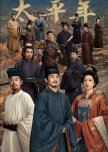
This isn’t just a historical drama—it’s a rare glimpse into the inner workings of a dynasty.
There’s something really satisfying about a drama like Swords into Plowshares—it doesn’t just tell a story, it quietly teaches you how a whole world functions.
What stands out is how it zooms in on the “unseen machinery” of a dynasty. Not just the generals shouting orders on the battlefield, but the structure behind everything—how troops are divided, who reports to whom, how discipline is maintained. It makes you realize that war wasn’t just chaos; it was system, hierarchy, and careful planning.
Then there’s the focus on supplies—grains, logistics, provisions. The drama shows that victories aren’t only won by swords, but by whether soldiers are fed, whether roads are safe, whether storage is managed well. It kind of shifts your perspective… like, a single delayed shipment could be just as dangerous as an enemy army.
What makes it even more immersive is how it doesn’t forget the capital. While battles happen far away, life at the center doesn’t pause—it reacts. Politics tighten, resources get strained, decisions become heavier. You start to see that war isn’t just fought on the frontlines, but also in courtrooms, storehouses, and strategy halls.
That level of detail makes the world feel alive and believable. Instead of romanticizing history, it breaks it down into moving parts—and somehow, that makes it even more powerful. It’s like the drama is saying: this is how a dynasty survives… or collapses.
What stands out is how it zooms in on the “unseen machinery” of a dynasty. Not just the generals shouting orders on the battlefield, but the structure behind everything—how troops are divided, who reports to whom, how discipline is maintained. It makes you realize that war wasn’t just chaos; it was system, hierarchy, and careful planning.
Then there’s the focus on supplies—grains, logistics, provisions. The drama shows that victories aren’t only won by swords, but by whether soldiers are fed, whether roads are safe, whether storage is managed well. It kind of shifts your perspective… like, a single delayed shipment could be just as dangerous as an enemy army.
What makes it even more immersive is how it doesn’t forget the capital. While battles happen far away, life at the center doesn’t pause—it reacts. Politics tighten, resources get strained, decisions become heavier. You start to see that war isn’t just fought on the frontlines, but also in courtrooms, storehouses, and strategy halls.
That level of detail makes the world feel alive and believable. Instead of romanticizing history, it breaks it down into moving parts—and somehow, that makes it even more powerful. It’s like the drama is saying: this is how a dynasty survives… or collapses.
Was this review helpful to you?


