

 11
11 14
14 2
2 1
1 1
1 8
8 2
2 1
1 1
1 4
4 1
1 2
2 2
2


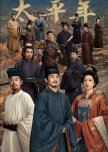
vast in scope and audacious in ambition
set in the Five Dynasties and Ten Kingdoms period, this drama is a rare epic and gives many of us, particularly international viewers, some fairly deep insight into an era that we may be unfamiliar with. if you can survive the first few episodes, much like the people of that time, you may find your endurance adequately rewarded by the end – the citizens with a unified, relatively peaceful state; the viewers with a wealth of historical factoids and a solid cinematic journey.
the first three episodes are a dizzying introduction to hundreds of characters, most of whom are narrative cannon fodder, and a nauseating introduction to the horrors of the never-ending wars. by the sixth episode, it has fully settled as characters are fleshed out and from then on, it develops into a layered and engrossing story as history is made human. the final arc demands that we accept something that is antithetical to many people’s worldview: that surrender is not necessarily failure. to this day, the economic legacy of this era where the leadership was focused on trade and uplifting the state, and a series of conscious choices to submit to more powerful allies rather than suffer damages from war, is reflected in the continued success of that little southeast corner of the nation.
one thing that is both appealing and intimidating about our main lead Qian Hongchu is the speed at which he makes massive decisions from a young age. he is a rare species, reactive but with impeccable moral logic, and he is fearless in delivering rapid-fire consequences when warranted. as he ages, you can actually see the tension increasing, with each decision weighing heavier, even though he knows it is the correct course of action. this progression culminates in his final decision, painstakingly made, and the heaviness of his steps as he makes his final journey out of Wuyue, tragically alone despite being surrounded by his clan.
Bai Yu’s portrayal of the middle-aged Qian Hongchu is where I found him most striking. he creates a strange tension which at first I questioned. compared with his usual more natural-feeling characterisations, he seemed to be visibly working hard, which is not a style that I favour personally. but with time, I came to realise that this was actually impressive work. that tension is within Qian Hongchu, himself playing a character playing a character. he is visibly suppressing his more natural fisherman prince persona in favour of the king he’s now required to be. his entire life has become a high-stakes bit.
in terms of some other members of the cast, Zhu Yawen is, as always, a study in charisma. his Zhao Kuangyin is magnetic, and not once did I question how he managed to garner support in any of his endeavours, even that most defining one. Zhou Yutong as Sun Taizhen is a light and somewhat odd-feeling presence early in the drama but comes into her own in her unfailing, mature, supportive role through the years despite her lean screen time.
the supporting characters were no less solid. a flawless performance by the evergreen Ni Dahong as Hu Jinsi, a man who does not shut up about how he is 90 years old and whose tenuous hold on patience is eventually broken. and Edward Zhang was a surprising winner for me, particularly in the later years where he thoroughly embodied the older version of Li Yuanqing, a grifting black hole of morality. criticism of the ageing makeup is justified. there are distracting discrepancies at both ends of the timeline. this performance, however, is not one of them.
there was one particular incident that I found jarring in how it was handled: the infamous 燭影斧聲 (candle and axe) scene. it reminded me of watching Empire of the Sun as a young teen after reading the book in literature class – astounded that the screen could bear so little resemblance to the vision I had created in my head. I feel like I would have preferred it to be a little more oblique instead of giving us a fictionalised version of what transpired inside the room.
there was a consistent and obvious attempt to humanise the characters which deserves praise. any habitual watcher of Chinese dramas likely knows to distrust joy, but space was made for people to be fully human and capable of joyful interaction, particularly within their families, which of course provided both occasional light relief as well as heightened emotional response to their fates.
the last few episodes could have done with a little more breathing space. the narrative was forced to coalesce very rapidly at this point and it felt like we lost touch with Qian Chu's world, both his internal world in terms of his decision-making but also externally, in terms of his relationship with his children particularly. in some ways though, it was entirely appropriate. his decisions had become slower, heavier, more loaded, and he found himself more isolated. it is unsurprising that we as viewers begin to lose our grip on his character at the same time but the sense of emptiness is hard to shake.
the occasional voiceovers were probably necessary but felt like a basic history lecture inserted because no one had any bandwidth left to show and not tell. working on this type of production must have been exhausting and even viewers might find themselves mentally overextended at times; nevertheless, it still feels like a suboptimal choice for storytelling.
the score is award-worthy. for me, this is Chen Xueran's master work. everything is well-calibrated, and it's rare to watch something with this level of care in the variations, which are then deployed with such meticulousness. throughout, the music was additive rather than intrusive.
with all that said, I am torn on how to rate this series. in pure enjoyment terms, I would probably give it 8.5/10. it is a monster of a drama, a multigenerational historical epic, and does occasionally falter of course. the core things that one would normally use to make a judgment – narrative, acting, pacing, special effects, direction – are solid. but it also deserves extra credit for sheer ambition. It’s a breathtakingly ambitious production.
I eventually settled on a very creditable 9/10. strongly recommended for fans of this type of series but probably a hard avoid for anyone who watches dramas purely for light entertainment and would balk at reading the Wikipedia entries of twenty different emperors.
[TW: graphic scenes of war and other violence, executions, sexual violence, cannibalism. don’t eat while watching if you are squeamish or unaccustomed to this type of historical drama.]
the first three episodes are a dizzying introduction to hundreds of characters, most of whom are narrative cannon fodder, and a nauseating introduction to the horrors of the never-ending wars. by the sixth episode, it has fully settled as characters are fleshed out and from then on, it develops into a layered and engrossing story as history is made human. the final arc demands that we accept something that is antithetical to many people’s worldview: that surrender is not necessarily failure. to this day, the economic legacy of this era where the leadership was focused on trade and uplifting the state, and a series of conscious choices to submit to more powerful allies rather than suffer damages from war, is reflected in the continued success of that little southeast corner of the nation.
one thing that is both appealing and intimidating about our main lead Qian Hongchu is the speed at which he makes massive decisions from a young age. he is a rare species, reactive but with impeccable moral logic, and he is fearless in delivering rapid-fire consequences when warranted. as he ages, you can actually see the tension increasing, with each decision weighing heavier, even though he knows it is the correct course of action. this progression culminates in his final decision, painstakingly made, and the heaviness of his steps as he makes his final journey out of Wuyue, tragically alone despite being surrounded by his clan.
Bai Yu’s portrayal of the middle-aged Qian Hongchu is where I found him most striking. he creates a strange tension which at first I questioned. compared with his usual more natural-feeling characterisations, he seemed to be visibly working hard, which is not a style that I favour personally. but with time, I came to realise that this was actually impressive work. that tension is within Qian Hongchu, himself playing a character playing a character. he is visibly suppressing his more natural fisherman prince persona in favour of the king he’s now required to be. his entire life has become a high-stakes bit.
in terms of some other members of the cast, Zhu Yawen is, as always, a study in charisma. his Zhao Kuangyin is magnetic, and not once did I question how he managed to garner support in any of his endeavours, even that most defining one. Zhou Yutong as Sun Taizhen is a light and somewhat odd-feeling presence early in the drama but comes into her own in her unfailing, mature, supportive role through the years despite her lean screen time.
the supporting characters were no less solid. a flawless performance by the evergreen Ni Dahong as Hu Jinsi, a man who does not shut up about how he is 90 years old and whose tenuous hold on patience is eventually broken. and Edward Zhang was a surprising winner for me, particularly in the later years where he thoroughly embodied the older version of Li Yuanqing, a grifting black hole of morality. criticism of the ageing makeup is justified. there are distracting discrepancies at both ends of the timeline. this performance, however, is not one of them.
there was one particular incident that I found jarring in how it was handled: the infamous 燭影斧聲 (candle and axe) scene. it reminded me of watching Empire of the Sun as a young teen after reading the book in literature class – astounded that the screen could bear so little resemblance to the vision I had created in my head. I feel like I would have preferred it to be a little more oblique instead of giving us a fictionalised version of what transpired inside the room.
there was a consistent and obvious attempt to humanise the characters which deserves praise. any habitual watcher of Chinese dramas likely knows to distrust joy, but space was made for people to be fully human and capable of joyful interaction, particularly within their families, which of course provided both occasional light relief as well as heightened emotional response to their fates.
the last few episodes could have done with a little more breathing space. the narrative was forced to coalesce very rapidly at this point and it felt like we lost touch with Qian Chu's world, both his internal world in terms of his decision-making but also externally, in terms of his relationship with his children particularly. in some ways though, it was entirely appropriate. his decisions had become slower, heavier, more loaded, and he found himself more isolated. it is unsurprising that we as viewers begin to lose our grip on his character at the same time but the sense of emptiness is hard to shake.
the occasional voiceovers were probably necessary but felt like a basic history lecture inserted because no one had any bandwidth left to show and not tell. working on this type of production must have been exhausting and even viewers might find themselves mentally overextended at times; nevertheless, it still feels like a suboptimal choice for storytelling.
the score is award-worthy. for me, this is Chen Xueran's master work. everything is well-calibrated, and it's rare to watch something with this level of care in the variations, which are then deployed with such meticulousness. throughout, the music was additive rather than intrusive.
with all that said, I am torn on how to rate this series. in pure enjoyment terms, I would probably give it 8.5/10. it is a monster of a drama, a multigenerational historical epic, and does occasionally falter of course. the core things that one would normally use to make a judgment – narrative, acting, pacing, special effects, direction – are solid. but it also deserves extra credit for sheer ambition. It’s a breathtakingly ambitious production.
I eventually settled on a very creditable 9/10. strongly recommended for fans of this type of series but probably a hard avoid for anyone who watches dramas purely for light entertainment and would balk at reading the Wikipedia entries of twenty different emperors.
[TW: graphic scenes of war and other violence, executions, sexual violence, cannibalism. don’t eat while watching if you are squeamish or unaccustomed to this type of historical drama.]
Was this review helpful to you?


