
 News
News 


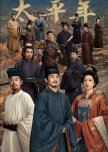
Today you're king, tomorrow you're gone.
It was a good series. I enjoyed watching it. Those who like this type of series can watch it. Because it's a bit of a political series. There's a lot of dialogue. Long conversations can sometimes be boring. The action is watchable, but the excessive dialogue reduces watchability. It gets tedious. That's why some people stop watching.
It depicts the turbulent period of the Five Dynasties and Ten Kingdoms. We can say it represents the transition from instability to stability. The lives of three kings, in particular, who contributed to this are the focus. The unification is depicted in the end.
I liked it. There were minor flaws. There wasn't a complete narrative. Otherwise, it wouldn't have been something that could fit into so many episodes.
There's no romance in the series. Only in the last episode, the conversation, hugs, and funeral ceremony after King Chu's wife's death moved me. While the kings, especially the fathers, are the focus, except for one king, none of the kings' wives, mothers, or fathers are mentioned. Those topics weren't explored. In other words, the subject wasn't delved into.
There was a guard played by Wan Zhi Peng. Every time, this man gets removed from his post. But then you see him doing the same things again. In one scene, the Guard Commander he portrays is removed from his post and demoted to private. In the next scene, you see the same man, as Guard Commander, beheading someone else.
Also, in the Qian dynasty, I think the sixth prince dies as king. Afterwards, his brother becomes king. When he dies, the mother figure appears. So, it seems these princes had mothers who were alive. Why wasn't she present at the deaths of the other princes after the father's death, or at their reigns, but only at the death of one prince? I was surprised. For example, such interesting things happened. I found it strange. I wouldn't say I found fault, but these felt like patches. They distanced the series from its core. It should have been all or nothing. It's as if one had a mother and the other didn't.
All the kings are married, for example, but their relationships with their wives were never shown. There were brief glimpses, but no detail was explored. The sons didn't rebel against the other becoming king. So, even if these events happened, they weren't reflected to us. There can be shortcomings like that. But not in this many episodes. It would take hundreds of episodes to fully capture it. It reflects that period in a general way. I liked it. I even compared it to "Nirvana On Fire" at times. It's not quite on the same level, but it's about the same. Bai Yu, Zhou Yu Tong, Zhu Ya Wen, Yu Hao Ming, and Dong Yong were especially successful. Ni Da Hong reflected his experience. He was very, very good. I liked it a lot. Wu Hao Chen was unexpectedly good. I didn't expect that. Jiang Kai, Gao Yu Qing, Edward Zhang, Wang Zhi Peng, and Mei Ting were the ones that stood out to me. I also liked the young princes. I especially recommend it to those who like political dramas.
It depicts the turbulent period of the Five Dynasties and Ten Kingdoms. We can say it represents the transition from instability to stability. The lives of three kings, in particular, who contributed to this are the focus. The unification is depicted in the end.
I liked it. There were minor flaws. There wasn't a complete narrative. Otherwise, it wouldn't have been something that could fit into so many episodes.
There's no romance in the series. Only in the last episode, the conversation, hugs, and funeral ceremony after King Chu's wife's death moved me. While the kings, especially the fathers, are the focus, except for one king, none of the kings' wives, mothers, or fathers are mentioned. Those topics weren't explored. In other words, the subject wasn't delved into.
There was a guard played by Wan Zhi Peng. Every time, this man gets removed from his post. But then you see him doing the same things again. In one scene, the Guard Commander he portrays is removed from his post and demoted to private. In the next scene, you see the same man, as Guard Commander, beheading someone else.
Also, in the Qian dynasty, I think the sixth prince dies as king. Afterwards, his brother becomes king. When he dies, the mother figure appears. So, it seems these princes had mothers who were alive. Why wasn't she present at the deaths of the other princes after the father's death, or at their reigns, but only at the death of one prince? I was surprised. For example, such interesting things happened. I found it strange. I wouldn't say I found fault, but these felt like patches. They distanced the series from its core. It should have been all or nothing. It's as if one had a mother and the other didn't.
All the kings are married, for example, but their relationships with their wives were never shown. There were brief glimpses, but no detail was explored. The sons didn't rebel against the other becoming king. So, even if these events happened, they weren't reflected to us. There can be shortcomings like that. But not in this many episodes. It would take hundreds of episodes to fully capture it. It reflects that period in a general way. I liked it. I even compared it to "Nirvana On Fire" at times. It's not quite on the same level, but it's about the same. Bai Yu, Zhou Yu Tong, Zhu Ya Wen, Yu Hao Ming, and Dong Yong were especially successful. Ni Da Hong reflected his experience. He was very, very good. I liked it a lot. Wu Hao Chen was unexpectedly good. I didn't expect that. Jiang Kai, Gao Yu Qing, Edward Zhang, Wang Zhi Peng, and Mei Ting were the ones that stood out to me. I also liked the young princes. I especially recommend it to those who like political dramas.
Was this review helpful to you?


