News
News 

This is high quality dramas in 2026
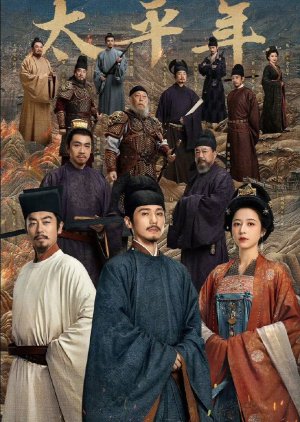
I'm a multi genre viewer. I watch any drama and film, including Cdramas, Thaidramas, Kdramas, and Jdramas, as long as they're engaging and high-quality. I can watch both light and heavy stories.When judging a drama, I consider the seriousness of the production team. Is the script heartfelt? Are the actors' performances good? That's what I consider. And this drama is one of the best dramas in my opinion and a favorite in 2026. This story isn't made for everyone because of its serious and heavy topic, but the script makes this heavy topic interesting to watch.
At the beginning of the episode, I saw how chaotic the times were with epic cinematography, so many actors, horses, and props that must have cost a lot of money. THIS IS AN EXPENSIVE DRAMA!! The storyline is great, the friendship between young people like Qian, Zhou, and Guo is very touching. Controversial figures in history like Hu Jin Si, Feng Dao, and my favorite character Shuiqiu... all are well written. I like Hongchu's growth in this story, his love story with Tai Zhen is only a small part of the story but I think the portion is very appropriate (although in history Hongchu had many concubines and children, it's okay if we just ignore it).
This story teaches me the sacrifices of people in the past, their struggles and integrity are truly extraordinary, this drama brought me into the story, made me cry and laugh.
If I transmigrated into this drama, I don't think I would be able to last for 2 episodes. My IQ, EQ, crisis management, emotional management and wisdom are very lacking to survive long in this era, modern knowledge will not be useful when war always occurs and peace is difficult to achieve. This is the second best drama in my opinion in 2026, hopefully there will be more satisfying dramas this year.
Was this review helpful to you?
Outstanding performances from the cast!!! Nakakatouch ung philosophy at yung commitment nya to the well being of his people at ung belief nya for peaceful transition, then yung pagascend nya sa throne to become the historical and last ruler of the Wuyue Kingdom (Zhejiang Provinxe, including parts of Jiangsu and Shanghai) until they surrendered to The Northern Song Dynasty to reunify most of China! Reigned from 947-878 AD. "For the greater cause - regional stability over personal power." 👏
Highly recommended for anyone who enjoys meaningful historical dramas.
#BaiYu #ZhouYutong #SwordIntoPlowshares #太平年
Was this review helpful to you?
An Ambitious Historical Gem That Deserved Much More Recognition
As someone who is slowly trying to learn Mandarin and has a growing interest in Chinese culture and history, I was immediately intrigued by the reviews mentioning that Swords in Plowshares was based on real historical events. That was what convinced me to continue watching, even during the first 10–12 episodes, which I honestly found quite difficult and confusing because of the many characters, names and places I had no previous knowledge of.My advice is: do not focus too much on remembering every name or understanding every detail immediately. Just let the story unfold naturally. Little by little, the bigger picture becomes clearer. Around the middle of the drama, I became completely engaged, and it actually sparked my curiosity about this period of Chinese history. I now want to watch documentaries and learn more about it.
This drama was extremely ambitious in its attempt to portray such a vast and complex historical period. There was an enormous amount of material to cover, yet in my opinion it succeeded remarkably well in its intent. The acting, directing, storytelling and soundtrack are all superb.
Do not expect epic battles scenes; the focus is mainly on politics, strategy, human relationships and character development. It is a thoughtful and deeply immersive historical drama that stays with you after finishing it and leaves you wanting to know more about Chinese history and culture.
It is honestly a shame that it did not receive the attention it deserved, although I suppose many viewers today are more interested in pure entertainment than slower and more intellectually demanding storytelling.
Was this review helpful to you?
Great historical drama!
Definitely feels like one of those that should be a 9 at least in my opinion, but overall, one of the best recent historical dramas I've seen! Really a good watch for those interested in the history of China. It can be boring if you're not into history, may even be hard to follow if you're not good with Chinese names, and somewhat long and boring at parts (like discussions about politics if you're not into that stuff), but overall I still really enjoyed learning about the history of this time period between the end of the Tang and the beginning of the Song. It truly was such a messy period back then that I never knew about as I never saw any other historical dramas about that era!Was this review helpful to you?
This review may contain spoilers
A Historical Account presented masterfully in an engaging drama.
The initial 5 episodes are chaotic and confusing, needing to be revisited time and again. By the last episode it's incredible how the entire series tied up, and how high, the characters in Ep 1 has risen.There is the bigger background story of a period when China was going through a chaotic period when 5 dynasties succeed each other in rapid sequence in the North. Simultaneously, it also chronicled the rise and fall of 10 kingdoms in the South. There is only one Emperor who rules from Kaifeng and is the dominant power of the North/Central Plains. He heads a Dynasty, or family, and the change of Emperor together with the fall of the his family marks the transition of a Dynasty when there is no orderly succession. Each Kingdom has its own monarchy with its familiar politics. Although these Kingdoms maintain its own independence, they are all beholden to the Emperor in Kaifeng. Depending on the highly dynamic relationships between the Emperor and these Kingdoms, the Emperor may have very benevolent and friendly ties or on the contrary be highly antagonistic to the point of military subservience.
The fall of the Tang Dynasty, plunged the era and especially the Central Plains of the North, into a turbulent period of wars and power struggles between opposing states and military regimes. The Tang dynasty was ended by Zhu Wen, a rebel warlord who founded the Later Liang dynasty. He was in turn overthrown and replaced by Li Cunxu, son of his main military rival, Li Keyong, founding the Later Tang dynasty, the second dynasty after Tang. Li was in turn usurped by a trusted general, Shi Jintang, son of another Commander in Li Keyong's army, with the help of the Khitans, setting up the Later Jin Dynasty, the 3rd Dynasty after Tang.
This CDrama starts with the compromised Emperor Shi, beholden to the Khitans being the Central Plains dominant power.
Within this background was the Kingdom of Wuyue, a small but extremely prosperous Kingdom, who lived by the mantra of "serving the central plains". They were a vassal state within the Central Plains paying homage and tributes to the Central Plains Emperor. The King at the start of the series was Qian YuanGuang, who has 2 adopted sons, the 1st and 2nd Princes. This is the story of the 9th Prince, Qian HongChu.
Wuyue borders with the Kingdom of Southern Tang. They are both adversaries and often in armed conflicts. Within this corner of the world, there operates a strong independent sea borne merchant fleet headed by a strong willed woman, Lady Yu, who was once the wife of King YuanGuang. She left the King after he married another as part of a power alliance.. She is the biological mother of the 3rd Prince, Qian HongZuo, and also the mother of Sun Taizhen, her only daughter and another younger son ChengZuo. Lady Yu and her brother, Yu Wenxiu, runs the HuangLong Society fleet out of HuangLong Island.
Within this mix of royals, there is a powerful ensemble of nobles, generals and merchants, each with their own interests. A prominent merchant from Wuyue, Cheng Zhaoyue is plotting with Li YuanQing, a Commander of an elite Southern Tang military unit.
QHC, who seems to have a predilection to get into spots is captured aboard a HuangLong Society ship and brought to HuangLong Island, where he was attended to by STZ.
This is a historical account seen from the smaller perspective of the trials and tribulations of a vassal state against the bigger canvas of shifting power dynamics of imperialism. One needs to get past the first 10 episodes before the the entirety of the canvas becomes more apparent. There are more villains than heroes and principles are readily abandoned for power and ambitions.
There are several threads that are sometimes loosely intertwined and then ends up tightly bound for a very engaging story line and immensely engaging plot.
Was this review helpful to you?

Burden of Throne. "A Masterpiece on Screenplay"
Sit on this throne. Yes you will have power, yes you will have status, yes you will have authority. But no, you will never have peace.I think this is the only show that has ever truly depicted the burden of sitting on a throne during Five dynasties Ten kingdoms era. They took historical records, added a bit of fiction and drama and written a compelling story.
This truly deserves a 10/10. Why? Not only because of the screenplay but also the production, background score and an impeccable performance. This is not just a regular TV drama but a true experience of Chinese Five dynasties Ten kingdoms era history.
P.S: Of course, these historical figures weren't truely fighting only for common people. But I am sure that they were very conscious and tried very hard to bring a peaceful and a prosperous era so people won't suffer.
Was this review helpful to you?

The history of the unstable dynasty and the journey to a stable Era
I would say from the beginning to the end I really love the drama even though I know that it not 100 percent accurate like what happened back then but they got a lot of the important event in and also the way they represent the culture was also very nicethe characters
Qiao Chu : I would definitely say he is my favourite character even towards the ending i grew to love him more especially when he made me understand that wuyue is not just the Qiao family kingdom but the peoples too that he can’t make a decision along about surrendering the land at the ends after he does he was labeled a loyal minister of the court I would truly say I was moved because after all all they have worked for his for the peaceful era
lady sun : Her death hurt me to the core I truly didn’t see it coming but I do understand that people can’t live forever but the fact that she went first and he has to live alone for so long before he joined her was so painful her character was very crucial in the drama because I believe that she is the only one that can make him change his mind talk to him and also understand him like when he didn’t want to sumit new tributes to the new emperor she played a significant role in helping to Realize that it won’t be smart to so that and at the end when she died and didn’t want to be buried in the ground I truly felt it as she grew up at the sea so her burial ground being the sea makes so much sense .
At the end of this drama the world is finally at peace the song dynasty ruled and it the peace ful era that so many people faught for it moves to how many powerful figures had an hand to this powerful dynasty and never got to see it and one like that moved me at the end was when Qiao Chu older brother told him that all the people from the past generation have died and that he it finally a peaceful era and that he should go with the trend and surrender the land to the empire I really cried because when Qiao Chu acknowledge the people of wuyue abs told them that the world is finally at peace and all that remains for unification is Wuyue territory and also they get such high welcoming if they just surrender in peace and he was labeled one of the most loyal people of the dynasty honestly I would say that this peace ful era was not achieved by one person but multiple every character played a role and after how many generations have passed they can finally say there was a peaceful Era 😭😭😭
Was this review helpful to you?

Stumbled upon this gem when I was searching for Zhou Yu Tong's drama
LIKEOmg that cannibal scene cannibal due to war - pukes
Very confusing every scene is moving fast no time for silly jokes all serious business
Need to know Chinese history to understand so many armies and countries omg
So many characters I have headache everyone I watched from here and there and see them in one drama wow huge blockbuster
Rewards and punishment from Shui Qiu Zhao Quan wow well said
Not at war doesn’t mean the world is at peace
What Qian Hong Chu did and all the generals, officers of Bian Liang covered for him wowowow
Hong Chu’s innocent thinking often lands him in trouble but he also did stuffs what others don’t dare to think of doing
Hu Ling Gong loves Wu Yue a lot
What Hong Chu did to He Cheng Xun was so good and taught Minister Hu a lesson
The Guo family so saddddd why good loyal officials generals are often being blamed
Emperor’s all short lived
The attention to details everyone grew older overtime and their little actions showed it is really excellent
Ah Ping is so smart
This Si Ma Pu reprimands Song Dynasty Emperor wowowowow
Thus is the fate of two princes one is capable and one is not, complete opposite of their fathers
I cried for Sun Tai Zhen and when lands are given back to Song Emperor
Towards the end I had nervous breakdown just to see what is going to happen my god this drama is just too good
Would history re-writes if another person rules Song Dynasty?
DISLIKE
This Qian Hong Zong is really soooo silly don’t know what he is thinking.. he is pathetic unbelievable should just die - what he did eventually got rid of a loyal royal and official of Wu Yue
MUSIC - personal fav
敬太平 Jing Tai Ping - 陈雪燃 Chen Xue Ran
萬里 Wan Li - 周深 Zhou Shen
REWATCH VALUE
I'll re-watch when I'm free someday
Was this review helpful to you?
REMARKABLE
One of my top cdramas of all time. From the score to the dialogue to the acting to the artistic liberties taken with the historical events that this drama is based on, there is absolutely nothing I would complain about. This is the perfect production. I would recommend this to anyone who has an interest in Chinese history, action, or political maneuvering.Was this review helpful to you?

Historical period drama
This is a historical war drama. I love period dramas but this one seems to take on so many characters, I have a difficult time following the series of events. I truly like all the actors and that is why I tried to watch it twice. I am giving up this time at episode 8 as I prefer some comedy compared to war dramas.Was this review helpful to you?

This review may contain spoilers
太平年下的一杯熱酒?
此劇名「太平年」,以亂世兵以民為糧的場景開頭,點出五代十國的血腥特色。且故事分成兩個場景敘述,一邊是皇帝不斷更替的汴京,一邊則是相對國泰民安,百姓穩定生活的吳越。在如此混亂的時局下,主角們是如何誕生出「太平」這樣的理想,並學習如何去實踐與創造。故事從後晉開始,一路到吳越納土歸宋。北方王朝的版圖越來越大,先南後北的政策下,將南唐給打了下來,而協助宋的吳越自是唇亡齒寒,只能納土了。
「金鳳欲飛遭掣搦,情脈脈,看即玉樓雲雨隔」、「帝鄉煙雨鎖春愁,故國山川空淚眼。 」是吳越王錢弘俶在納土歸宋前後所吟詠的詩詞句。可見納土歸宋並非錢王全然實心誠意。
納土後,錢弘俶夫人孫氏封吳越國王妃,開了外姓諸侯王妻封妃的先例;趙匡胤又設王宴,讓錢弘俶與其弟趙匡義、趙匡美「敘昆仲之禮」。相比蜀孟昶的不堪、唐李煜的受辱,錢氏確受榮寵,又由於恭順,被趙匡胤許「盡吾一生,盡汝一生,令汝享有二浙也。」納土歸宋,雖是將數十年錢氏父祖東南基業拱手相讓,然而兵不血刃,頗受時人與後世讚頌。且從趙匡胤賜下的恩典可見,趙氏多麼重視這個行動。
在電視劇的改編中,無論是兼併南唐或吳越,似乎都是為了「太平」的理想,然而若單以「太平」考量,會質疑吳越善事中原大國,撫育數十年的黎庶,為何也需納土?然而,南方政權確實是趙匡胤要北伐前的心頭隱患;在劇中,也需服務「統一」的現實政治寓意,比如指斥南唐分裂疆土。也許正是這段歷史情境,與當下政治有所呼應,因此使此劇受審核良久,才刪減出現在觀眾看到的版本。
故事有點高開低走,後面的敘事能發揮的空間很有限。
Was this review helpful to you?

De Espadas a Arados - política, caos e guerra.
A série se passa durante o período das Cinco Dinastias e Dez Reinos, um dos momentos mais instáveis da história chinesa, logo após a queda da dinastia Tang. Aqui não existe um império central forte, mas sim vários reinos menores disputando poder ao mesmo tempo, com dinastias surgindo e caindo em sequência.O resultado é um cenário de guerra constante, instabilidade política e trocas frequentes de governantes. É um contexto caótico, onde alianças são frágeis e sobreviver já é, por si só, uma conquista.
Dentro desse cenário, acompanhamos três figuras históricas importantes: Hong Chu, Guo Rong e Kuang Yin.
Hong Chu é o foco principal da narrativa, um príncipe inicialmente despreocupado e sem grandes ambições, que aos poucos é exposto às complexidades do poder. Guo Rong representa uma liderança mais estabelecida e consciente do peso das decisões políticas, enquanto Kuang Yin surge como um militar que gradualmente entra nesse jogo político.
O ponto forte da série está no desenvolvimento do Hong Chu. A evolução dele é lenta, construída ao longo de diversas experiências, como guerra, administração, corrupção, relações políticas, não dependendo de grandes momentos de virada. Isso torna a trajetória mais realista, mas também exige paciência do espectador.
Especialmente no início, o drama pode parecer confuso e até arrastado, já que joga o espectador direto no meio de um cenário político complexo, com muitos personagens e pouca contextualização imediata. Mas conforme a narrativa avança, essa construção mais gradual começa a fazer sentido.
Outro aspecto importante é que o drama não romantiza o poder. As decisões são duras, muitas vezes desconfortáveis, e raramente existe uma solução ideal. Governar, aqui, não é um ato heroico, é uma tentativa constante de manter algum nível de ordem dentro de um sistema instável e frequentemente corrupto.
A série também trabalha bem a sensação de repetição histórica. Reis e Imperadores morrem, por doença ou por conflitos, e novos assumem, mas os bastidores continuam muito semelhantes. Essa ideia de ciclo é reforçada principalmente pelas figuras políticas “moderadas”, que aparentam equilíbrio, mas na prática ajudam a manter o sistema como está, preservando seus próprios interesses.
De Espadas a Arados é uma série histórica densa, que exige atenção e envolvimento, o que pode não agradar quem busca uma narrativa mais dinâmica ou recompensas rápidas.
Por outro lado, para quem gosta de histórias políticas mais realistas, com desenvolvimento consistente de personagens e um contexto histórico inédito para a maioria, ele oferece uma experiência bastante sólida e recompensadora.
Para mais, visite no youtube o canal @CdramaBrasil
Was this review helpful to you?