

 2
2


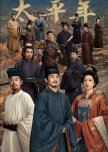
A Drama That Turns History into Reflection, Meaning, and Message to Humanity
A historical drama rooted in real historical events is quite rare in the landscape of Chinese dramas. That’s why I feel truly grateful to have watched Swords into Plowshares. While watching it, I was reminded of the early wave of Hallyu, marked by remarkable Korean historical dramas such as Jewel in the Palace (2003), Jumong (2006), and Queen Seondeok (2009). It made me think that China should produce more works that explore its own history and culture and create a similar impact, helping the world better understand and appreciate the richness of Chinese society. As an international viewer, I can’t really take part in the heated debates about the more controversial aspects of this drama, but I genuinely appreciate it and thoroughly enjoyed watching it.
The first thing I love about this drama is how intellectually challenging it is. It covers a full century of the Ten Kingdoms and Five Dynasties period in 10th-century China—an era after the fall of the Tang Dynasty that bridges the rise of the Song Dynasty. Watching the story, directly or indirectly, feels like learning history. There are so many events, all connected, forming a continuous chain that builds a coherent historical narrative. The storytelling is dense and demands focus and careful attention to fully understand what’s happening. Each episode needs to be followed slowly, without rushing. For viewers who enjoy a strong cognitive challenge, this drama is deeply satisfying.
The second thing is that this drama feels deeply meaningful to me. Its central theme is very clear: the search for peace and unity in a land torn by chaos and division. This is a universal pursuit, because every nation longs for these things in a world that is far from stable. What makes it compelling is that the drama portrays this journey as long, difficult, and full of sacrifice. It truly reflects the idea that “you cannot change the world before you change yourself.” We cannot bring peace to the world unless we ourselves desire peace and are committed to resolving conflicts through peaceful means. And we can only reach that point when we realize that violence is not a solution—it only creates more suffering and destruction.
Third, I really appreciate how realistic the drama is in handling issues of governance, society, and the state. I especially like how it presents leadership, bureaucracy/government officials, and military power as three pillars that must stand together to support the state. When one of these pillars fails, the country cannot function or move forward properly. The drama goes into great detail in portraying the dynamics and interactions among rulers, officials, and the military—how decisions are formed, debated, finalized, and agreed upon; how ideas develop based on virtues and righteousness; and how morality is preserved in an era when human dignity has fallen so low to the point where people literally become beasts who consume their own kind. Even though it is set in a dark and chaotic period, the story itself feels like a light at the end of the tunnel, offering hope.
Fourth, the character development is deeply moving. Even though it tells a grand historical story, the drama skillfully uses the perspectives of four main figures—Guo Rong, Zhao Kuangyin, Qian Hongchu, and Sun Taizen. We follow their journeys from youth to the end of their lives, witnessing how they change as they begin as nobodies, face the harshness of the world, form friendships, build shared goals of peace in their own ways, collaborate in different ways, and eventually become influential figures who shape history. Through their eyes, we experience both the joys and sorrows of that journey. We feel their worries, their losses, and their struggles, as well as their moments of success. Even though this is not primarily a character-driven story, it still explores their psychological depth well, allowing the audience to form a strong emotional connection with each of the main characters.
Lastly, this drama offers far more than I expected when I first started watching. The storytelling is very tight—effective and efficient. There are no wasted scenes, the plot is handled with strong discipline all the way to the end, and plot holes are kept to a minimum. The setting feels highly realistic, and the drama is unflinching in portraying the brutal side of history, yet it still leaves room for reflection and contemplation, helping the audience understand the world with a clear moral grounding. The values and virtues are consistently upheld throughout the story, so it never turns into just another Game of Thrones-type show that glorifies violence and the darker side of human nature. The use of music is also excellent—I never felt the need to skip the opening or ending songs. On top of that, the presence of many veteran actors adds a strong sense of gravitas, reinforcing that this is a drama created with a serious purpose and a message to deliver.
In the end, this drama stands out as a rare and meaningful work—intellectually engaging, emotionally resonant, and grounded in a rich historical reality. It offers not only a sweeping portrayal of a turbulent era, but also a thoughtful reflection on peace, leadership, morality, and the human condition. With its disciplined storytelling, strong performances, and clear sense of purpose, it delivers far more than mere entertainment. For anyone seeking a drama that challenges the mind, moves the heart, and leaves a lasting impression, this is absolutely worth watching.
The first thing I love about this drama is how intellectually challenging it is. It covers a full century of the Ten Kingdoms and Five Dynasties period in 10th-century China—an era after the fall of the Tang Dynasty that bridges the rise of the Song Dynasty. Watching the story, directly or indirectly, feels like learning history. There are so many events, all connected, forming a continuous chain that builds a coherent historical narrative. The storytelling is dense and demands focus and careful attention to fully understand what’s happening. Each episode needs to be followed slowly, without rushing. For viewers who enjoy a strong cognitive challenge, this drama is deeply satisfying.
The second thing is that this drama feels deeply meaningful to me. Its central theme is very clear: the search for peace and unity in a land torn by chaos and division. This is a universal pursuit, because every nation longs for these things in a world that is far from stable. What makes it compelling is that the drama portrays this journey as long, difficult, and full of sacrifice. It truly reflects the idea that “you cannot change the world before you change yourself.” We cannot bring peace to the world unless we ourselves desire peace and are committed to resolving conflicts through peaceful means. And we can only reach that point when we realize that violence is not a solution—it only creates more suffering and destruction.
Third, I really appreciate how realistic the drama is in handling issues of governance, society, and the state. I especially like how it presents leadership, bureaucracy/government officials, and military power as three pillars that must stand together to support the state. When one of these pillars fails, the country cannot function or move forward properly. The drama goes into great detail in portraying the dynamics and interactions among rulers, officials, and the military—how decisions are formed, debated, finalized, and agreed upon; how ideas develop based on virtues and righteousness; and how morality is preserved in an era when human dignity has fallen so low to the point where people literally become beasts who consume their own kind. Even though it is set in a dark and chaotic period, the story itself feels like a light at the end of the tunnel, offering hope.
Fourth, the character development is deeply moving. Even though it tells a grand historical story, the drama skillfully uses the perspectives of four main figures—Guo Rong, Zhao Kuangyin, Qian Hongchu, and Sun Taizen. We follow their journeys from youth to the end of their lives, witnessing how they change as they begin as nobodies, face the harshness of the world, form friendships, build shared goals of peace in their own ways, collaborate in different ways, and eventually become influential figures who shape history. Through their eyes, we experience both the joys and sorrows of that journey. We feel their worries, their losses, and their struggles, as well as their moments of success. Even though this is not primarily a character-driven story, it still explores their psychological depth well, allowing the audience to form a strong emotional connection with each of the main characters.
Lastly, this drama offers far more than I expected when I first started watching. The storytelling is very tight—effective and efficient. There are no wasted scenes, the plot is handled with strong discipline all the way to the end, and plot holes are kept to a minimum. The setting feels highly realistic, and the drama is unflinching in portraying the brutal side of history, yet it still leaves room for reflection and contemplation, helping the audience understand the world with a clear moral grounding. The values and virtues are consistently upheld throughout the story, so it never turns into just another Game of Thrones-type show that glorifies violence and the darker side of human nature. The use of music is also excellent—I never felt the need to skip the opening or ending songs. On top of that, the presence of many veteran actors adds a strong sense of gravitas, reinforcing that this is a drama created with a serious purpose and a message to deliver.
In the end, this drama stands out as a rare and meaningful work—intellectually engaging, emotionally resonant, and grounded in a rich historical reality. It offers not only a sweeping portrayal of a turbulent era, but also a thoughtful reflection on peace, leadership, morality, and the human condition. With its disciplined storytelling, strong performances, and clear sense of purpose, it delivers far more than mere entertainment. For anyone seeking a drama that challenges the mind, moves the heart, and leaves a lasting impression, this is absolutely worth watching.
Was this review helpful to you?


