


7) Día de los Muertos (Day of the Dead)
:max_bytes(150000):strip_icc()/Dia-De-Los-Muertos-opener-MAG-1124-e4357a3902f84f649cfa58f3341ebcae.jpg) A vibrant Mexican holiday celebrated annually from November 1st to November 2nd. Rather than a time of mourning or a spooky occasion like Halloween, it is a joyful reunion between the living and the spirits of departed loved ones. According to tradition, the boundary between the spirit world and the physical world dissolves during these two days, allowing souls to return and celebrate alongside their families.
A vibrant Mexican holiday celebrated annually from November 1st to November 2nd. Rather than a time of mourning or a spooky occasion like Halloween, it is a joyful reunion between the living and the spirits of departed loved ones. According to tradition, the boundary between the spirit world and the physical world dissolves during these two days, allowing souls to return and celebrate alongside their families.
The centerpiece of the celebration is the ofrenda, a home altar lovingly built to welcome visiting spirits. These altars are adorned with vibrant orange marigolds (cempasúchil), framed photographs of the deceased, candles to guide their path, and offerings of their favorite foods and beverages. Families also prepare special items like pan de muerto (a sweet yeast bread decorated with bone-like shapes) and intricate sugar skulls (calaveras).

mongwoo:
5) chocolate is originally from Mesoamerica, which includes modern-day Mexico and Central America, with ancient roots traced back over 4,000 years to early civilizations like the Olmec and Mokaya.
When we think of chocolate we often think of the luxurious and indulgent modern-day confections from Belgium, Switzerland and Germany, or fond childhood memories of the American classics like Hershey’s Bars. There is however one country that can proudly lay claim to being the home of chocolate, albeit in a very different form to that enjoyed across the world today. That country is of course Mexico. While there is some academic debate regarding the exact origin of the precious cacao trees used to create chocolate, any Mexican will tell you that chocolate not only hails from Mexico but is a key part of its history and heritage.
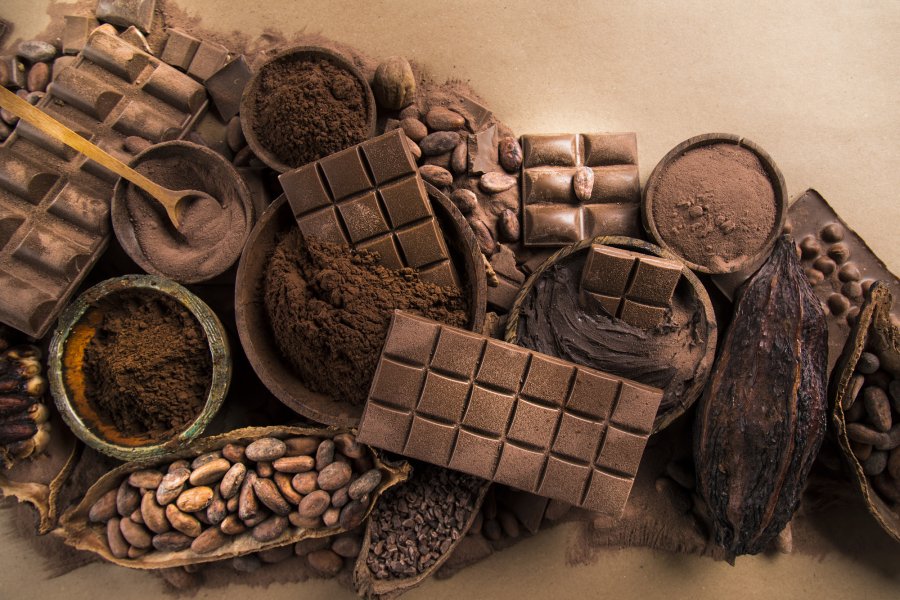
And we drink it even today as some people in other countries drink the coffee, with hot water and no milk and sugar that was what Spaniards did for controlling the acidity of the original Aztec, Zapotec, Mayan and many other aboriginal cultures drink.
8) Sana sana colita de rana
Here is what I mean by that:
In Mexico, if you get sick, a neighbor you barely know will show up at your door with a mug of hot atole or te de manzanilla without you asking. If you are crying, an elderly aunt or even a stranger on the street will place a hand on your shoulder, look you in the eye, and say "échale ganas" (hang in there) with a sincerity that feels like a hug. If a child falls and scrapes their knee, the immediate response isn't just a band-aid—it is the ritual of "sana sana colita de rana" while someone rubs your back.
What Mexicans abroad miss is the physicality and immediacy of that communal warmth.
In the U.S., Canada, or Europe, when you are struggling, people give you "space." They text you "let me know if you need anything" (which you will never actually ask for). They respect your privacy.
In Mexico, they invade your privacy with love. They show up. They touch you. They sit with you in silence. They feed you. They don't ask for permission to care for you; they just do it.
Mexicans who live abroad for a while often find themselves deeply lonely not because they lack friends, but because they miss the unspoken permission to be vulnerable in public and the spontaneous, tactile response of a community that treats your problems as their problems. They miss a culture where "how are you?" isn't a greeting, but a genuine invitation to share your burden—and where the other person will physically stay until that burden feels a little lighter.
10) Tequila
Tequila is a distilled spirit deeply tied to Mexican heritage, made exclusively from the heart of the blue Weber agave plant (Agave tequilana). By Mexican law, authentic tequila can only be produced in designated regions—primarily the state of Jalisco, along with specific municipalities in Guanajuato, Michoacán, Nayarit, and Tamaulipas. This Designation of Origin ensures that the spirit reflects the unique terroir, soil, and climate of west-central Mexico.
Tequila falls into several distinct categories based on aging. Blanco (or Silver) is unaged or aged briefly for less than two months, offering a crisp, agave-forward flavor with bright herbal and citrus notes. Reposado is aged in oak barrels for two months to a year, gaining a soft golden hue and subtle notes of vanilla and oak. Añejo is aged between one and three years, yielding a deeper amber color and richer, whiskey-like characteristics, while Extra Añejo ages for over three years for maximum complexity. Whether enjoyed neat as a sipping spirit or shaken into classic cocktails like the Margarita or Paloma, tequila remains one of the world's most versatile and celebrated spirits.
Timor-Leste
1) Tais textiles
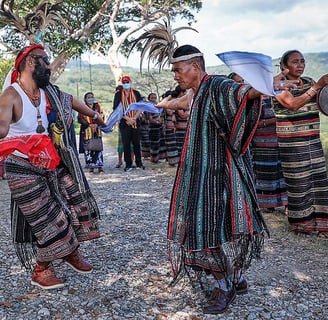
Tais is the traditional handwoven cloth of Timor-Leste, serving as an essential symbol of the nation’s cultural identity, heritage, and social fabric. Primarily crafted by women using backstrap looms, Tais weaving is an art form passed down through generations. The textiles are created using dyed cotton threads to form vibrant colors and intricate geometric patterns, each representing specific ancestral lineages, clans, and municipalities across the country.
Beyond their visual beauty, Tais textiles hold deep ceremonial and social significance in Timorese life. They play a central role in life events—such as weddings, births, and funerals—and are frequently presented as official gifts of respect and welcome to honored guests. The motifs embedded in the cloth often depict local folklore, sacred symbols like the crocodile (a revered figure in Timorese origin stories), and historical events.
3 Endemic Species to Timor Leste
Timor-Leste, part of the Wallacea biodiversity hotspot, is home to a remarkable array of endemic species found nowhere else on Earth . Its isolation has fostered high levels of endemism, particularly among reptiles and amphibians, with about 50% of frog species and 25% of skinks and geckos being endemic to the island .
One of the most critically endangered endemic species is the Timor green pigeon (Treron psittaceus). Known for its distinctive mango-green plumage, its population has catastrophically declined to an estimated global population of only 100-500 individuals . Its final stronghold is in Timor-Leste's Nino Konis Santana National Park, with the species now considered nearly extinct in Indonesian West Timor .
Recent discoveries highlight the country's undiscovered biodiversity. In 2023, a new species of bent-toed gecko, Cyrtodactylus santana, was described from a limestone cave in Nino Konis Santana National Park . Nearby Ataúro Island also harbors potentially undescribed endemic species of geckos and skinks . In 2024, researchers captured the first-ever live footage of the rare painted swellshark (Cephaloscyllium pictum) in the deep waters off Dili, a species previously known only from fish markets in Indonesia .
These endemic species face significant threats, including habitat loss, hunting, and resource extraction . The 2026 designation of Nino Konis Santana as a UNESCO Biosphere Reserve represents a major step towards conserving this unique natural heritage and the endemic species it harbors .
4 ― Timor's Name Origin
The name Timor originates from the Malay and Indonesian word timur, which literally means "east".
The island received this name from the inhabitants of the surrounding archipelago due to its geographic position at the eastern end of the Lesser Sunda Islands chain. When Portuguese explorers arrived in the region during the 16th century, they adopted the local name and transcribed it into Portuguese as "Timor."
The name creates a unique geographical tautology in the official naming of the modern nation on the island's eastern half, East Timor:
In Portuguese (Timor-Leste): Since leste is the Portuguese word for "east," the country's official name translates literally to "East East."
In Tetum (Timor Lorosa'e): The local language uses lorosa'e, which translates to "where the sun rises." Consequently, the native name effectively means "East Where the Sun Rises."
The country's name is a double-east repetition born from layering colonial and local translations on top of the original Malay geographic descriptor.

6) Batar Da'an
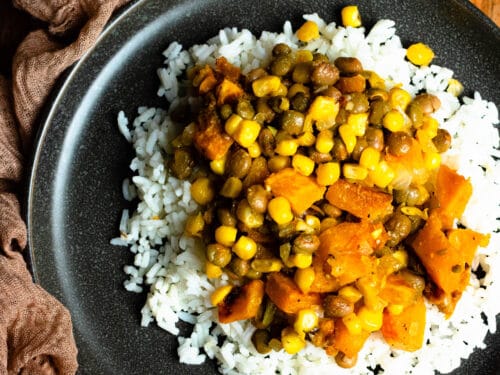 traditional vegetarian dish originating from East Timor (Timor-Leste). Its name roughly translates to "boiled corn," reflecting the staple ingredient at the heart of the recipe. It is a humble, nourishing stew or medley that highlights the fresh produce commonly grown across the region.
The core components of the dish typically include corn, squash or pumpkin, and legumes—most frequently mung beans or kidney beans. These ingredients are boiled together alongside sautéed onions, garlic, and basic seasonings like salt and pepper. Some regional variations also incorporate coconut milk for added richness or fresh greens like mustard greens and spinach near the end of cooking.
Traditionally enjoyed as a main course over warm rice or served as a side dish alongside grilled fish or meat, Batar Da'an balances a light, natural sweetness from the corn and squash with savory, hearty undertones.
7 ― A Natural Site For Natural Disasters
Timor-Leste is highly vulnerable to a variety of natural disasters due to its location in the Pacific Ring of Fire and its tropical climate . The major disasters affecting the country include floods, tropical cyclones, earthquakes, tsunamis, and droughts.
Floods and Landslides: These are the most frequent and severe hazards, occurring during the wet season from November to April . The 2021 Easter floods, triggered by Tropical Cyclone Seroja, were the worst in 40 years, causing 41 deaths and affecting over 140,000 people . From 2013 to 2023, floods resulted in 28 deaths and damaged nearly 7,000 houses . Landslides, often linked to the country's steep terrain, compound these risks and frequently damage critical infrastructure .
Tropical Cyclones: Though mostly outside the primary cyclone zone, the country is still impacted by cyclones. Cyclone Seroja in April 2021 was a landmark disaster, highlighting gaps in early warning systems and infrastructure resilience .
Earthquakes and Tsunamis: Located near a highly active tectonic boundary, the country experiences frequent earthquakes. The deadliest tsunami occurred on May 14, 1995, when a magnitude 6.9 earthquake in the Flores Sea triggered a 1.5-meter tsunami. This event resulted in 11 deaths, 19 injuries, and significant damage in the Dili area . Because the risk is persistent, tsunami preparedness and awareness are critical priorities .
Droughts: El Niño events frequently cause severe droughts, leading to water shortages, crop failures, and food insecurity. The 2015-2016 El Niño-induced drought affected an estimated 80% of the population and caused severe food insecurity for over 40% . More recently, drought-like conditions in 2023 impacted over 300,000 people .
The cover of a book on a disaster on Timor Leste
https://documents1.worldbank.org/curated/en/099245001042214184/pdf/P176988082e2b60f30b4d60866a38e728f7.pdf
The text was prepared with AI
Back to my country then... 😁
Indonesia
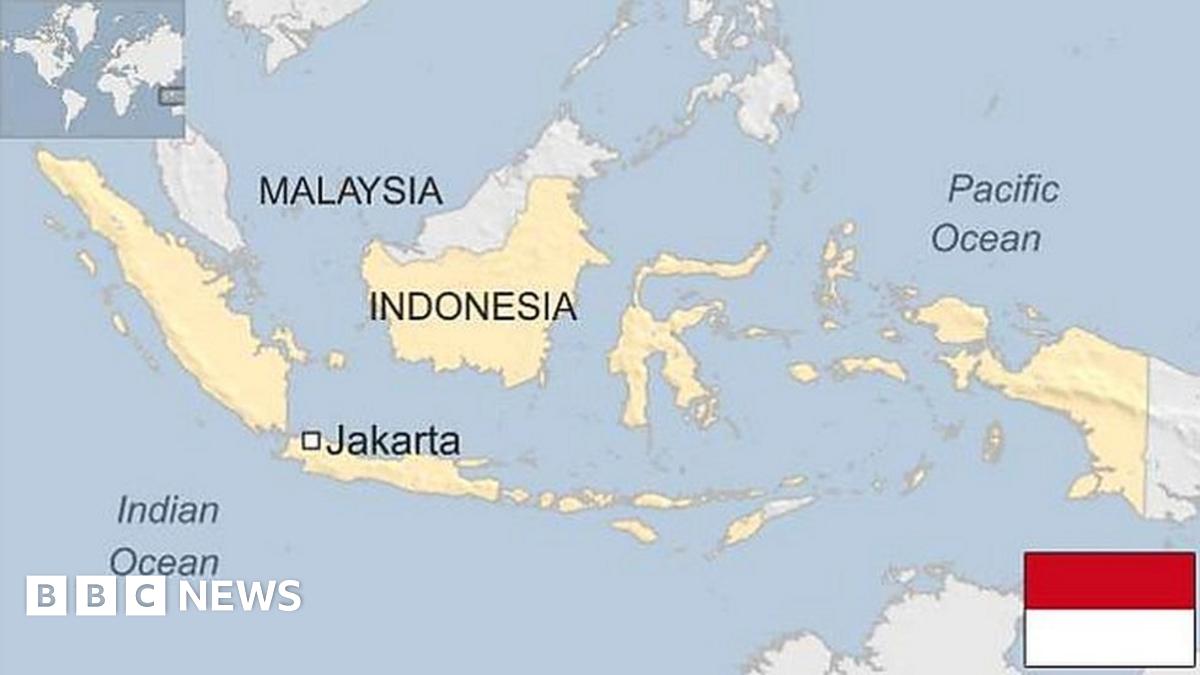 1) Indonesia is the world's largest archipelagic state, located in Southeast Asia between the Indian and Pacific Oceans. Spanning over 17,000 islands—including major landmasses like Sumatra, Java, Borneo (Kalimantan), Sulawesi, and New Guinea (Papua)—the country forms a crucial geographic bridge between Asia and Oceania.
With a population exceeding 270 million people, Indonesia ranks as the fourth most populous country globally and has the world's largest Muslim-majority population. It is an exceptionally diverse nation home to more than 1,300 distinct ethnic groups, with the Javanese forming the largest demographic. The country's national motto, "Bhinneka Tunggal Ika" ("Unity in Diversity"), reflects how these varied cultures, local traditions, and languages are united under one official national language, Bahasa Indonesia.
3 ― Indonesia's economy
Southeast Asia's largest, it has demonstrated resilience with steady growth around 5% . In the second quarter of 2026, GDP expanded by 5.29%, slightly down from the previous quarter but beating forecasts . This growth is largely driven by domestic consumption, which accounts for about half of the economy, and supported by rising investment and significant government spending .
The economy is a mix of traditional and modern sectors. Manufacturing is the largest contributor to GDP, alongside agriculture, trade, and construction. However, manufacturing's share has declined, raising concerns about structural challenges . In contrast, the mining sector has contracted recently due to quota restrictions .
While the economy shows strength, it faces headwinds. A weakening rupiah, investor jitters over policy, and the need to transition from raw material exports to higher-value downstream processing are key challenges . The government aims to accelerate growth toward the president's 8% target by reforming taxes, deregulating, and boosting domestic industries to create a more sustainable economy .
Based on current market capitalization and economic influence, here are three of the most important companies in Indonesia, each a dominant player in its sector.
### 🏦 Bank Central Asia (BCA)
As Indonesia's largest private bank, BCA is the most valuable company on the Indonesia Stock Exchange (IDX), with a market cap of over Rp 755 trillion . It provides commercial banking, digital financial services, and loan products to millions of customers , making it a key driver of the nation's financial stability and household consumption.
### ⛽ Pertamina (State-Owned)
This state-owned energy giant is the backbone of Indonesia's energy sector, managing the entire oil and gas value chain from exploration to retail fuel sales . As a strategic state-owned enterprise (BUMN), its role in securing energy supplies is absolutely critical for the entire economy .
### 📡 Telkom Indonesia (State-Owned)
As the country's largest digital telecommunications provider, state-owned Telkom is the cornerstone of Indonesia's digital economy . Through its subsidiary Telkomsel, it provides mobile and broadband internet to millions, driving connectivity and economic digitization .
---
While the three listed above are central to economic activity, a broader view reveals other companies with enormous influence.
By Market Value: The leading state-owned banks, Bank Rakyat Indonesia (BBRI) and Bank Mandiri (BMRI), often rank among the top five most valuable companies . The energy and infrastructure sector is also powerfully represented by Barito Renewables Energy (BREN) .
By Revenue: On a revenue basis, major conglomerates like the APP Group (pulp and paper) and Astra International (automotive) are among the country's largest corporations , while food giant Indofood also plays a massive role in the consumer goods sector .
If you would like to know more about any of these companies or a specific sector, just let me know.
Search done with AI
 mongwoo:
6 ― Love for Kpop
This is the Kpop streaming consumption nowadays. US expelled from Pacific America is the big consumer but the second one is
I N D O N E S I A!!!
Top Countries by Digital Streaming Volume
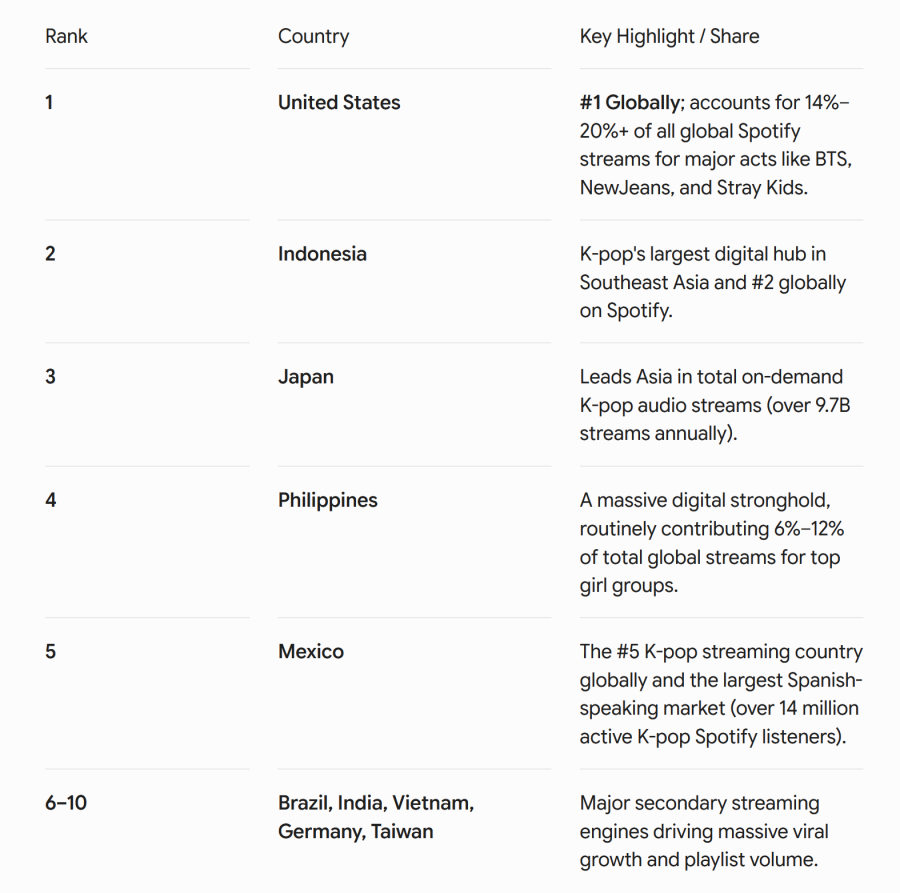

Prepared with the help of AI.
One of these days I will show a study about Wasted Talent by country in the world and it is really interesting that two of the leading five countries mentioned here are also leaders of one of the three categories in that report.
7) gado-gado
Gado-gado is a traditional Indonesian salad consisting of slightly blanched or steamed vegetables, hard-boiled eggs, fried tofu, and tempeh, served with a rich peanut sauce dressing. Common vegetables used include long beans, spinach, bean sprouts, cabbage, and potatoes, often accompanied by fresh cucumber slices and lontong (compressed rice cakes).
It is typically topped with crispy emping (melinjau nut crackers) or kerupuk (prawn crackers) and fried shallots for added texture, making it a hearty and nutritious meal
The heart of the dish lies in its savory peanut sauce, which balances sweet, salty, and tangy flavors. Ground roasted peanuts are blended with garlic, palm sugar, tamarind juice, lime, salt, and chili, creating a thick dressing that thoroughly coats all the ingredients before serving.
That's what AI or google can tell about gado2. But actually we actually rarely have tempe in the dish...
8 ― Krakatoa
Krakatoa: The Volcano That Shook the World
Krakatau (Krakatoa) is a stratovolcano in the Sunda Strait between Java and Sumatra, Indonesia. Its cataclysmic eruption of August 26–27, 1883, remains one of history's most violent volcanic events. The explosion was heard 4,800 kilometers away, generated tsunami waves up to 46 meters tall that killed over 36,000 people, and injected enough ash into the stratosphere to lower global temperatures by 1.2°C for five years.
The volcano collapsed entirely during the eruption, leaving only two-thirds of its original mass underwater. In 1927, a new cone emerged from the sea—Anak Krakatau ("Child of Krakatoa")—which has grown continuously and experienced its own eruptions, including a major collapse in December 2018 that triggered another deadly tsunami.
Recent Seismic Activity in Indonesia
Indonesia sits on the Pacific Ring of Fire, experiencing frequent earthquakes. Just on August 15, 2026, a magnitude 7.7 earthquake struck off the coast of Flores Island in East Nusa Tenggara province, killing at least 51 people. The epicenter was located approximately 1,850 kilometers east of Krakatoa, near the city of Ende at a shallow depth of 10 kilometers beneath the seabed.
These distances demonstrate Indonesia's extreme geological vulnerability. While Krakatoa's catastrophic 1883 blast focused devastation in the Sunda Strait, seismic threats extend across thousands of kilometers throughout the archipelago. Each region faces unique risks from volcanic, tectonic, and tsunami hazards originating from the same convergent plate boundaries that forged Krakatoa's destructive legacy.
I hope Indonesians go forward happily the soonest the possible!!!
Prepared with help from AI


