News
News 

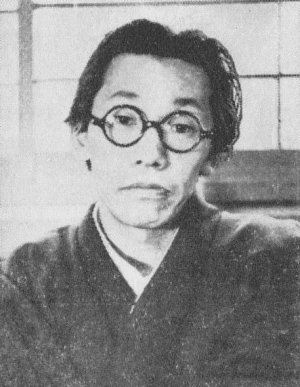
Hayasaka Fumio
- Name: Hayasaka Fumio
- Native name: 早坂文雄
- Nationality: Japanese
- Gender: Male
- Born: August 19, 1914
- Died: October 15, 1995
After the war, Hayasaka continued working on films, quickly winning recognition for his abilities. In 1946, he received the film music award for An Enemy of the People (Minshū no Teki, 1946) at the first annual Mainichi Film Awards. The year after, 1947, Hayasaka received the Mainichi film music award for Teinosuke Kinugasa's Actress (Joyu). In the late 1940s, Hayasaka invited his friend Akira Ifukube to write film music with him at Toho Studios. Ifukube's first film score for Toho was for Senkichi Taniguchi's Snow Trail (Ginrei no hate) in 1947. Toshirō Mifune, the famous actor who later starred in most of Kurosawa's films, first met Kurosawa at a pre-screening of this movie.
Relationship with Akira Kurosawa
Fumio Hayasaka had a celebrated association with the pre-eminent Japanese director Akira Kurosawa which was short-lived due to Hayasaka's early death. The 1948 film Drunken Angel (Yoidore tenshi) was the first film directed by Akira Kurosawa that Hayasaka composed music for. The director and composer collaborated to test "oppositional handling of music and performance". Their collaboration turned into a very deep artistic relationship, with Hayasaka contributing ideas to the visual part of the film. In his autobiography, Kurosawa would say that working with Hayasaka changed his views on how film music should be used; from then on, he viewed music as "counterpoint" to the image and not just an "accompaniment". This is also the first film that Kurosawa used Toshiro Mifune as an actor.
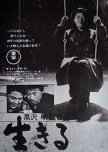
Among the films Hayasaka scored for Kurosawa are Stray Dog (1949), Rashomon (1950), Ikiru (1952) and Seven Samurai (1954). During the 1950s, Hayasaka also composed the scores for some of the final works of another Japanese director, Kenji Mizoguchi. Hayasaka composed music for Ugetsu (1953), Sansho the Bailiff (1954), and The Crucified Lovers (1954).
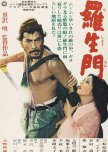
The 1950 film Rashomon was especially significant for Hayasaka. This film won the 1951 Golden Lion from the Venice film festival, and is considered the first Japanese film to be widely seen in the West. In the Japanese film culture, directors normally wanted music that sounded like well-known Western works; Kurosawa specifically had asked Hayasaka to compose music that sounded like Maurice Ravel's Boléro. Masaru Satō, then a young composer, was so impressed with the music that he decided to study with Hayasaka. This film was also related to the atomic scar of the Japanese culture; although the American occupation forces forbade the Japanese media from "criticizing America’s role in the tragedy" of Hiroshima and Nagasaki, Rashomon depicts a historical era of Japan where her cities are in ruin and social chaos abounds.
Hayasaka was continually productive in the years leading up to his death. In 1950, he founded the Association of Film Music.[11] The 1953 film Ugetsu, directed by Kenji Mizoguchi, featured a score by Hayasaka; the film wons the silver prize at the 1953 Venice Film Festival. The year after, 1954, Hayasaka did another Mizoguchi film, the jidai-geki Sansho the Bailiff (Sansho dayu). This film shared the 1954 Silver Lion prize from the Venice Film Festival with Kazan's On the Waterfront, Fellini's La Strada, and Kurosawa's Seven Samurai.
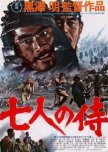
Seven Samurai, a Kurosawa jidai-geki film, also features music by Hayasaka. At the time, it was the largest Japanese film production ever. This film featured strong directorial music choices that are closely related to Western symphonic concert music. Masaru Sato assisted with the orchestration of Hayasaka's score. This score utilized the leitmotif, which is a method of compositional organization borrowed from western operas.
During his time in Tokyo, Hayasaka also wrote several notable concert works including Ancient Dances of the Left and on the Right (1941), a Piano Concerto (1948) and the orchestral suite Yukara (1955). Hayasaka served as a musical mentor to both Masaru Satō and Tōru Takemitsu.
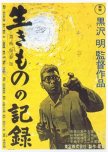
In 1955, Hayasaka died of tuberculosis in Tokyo at the age of 41. He died while working on the score for I Live in Fear (Record of a Living Being, Ikimono no kiroku), so Masaru Sato completed the score.
(Source: Wikipedia) Edit Biography
Composer
| Title | Rating |
|---|---|
| 0.0 | |
| 7.3 | |
| 6.9 | |
| 8.6 | |
| 8.2 | |
| 0.0 | |
| 0.0 | |
| 8.0 | |
| 0.0 | |
| 6.0 | |
| 0.0 | |
| 0.0 | |
| 6.0 | |
| 0.0 | |
| 0.0 | |
| 7.7 | |
| 0.0 | |
| 0.0 | |
| 0.0 | |
| 0.0 | |
| 9.0 | |
| 0.0 | |
| 0.0 | |
| 5.9 | |
| 2.0 | |
| 0.0 |



Trending Articles

Kim Soo Hyun's agency seeks to close the chapter on late Kim Sae Ron controversy
News - Oct 14, 2026
Actor Kim Soo Hyun and his agency have announced plans to take action against malicious online comments, which arose after his controversy concerning late actress Kim Sae Ron

Shin Ye Eun is in talks to replace Mun Ka Young as Cha Eun Woo's female lead in new drama from 'Bon Appetit, Your Majesty' director
News - Oct 19, 2026
Shin Ye Eun is in talks to replace Mun Ka Young as Cha Eun Woo's female lead in a new drama

Yim Si Wan & Seorina star in ‘Love in Disguise’, a K-Drama Where a Crossdressing Detective Goes Undercover as Her Rich Murder Suspect's Bodyguard!
Editorials - Oct 19, 2026
Prime Video's 'Love in Disguise' follows detective Kang Jae-hee as she disguises herself as a male bodyguard to investigate a wealthy heir in a murder case!

'Blossom' stars Li Yun Rui and Meng Zi Yi's new drama 'Tigers Sniff the Rose' announces premiere date
News - Oct 18, 2026
New Chinese historical drama 'Tigers Sniff the Rose' has confirmed its premiere date

16 supernatural K-drama characters who have us under their spell
Editorials - Oct 17, 2026
Here are 16 memorable supernatural K-drama characters who make their stories even more captivating

Kim Yong Ji Is Married! Mr. Sunshine Star's Secret Wedding and Baby News Take Fans by Surprise
News - Oct 12, 2026
K-drama actress Kim Yong Ji shocks fans with a surprise wedding and pregnancy news! The Mr. Sunshine and Tale of the Nine Tailed star tied the knot in a traditional hanok ceremony, with Kim Go Eun and Bae Jung Nam sharing glimpses of her special day.

Netflix officially renews 'The Trauma Code: Heroes on Call' for Seasons 2 and 3
News - Oct 19, 2026
Netflix has officially renewed 'The Trauma Code: Heroes on Call' for both Season 2 and 3, with production plans for the two installments confirmed simultaneously on October 19

Tian Xi Wei's 'Where the Mask Ends' surpasses 10,000 in popularity index on Youku, trends on Netflix
News - Oct 19, 2026
On October 18, just 48 hours after its premiere, the costume drama 'Where the Mask Ends' surpassed 10,000 in popularity index on Youku, becoming the fastest drama to reach the milestone this year