
 K-Drama


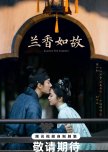
A Maid's Quiet Rebellion Against Every Tide
Against the Current is a drama where a noble lady survives by pretending to be a maid, and somehow the maid ends up running everything. It holds 8.9 on kisskh, and the acting, costumes and soundtrack earn every bit of that.
Shen Jialan loses her whole family to a treason charge and hides as the servant Xu Lanxiang inside the home of Lin Jin Qi, the man whose family once broke their engagement. Awkward does not begin to cover it. Through the slave years, the maid years and the life in the capital, she stays calm, sharp and three steps ahead, and the story proves that worth comes from character and wisdom, not lineage or status.
The world around her is the real antagonist. This is a society built by men, for men, where women have no say in the decisions yet pay the full price for them. A father's treason wipes out a whole clan, a marriage is a transaction, and an imperial decree can hand a woman to a husband she did not choose. The drama shows how rigid rules of rank, bloodline and propriety box people in, and how women get by within them through patience, information and quiet strategy. It is also honest that women are not saints. Some use each other's weakness as a weapon, and the rules turn even kind people into gatekeepers.
The acting is the drama's crown. Every character is played with such skill that the emotions land perfectly, from Tan Song Yun's silent suffering, where you can watch Lan Xiang calculate what to reveal and what to hide, to Liu Xue Yi's soft eyed devotion as Jin Qi. The supporting cast shines just as brightly, especially Liu Mei Han as Ji'er, whose raw, expressive performance in the brothel scene will make you cry on cue.
The women are the heart of the show. Ji'er is competitive and flawed, falls hard, and climbs back with her self respect intact. Zhao Xing Tang is the brilliant, trapped first wife, a bird in a golden cage passed along by the family like a gift. Xiu Wan is spoiled and free spirited, Xiu Ru is shy but secretly sharp, and both grow without losing who they are. The elder women of the household, the mothers-in-law and matriarchs, are the guardians of the rules, and you feel the weight of their stares in every hall. Even Grandpa Lin, who looks cold, turns out to be protecting the family from the dangers of politics.
The children and the next generation matter too. They remind us that the rules do not end with one woman, and that every lesson Lan Xiang teaches is meant to reach those who come after her. When she raises children and steers the clan as matriarch, it feels like her way of changing the household from the inside, one generation at a time.
Then there are the costumes, which do more than make everyone pretty. They tell you who is rising and who is falling, and Lan Xiang's clothes change as her place in the world changes. Add the courtyards, the seasons and a soundtrack that wraps the sad scenes in a soft ache, and the whole thing looks like a moving painting.
The main couple is the quiet engine. Lan Xiang and Jin Qi know each other deeply, and they support each other even when they are apart, each trusting the other's mind when words run short. Her distance at the start is fair, since his family walked away from hers and he later married her by imperial decree. That wound needed time. But Jin Qi owns his faults, treats her well and honors her family, and he grows from a proud, upright heir into a man so devoted he gives up his post as Left Army Commander for her. I wanted her to answer his love in kind once she truly knew him. Marriage is a two way street, and for long stretches he drives alone. The time jumps skip the very moments where her heart should have opened, and even their closeness arrives like a surprise.
The ending is the drama's one real miss. Too many characters die, and grief starts to lose its sting. Jin Qi's death comes after decades together, yet it feels thin on reason and weight. Lan Xiang's own end leaves us outside her heart, with no regrets, no memories and no look back at the life she lived. Her family's name is cleared only 113 years later, long after she is gone.
Watch it for the schemes, the plots, where every strategy was a silent weapon, the beauty, the flawless acting and the strong women. Bring tissues for the ending and patience for her slow heart. I give it 9 out of 10.
ps: My one pet peeve with Chinese dramas is that the heroine’s brilliance and the hero’s shrewdness are shown on separate tracks. In Against the Current, Lan Xiang’s brilliance runs mostly on her own track while Jin Qi stands beside her more than he schemes with her. The best love stories in any era are partnerships. Two sharp minds with one heart are far more satisfying than two geniuses taking turns. There is something deeply true in that. That is what makes it so frustrating when a drama builds two clever leads and then keeps them apart. Unity is the more intelligent strategy. One mind sees the board, the other sees the people, and the heart between them keeps the cleverness humane instead of cruel. Add the faithful maids, aides and friends as a circle of trust, and the villains do not stand a chance, because they scheme alone while the heroes win together. Dont get me wrong, I loved the drama it was fantastic but it could have been more. I want leads to outwit the evil with wit, ingenuity and compassion in one accord, keeping each other and their people close to their hearts. The evildoers always scheme in unity, husbands and wives plotting hand in hand, so how much more should the good guys stand together?
Was this review helpful to you?


