

 1
1 1
1


This review may contain spoilers
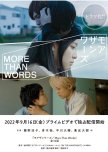
More Than Words — When Love Is Not Allowed to Exist
This is not a “soft” BL. This is not a comfort drama. And it is not a story you can judge without understanding the society it is born from. More Than Words is painfully realistic because it is deeply Japanese. Not in aesthetics, but in values: patriarchy, duty, silence, and the idea that love must bend to family and social expectation. Many viewers were angry at the characters. I was not. I was angry at the system that made their choices feel inevitable.
Context Matters
This drama cannot be read with Western eyes. In Japan, there is still no full legal protection for LGBTQ+ people, and family pressure to marry and produce children remains extremely strong. Being single past 30 is still seen as failure, especially for women. Marriage is not just love, it is duty. This context is not background. It is the invisible hand controlling every decision.
Three People Trapped by the Same World
Eiji (Eichan): Openly gay among friends, deeply closeted at home. Raised in a wealthy, patriarchal family, he has learned to survive by making himself smaller. He compares himself constantly to his sister, feels like a disappointment, and believes love must be hidden. His father does not hate him. He manages him. And that is worse.
Makio (Makki): Warm, impulsive, emotionally honest. He does not see gender as a rule, but as a feeling. He loves freely and without calculation. But he lives in a world that demands calculation. Makki is not confused. He is unprotected.
Mieko (Takagi): She is not a rival. She is a victim of the same system. Neglected by her mother. Beaten by her boyfriend. Never chosen. She does not want love. She wants to belong.
When Love Becomes a Secret
Makki and Eiji’s relationship grows naturally. Quietly. Tenderly. But their love is only allowed to exist in private. Eiji’s father believes homosexuality is something that can be “tolerated” for a while, as long as no one knows. As long as grandchildren are still possible. This is not protection. This is emotional violence disguised as care. Eiji changes himself to survive: hair, career, silence. Makki watches the man he loves slowly disappear. Mieko’s Sacrifice Is Not Romantic The pregnancy is not hope. It is surrender. Mieko offers her body to preserve a structure that is destroying all three of them. Society finally sees her as valuable, because she can reproduce. She becomes a function. Not a person. Makki realizes he was never part of the decision. Never chosen. Never needed. So he leaves. Not because he stopped loving, but because love is no longer allowed to exist.
Eiji’s Final Tragedy
He has a wife. A child. A family. And no life. Makki becomes a memory he is not allowed to keep. His home is filled with pictures of duty, not of love. He did everything right. And lost everything.
Why This Is Political
Director Asano Taeko is known for her feminist and social perspective, and it shows. This is not only about queer pain.
It is about how patriarchy consumes everyone. Mieko is valued only when she becomes a mother. Eiji is valued only when he becomes “normal.” Makki is erased because he cannot fit either role. If people were allowed to love freely, none of this would have happened.
Final Thought
More Than Words is not a romance. It is a warning. Love is not enough in a world that does not allow it to exist. And that is why this story hurts so deeply.
Context Matters
This drama cannot be read with Western eyes. In Japan, there is still no full legal protection for LGBTQ+ people, and family pressure to marry and produce children remains extremely strong. Being single past 30 is still seen as failure, especially for women. Marriage is not just love, it is duty. This context is not background. It is the invisible hand controlling every decision.
Three People Trapped by the Same World
Eiji (Eichan): Openly gay among friends, deeply closeted at home. Raised in a wealthy, patriarchal family, he has learned to survive by making himself smaller. He compares himself constantly to his sister, feels like a disappointment, and believes love must be hidden. His father does not hate him. He manages him. And that is worse.
Makio (Makki): Warm, impulsive, emotionally honest. He does not see gender as a rule, but as a feeling. He loves freely and without calculation. But he lives in a world that demands calculation. Makki is not confused. He is unprotected.
Mieko (Takagi): She is not a rival. She is a victim of the same system. Neglected by her mother. Beaten by her boyfriend. Never chosen. She does not want love. She wants to belong.
When Love Becomes a Secret
Makki and Eiji’s relationship grows naturally. Quietly. Tenderly. But their love is only allowed to exist in private. Eiji’s father believes homosexuality is something that can be “tolerated” for a while, as long as no one knows. As long as grandchildren are still possible. This is not protection. This is emotional violence disguised as care. Eiji changes himself to survive: hair, career, silence. Makki watches the man he loves slowly disappear. Mieko’s Sacrifice Is Not Romantic The pregnancy is not hope. It is surrender. Mieko offers her body to preserve a structure that is destroying all three of them. Society finally sees her as valuable, because she can reproduce. She becomes a function. Not a person. Makki realizes he was never part of the decision. Never chosen. Never needed. So he leaves. Not because he stopped loving, but because love is no longer allowed to exist.
Eiji’s Final Tragedy
He has a wife. A child. A family. And no life. Makki becomes a memory he is not allowed to keep. His home is filled with pictures of duty, not of love. He did everything right. And lost everything.
Why This Is Political
Director Asano Taeko is known for her feminist and social perspective, and it shows. This is not only about queer pain.
It is about how patriarchy consumes everyone. Mieko is valued only when she becomes a mother. Eiji is valued only when he becomes “normal.” Makki is erased because he cannot fit either role. If people were allowed to love freely, none of this would have happened.
Final Thought
More Than Words is not a romance. It is a warning. Love is not enough in a world that does not allow it to exist. And that is why this story hurts so deeply.
Was this review helpful to you?


