
 K-Drama


 1
1



Emotions and their parallel to art: shaping love and searching for a ‘forever’ through sculpture
"How does one become such a great artist?" — "How do you define great?" — "To stand the test of time." — "I wonder if forever exists."Artistic, pensive, beautifully crafted, and unique in its cinematographic ways—‘Wakatte Ite mo: The Shapes of Love’ explores the vulnerability of struggling, waiting, hoping, and loving. It perfectly portrays the essence of human nature and captures love in its many different shapes under a refreshingly realistic light. It represents these themes through art in a mature and abstract manner, much like the concept of humanity and love itself.
In a world where "there is nothing more uncertain than a person's heart," the story follows the lives of artists who create art driven by their inspiration and their desire to create their own sense of forever. They are ready to put aside their usual composure and values in order to seek the heart of their loved one. For example, Kosaka Ren, the male lead, wants forever. He may seem to act in the opposite manner, constantly changing girlfriends, however this is his way of experiencing his 'forever' by always surrounding himself with the beauty of new beginnings. But when he meets Hamasaki Miu, he's ready to put that habit of his aside and sacrifice the paths he's always safely borrowed in his life to stay by her side. Another lead, Osakabe, thinks it's bad to act on lust, yet his world melts the second he sees his crush’s smile. Lastly, there is Ikushima Ruki, who wants to be with his crush but lets her be with another if it means gaining her trust and friendship first.
Ultimately, the series perfectly encapsulated the original webteeon’s overall message, reinforcing it with scenes and lines that portray its message more explicitly instead of requiring heavy analyses like it was for the webtoon’s Korean adaptation; ‘Nevertheless,’. The shortened run time allowed the leads’ journey to be explored more thoroughly without weighing down the whole series with its heaviness. Additionally, the poetic and inspirational narration made it easier to grasp its concept and allowed for a more direct interpretation of the webtoon’s work—keeping its core themes but casting aside tropes that don’t add to its main focal point.
Through Hamasaki Miu’s eyes, the female lead, Ren is the butterfly—beautiful, attractive, light, and seemingly free—giving her the illusion that he has it easy. The series adds a new meaning to the significance of butterflies: they are thought to be a symbol of freedom, but actually, they just fly the same paths over and over. Maybe the best thing they can do is just enjoy the ride. This goes for both of them because they are both like butterflies, or at least, they both try to carry the essence of butterflies by capturing their fleeting beauty through art. When Ren finds Miu, he wishes to metaphorically capture her, who is like a butterfly to him, but one who hasn't opened its wings yet.
Ren wants to approach her, mostly out of self-interest, intrigued by how she expresses her inner-feelings through art without fear, but also because of a certain fate-like pull that builds up following their many coincidental meetings. However, he is a playboy by nature—flirty and manipulative. He seems more curious about how far he himself is willing to go or devote to her rather than the other way around, not caring about her reactions and staying consistent in the attention that he devotes to her.
His push and pull plays with her emotions; his stance in his affection towards her grounded in unsteady terrain, teetering her back and forth into the territory of hopefulness and then desperation. This constant shift in Miu’s emotions highlights the overall theme of the series, which is that she can't help but hope even if she knows things will come to an end or leave a scar. Nevertheless, Ren constantly ignites these feelings of hope within her, making her want to reach out and seal the faith of their relationship—an impulsive act that mirrors his own tendency to act on impulse.
Kosaka Ren is a rather peculiar character. Since he is not good at sharing his feelings, he uses art to communicate them. Even we, as viewers, don't know him quite well and have been misguided by him many times with deceptions based on what we do see from him. For example, we don't know if whenever he picks up a call, it's his girlfriend. He never clarifies misunderstandings and viewers are prompted to believe he's a player and always the one at fault. However, in the last episode, “I couldn't succeed in becoming the most important person in her life” is a line said in his narration while the screen presents a note his mother left saying she'd be absent for lunch. This shows how he doesn't have commitment issues as is suggested throughout the whole series, but rather that he blames himself for the constant departures of the people around him in his life. Instead of being a playboy, he's the one constantly getting played and letting others tug on him like a puppet.
He's not the butterfly who comes and goes, but the others around him are, flocking to his beauty like butterflies do to flowers—which explains his longing despair for a 'forever'. “Gradually, I got used to giving people what they expected of me.” Ren only mirrors what those around him feel and how they act. He does this because he wants to avoid experiencing pain or loss, and whenever he declines their proposals, or finds himself wanting more, he always ends up getting hurt. And so, he chooses to follow the same paths over and over again like a butterfly with everyone around him, trying to please each one of them while looking for a piece of his own self through their eyes—which he eventually finds in Miu and soon enough, catches himself searching for her instead of his own self. This growth of his is beautifully captured through a certain scene, where he looks at a girl whom he doesn't actually like but plays along as her boyfriend to avoid pain—his usual toxic habit—yet only sees Miu's eyes instead of hers.
Through this endless cycle, where he has the habit of constantly putting himself last, he says he ended up losing his identity. He essentially became a canvas of however one sees him, having different versions of himself through different pairs of eyes, like a piece of art. Like someone interpreting a sculpture, Miu, as well as everyone else, can interpret him, what he says, his actions, and what is and isn’t known about him in their own way. Through Ren, who is like a sculpture, Miu hopes to find her forever. And through her, he sees yet again another chance to find his true meaning and define who he really is despite his traumas and past experiences in life. This is essentially why he leads on and makes so many people try to fall in love with him—because he wants to find the one, his true self, and his forever.
It is said by Miu’s toxic ex boyfriend that the female lead's wings are tied down, leaving only her thoughts to wander. However, there’s another interpretation suggested in the series: that her wings are rather too heavy to go forward—not tied down by external forces and submitted to others, as her ex had suggested through his sculptures of her falling to the ground and begging him to stay—but perhaps heavy because of the weight of their worth and hope, waiting for their reason to take flight in a world that keeps letting her down. The female lead, whose name means "beautiful wings," beautifully encapsulates this struggle of waiting for hope; hope that ultimately introduces itself in her life through the male lead.
From the very beginning of the series, during their first encounter, Ren recognizes this wait for hope of hers through her pleas for her boyfriend to stay. Instead of perceiving her pleas as a desperate and hopeless attempt of begging for something long gone, he sees that all she wants is to hold a promise of a future with someone, and that she has hope for something more than what she already has. This is ultimately what draws him to her.
There are a lot of similarities that the female and male lead share—their fear of abandonment, their wish to freeze a loved one’s heart in time and gain a forever happy side by side with them, and their struggles in finding what they want in life. Though Ren doesn’t express his struggles and desires aloud like Miu does, he addresses them through his fiery art, which tells another story from the nonchalant version of himself that is presented through his character and the aloof image that he lets on—reserved, quiet, and who lets other people make things up and narrate his life.
Despite their seemingly stark contrast, both faces of himself that he puts out into the world stem from the same thoughts and emotions he has. His art paints a strong image of resilience, longing desire, and determination in pursuing what he wants—emotions that give him the impression of being lost and left with nothing but wavering emotions. In real life, these feelings of his manifest through his calm composure that radiates a sense of aloofness and indifference.
This overwhelming desire to find the key to freedom and his true self drives him to act like the playboy type, not knowing who to love or dedicate himself to. His art, on the other hand, portrays his sense of lostness as something fiery and bright and that drives him to maddening lengths, putting him in a fight against society’s typical representation of love and relationships, and forcing him to confront his true feelings.
Ren, in a way, relates to Miu and sees himself in the scene before his eyes, where he sees her for the first time. Through his eyes, witnessing her meltdown opens a window of opportunity. Ren likes to capture that happiness in the brief flutter of color in his world, like a butterfly, so he’s drawn to her strong personality and wants to capture the beauty that lies in the most beautiful and intense human emotion, which is love. From that moment on, he tries to draw that emotion out of her by making her fall for him. He does the same for other girls when he flirts, all to satisfy his somewhat selfish desires to only have a portrait of pairs of loving gazes around him so that he’s surrounded by beauty. At the same time, through this tactic of his, he gets attention from the opposite gender, mirroring his mom’s absence in his life.
Even if Ren’s actions can be perceived as stemming out of selfishness, his supposed attraction to her is also beneficial to Miu because he wants to awaken this strong, powerful, and beautiful feeling of love within her. He wants to make her wings flutter and for her beauty to be set free by expressing her emotions instead of restraining them and staying tied to the past that she’s stuck in. This is vividly illustrated when he guides her to smash the sculpture where she’s begging for her ex to stay. But her perspective of it contradicts his own: he sees her beauty through that sculpture; nothing bad and submissive about it, but instead, brave for not being scared to reach out and try to grasp what she truly wanted—something he doesn’t know how to dedicate himself to doing.
Similarly, just like how Miu struggled to be freed from her painful last moments with her toxic ex that had been frozen in time both metaphorically and literally, Ren also wishes to be freed from his own struggles. For him, the butterfly doesn't represent something light and nonchalant and non-troubled as Miu had suggested, but is rather representative of a small precious thing that tries to navigate through the harsh and turbulent-winded world with its colorful yet light-weighed wings. His desire for freedom and his little efforts to cast a ray of colour in the world manifests itself through his obsession with butterflies. These insects are a recurring motif throughout the series, not only symbolizing change and growth but of which are also a statement of the short-lived but beautiful flutters that can be seen when one pushes through hardships and keeps on flying.
Furthermore, butterflies aren’t the only metaphorical symbol that has been included to better convey the story’s message to viewers. One of Ren’s characterics is the way rainstorms always follow him. These scenes in the rain with Miu hold a greater meaning than just being a rainy day. Despite his messiness, he serves as something stable in Miu’s life, like an anchor among the countless possibilities she has to navigate and the decisions she has to make as she enters adulthood. Since she feels like she doesn't really know herself and has trouble finding the answer to anything when it comes to being subjective, this inevitable journey she’ll have to face stresses her out. Ren’s strong attraction for her never ceases in its intensity, and in this, she finds a harbor in her life.
By diving into the complexities of human emotions, relationships, and the unpredictability of attraction, the series conveys the message that some things just can't be helped. The leads’ imperfect relationship is threaded with flaws and raw with hidden insecurities. The magic in their chemistry lies in the delicate yet profound interactions they share, and the space between them constantly grows wider and smaller, full of hidden meaning and unspoken words. ‘Wakatte Ite mo: The Shapes of Love’ portrays romance as something realistically hurtful and messy, and exemplifies how love is not something that is bound to be constrained to limits. It is everything but simple or straight out of a fairytale. Instead, it is a love story using its own words—not sticking to convenience for the sake of its principal aspect of romance despite the numerous physically intimate scenes.
The show’s beauty lies in its unique perspective and outlook on life that it sheds through this window of two young adults trying their best to navigate their lives. Even though we may lie to ourselves or convince ourselves otherwise, nevertheless is a word that defines us all. Our overbearing desire to act freely against others’ rules and against our own will is the human nature of our essence here on earth. "If you just label yourself as something, it'll just restrict you." is a line pulled from the series that encapsulates its essence, defining how there is beauty to be found in the unknown. As the title suggests, the shape of love looks different for everyone, just like one emotion can be represented through many different sculptures and hold different interpretations through each individual's eyes.
The series is tied up beautifully, its last scene especially goosebump-inducing—Ren knows that forever doesn't exist, and Miu knows that she shouldn't hold out for hope, but nevertheless, they come together and discover that the shape of forever is simply holding on to hope.
12/23/2024
Was this review helpful to you?

This review may contain spoilers
Weaving together chaos and hope to explore the future of AI and its impact on humanity
‘Wonderland’ is an emotion-driven movie that puts forward the pros and cons surrounding the idea that artificial intelligence can be used to transform death into a renaissance of lost hopes and dreams.The film presents a platform that attempts to blur the line between the living and the deceased through new technology. It explores AI’s power in manipulating human emotions by altering the subconscious mind’s memories, making it possible to forget a loved one is gone and give the illusion of forever being able to interact with them. This opportunity presents the possibility of closure and continuation in relationships for the one activating the deceased through the platform.Overall, the movie is especially touching and scary because of its resemblance to the real-life possibilities that may await us with AI’s rapid progression in intelligence. It explored the circumstances that can stem from its usage, using the Wonderland platform as a way to take a look at the possible future AI can bring to the world all while exploring the public’s many different opinions surrounding this topic.
The film starts off by providing viewers with a depiction of the service’s negative impacts on those who use it. It prevents the user from being able to let go. This effect on the characters’ daily lives is shown through different scenes. Firstly, there is Koo Jeong In, the girlfriend of a man in the comma missing out on the occasion to date someone new because she’s convinced her boyfriend is an astronaut coming to earth soon. Then, there are two individuals who pretend to be a couple in order to satisfy the woman’s deceased parents who are constantly pestering her to find a boyfriend. The platform allows lies to easily be believed and shared, distorting reality by presenting a different face to those who are actually long gone. For example, instead of remembering her deceased Mom as someone who is always there but never paid attention to her, Jia will now believe her Mom is someone who always listened to what she had to say but was never actually present. It additionally gives an improper ending to those deceased and severs relationships using the AI that changes their personalities, giving these generated people a life of their own. This was shown through the grandma spending her last moments with her grandson feeling like she wasn’t doing enough for him even though she kept buying him whatever he asked for because he became greedy.
By diving into the life of Lee Yong Sik, a dying man, viewers can gain a sense of understanding regarding the AI platform ‘Wonderland’ as he follows through its policies and braces for his ‘new life’. He disagreed with his wife’s opinion that one lifetime was enough and wished to go elsewhere, thus perhaps putting more distance between the both of them than death would have. With the storyline of his possibility in being Kim Hyeon Su’s Dad, he also allowed viewers to dive into the life of the one prominent character who wasn’t yet explored. Their interactions, such as playing ping-pong through a screen or an awkward video call provided some comedic relief amidst the movie’s heavy themes of loss, grief and acceptance.
The relationship between Song Jeong Ran and her grandson showcased how AI uses humans to evolve instead of the other way around. As for the relationship between Bai Li and her daughter, it suggests the opposite idea. Jia uses the platform to accept reality and emotionally process the loss of her Mom. This relationship between them also showcased the prominent barrier between AI and the real world. This was shown when both were trying to physically reach each other, building up on a climax that teased that the impossible would happen. The movie put focus on how these actions of theirs would result in breaking their invention because of how nonsensical the idea of AI forging its way into the real world as actual humans would be.
The AI Mom brought to the scene a person struggling to accept and process their own death instead of realizing the platform’s goal of making the deceased forget it even happened at all. Instead of continuing her ‘life’ by satisfying her own childhood dream of becoming an archaeologist, she wanted closure to it, wishing to come closer to the reality that she was gone so that she could settle things with her own child. Through the journey she took to the airport in her universe to help Jia accept the truth that she was gone, she herself accepted that she was deceased and could no longer continue her life. She admitted to being dead so that her daughter could move on even if it meant ending her dream life where she would stay stuck in the idea of who she had wished to become .
This particular scene where they reunited showcased the stark contrast between both worlds. Jia can move on, but her Mom can't. She’s an idea, mirroring how IA is simply just an invention. All the daughter wants is to be with her Mom in that very moment, showcasing her human need for love. The Mom (who is AI) is only there to provide her with it, mirroring the reality of this platform. AI is fake, and will never be anything more than an invention. It doesn’t have the emotional complexity of a human, making it impossible for it to take on a true form of life. What’s so scary about it is that it can give the impression that it is a real human being to us in terms of emotion even though it isn’t there physically.
Jia’s desire for the impossible, for her Mom to be more than just a face on a screen, was driving her crazy. She was literally losing herself by chasing after the part of her Mom that was long gone and unable to come back. The shadow of someone lost behind is represented through Park Tae Ju, who woke up from his coma as a different person. In the airport, he got a call. Unlike the time where it was a delusion that awaited to be picked up, it was a call for reality. There was no astronaut Park Tae Ju from the past that was trying to reach Koo Jeong In who never let him go and was convinced she was still dating him. Bai Li used the AI service’s phone line to reach her daughter and reveal the truth. When Park Tae Ju saved Jia from getting hit by a truck, it represented how he saved her from losing herself in the lie that her Mom was alive and still yet to be found. He provided assistance in Jia’s journey to wait for her Mom and Bai Li ended up providing her daughter with solace.
In the end, the reunion that concluded their search for one another was as heart-touching and realistic as could be. They learned that even though they remained in two different universes, they would always remain together at heart. Instead of trying to get to her deceased Mom and create new memories with her, she’s now content with just having their old memories to keep her company. This was represented through her being happy that she can at least communicate with her AI version, who is like a keepsake of moments they spent together in the past since she was only able to come to life as AI using old pictures and videos.
As for Koo Jeong In and Park Tae Ju’s relationship, it unveiled an unhealthy face to the ‘Wonderland’ platform. It delved into both sides of the sea of people that were affected by the platform. The heartbroken user, and the unconscious individual whose life was mimicked in a distortion of reality. He had finally woken up from his coma though it was as if he was by his girlfriend’s side all along since she would wake up and fall asleep to the AI version of his voice every day. Whenever she would experience whiplash from his drastic change of personality, she would run back to his past version of self using the service, wishing his normal self would come back rather than supporting him in his journey of recovery.
The day their relationship started going up in flames was the day their apartment was set on fire just moments after Park Tae Ju exited its entryway. This significant event gave meaning to the earlier scene that showed him eyeing all of the couple’s old pictures that were still put up in the house. He wasn’t admiring what they used to be, but wishing she’d let go of his older self. Something that added to these feelings of his was the scene that preceded the fire incident, where he saw that someone with his exact name kept calling Koo Jeong In on a second phone. This made him realize to what point she was still attached to his post-comma self and unable to let go.
By setting the apartment’s entirety on fire, he’d be attempting to get rid of his old self and cut its link to his girlfriend in the present. Not only does this give him reason for purposely starting the fire, but there are also small details that hint at it. After leaving the apartment, the first place he looked was right into the hallway’s camera. Secondly, when Koo Jeong In proposed different ways that could have led up to the incident, he denied them all, insisting it wasn’t him. Perhaps he meant that it was the other, past version of himself that caused the chaos in their lives: the fire and their relationship.
This tactic of his failed in getting his girlfriend to let go, and the subject of the ‘Wonderland’ platform introduces itself between them. The moment where he asks Koo Jeong In about her decision to make him an astronaut enables us to see an earlier scene from a new perspective. She answers that space is the farthest place she knows of and he had felt so distant from her, giving light to the prolonged moment where he sat in a seat by the window at the airport. He wasn’t just watching his girlfriend’s airplane fly into the sky, he was watching her approach space and getting closer to the old reality of who they were. This time, she was the one leaving him and getting farther away into the sky as he waited for her to come back down below.
After speaking with him about it and coming to terms with the truth, she calls the company for a favour, still emotionally connected to the AI version of her boyfriend. The only way she’d be able to let go was by providing him a happy closure. To satisfy this desire of hers, what she wanted was for the company to set up his arrival back to planet earth to make him believe that he’s coming back home during his last moment before deactivating that last trace of Park Tae Ju’s past self.
The couple settled things between them as Koo Jeong In spoke to Park Tae Ju with his new personality traits. Speaking about the matter allowed her to reconcile her feelings for the lost version of her boyfriend and move on. By stopping those feelings of hers from lingering, she has let go of her past relationship and Park Tae Ju walks away as a goodbye. Despite knowing that he's almost like a new person, she still runs back to him, not wishing to continue what they had, but start anew.
Seo Hae Ri, the woman who works for ‘Wonderland’ and picked up her call seemed almost disappointed to hear that her beloved came back because she’s aware that her deceased parents never will. Even though part of her knew their AI versions weren't real, in her mind, it was the only possible way to speak to them. It reminded her that it isn’t reality, helping her process the fact that her parents won’t ever be their real selves again. This jealousy of hers shows how despite knowing the truth, there will always be people who put AI in favour by choosing to seek comfort in pretense.
08/02/2024
Was this review helpful to you?

This review may contain spoilers
Exploring the journey that is first love: falling, discovering, letting go, and regaining hope
Two storylines intertwine and develop into a blossoming romance, offering the realm of Korean dramas a fresh take on both juvenile and matured love. When fate offers two past students of Obok High School a chance to mend the lost pieces from their past, will their relationship’s outcome differ from how they last tied ends with each other? 2013 was the year one gained hope in starting a relationship and the other lost all hope in deepening any of his friendships. The timelines that parallel each other raise the question of whether Lee Hong Ju and Kang Hu Yeong’s second chance at love will win over their struggles in coming to terms with past heartbreak and surpass the current barriers that stand in their way, including a particularly messy breakup with a first love and boyfriend of three years; Bang Jun Ho. In this male-chases-female rom-com, 10 years after their first encounter, it’s for Lee Hong Ju to open her eyes to the destiny that awaits her and her heartbroken heart. With two people dear to the female lead back after pained departures, her choice between both will determine whether it’s our love for someone that changes overtime, or the people themselves.The mini-series strung together untold secrets from the past into an overwhelming surge of pent-up emotion that wished to be let loose. 10 years was more than enough time for it to overflow and soon enough, the story managed to turn those unspoken feelings into the continuation of a romance that was cut short and that didn’t have the chance to bloom. It did so by reuniting the main leads once again, this time in a serendipitous encounter at a café. In the beginning, ‘Serendipity’s Embrace’, more commonly known as ‘Is It Fate?’, tells the story of two busy individuals who have cut out the romance of their lives completely. But somewhere along the hard journey they took to get from being acquaintances to being happily in a relationship, the leads’ poignant acting and chemistry outshone all else. It brought the plot to life, turning the storyline’s delicacy of reminiscence and heartbreak into an exciting race of capturing another’s heart. The actors’ perfect embodiment of character truly enabled the series to convey strong emotion to the audience.
As for the show’s few sets and choice of location, they provided a tranquil and familiar backdrop to the characters’ ever-changing relationships with one another. The show’s cozy atmosphere curated a comforting vibe, its simplicity putting on pedestals the amazing acting that brought the show to life. Furthermore, the script is simple yet well-written, with thought-provoking and comedious lines bringing many smiles to the faces of viewers; whether they be from nostalgia or out of laughter. The soundtrack was soft-sounding and felt as faint as the simple cinematography; very fitting to the show’s light emphasis on the heavy matters of self-discovery, growth, and acceptance it incorporates into its romance. Despite having many subplots, side characters and different themes, it managed to touch each with just the right amount of detail to fit it all into a well-accomplished eight-episode mini-series. Overall, the ‘Serendipity’s Embrace’ has undeniably earned itself a spot among some of the most successful releases of 2024.
The main leads are layered characters, meaning that they have more than one side to themselves: their personality traits vary depending on whether they're put under certain circumstances or in company of certain people. Their depth allows them to be capable of growth and change; providing greater room for character development. To understand their reasoning and motives behind their choice of words or certain actions of theirs, it is necessary to understand from which perspective they stand. At first, it may be frustrating to watch Lee Hong Ju be so hesitant in accepting her romantic feelings towards Kang Hu Yeong because, from the viewers’ standpoint, she’s pushing the lead love interest away whenever he flirts or tries to make a move on her. But with the show’s unraveling comes the revelation of her backstory which allows us to understand this hesitant side of hers; her fear of abandonment from past traumatic events. From her perspective, if she couldn’t stop anyone else dear to her from leaving without an explanation, why should she have faith that things would be different with Kang Hu Yeong? Furthermore, the wide range of attitude showcased during her growth as an individual gives her a more humane allure, making her more appealing to the audience.
Lee Hong Ju, the most emotionally complex character, also provides a healthy example for others going through a break-up. Instead of focusing on the sadness that follows heartbreak, the series shows the female lead as someone strong who is in control of her own emotions and capable of putting herself first. Rather than letting her emotions consume her, she tries her best to let them go instead of putting her pride down and begging for answers from her ex-boyfriend. The maturity she gains following the hard time she endured because of Bang Jun Ho’s departure is evident in her choice to end things with him, even once he comes back and begs forgiveness. Showing the emotional impact left on both individuals involved in the miscommunication problem allowed us to sympathize with them both, even before knowing whose reason it was for their break-up. Presenting the motives behind their actions gives viewers the chance to truly understand all of the characters. Because of this, there are no unlikeable characters despite the faces they put out to others. This connection between the characters and viewers enables us to root for them— not for the sake that they end up reconciling and get their happy ending, but rather that they let go, and move on from the struggles that hold them back.
Each actor involved in the series fit their role perfectly and I very much enjoyed watching the behind-the-scenes cuts where their interactions with one another expanded to beyond the script. As expected from rising-star Chae Jong Hyeop, his acting was so good that I could not imagine any other actor taking on Kang Hu Yeong’s role. It takes a certain level of talent to play a character who, even when expressionless, still has emotion dancing in his eyes. Kim Da Som, who played Kim Hye Ji, also had a remarkable performance as a side character who provided the female lead with ten years of best-friendship.
The realistic unraveling and outcome of the side storylines amplified the magical and passionate romance that Lee Hong Ju and Kang Hu Yeong effectively shared through the screen with their convincing chemistry. Each character’s relationship with one another presented a different shade of love—from unconditional yet complicated familial love to heartbreak and everything in between; including the one that shows up unexpectedly and the one that comes back, giving us a second chance. Rather than the side characters’ storylines taking away from the main one, they enhanced it by giving insight into the struggles faced by others among the lead’s mostly perfect and unrealistic romance. Their stories were all in touch with themes of decision-making and self-discovery and either presented through grappling feelings of love, or learning to let go. This enabled the side characters and the leads’ storylines to merge as one big lesson of growth and renaissance instead of the different plots veering off into their own direction and being an annoyance.
Although the show's angst, anger, and sadness is derived from miscommunication, it doesn’t dwell on the matters that bring negativity to the female lead’s life. When these emotions prevent her from moving on, she lets go, that new empty space in her heart leaving room for growth. Lee Hong Ju’s way of refining her negative feelings into an opportunity to improve herself enhances the show’s light and hopeful vibe. Not only is this beneficial for the series’ overall lightheartedness, but it also stops the angst from being a nuance to the plot, which manages to stay quick-paced throughout all eight episodes. Rather than holding the characters back and stopping them from developing, the angst is what pushes them and their storylines further. The series connects with its audience by using the universal experience of heartbreak to create a sense of relatability between the characters and viewers.
The open-ending stayed true to the series with its sweet and lighthearted hopefulness. The last few scenes were nothing big or spectacular, but rather realistic—just like the rest of the series, which builds up on small, random moments that may seem insignificant on their own but of which have slowly led up to the leads’ passionate romance. With its strong female lead, ‘Serendipity’s Embrace’ puts up a conclusion that affirms it is indeed possible to let go of your adoration for your true love, though the moment you fell for them will always remain in your heart. The male lead represents second chances, and his unwavering loyalty and dedication for Lee Hong Ju are a testament of true love.Together, both ended up fulfilling each other's dream. Through Kang Hu Yeong, whose first love was Lee Hong Ju, the female lead got a second chance to experience the magic of a successful first love. Kang Hu Yeong, whose direction in life depended on his controlling mother’s choice, felt the success of his dream job as an animator through Lee Hong Ju. This gives new meaning to an earlier scene with his girlfriend, where he pauses the movie as the credits play to admire her name among the others in its production team. Instead of portraying this as a cute moment between the couple, the series focuses on him alone, emphasizing his acknowledgement of her success, which in a way, was also his.
08/28/2024
Was this review helpful to you?
This review may contain spoilers
Missed the mark: a rom-com turned melodrama with failed comedy and messy storylines
Despite its popularity, ‘Love Next Door’ feels like a failed attempt at narrating an already messy plot, lacking in many aspects that make a show captivating and overall underwhelming in terms of production. I found the series unmemorable, and was especially disappointed by the lacklustre chemistry between leads, slow-moving storylines, and jokes that felt uncomfortable from being misplaced. As a result of these flaws, the romance the main leads shared felt bland, and its comedic scenes would most-likely only appeal to those with an eccentric sense of humour. Its comedy and romance were insufficient to carry the series from its start to its end, which is why it makes sense as to why it progressively leaned more and more into melodrama territory rather than the rom-com that it had promised viewers ahead of its release.The many tropes that have come together to bring the characters’ stories to life—such as childhood friends to lovers, the discovery of oneself, reconciliation between family, the annoying banter and quarrelling of siblings, and obviously, as the title suggests; a lover next door—are carried by a unique mix of emotion that highlights the series’ authenticity. Although it often shifts between the lives of different characters, the lead’s pure affection towards one-another threads the episodes with a consistent warmth, stopping viewers from getting lost in these constant changes. Their ever-deepening relationship blossomed slowly over time, navigating them through the incessant waves of trial and error faced by young adults while going through their period of self-discovery. This enabled the series to deliver a slow-burnesque type of love story with its leads, taking away from all the other aspects of their relationship, such as its simplicity, softness, and juvenile innocence. Not only did the romance fail in bringing a smile to my face mostly because of its painfully slow progress, but so did the comedic moments, heavy from the serious matters brought to light. Though the series's depth brought meaning to even the most lighthearted interactions shared between characters, it ultimately stole the show from its playful and humorous nature. If anything, the only good this did was bring out their rawest sides by presenting them using an approach that highlighted their faults and flaws. This tactic gave a realistic and emotional face to the characters, but also contributed to my disliking towards them.
The characters have each endured countless struggles, of which the worst have been Dong-jin’s early heart surgery, Mi-suk’s childhood in poverty, Seok-ryu’s cancer and depression, Seung-hyo’s near death experience and past car accident, and Dan-ho’s loss of family members. These dark times that have been presented shows that the series relies on tragedy to highlight the fragility of life as well as the preciousness of love. This deepens the bond shared between characters, and gives room for forgiveness and reconciliation. The technique used in bringing the story to life with strong emotions also worked in accordance to the viewers’ desires, because not only did it fortify the bonds between the families presented, but it also helped bloom the flawed but precious relationship that Seok-ryu and Seung-hyo shared in the last episodes of the series. Through living and reminiscing encounters that each held the possibility of a sad fate, the characters realised the importance of these relationships that may seem trivial, but of which are a necessity in overcoming trauma and accepting oneself. This vulnerability from fear and uncertainty, combined with exasperating hope for fulfilment of dreams, blurred the line between hidden secrets and spoken words. This combination of emotion created intimate scenes of verbal communication where love danced and pent-up emotion spilled.
From the very beginning, the series started on a rather serious note, rendering its advertising misleading, especially with the poster’s fun and colourful vibes. Its viewership ratings, of which have dropped exponentially since the airing of the first few episodes, only serve as confirmation to this claim. The concept photos put an emphasis on hopefulness, and contentment, though these themes are only truly present in the last episodes of the series. It introduced viewers to its main message with the first emotional moment shared between the main leads, which is the importance of having a shoulder to lean on. After this emotionally heavy moment came a pause in the unfolding of secrets. The series circled around the series’ main event—which was Seok-ryu’s stomach cancer—with little bits of comedy and metaphorical insight before cutting through the main storyline with angst, denial, loss, and other strong emotions that contradict the series’ overall image of light-heartedness.
Because of its heavy themes, the entirety of the show’s lightness seemed to revolve around its aspect of comedy, and yet, even the laughing matters were arguably put in inappropriate context, leaving some viewers uncomfortable with their watch. Moments like these included Seok-ryu’s Mom, whose physical actions such as hitting to express her anger and displeasure were overused and could be seen as abuse. Secondly, they tried to make out comedy of an awkward moment between Seung-hyo’s parents where the couple was together with one of the wife’s higher-ups, who was forced into his confession of being gay. The series brings attention to this moment being the first time he openly stated his sexuality to an individual he wasn’t close with because of the homophobia present in South Korea. There were also a few times where Seok-ryu and Seung-hyo’s fathers were out for a drink, both talking about how they felt miserable and hopeless for their lives, and yet each time ended up turning into a laughing matter because of their particular drinking habits. So, overall, the series’ comedic aspect was a let-down, save for Seung-hyo’s Dad’s hidden hilarious personality that overshadowed the series’ other comedic moments that landed flat in failed attempts at being funny.
The plot development was overall mediocre, with significant parts lacking between the journey Seok-ryu and Seung-hyo took to get from being friends, to lovers. Though its structure was evidently present due to the outcome of their relationship, the plot itself was messy and hid behind characters that distracted all else with their unserious dialogue, consistent personalities, and strong feelings. The series’ flow wasn’t very structured, and the episodes delved into different ideas that branched off without intersecting or building on each other and of which didn’t end up anywhere or support any of the series’ main ideas. For example, it didn't delve into an exploration of the pressure to become successful and start families in South Korea, like the first few episodes suggested it would. Instead, it skimmed the side with a mere generalisation and brought it to life using the toxicity of Moms that loved to brag of their childs and childs that competed against each other.
As for the acting, although Jung So-min and Jung Hae-in succeeded in bringing the story to life, their facial expressions were unvaried and at times lifeless. With chemistry that fell short and the lack of focus on the female lead’s backstory in falling in love with her partner, their relationship seemed forced. Despite this, something I was able to appreciate in the development of their relationship was Seung-hyo’s confession of love. It was nothing grand, and took place in a familiar setting, which mirrored his feelings that were hiding subtly in their almost-30-year-old friendship. These hidden feelings of his simply yet slowly installed themselves in his heart, allowing him to accept them and let them grow before being certain in his action to confess to her. The lead couple was accompanied with a second romance that, although wholesome, got messed up by the confusing relationship between Dan-ho and Yeon-du, and insensitivity on Mo-eum’s side. When viewers learn of Dan-ho’s ‘daughter’ in the beginning, it is assumed he has a wife, so the scenes he shares with Mo-eum before the revelation of his relation with Yeon-du seem inappropriate. There also could have been reconsideration on Mo-eum’s side regarding the way she chose to act in Dan-ho’s presence. For example, her questionable choice to kiss him during a conversation they shared where Dan-ho expressed his sadness for the loss of Yeon-du’s Mom, and her persistence in making her feelings for him known even though they made him uncomfortable.
Another notable aspect of the show worth mentioning is the abundant amount of product placement. ‘Love Next Door’ advertised a wide variety of brands, dedicating multiple scenes per episode to product advertising. Its constant habit of veering off into commercial territory was distracting, and combined with its poor-production qualities and mediocre acting, it really decreased my level of appreciation for the show.
10/27/2024
Was this review helpful to you?

This review may contain spoilers
Straight to Hell: A Guide to Building the Castles You Can’t Escape
Straight to Hell is a Japanese biopic that burns with stunning energy through its high‑end retelling of a story that observes the price of chasing insatiable ambitions. A ride that punches you in the gut, wrenches your heart, and drops you at the doors of a hostess bar, daring you to survive without selling your body and stay pure-hearted in a world where the blame falls on the gullible, not the liar. Most notably, it challenges you to understand the becoming of a rich, tight-strung seeming woman and see the struggle behind her life of luxury. Through its strong lead, it takes character building beyond its literal sense, revisiting every fragment of time and memory that creates a person, every experience that makes them alive. The drama is not just the memoir of the individual it follows, but a reminder that every coin is two-sided, with a dark underside waiting to be told.The story starts on a bold note and holds the momentum all the way through. Ruthless, record-breaking and cultural phenomenon Hosoki Kazuko—the name that holds the title of Japan’s most famous fortune-teller—is notorious for the blunt quality of her predictions. With grace, she stands poised, every step flaunting heels that serve as weapons in disguise. Just like herself, designed to look pretty while fierce fire burns on the inside, the gunpowder of past wars a rumbling that never stills. If eyes are a window to the soul, her sharp gaze is testimony to the rugged paths she survived with nothing but pride and a head held high. An editor and author follow her extensively, determined to unearth the truth behind daggers of rumours tainting her reputation as a fraud with ties to the Yakuza. Together, they document both the spark of her polished persona under the spotlight of being one of the country’s most domineering mediatic presences and the part of her life spent in the shadows. Finally ready to tell her story, she revives the past six decades. All six numbers of her seemingly lottery ticket of a life slowly reveal themselves—yet perhaps not so honestly.
From post-WWII Japan to the empire of mediatic attention Hosoki led in 2006, the story unravels her life as the world's most celebrity yet controversial fortune‑teller. The reconstruction of different eras reveals how she grittily builds herself a winning name, becoming gold from the earth and dust she once fought her way through. Erika Toda stuns as the central piece to this shifting story, playing ages 17 to 66 with remarkable nuance and precision, embodying this tale of empowerment and rags-to-riches as though Hosoki’s story were truly engraved under her skin. As an underage teenager pretending to be 20, she first begins her lifelong journey to success working in a hostess club in a bustling district reigned by desire and greed after a long postwar period. What represents a night-retreat for the rich, women-famished men in the area is grounds for survival for the hostess ladies trained to compete for their pay. Luckily, Hosoki possesses an actress's talent for crying on the spot, which she uses in her favour to turn a literal one-man show into a puppet theater where she is the master of their strings.
Although her effortless charm makes her the gravitational pole of everyone's heart, it also makes her the victim of betrayal from the hostess's boss himself. Furious at being tricked into selling her body, his leading her down the road “straight to hell” marks the next chapter of her story. But unlike this bad faith suggests, her fiery sense of determination drives her to turn the tables and become the one creating that hell, leading her own uprising and setting those she passes ablaze. The support of an investor grants her monetary freedom, allowing her to juggle her sprouting businesses and school, marking the start of her journey to becoming an accomplished and educated woman—then crowned the “queen” of Ginza, the most sought-after and high‑end Japanese nightlife district. She reigns the streets like a feline claiming its territory until a member of the Yakuza Japanese mafia enters her life, leaving her with heartbreak and insurmountable debt.
However, some stones still remain unturned, and more stories are yet to be discovered. Driven by her growing curiosity and an adept sense of journalism, Uozomi Minori manages to meet Hosoki’s estranged brother and longtime business partner, Hosoki Hisao. His retelling of his celebrity sister’s past places the author in a dilemma, torn between continuing as planned and writing Hosoki’s story in a favourable, white washed lens, or revealing the darker truth behind her fame and risking trouble. The shocking discoveries she makes seem endless in their cruelty as she continues to meet Hosoki’s past acquaintances, each encounter revealing a sinister underside to her otherwise acclaimed reputation.
Back in the nineteen-seventies, Hosoki continued to plummet like a wingless bird. Her empire becomes a cage instrumenting her own demise, transforming her castle into a prison that steals from her in more ways than one. After being pulled into the world of assault, authority and crime, another member of the Yakuza slips into her heart. This time, a saviour who has always led his life by the standards of tradition and integrity. But even when he leaves her palace, fumes of cigarettes and moral decay still linger, swarming around no other than herself, revealing her as the final shadow…and perhaps the ultimate villain of the story. The crown of notoriety she once wore becomes a symbol of corruption, a stolen jewel reflecting all the shining beauty she took away from those around her. First hungry for food, then for success, and finally power. While chasing the satiation of her greed, all of her inhumane experiences left their everlasting trace on her, leaving her unable to erase their rot and shaping her into a villain herself.
With nothing but her own two hands, her exquisite manipulation skills, her familiarity with the cruel workings of life, and her immeasurable wealth, she builds a reputation not even she can escape—not even in the name of survival. Seeking to seal her faith as an untouchable figure, she pursues a career in fortune-telling, becoming the power orchestrating others’ misfortune, perhaps even for her own gain. Her sincere spiritual awakening that had once anchored her among the instability of her life transforms into a vessel through which she can feed off of other people’s most sacred hopes and dreams. Yet in the end, Hosoki falls victim to her own slogan, the very predictions she sold lifting her onto a cursed throne that was bound to fall to pieces. All along, the series title didn't just allude to the hell she was put to due to others or the hell she put others through. Rather, it signified her own descent, every step she ever took ultimately leading her down the path straight to hell.
Ironically, the fortune teller’s own future in the series remains an unresolved enigma rather than a clear answer. The audience becomes the true predictor, weighing the array of possible answers to the endless questions Hosoki Kazuko left behind with her legacy. As Uozomi writes in her book, “What will happen to Kazuko in the future? Even her own six‑star astrology has no answer for that.”
This slice of hell is plated fashionably, satisfying the hungry audience's craving for pure, untamed chaos. From its production quality, to its orchestral music and luscious visual appeal, Straight To Hell is one of the rare gems that aims high yet still successfully scores without missing a single beat.
Was this review helpful to you?
This review may contain spoilers
Healing with true love: the promise of a lifetime and more!
I thought I knew what a captivating story was like—that is until I fell in love with watching, and in love again while writing this review—the manhwa inspired drama 'See You in My 19th Life'.This kept me on my toes from the very first moment to the final; an adrenaline pumping roller-coaster of hypothesizing my own theories to being left with clues that didn't exactly match up. The non-linear narrative made for missing pieces of whatever a viewer would be left yearning for to spread out over the course of the twelve episodes, building up on itself till it summed the core formation of its rising climax.
In the beginning, I was dedicated to being fully immersed in the female lead's mystifying character and ready to discover with her, the secrets even she herself didn't know her memory possessed. At the end of the last episode, I was tear-stricken with such an overwhelming compassion of having journeyed through this search-of-meaning-in-life encompassed series.
Emerging secrets, uncovered relationships, creepy coincidences that turned out to all have to do with past lives... I watched with engrossment as lies and truths twisted with each other until all but a captivation so strongly enlaced me to binge watch the tale-like story of Ban Ji-Eum and Mun Seo-Ha.
Its through the grief of the precious life she had loved the most (ending of episode 2, where Mun Seo Ha visits her old grave and she, for the first time, is able to see herself through another’s perspective), that she learned it wasn’t others she was losing, but it was rather herself all along. This is an essential-to-her-growth realization she makes during the act of rejoicing paths with everyone from her precedent 18th life as Ju-won Yun. Due to her time being cut short from a car accident that becomes a whole part of the plot on its own, her reincarnation as Ban Ji-Eum signified the first life she was able to see her own impact on the people she left with her death and see herself thru a new perspective.
As she tries to come to terms with past struggles, wholeheartedly faces exigent secrets she'd rather not know and contentedly attempts at a chance to concur past traumas, her life as Ban Ji-Eum becomes her first, 19th, and last all at once.
The lead's insatiable wish for a happier self adventures above and beyond her romance life, into the depths of her inability to move on from past nostalgia of which although brought her tears of joy, negatively chained her motifs. It was only after going through the struggle of remembering it all—from her very first life to her latest—that she was able to garner the beautiful courage to free herself. Because although she was happy, she didn't yet feel the satisfaction of being complete.
To get herself back meant going after what she wanted, not from her self that endured the war to having to adapt to modern times, but who she was in the moment. And that was the desire to be able to let go, and start anew. Just like that, letting go was a renaissance, a revival of her true self. When she was ready, Ban Ji-Eum chose to keep her loved ones over remembering her past lives instead of having to let go due to ‘magical rules’ of the people she found that allowed her to be the best version of herself than remember them.
After both main leads amended what they most wanted with the treasure of extra time gifted to them with magic (Ban Ji-Eum to see how he was doing after being forced to break her promise to forever stay by his side, and Mun Seo-Ha another chance at saying his final goodbye), they, as a couple got the chance to see how they would've ended up if nothing had changed in the first place; if the car's collision with a truck never would've happened.
With a thrilling twist, the ending explores the theory of 'one will always love the other more' in an ironic switch, putting the aspect of a relationship's need for dedication and trust in favour. It introduced to viewers the beauty of true love, the strong dedication to be with the one you long for, and most of all; the promise of a lifetime and more.
A story line that makes you think, a relationship that makes you feel, and a realization that makes you heal is what most defines this inspiration-gripping show.
11/18/2023
Was this review helpful to you?

Ballroom rivalry turned limbo between desire and discipline—who is the true winner?
‘10DANCE’ is so much more than a testament to the grueling process of competing in the world's most anticipated dance-off. It is a movie that captures the slow creation of beauty, priceless far beyond the prestige of any award won: the reunion of two halves and the replenishing of one's soul.The premise is established seductively, the trailer presenting two tan, sculpted men who hover on the fine line of love that rests between power and surrender. This limbo-reminiscent display grants the movie a face of competition and unexpected attraction, teasing the grounds of rivalry the main leads would soon step foot on. From the outset and throughout, it defies any common preconceptions within the enemies-to-lovers genre, setting the stage for its mature take on love that delivers a powerful performance of sensuality. During the story’s progression, the movie remains unrestrained, and flows unpredictably, its structure much like the free-flowing beauty of dance itself. It is not so much focused on the art’s rigidity—the rules, the formations, the structure of the competitions... Instead of staying true to the string of drama it first teased, as the movie unfolds, dance becomes a vessel of self-expression, an avenue for exploring attraction, and, interestingly, mirrors the two men’s lives and inner conflicts.
Japanese Latin dance champion Suzuki Shinya is fire-spirited, vulgar in the way poets spill raw emotion onto paper. Not so much consumed with the need to release feeling, but ravenous to live it, to feel it seep into every bone. Driven by the body, he graces the dance floor with untamed steps, unearthing a raw sensuality through his unrefined movements. He has grown to embody love, to make it and to live it through his body. On the stages he shares with the dozens of other participants he overshines, his body does not become his frame of eloquence. Instead, it moves to the sound of its own drum: a wild flame of a heart turned into a spell, turning the audience into victims of its quaint power. Raised by his mother, who burned bright as the Cuban sun and fell in love with whomever she met, he inherited that spirit of hers, always loving and bound to the Havanas. Yet to his dismay, that fleeting beauty was overlooked as a lack of restraint in the moments when control was expected of him.
Unlike Suzuki, Japanese standard dance champion Sugiki Shinya is rather professional-comported. His traditional upbringing not only shaped his conservative stature, but also heavily influenced his dance style, clashing with the freeness demanded of him to embody Latin dance. This weakness is ultimately the reason he becomes drawn to Suzuki and asks for his assistance. Though he insists he lacks such skill, one can only wonder if his refined movements are true to his heart... Is he truly the grim reaper of dance? Severe to the point of demanding perfection and cruelly strict in his commands, Sugiki's execution of power over his dance partner sure gives him the allure of one. His speciality, ballroom dance, follows a precise formula that asks for control and rigidity, requiring every posture and step to be measured, every frame precise. What appears as cruelty is merely his embodiment of a role that would fit into this formula. He has long discarded his love for dance and traded it for survival. He led a life masked by grace, ignoring what sizzled beneath his elegance: dangerous passion, hunger for power, authenticity, and love—perhaps his greatest, most sacred desire of all.
Once their two worlds collide, they expose each other in every way that brings them a step closer to their breaking point. Sugiki remembers first being attracted to Suzuki after being drawn to his hands that seemed eager to fight and to pour themselves into passion. However, this illusion of strength broke as soon as they grew closer. Throughout the movie, Sugiki slowly discovers the underlying vulnerability and the desire to surrender hidden beneath a body that dominates the stage and steals attention away. Behind the scenes of the bright lights and competition, this ache to surrender grows, consuming Suzuki, who feels that this desire of his is only fulfilled by experiencing it, however briefly, through the dance practices he shares with Sugiki. Because he is so used to dominating the stage, he yearns to feel this fleeting sense of surrender seep into every part of him—into his body, through dance, and into his soul, through every weakness and through lending his heart and his body to his rival.
This strange attraction soon evolves into a complex connection. In Suzuki’s touch, Sugiki finds his own self and recognizes the familiar way of living as if enslaved. Suzuki’s soul was stuck in a moving body that wouldn't let him rest, always moving on its own to the beat of a forever-drumming heart. The qualities that had drawn Sugiki to him were exactly what had been slowly pulling the life out of him. In reverse, Suzuki, too, saw right through him…he sensed a yearning for power inhabiting Sugiki’s moves. Hidden beneath his eloquent and elegant demeanor, there burned a dangerous, insatiable urge to possess and command. He loves keeping Suzuki on edge, using him as a vessel through which he can exercise his domineering hunger for power. The same factors that bind them to each other expose the fact that their roles are almost reversed. Their dances are mere shields, practiced to hide their vulnerabilities and to conceal their true selves, their bodies speaking different languages than their souls. Yet the very reasons that draw them together are also what threaten to pull them apart, raising the question: which one of them dares break first?
Falling into each other means surrendering, giving up their pride as rivals. Every interaction holds a dangerous weight like that of a dance, of a waltz stepped too close. The poignant acting captures each of these small, deliberate moments where the definite rupture is an outcome breathing down their necks. Even the ending scene stands on this edge between dominance and surrender, love and restraint, of breaking apart only to come back together again, everything that pulls them further only bringing them back together again. In Suzuki’s own words, their severed bond bathes them in the everlasting feeling that taints their dangerous romance: “So close, and yet so far.” The climax of this tension risks them crumbling and unraveling when they have roles to play and their careers depend on it, their rivalry creating chemistry that is both irresistible and dangerous.
The cinematic train scene, textured with a luscious tone of forbidden romance, becomes the moment when the sensuality between them shifts into something greater: a ledge that leaves them teetering on the edge of falling apart. It especially poses a risk for Sugiki, a rigid dancer who has always separated his vulnerability from his art. The climactic scene begins with Sugiki and Suzuki role-playing as puppers of dance. ”I could be the beauty and you can be the beast”, Suzuki teases. But the ending of this shared interaction shatters the illusion just like how every facet of themselves can't help but break when they are in each other's presence. By pouring intimacy into their every word, touch and kiss, they become men revealing themselves beyond the masks that cloak them behind their assigned archetypes. This pivotal moment perfectly encapsulates the show’s essence: a hollow rivalry turned into something greater, transforming from a fight of egos to a relationship characterized by authenticity, trust, and vulnerability. Now, what they share is more dangerous, because even dance cannot contain it.
Their final performance represents the peak of this chemistry. They finally let their emotions be the strings to their bodies, their love ripping through them so fiercely it overcomes any other sense of rationality. Together, on stage, they combine every emotion ever tended to each other and finally become a language that tells the story of their romance. Both become the grim reaper and the angel at once, alternating roles in sizzling chemistry that refuses to be left unseen. Their steps tread the fine line between tender grace and fiery, vulgar strength, hanging on the verge of eroticism. The very same dance rituals they had practiced so many times before became thickened with love, offering a stellar performance—dance turned mating, sexual yet emotionally intimate and fragile. Two flames in one, tying back to the movie's opening line that love is the reunion of two halves of one soul. “Dance is neither about technique or stamina. Love is what makes it whole” is a reoccurring quote throughout the movie, words that guide them back to each other even after the cruelest of departures. In the end, they finally embody this mindset, letting love dictate the rhythm, uniting them in a shared devotion that surpasses rivalry, pretense, and performance.
After dancing to love on stage and bending the rigid frames set around them, they separate once more. Not as men who refuse to acknowledge what lies between them, but as dancers who choose to continue their love, their dancing a love language pushing them back and forth, in and out. Their last kiss during their departure from one another doesn’t seal the romance they shared into a tragedy of loving but having to leave. It is a token of anticipation for their next encounter, for the next time their masks would crack and their dancing would not be a mere spectacle, but instead a language, a play of an angel and a grim reaper. An embodiment of the duality of holding on: powerful, yet surrendered. Again, they will lend their hearts to their bodies, waiting to be found again, through the one thing they allow themselves to share: dance. The open ending stays truthful to this complex dynamic. Their romance allowed them to rediscover their passion for their art, reigniting their chemistry...and their rivalry. In the end, they both leave the stage like true winners, finally letting their rivalry and romance breathe as one.
2026-02-16
Was this review helpful to you?
Comedy meets heartfelt lessons in this fun twist on fake marriage and newfound family
‘No Gain, No Love’ is an amazing rendition of a rom-com done right. The classic trope of fake marriage is explored from a fresh, new perspective. Originally formed out of mere convenience, as the episodes run on, the leads’ relationship satisfyingly slips into what can only be labeled as a bright, bubbly romance. This transformation allows the leads’ true personalities shine strong, and reveal their most vulnerable and beautiful sides. The series manages to balance serious matters and romcom in perfect harmony, using this blend of genres to bring its hilarious and heart-touching plot to life. It offers its fun spin on fake marriage all while staying true to its core message: that family is not determined by blood, but is determined by the heart.Inspiring, heartwarming, and brought to life with formidable acting, the characters are full of life, and their psychological growth is unarguably a significant part of the series’ forte. It is both refreshingly perfect and realistic as can be. Though the main characters’ true values and motives in life essentially stay the same throughout the 12 episodes, their decisions reveal that their mindsets have evolved into something much stronger, giving them the strength to find confidence in the actions they choose to take. The difficulties they face only strengthen their bond, making the chemistry they share even more appealing to the audience. Enhanced with mature romance, the leads’ relationship forces them to endure trials that make them step out of their comfort zone. Each difficulty they endure together allows them to see each other under a new light and gives them the opportunity to learn about one another in different contexts. Over time, they harbour strength and love in each other through these hard times, causing a strong and genuine connection to form—slowly but surely.
Though the plot is filled with events, the pacing of these exciting and enthralling happenings is perfect, though they could benefit from better closure. Each one of the storyline’s twists and turns all add up in creating a shift in the leads’ personalities, contributing to their growth. Once individuals who had fallen deep into the bad habit of letting their flaws dictate their everyday lives, they learn to free themselves, and the series ends on an inspiring note regarding this matter. Son Hae-yeong and Kim Ji-uk’s relationship is what fosters this growth, as it allows them to stray from the path of their everyday-life routines. Essentially, their initial connection is not only the start of a touching love story, but it also represents the commencement of their own exploration of self. The qualities they bring out of each other allow viewers to grasp a hold on their true personalities, and their depth crafts a sense of realisticness out of the unique relationship they share. This furthermore deepens the series’ essence, proving that love knows no boundaries and can be harbored out of even the most inconvenient situations.
The leads are depthfully crafted, with flaws made clear from the very start. Kim Ji-uk, the male lead, has a low esteem of self and undervalues his worth. This feeling of inferiority he has manifests itself through his selfless actions, his obsessive oath of keeping promises, as well as his nature of always setting his own priorities in accordance to those of the people around him. His relationship with Son Hae-young breaks his usual demeanour. When Son Hae-yeong enters his life, he lets her break into his bubble, and allows himself to crumble away from the strong and lighthearted posture he usually wears. For the first time, he lets someone bear the consequences of his presence, abandoning his fear of being a burden to others in a life where he feels he is only troublesome.
As for Son Hae-young, her long-time fear of suffering losses and consequently missing out on things in life subsides. The principles she had set for herself long ago don’t apply to Kim Ji-uk, who becomes the center point of her attention. Rather than weighing her loss when faced with situations, she starts making decisions for Ji-uk’s sake, acting in accordance to his own needs. This shift in her priorities represents the first time she puts someone, other than her own self, first. These steps that both Son Hae-Young and Kim Ji-uk take toward becoming better people simultaneously push their relationship forward. It may not be evident in the male leads’ case, but sharing your burden with your partner is more than self-liberating. It’s a healthy practice of care, because by voicing your struggles to your significant other, you are lending them your heart and growing your trust in them.
Through the side characters, ‘No Gain, No Love’ also explores the lives of orphans. With ease, the series manages to balance its lightheartedness with seriosity; showcasing the journey of individuals who try to navigate their life despite their past traumas and experiences. It highlights their determination to surmount their difficulties, as well as their will to make decisions that can be benefitted from rather than bring hell into their lives again. The series’ integration of these characters amidst its comedy invites an exploration of various themes; such as parental abuse, parenting, and tests common conceptions of both familial (with the orphan 'sisters') and romantic love (with a polyamorous relationship).
Because of the limits they confined themselves to, the growth of their relationship blossomed quickly and naturally. They convinced themselves that the love they shared wasn’t real, which let them sink into their vulnerability together without the fear of losing each other because of prejudices or judgement. Their fake engagement gave them the opportunity to explore what they truly seek in the world and how they want to seem through the eyes of others. As they spoke about their struggles openly without humiliation or embarrassment under the pretense of being a fake couple, they gave each other room to open up about their true desires in life—their desires that lay bare underneath the cover of their personalities that were crafted by their sad pasts.
Overall, the series is bright, though it ultimately tells the story of broken hearts and forgotten bonds. Interestingly, despite South Korea’s conservativeness, it didn’t steer away from delving into rather delicate themes such as abortion and modern-day femininity, and what this means in the context of marriage. These elements contributed to its depth, and helped shape ‘No Gain, No Love’ into the amazingly entertaining story it is.
12/13/2024
Was this review helpful to you?
Distracting subplots and mediocre acting—I watched it for Jiang Bo and the mystery
'Derailment' tried to create an emotion-packed series, incorporating themes like romance, grief, self-discovery, slice of life, thriller and mystery. However, the subplots veered off in different directions and none of them built on each other, resulting in mostly an unsatisfying mess. Despite Wanyan Luo Rong's goose-bump raising performance as Huo Bo Yu, it was quite a disappointment in the thriller department. The aspect of the villain trying to get closer to FL and catch her was more of an annoyance than anything else. Not only was the romance not explored enough, but the slice of life seemed to drag out the mystery, which should have been quick-paced to keep the audience on the edge of their seats.Subplots aside, the show's ending strategically and successfully tied up the ends of all the build-up of mystery in the series. Its mystery was amazing and its deliverance well accomplished. However, it felt as if the mystery was competing against the slice of life and both aspects took away from each other. It was a good idea to fuel the mystery with the FL's journey to self discovery and reconciliation with her old self, and the slice of life with who she is in the present day and the person she is working towards being. But despite the series’ effort to balance them out, they didn't fall together into an enjoyable watch. Instead, the many tropes make it confusing to know where to steer your attention towards. Viewers may not know from where to gather hints, what it seems the show expects for them to be doing with their ‘time-travel’ trope that would keep one guessing. Because of many elements such as the FL’s hairdressing experience and the focus on Jiang Bo and his possibility in being a second love interest, it's hard to guess the conclusion that everything will lead to.
The first episode was especially overwhelming because it dives into the heavy ‘sci-fi’ elements right away. Consequently, viewers don’t have the chance to connect with the characters. Before properly developing the story, the series hints at potential possibilities for the mystery’s solutions. It puts forward clues without even providing a base for what has to be solved. Since the truth isn’t yet revealed, the characters are hard to be trusted in the face of all these possibilities, especially considering how little is presented of them. A viewer may not be tempted to continue on with the next episodes because it’s hard to process what’s going on, and at this point into the series they wouldn't have connected with characters. The show would have benefited from showing the characters before and without the context of the Lighthouse mystery disrupting everything. This would allow viewers to get a bit familiarized with the setting and the characters amidst the dizzying elements of mystery.
Maybe then would character development also be more evident, if it were to be incorporated. Instead, the character growth is very minimally depicted and only subtly scattered throughout episodes. For example, when Jiang went from forcefully denying her true identity to accepting the truth. Then there’s the time where Jiang got a new year’s gift from her friends, showcasing her first true, worthwhile friendship with other girls. Or how even though she kept her stubbornness all along in the series, she later on used it to stop others from getting in her way, prompting her to reach greater heights in her career instead of letting it be an annoying personality trait.
‘Derailment’ doesn’t delve into romance but rather skims the genre with its few stereotypical romantic scenes. The ML has proven to be very protective towards the FL, as shown when an old friend splashed her with a cup and he went to block her. He showcased his caring side by offering the FL his jacket to cover her period stain. Despite these moments, the chemistry was obviously lacking, and it seems that they tried to make up for this by heavily leaning into visual appeal. The many zoom-ins on the ML’s hands or closeups to his face were unnecessary for the series. Also, although there’s no reason for the ML to wear professional attire 24/7, he wears a suit all along the series’ 30 episodes and always has perfectly styled hair. These techniques were used to improve his visuals and attract viewers looking for eye-candy, inevitably attracting fans of romance. The advertising is misleading, a lot of people who have watched the show wanted romance because of the scenes that were used to promote the series and it seems to have missed the target audience. Instead, fans of romance were left searching the series for heart-fluttering moments and got disappointed in the end with only a few bland scenes.
The series steers more towards the mystery of the plot rather than exploration of the characters themselves, stopping the romance from developing. Self-expression is necessary for romance, and including a relationship was not a good choice for characters who don't have depth. Additionally, the opening song is mysterious, with colors giving off futuristic vibes, in contrast to the soft and light ending song that showcases the leads’ special moments together. Though it’s fitting for the romantic clips that are played, it sounds like an anthem for defeat in the theme of thriller and mystery. Regardless of how much of an enthralling watch the mix of romance and mystery would have made, ‘Derailment’ failed in successfully balancing them. The series should have leaned into its main genre rather than attempting to blend in various storylines.
Furthermore, it doesn’t make sense that the ML and FL’s attraction towards each other is put on pause whenever mystery overtakes the plot. Their actions, motivations, and interactions are only for the sake of the plot. The main characters are empty and don’t have a mind of their own, which is why the incorporation of romance is off-putting. The FL’s personality is a prime example of the leads following the plot instead of it building on their actions. Jiang is confident and has pride in herself all along, all that changes in the second half is that she ends up having the right to be so because the plot gives her reason for it. Something that additionally backs this lack of character is the ML’s sidekick, who doesn’t seem to exist without him. He sticks around at all times and does whatever he’s asked. Even though he doesn’t have any other interactions with the ML other than in the context of mystery solving, viewers are told that the both of them are best friends and forced to believe it without any proof. He’s completely dropped towards the end.
Another thing that doesn’t make sense is that despite being the boss of a hair salon studio, the ML somehow has the most practical connections anywhere he steps foot. There are always random people who are willing to risk it all just to bring him the information he needs.Also, the ML appears by the FL’s side whenever the plot calls for random romantic moments. More than anything, they just seemed forced and seem out of place with their empty personas that are there for the sake of the complicated mystery storyline.
At some point, a group of guys appear at his house, foreshadowing the ML’s past experience in being a fighter, However, this was very subtle and needed to be reinforced to be properly understood. His situation with his parents can be confusing at first, but his little encounters with his Dad and the absence of his Mom become important parts of his development. His severed relationship with his parents is needed to understand his past. It also plays a crucial part in explaining his relationship with the FL as they slowly delve into their pasts together. The past is important because the series shows the consequences left by actions that were taken during a rough time in the leads’ lives. The events that take place in their current lives are led on by these impactful choices, which are only revealed towards the end. Despite its many incoherent ideas, the show succeeds in giving viewers the perfect amount of time to come up with theories for their future based on hints from the past. The only advantage to the many new conflicts that happen over the main ones is that they allow you to stay captivated in the moment.
The show’s continuous focus on the after-effects of big decisions is strange considering all the characters’ trains of thoughts that lead to nowhere. As a hairdresser salon’s boss, the ML pulls some strings for the FL and makes things work in her favor. They make you think things will change by breaking this consistency when he makes her fail the test she takes to get promoted, only to then request the opening of a new makeup branch under the company for the sake of her promotion instead. In addition to this, they show a scene where Qui Lian seems to sympathize with Jiang for also having no parents, but then don’t show the aftermath of this train of thought.
The characters can only be learnt about through their actions and those around them. This exploration of the main leads isn’t enough just on its own and doesn’t give them much of a realistic image. There is still much that remains unknown on their subject. Not because there are still things to learn, but because there’s nothing else to them than the way they are seen through others’ eyes.
From gathering hints from those he grew up with, the ML can be made out as a selfless individual who prioritizes others instead of his own self. We know this from the time his friend group from back in highschool shared their gratefulness towards him. They admitted that he helped them in starting their successful careers. The years he’s spent hooked on Xu’s case even though police were telling him there was no one by such name also show his determination and care towards his loved ones. However, a few of his moments with the FL highlighted an inconsistency within his character. He would use her for his own benefit and would become toxic whenever she disobeyed him. Then again, it is evident throughout the series that all he cares about is answers and resolutions. The ML is always on the search for new information and obsesses with any question mark that reveals itself. when Jiang appears, he starts taking care of her, even with her refute. These actions of his are led on by his curiosity as to why she claims not to remember him despite their time spent together in high school.
It’s clear that he knows himself only through those around him. Without the reassurance of others, it seems that he’s unsure of his own knowledge. This is obvious in how he’s always asking the police for answers even though he already has them. His obsession with satisfying his curiosity reflects the relationships he chooses to keep with other people since he benefits from them for the sake of solving the mystery. It’s almost as if the ML can’t exist on his own without his friends, and his personality is broken into pieces between them. Without those around him to carry his personality, he lacks one. His protective nature is seen through the FL, his determination through Xu Jin Yang, dedication through the policemen, and his hardworking personality through Chen Fang Zhou. It brought tears to my eyes to see how much he was losing his sense of self as those he cared about the most were slipping from his fingers. This emotional impact his grief had on viewers is the only advantage to how deeply he is affected by those around him.
Unlike the ML, the FL leaves an imprint on her environment. Her motivation to prove herself worthy of her place shows itself through the massages offered at the hairsalon and the competition between employees that arises from it. The theater is set free from someone holding them back thanks to her outspoken trait, and her dedication to get what’s best for everyone can be made out of her bickering with Jiang Bo. Also, her helpfulness was shown through how she helped fellow makeup artists pass their tests. So though it may have dragged out, the atmosphere of hairdressing was crucial for viewers to get to know her better.
Huang Sheng Chi, who played Jiang Bo, delivered an exceptional performance with his acting skills, and his role of which became of much importance later on, carried the show to its ending. His talent really stood out in comparison to the other characters, making it seem unbalanced. Next to him, Lin Yi who took on the role of the ML and Liu Hao Cun who played the FL were underwhelming in terms of acting. Liu Hao Cun’s facial expressions and tone of voice were over-exaggerated, making it hard for me to sink into the show without feeling like it's scripted. As for Lin Yi, he barely expressed any emotion on his face and seemed to lack many crucial characteristics in making a character appealing to viewers. He seemed like a filler character, which is not convenient because he should be the most interesting one and capture the viewers' attention because of all of his screen time. Even though Jiang Bo’s character was barely explored in comparison to how much of the main leads’ lives were shown and all the time spent on them, he simply gave off the vibe of his character, even when he wasn’t talking or taking action. This showed true embodiment of character and showcased his amazing skill in acting, which made me feel more things than the leads themselves.
Personal enjoyment aside, the show is definitely below average for its genre but my awe for Huang Sheng Chi’s exceptional embodiment of Jiang Bo and the Lighthouse system’s unique mystery is so strong that it overshadows all else, securing it a good 6.5/10.
With their choice of promotion and poor execution of many subplots, the question up for debate is, did everything happen for the sole appeal of the show towards the audience, or was there really something to be learnt from the show, or to admire the characters for? If you were to watch an actually good series, there'd be no need for this question to be asked.
07/18/2024
Was this review helpful to you?

A fate that renews their faith and a love that reunites them—again
‘My Demon’ follows the life of Dodohee as she navigates through fantastical mysteries and personal struggles that lead to the defeat of an already lie-ridden and lust-driven chaebol family. A suspenseful feud over the nomination of the mystery heir that would come to inherit the role of CEO for Mirae Group arises, and the adopted daughter of the family is left with tough decisions to take in order to survive. Regardless of the classic business magnate trope of which deems itself recurrent in modern day Korean dramas, ‘My Demon’ uses its commonality in a way that brings structure to the complicated fantasy themes brought to scene. The series excels with its stellar performance that depicts the hardships and fear that accompanies the role of being the country’s top influencer.Its entirety—from outfitting and cinematography to script-writing and character complexities—exudes a sense of superiority that reigns it above all other releases of its genre. Additionally, its high viewership rating and audience response indisputably succeeds it as one of the top dramas of 2023. Though the esteemed actors visibly play a pivotal role in its popularity and emerging fanbase, the series’ comedious usage of demons is unique and attractive to devotees of diverse genres, notably romance, fantasy, sci-fi, and thrillers.
The summoning of love rather than your typical demon serves a lesson that what is stronger than fear is weaker than the human complexion. This means that the essentialness of being human and experiencing love can transcend even the strongest of emotions like being fearful. “What’s best for you is what’s best for me…” All that is needed in the face of challenges is each other and when Dodohee and Jeong Guwon open their eyes to this truth amidst all else, it’ll represent the true testimony of love which promises the show with its build-up of tension, rivalry and romance.
Their existences throughout the timelines presented intertwine in a fateful clash of values in forthcoming to the eventual turn of events that leads the series into its mysticality. Their connection grows stronger through the difficult circumstances in which they find themselves, unveiling a healthy face to their relationship as they put in favor trust, responsibility and understanding. With Kim Yoojung personating a rich celebrity through Dodohee and Song Kang a handsome immortal as Jeong Guwon, together, the main leads journey to find meaning in their successful lives—but not without being at high stakes of losing the traditional values that hold together their individual mindsets.
They attempt to grapple onto their old selves and struggle to accept any change from the past, something that causes them both to get farther away from their reason to live; getting them farther away from what makes the insignificance of being human hold value....something of which viewers will get to piece together with the answers hidden throughout the sixteen episodes of the series.
The demonic antagonist has diverse contradicting personality traits that make for the quirky authenticity his character brings to ‘My Demon’ and Song Kang’s not-so-flawless portrayal of Jeong Guwon contributes a decent portion to the show’s overall wittiness. Rather it be unintentional or not, his serious attire, inexpressive face and monotone line-delivery was a laughable distraction to the certain scenes that can especially make one wonder whether those particular moments were even acted out in synchronization to the script, or completely out of character. Taking in consideration the actor’s mediocre embodiment of Jae-eon from one of his most recent previous lead roles in ‘Nevertheless’, it could either be lackluster performance from his part or a mere penchant towards taking on cold-hearted and stoic roles. Nonetheless, this characteristic aspect of Jeong Guwon itself took on a new face to the character, coming off as yet another comedic appeal to the romcom.
As for Kim Yoojung, her role as Dodohee provides a strong consistency to the show’s romantic appeal amidst its outwordly ambience. The renowned actress has proven to have the remarkable talent of turning lines on a script to a whirlwind of emotions.
Overall, in the emotional aspect of the series, Dodohee’s rather structured and consistent persona paired with the male lead’s tendency to be random and impulsive highlighted the polarity of styles between both actors. These stark differences in personality enabled a certain duality to their connection and especially made for a compelling watch.
Kim Tae-hoon's exceptional acting and execution of Noh Seok-min was undeniably the highlight of 'My Demon' as he provided the series with its much-needed thrill and action. He succeeded in bringing to life a goose-bump-raising villain and, in my opinion, carried the entirety of the series in the acting aspect.
The seamless harmonization between the fun storytelling of emerging secrets and the enigmatic anticipation of who would come to take on the country’s most reputed company amidst a gripping murder-spree was remarkably conducted into the exuberant romcom drama ‘My Demon’ deems itself to be. Its perfect execution of mystery and romance furthermore made for the extravagant dance of passion it ignited within viewers with its additionally enthralling take on the forbidden love between a fate-intertwined demonic power and a reputed influencer.
As expected, the couple’s fans are left in awe once more as their passionate characters grapple a hold on international k-drama viewers, bringing rise to the success of both acting careers.
01/10/2024
Was this review helpful to you?

Thrillingly brilliant: when justice becomes a game and the courtroom a tool of power
Following a national epidemic, an era of riots, homelessness, and distrust in the government arises, bringing the country’s liveliness and finances to a halt. Politics and law become one, entangled in a mess of corruption that no one dares to touch for fear of challenging the conglomerates. No one except Judge Kang Yo Han, an avid chaos-maker and lover of games.But is he truly the hero he presents himself as? Or is he just another power-hungry figure, taking advantage of the country’s chaotic state to turn the growing force of his fame into a seizure of control, as have done past dictators? No one can ever know his true face, because he tells people the stories they want to hear. Amused, he watches as the strings he pulls—every illusion, every trace, every word he says, and the way people react—all fall into place like dominoes, just as he planned for things to play out. When you’re a genius who’s always one step ahead, it’s hardly ever possible to veer off track. But when Kim Ga On, an innocent and pure judge, committed to upholding the law, steps foot into his twisted world, becoming the light to his dark, Yo Han’s façade risks cracking…in more ways than one.
When the cards are already set up against you, or in Yo Han’s words: “When our playing ground is tilted against us,” the moral compass shifts not between matters of justice and plain right or wrong, but between the personal perception of good and evil. There is no fair game in this Korean near-future dystopian series’ live-aired courtroom, where corruption and greed meet the most vulnerable stories—facets of social injustice where civilian death and heartbreak are at the forefront—placing this confrontation under the spotlight, pedestaled like a variety show for everyone to witness.
In this series’ public-opinion-infiltrated courtroom that dares to fight against political corruption and the elite, power games are truly what’s at play and what is at stake for one becomes the other’s gain. From the get-go, always one step ahead, and aware that the courtroom is a mere tool in a greater scheme, Judge Kang attempts to gain control of it, convinced that public support is the only way he can shine alongside other powerful figures. However the saviour he may appear as, his judicial principles come with a twist: he believes everyone is equal under the eyes of the law—not in the sense that all should be granted innocence at first glance, but in the cold belief that innocent people don’t exist at all. Led by this philosophy, the expedition of law orchestrated through Kang is followed through a “game” rather than a more “just” vein of what would be an ideal, fair courtroom.
Kim Ga On, a newcomer judge fighting to stand his moral ground amidst corruption, slowly opens his eyes to the truth hidden behind the polished version of “justice” led by Judge Kang and presented on screen to viewers of the Live Court Show. Its image is meticulously crafted with the goal of fishing the attention and support of citizens—who have lost trust in their juridical regime and government—by showcasing exactly what they vote to see unfold on screen, unaware of what goes on behind the scenes or perhaps choosing to feign ignorance for their own satisfaction. Although mostly content with the outcomes of Judge Kang’s decisions, his sometimes masked, sometimes unmasked dishonesty puzzles Ga On, preventing him from resting in that contentment. Initially tasked with keeping a close eye on him due to his professor’s suspicions, Ga On’s relentless chase for answers soon spirals into a more personal-driven search, an obsession that borders on being downright down bad for him.
A god in the courtroom, a-sometimes-quirkily-immature man at home, a traitor among his peers, an unrightful trickster as a supposed follower of the rule…Perhaps enthralled, or baffled by the ever-changing silhouette of Kang Yo Han’s character, Ga On feels a magnetic pull draw him closer to his side, determined to unearth the reasoning behind his motives and enticing decisions. Ga On’s fixation on Judge Kang and obsession with understanding his complexity leads him astray from his black-and-white worldview. His character’s naivety and lack of depth reveal themselves when placed side by side with the complexly moraled Yo Han.
Ga On possesses a strong sense of utility; he cherishes those around him dearly, for they are lovers and not enemies. Even as an adult, he carries a youthful innocence, as represented through the bird tattooed on his back—one that resembles the white bird Yo Han had killed when he was in school and of which mirrors his loss of innocence at such a young age. Portrayed as a rule follower who strives to follow the book, the audience’s perspective of Ga On is initially that he is a good guy—at least when he thrusts himself into life-endangering situations with the goal of protecting everyone. Magnetic and sharp, Kang Yo Han’s presence draws one in with his strange and unpredictable, sometimes perhaps even crazy sort of flair. The series leaves Ga On—and viewers themselves—grasping at straws, the many versions of himself put forward, to try and dissect a clear picture of his persona—morals and motives and all—to decide if he is cheer-worthy or not.
The chemistry between these two leads, who are stuck on the same team yet overcome by mistrust, creates a tense dynamic similar to the one presented in the renowned K-drama ‘Beyond Evil’. Shared moments between Kim and Kang drip with subtext, especially in the subtle details that feel too strong to dismiss the deliberateness of every quiet pulse. Though not overtly romantic, the quiet intimacy laced within every lingering gaze, every crack in the armor that exposes a soft, scared vulnerability only the other can see, every emotion-charged touch, is energetically sensual and steamy.
In a spectacle of fine ice between the two leads, where one might succeed but only at the other’s expense, the only way to survive is for both to stand on equal ground, only possible when Ga On—who grew up adhering to the faulty law system and surrounded by people in government jobs—finally adjusts his perspective of justice into a more radically complex one. It’s the key to being content with what’s considered the courtroom’s “wins.”. Ga On slowly comes to learn this truth; that justice is not achieved by following the rulebook page by page. With everything he had once been taught by the country’s official judicial team now non-applicable to this new game-styled courtroom, he has no choice but to turn to Judge Kang’s ways. Ga On comes to realize that fairness is a projection of your own ideals and values, and that leveling up to your opponent sometimes means detouring from the rule book and playing dirty.
Heavy on mystery and play of perceptions, this gritting series is for lovers of suspense, ponderers of justice, desirers of societal reform, or simply anyone wishing to question their own morals. It’ll leave you contemplating and pondering—remembering, as Kang Yo Han says, that “There is no justice in the real world. Only a game exists. A terribly tilted one at that.”
Want to delve deeper into the world of 'The Devil Judge'? FIND THE LENGTHENED AND ANALYSIS -STYLE VERSION OF MY REVIEW ON MEDIUM! : “Analyzing The Devil Judge (K-Drama): When Justice Becomes a Game and the Courtroom a Tool of Power”
2025-08-06
Was this review helpful to you?

A unique show with characters that shape the story into a compelling watch
The tension, romance, and comedy set in a multitude of different environments created the authenticity of the binge-worthy romantic comedy 'Everyone Loves Me'. The mix of home, school, and office-life seamlessly balanced out into an engaging and very pleasing watch. Putting the leads through so many dissimilar circumstances gave them the opportunity to put forward new faces of theirs all while exploring different sides of their lives. This approach at presenting the characters and their motives enabled viewers to align themselves with the plot that frequently moves into new territory–comedy, romance, and youth. In all, the crafting of the show revolves around workplace conflicts. The problems they faced in their office environment counterbalanced their interpersonal struggles, making the problem solving seem effortless as it seamlessly wove together both aspects within the series. This harmonization between these is what enabled the show to come to a perfect resolution in a gradual and not unnecessarily-prolonged way.On top of reconciliation between characters, the struggles faced at work shone light on the characters’ true personalities. For example, the various work conflicts are solely what allowed us to dive into Gu Xun’s past. This was necessary to gain an understanding of his reasoning behind certain choices. The revealing of the journey he took to get to his current position gave him a side of vulnerability as well as a certain authenticity to the decisions he put forward. As for Qian Ling, her dedication in thriving at whatever task she's assigned, without backing down despite the disapproval of others, mimics how she’s someone who knows her worth and what she wishes to pursue.
The characters all serve a purpose, with each one of their personalities seemingly meticulously created in the goal of enforcing the series’ strong point of deliverance. To elaborate, every one of its aspects build on an atmosphere that makes it easy to learn about the main leads despite the ever-changing story settings. Qian Ling’s relationship with Gu Xun in particular depicts how she knows her worth and values staying true to herself above anything else. In fact, a particular staple that sets ‘Everyone Loves Me’ apart from other series of the romance genre is how independent Qian Ling proves to be throughout the 24 episodes. Furthermore, she’s not blinded by romance, nor does she easily let herself be swayed by others. A specific situation that depicts this independant personality trait of hers is when she is presented with the opportunity to switch to Gu Xun’s department at work. Despite being offered a better pay and the chance to work alongside her boyfriend as well as others whom she knows will value her efficiency, she decides to wait until she is confident switching is really the best choice for her.
As for the side characters, they pushed the story forward by providing the main leads with a chance to showcase their growth as individuals. Through Jian Hung Nan’s backstory of his friendship with Gu Xun, viewers got to see how caring and selfless the latter has always been. Jian Hung Nan looks up to him as a role model, his expression of love and admiration for Gu Xun enabling viewers to see him from a new perspective. Su Zheng brought on a new side to the main lead and enabled him to realize the lengths he’s willing to go to win over Qian Ling’s heart. As for Jiang Yishi, he provided a history to Gu Xun’s career in game production. This showcased Gu Xun’s dedication to his career and unveiled to what extent he strives to chase his dreams.
The good acting allowed for strong chemistry between the numerous characters whose lives are explored throughout the series. Qian Ling and Gu Xun set the example of a healthy relationship where each partner presents to one another their true selves. Despite both having personalities that might make them seem closed off to the outerworld, neither of them hold back from showing their love through acts of kindness, sweet words, and kisses. There are a lot of heartfelt moments that exhibit their vulnerability. That, combined with the hint of comedy incorporated into the ironicness of the too-perfect coincidences, helped bring them closer together. Throughout the show, Gu Xun strives to prove his respect for Qian Ling. This is one of their many interactions that show how they both truly cherish their love for each other and prioritize their special bond over all else.
Contrary to what seems to be the majority's belief, I wish that Gu Xun and Qian Ling’s online friendship, with Gu Xun secretly knowing about her identity as Dough Twist, had been more prolonged. I loved seeing Gu Xun slowly develop into someone capable of loving another for a change instead of pushing everyone away like he usually does. It was new and refreshing to watch the male lead become accepting of his feelings for his crush and embrace them to their fullest in order to get the determination he needed to make progress in their relationship. The contrast between Gu Xun's real-life self and online persona added a realistic touch to his personality. I enjoyed watching the thrill of Gu Xun juggling both his feelings for Qian Ling and the need to keep his gamer identity a secret from her while he transitioned between his different roles in her life. I think that the storyline's development would have benefited from more scenes showing these struggles of his.
Since the clash between their online personas and true selves is what adds depth to their characters, eliminating the fun dynamic between the leads being teammates while video gaming was an impractical choice. Not only would it have reinforced the gaming trope within the series, but it also would've been interesting to see the portrayal of their newfound connection in the real world through the online video games. Placing scenes of the leads video-gaming together later on in their relationship would parallel their first moments together. This link to their past would clearly show their realistic growth as well as the stark contrast between their relationship at the beginning and the end. Staying consistent and not cutting off what connected them with one another in the first place would have provided a closure without neglecting any aspects of their relationship.
Gu Xun and Qian Ling both have layers to their personalities that unravel through their relationship; causing not only a bond, but a sort of connection between the main leads and the viewers as there is room for interpretation and discovery of the characters.
Another one of the series' pros besides its layered characters, convincing chemistry, and outstanding sets, would be its soundtrack. From its opening song, to the one that plays over the credits and every background music in between an episode's begining to its end—they all stood out in a way that made me replay certain scenes just to hear the songs again.
In all, the series’ execution was flawless, with the eye-catching sets and the actors’ outstanding performances enabling the show to carry its numerous tropes into the memorable drama ‘Everyone Loves Me’ deems to be.
06/17/2024
Was this review helpful to you?

This review may contain spoilers
The art of layered storytelling and illusion: Sarah Kim, the face worn but never lived
Storytelling is an art that lives through every one of us—the words we speak, the secrets we share, the tea we spill to entertain our friends. As complex and colourful as a kaleidoscope, each person is made of their own recollections: experiences, memories, the sides of themselves that hide in the shadows and the ones that don’t. But what happens when this footprint of our lives, this proof of our identity is magnified under the pointed gaze of a detective?Just as in ‘The Art of Sarah’, what allows the world to stand strong risks crumbling: the magnates who sit at the top of the social hierarchy, ruling over society—and its wallets. Even Sarah Kim, a self-proclaimed “lady of Dior” who heads the Asia branch of a luxurious, high-end brand descended from English royalty, has her notoriety put into question. When her stories are compiled, one on top of the other, with murder and fraud becoming new layers of complexity in this frame, investigation demands that every piece fit together into a coherent whole. In the context of criminal justice, deception has long been used to mask the truth, and it is in such cases that the veracity of everything once believed to be known becomes measured on a scale, reconsidered from different angles. Among the glittering Gangnam boutiques that shine with million-dollar handbags and business-savvy elites, a question arises, tearing through the seemingly untouchable sea of gold. What can or cannot be considered a diversion from the truth when truth is a concept built of memory and intention, a narrative shaped by the very same elements that define fact?
In this case, there is no diversion from the truth—only numerous ladies who wear the same face: Mok Ga-hui, Kim Eun-Jae, Kim Mi-jeong and Sarah Kim. Each represents a facet of one person, each one very real in presence yet fabricated in identity. Once hidden beneath the graves of tragic endings and stained with the yellowing passage of time, a certain party that begins in glee and ends in tragedy reanimates these façades, bringing them back to life—and questioning their very existence. Shortly before, Sarah Kim, a new prestige, suddenly stormed into the Korean realm of high‑fashion, shifting the plate with her odd flair, her humane charm, and her unmistakable celebrity quality. After establishing her presence in the elite fashion scene, she hosted one of the most lavish nights in her Boudoir empire, housing a collection of luxury handbags and swarming with the country’s most influential faces. Then she vanished, only to be found days later in a sewer—once an icon, now the name behind a lifeless body, distinguished by a peculiar tattoo and a rare designer handbag.
Park Mu-gyeong is a persistent detective with a highly perceptive eye, part of the police department’s violent crimes unit and striving to prove himself worthy of a promotion. He jumps headfirst into the case, without any verifiable accounts of the bloody night and without an identity to tag the body with or fingerprints to track the killer. All he can use to identify both the murderer and the victim are other people’s stories, his keen sense of suspicion, and a new partner he is forced to trust. Throughout the series, his just moral compass offers a stark contrast to Sarah’s fraudulent sense of self in their fierce encounters. Elegant chemistry sizzles, starring a mastermind con artist who mirrors others to win their trust and twist it to her benefit, and a detective who knows how to get under people’s skin… Two individuals on opposite sides of justice, immune to each other’s skills. Despite the odds stacked up against him, Park Mu-gyeong does his best to pressure her into confessing her culpability in a case so complex even the textbook rules no longer apply. Sarah Kim falls outside the category of registered persons, therefore her crimes drift like an untamed shadow, claimed by no name, fueling an enthralling game of cat and mouse.
One by one, detective Park Mu-gyeong questions those in Sarah Kim’s entourage. But the truth present in our everyday lives is not necessarily the same truth that stands in the police interrogation room. Every peeled layer only reveals new names and brings him closer to the impossibly untraceable ghost of a person. It all comes down to discerning the divide between being a con artist and a ruthless businesswoman. By the time of her disappearance, she had deliberately entangled a web of high-profile individuals in her scheme and left them to fend for themselves, each one protecting her to conceal their own fault in falling for the fraud that was Sarah Kim. Stories clash, layering the characters with textured personalities and humane depth. Sarah Kim was no one, yet she lived through everyone who each saw their own version of her, making her identity so grand it became unreachable, un-pinpointable. “If you weren’t a materialistic person, would I have even deceived you?” she once asked. The only reason she was able to extort their trust and their money was by moulding herself into the very person they desired by their side—borrowing their qualities, becoming their greatest dream of a companion. Her manipulation is not the only factor to be blamed; what created the fraudulent monster of her character were all those around her. Even those within the police department itself, who benefitted from helping her conceal her true self, by imprisoning her for someone she was not.
As a whole, ‘The Art of Sarah’ acts as a critique of society, discerning the light shone on the fragile stage of manufactured beauty in an age of digitalism, consumerism, and celebrity culture. The series thrusts viewers into the world of luxury through a lens that allows them to scrutinize sugar-coated recounts of rises to fame and the inevitable fall from it. With style, it bends even the most high-profile individuals’ stories into words worthy of suspicion, never hesitating to pull at their strings until what was once perceived as perfect and unblemished unravels into a mess of lies, fear, corruption and desperateness. Even the most ordinary moments of the characters’ lives are granted a sense of splendour; layered with lush orchestral music, film shots reminiscent of a noir movie, and shiny, polished visuals—production elements that collectively breathe life into characters animated by strong acting performances. Despite such factors rendering the show a memorable watch, it could have benefitted from punchier dialogue and its numerous plot holes leave strings hanging loose in its tapestry of mystery and thrill.
In the end, the protagonist's life spent undercover comes to a close in jail—however, under the actual victim's name—choosing to leave her reputable image as Sarah Kim untainted until the very end. Her identity under this name becomes a long-lost part of the past, repeating the same tragedy that concluded the other versions of her life. Ultimately, everything that once thrived in the protagonist’s fabricated world died at the hand of her unreachable dreams and became the price of luxury. Except for Boudoir, which was everything Sarah Kim had ever aspired to be—luxurious, famous, idolised, and untouchable. After living a life—many lives—letting everything she lacked define her, the only thing that was left to her was what she was on paper and the same emptiness she had once filled in the lives of everyone who had once cherished her: a void. Through every identity, every story, every mask worn, her own demise became the truth she had been crafting all along. Boudoir was a fake that won, a product of society’s every fault.
After basing her entire identity off of wealth, once this, too, became another piece taken away from her, her name itself became a mere blank canvas. “I have just one final question for you…Who are you?” detective Park asked, marking his final words to her. She met his question with silence.
Want to delve deeper into the world of 'The Art of Sarah'? FIND THE LENGTHENED AND ANALYSIS -STYLE VERSION OF MY REVIEW ON MEDIUM! : “Reviewing Illusion as Performance in The Art of Sarah (K‑Drama): A Face Worn but Never Lived”
2026-02-17
Was this review helpful to you?
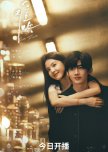
A poetic ode to love stories that wait: when timeless love knows no end
‘The First Frost’ feels like a miracle love story. Rich in emotion and poetic quality, it follows the lives of Sang Yan and Wen Yi Fan; two people who meet after what feels like a lifetime has passed between the abrupt departures that separated them and where they stand now. Such pairings in real life, where one person is open and ready for the next step in a relationship while the other isn’t yet ready to commit because of past trauma and low self-esteem, typically don’t end well. In most cases, the emotionally unaware person fails to heal or open up to others. One can only wonder how this common trope will unfold between the leads. How far will Sang Yan’s love bring them? Will it be reciprocated strongly enough, on her side, for her to rebuild herself and heal? Like a sunflower growing towards the sun, Wen Yi Fan slowly leans into his embrace; a space he crafted with patience, security, understanding, and warmth, ready to support her healing journey and allow her to find safety....and eventually bloom.First high school sweethearts, then strangers, and finally, roommates. By pure chance, their lives collide with the force of old flames of passion waiting to reawaken their glow. Lit with a tender yet strong vulnerability, their reincounter blazes both of their worlds to their cores. Wen Yi Fan, now working in journalism, finally moves out of her co-living space after experiencing multiple harassment incidents. Sang Yan is owner of ‘Overtime’, a trendy bar where nightlifers go to take refuge from the rush of work and the neon lights of the big city. Graceful like ballet, Wen Yi Fan’s quiet resilience reveals itself through every step she takes, bruises and pain hidden behind a shy smile. The power of her determination that shines like a stubborn light that refuses to give out taunts Sang Yan to further discover her hidden beauty. To hold it, love it, and fuel it with his hands that dare let go of something so passionate. Slowly and quietly, their lives veer off into a journey of rediscovering the paths to each other’s hearts.
Usually, dramas in which the leads meet in a second encounter after having known each other when younger offer a fresh start to a new relationship, one where lost strings are quickly sewn together. Unlike these dramas, ‘The First Frost' handles the theme of reconciliation with a past lover with the fragile touch of melancholy, regret, and longing, showing the true face of separation rather than shying away from its rawness. Sang Yan is an attentive, confident, and thoughtful yet emotionally guarded character. He secretly carries a tender heart, despite his cold appearance. As for Wen Yi Fan, she is someone quiet yet strong, loving yet reserved. Together, they alight heart-fluttering sparks of chemistry. But the more hope that finds home in their hearts, the more something more sorrowful grows from deep within. Between every accidental and intentional brush of skin, the past lives in hiding, waiting to be found somewhere underneath the dark hues of hesitation, regret, and confusion that have tainted their bond. Is it possible to rekindle such a lost connection, one where trauma and years of no contact set them further apart?
When, in every conversation, there is something left untouched, and every silence is met with a lingering gaze, yearning to spill words left unsaid, there is a certain tension that builds, palpable through the screen. This tension is especially felt in a café scene in which they pretend not to recognize each other when first meeting again for the first time after six years. It is also ever-present when both are—seemingly very much against their own liking—forced to a closer proximity through a shared living experience after facing unfortunate fates in past homes. Even before their past is fully revealed, it is evident they share a complicated history. Viewers are left with the impending wonder of what the emotionally-charged energy between them will amount to: whether it'll burst in a second chance or a second departure and a retelling of past goodbyes. The leads attempt to build a completely new relationship, yet traces of past resolve, disappointment, and hope still lie behind faces of faked indifference.
Heavy on societal commentary and the problems faced by women in modern society, the visually appealing show—both cinematographically and in terms of the actors’ visuals—gains substance mostly through the trauma lived by Wen Yi Fan. Throughout the entirety of the series, Yi Fan carries the weight of past trauma and struggles. Left scarred from abandonment and abuse, she develops the habit of guarding her emotions, feeling undeserving of receiving or giving love to others. Her eventually opening her heart goes both ways: the way she ends up accepting Sang Yan’s love and reciprocating it is also her accepting and choosing to love herself. Her self-healing process manifests itself through the story’s central plot of romance, because it runs in parallel to her relationship with Sang Yan. This tactic at reflecting her inner growth to her outside relationship with Sang Yan only adds depth to the romantic component of the show. It showcases how love is a long, complex process and that true love is something that builds on patience, understanding and trust rather than arriving spontaneously.
As the story slowly progresses, the depth of their relationship is revealed in a gradual, non-linear way, breathing life into the series’ message. The mosaic of small moments that make up their past, scattered at the beginning of each episode, eventually becomes a fuller picture, coming together to create the core component of their relationship: true, long-lasting love. Alongside this coming-together of what becomes a legendary romantic tale, comparisons are drawn between their current and past connection, enabling viewers to fully grasp the characters’ choices and complex personalities. Across each timeline, there is no chase, but only a mere constant reminder for Wen Yi Fan that there is someone waiting even in the darkest of nights to catch and save her: Sang Yan. And it is this constant devotion of Sang Yan that pumps the chemistry, fueling their romance with timeless passion and love that transcends all. Wen Yi Fan and Sang Yan’s story is one of choosing vulnerability over pride.
‘The First Frost’s ending is especially powerful because it reinforces this lesson and flips our perception of Sang Yan. Throughout the story, he is portrayed as the steady and composed one, while Wen Yifan is painted as more fragile because of her struggles at work, her family situation, and the trauma she carries. But when he confesses being the weaker one in their relationship, it is revealed that his “strength” was a mere façade to protect his pride. Instead of risking being vulnerable, he chose to pretend he was no longer interested after Wen Yi Fan when she started pulling away. For two years, he missed her but chose to love in silence, which mirrors their earlier dynamic when she had been the one waiting for him, scared to confess her feelings out of fear of not being good enough for him. This cycle makes their coming-together even more touching, because it reveals the one thing keeping them apart was the fear of being the first to let their guard down. In the end, by choosing to love her fully, he was finally able to be by her side not as someone who needed protecting but as the one who could protect. His authenticity finally allowed him to become her strength.
The cinematography captures the show’s essence beautifully, giving a poetic undertone to the bustling city life of Chongqing, the Chinese “mountain city” where the leads’ stories unfold. Each scene seems carefully curated down to every detail to build an overall atmosphere that feels intimate and satisfyingly perfect. Its soundtrack only reinforces this feeling. If not with its hefty narrative and deep nature in terms of themes, it is with its standard-meeting portrayal of the male lead that enables ‘The First Frost’ to resemble its sister series; ‘Hidden Love’, the iconic wholesome romance starring hit actress Zhao Lusi, released in 2023. What ‘Hidden Love’ didn’t delve deeper into with its main characters Sang Zhi and Duan Jia Xu, ‘The First Frost’ did through Sang Zhi’s elder brother Sang Yan and his romantic interest. Though much more mature, this series does draw comparisons to the show it spins off, at least with what it is at-heart: a beautiful, inspiring love story.
2025-10-20
Was this review helpful to you?

Losing humanity in an attempt to restore it—when zombies don’t represent death, but the living
We know zombies as cruel creatures that know no limits. Heartless and inhumane, mere shells of past human lives that once-upon-a-time also feared zombies themselves. In a case where the world would meet its end through this fate, it would be unquestionable to resort to whatever is essential for survival and the restoration of humanity. But what would happen if zombies were not completely stripped of their morals? What if they were not devoid of emotion? ‘Happiness’ is a dystopian series that questions conventional ethics, offering a thrilling twist on popular conceptions to challenge the usual divide between good and bad. Blurring this division brings an alternative to commonalities within its genre, focusing on the zombie’s struggles: the loss of control, the insatiable hunger for more, the helplessness of hanging on a thread between life and death....A mysterious drug is to blame for the rapid, chaotic spread of an incurable disease in South Korea; one that turns people into blood-thirsty, zombie-like creatures. In the midst of this chaotic pandemic, Yoon Sae-Bom, a fearless counter-terrorism agent, and Jung Yi-Hyun, her longtime friend and a righteous police detective, finally tighten their bond. They decide to file marriage paperworks to benefit from a work promotion that promises an apartment in a newly built complex. But as the virus continues to spread, and the building becomes isolated in a strict military-run lockdown, a new threat arises: the residents themselves. Slowly, the series shifts its lens to a danger less-obvious than the violent zombies, and the outbreak becomes a mere backdrop for social commentary and reflection of human behaviour when on the brink of death.
Is it wrong to suppress your human side, by avoiding feeling remorse and empathy towards the infected, if getting attached and involving emotion in your decisions risks your own safety? In this apocalyptic dystopian Korean series, the horror derives from pain. The infected are left to die on the streets, treated like wild animals, despite not wishing to inflict harm on anyone and being embarrassed by their own episodes. Meanwhile, the people in their lives—family members, friends, colleagues, or mere neighbors—are mentally exhausted, torn between letting their fear and fight for survival drive them, and their dissipating sense of humanity.
When this zombie epidemic takes place, the human is removed from all. Everyone, even the non infected, grasp onto the little part of sanity and humanity they have left in them to fend for themselves alongside a small group of people whom they don’t know if they can trust. Because of their proximity and need to trust them for survival, the same people they surround themselves with are the only ones capable of tricking them and betraying them. As the episodes progress, this most feared betrayal of all intensifies, leading them to become even less human than the zombies themselves—fighting amongst each other and trying to take control of power and wealth while the zombies cower in fear or whimper in pain. With these dual complexities to both sides, who are the true victims?
In this series that questions morality, we see the many different ways humans react when faced with the end of the world, and watch as humanity dies in an attempt to restore it by doing what is believed to be conventionally right. Those who are natural leaders and heroes reveal themselves, as do those who are hungry for power, those who are selfish, and those who are selfless. In a new world where there is no determining line of right and wrong, even a lawyer's words feel empty and ridiculous in the context of the outwordly situations and trials the characters face. Everyone is slowly losing themselves as days go on, locked up in this building where, interestingly enough, everyone has concerns despite the zombies, who are scared of themselves, hiding their thirst and fearing their own death.
The apartment complex in which the individuals whose lives are followed are stuck isn't only like a petri dish to check for virus mutations. Instead, it's a small part of the world where authority, competition, personal values, thriving to survive, capitalism, societal class clashes and more all manifest themselves, with each single individual a portrait of a portion of the world with variations in age, jobs, background, wealth, etc. This is an example of the virus serving greater purpose than merely being a virus, it's a dual meaning to depict human flaws and study nature in the face of a crisis. In the introspective series ‘Happiness’, the virus isn't the main focus—it is rather a tool used to arise intense emotion from the complex characters and in turn drive the story forward.
Finally, what does it mean to truly be alive? Are the zombies alive? Viewers are almost forced to ask themselves this question, as it is what forms their opinion on the characters and on whether some of their actions are favorable or not. They are in this state of thirst and only wanting more, which is what sets them apart from being human because of its intensity. This scares others, when in reality, it is only a mirror of their own selves, constantly wishing for more—more money, more followers, more popularity...they aren't only striving to overcome the zombies. Surviving means overcoming it all, and only those who are emotionally mature and aware enough to do so will manage to make it out alive. Because surviving doesn’t equate to living, but perhaps having morals and knowing where to stand your ground to be able to confidently take the next step is.
By the end of the series, the tension between the complex tenants is palpable, everyone torn apart in one way or another. The fear is no longer centered zombies. Its goose-bump raising scenes shift from thrilling zombie chases to those involving people who, at first, seemed like the safest ones you could surround yourself with. It steps farther away from the science fiction of creatures and further into the realm of dystopia, where greed overthrows even common sense, and people willingly turn themselves into zombies or pretend to be infected to justify crime or satisfy their hungry desire for money. A particularly chilling scene that signals the series' step closer to the real world—while still bathing in thrill, almost a direct call out to the society we live in today—is when a member of building's cleaning service voluntarily trades his conscience for luxury, and finds himself sitting in a pile of wealth, gone mad, but not because his mind was overtaken by poison. Instead, he screams for thirst while stuffing his insatiable hunger for money with items he monstrously fought to keep, even choosing to stay over claiming his own freedom.
Corruption poses great risk to Jung Yi-Hyun and Yoon Sae-Bom, who finally get their happy ending after going through long lengths and many hardships that reveal what has let them withstand it all—even in the midst of collapse of civility: empathy, compassion, and love.
2025-07-12
Was this review helpful to you?


