
 News


This review may contain spoilers
A love on the chessboard of fate
Hello!
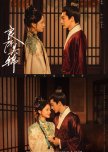
The story centers on Gu Jinzhao, a woman raised by her grandmother to be a free spirit. Though overlooked by her own family, she grows into a headstrong, intelligent, and strategic individual. Finding herself in a position where marriage becomes a necessary tactical move to secure her place in society, she crosses paths with Chen Yanyun. Their bond is built not on "love at first sight," but rather on mutual respect, trust, and shared intellect; as they join forces to navigate palace politics and work toward the greater social good, their destinies become inextricably linked.
A major strength of the story—and perhaps its most compelling aspect—is that the female lead is neither passive nor a damsel in distress waiting to be rescued. Instead, she is a strategist who shapes her own destiny and plays an active role in her husband’s political ascent. The chemistry between the leads is remarkably well-balanced and complementary. Furthermore, the supporting cast—notably WinWin—adds significant depth to the subplots and political intrigue. The historical costumes, the atmosphere within the estates, and the chosen color palette all succeed in bringing the period setting to life.
As for the weaknesses—which is where I’ve deducted some points—the narrative flow occasionally slows down during the middle sections, where the palace and family intrigues become particularly dense; at times, this makes the series feel a bit tedious.
Overall, if you are looking for a story that combines political intrigue, the development of a strong female lead, and a mature romance, this production is an excellent choice—it offers a highly satisfying and enjoyable viewing experience.
Was this review helpful to you?


