
 Editorials

 4
4 1
1


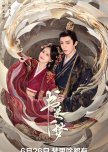
Artistically brilliant in every aspect, immersive guessing game & lesson to resist the preordained
This drama is an all-round artistic creation, fulfilling practically all the purposes of the arts, which I'll break only in several (major) points in the following, representing the reasons for my first time ever 10/10 rating for a drama
1. It stirs up all range of emotions, thoughts and reflections
If you decide to watch, know you'll get seduced, irritated, moved, shocked, amused, depressed, entertained, anxious, sucked into a continous guessing game on why things are happening, on what happens next and how it will happen, you'll love and you'll hate, in short, it will occupy your full attention, your heart and your brain cells. Believe me, even if you decide to drop it after a while, it will only mean you were too moved, you won't drop it bc. you were indifferent or bored
2. It breaks barriers (/transcending and lingering in a space) between fiction and reality, between imagined and realised, it explores different, multilayered realities (or, better, "fictionalities")
The plot is more or less explained in the official MDL synposis but I'll have to make it less abstract in order to explain how it breaks barriers. You've already got there are 2 parallel stories, one taking place in a (fictionalised) modern time "reality" and the other in a fictional, Jing empire, script-written in the 1st story. Due to the fact all the first-tier actresses refused to take the role of a tragic and desperate FL and in a horribly written costume-drama story, an unaware and mediocre actress is called to take this part. Skimming lazily and superficially (that's her character) through the script on her couch, she first gets irritated and then sucked into the 2nd story. Breaking through this barrier is accompanied with a typing sound which will be often used later in the drama. The ancient Greek/Roman theatre "production" used a special mechanical device producing sounds to represent a "divine intervention" in their dramas, known as "deus ex machina". This expression also has its broader meaning and today is largely used for a particular writing/storytelling technique: when narrative uses one story to tell, explain, or manipulate the interpretation of another, apparently unrelated, story. Like right now, I'm telling 'u a story on the ancient Greek theatre to explain what is happening in this C-costume drama. This "deus ex machina" sound will be repeated every time there's a "divine intervention", and who is the main divinity in a scriptwritten story? The Scriptwriter, obviously. Who is a bad person in the drama, having written such a horrible script. FL refers to him as a God several times while trying to explain his role to the ML, who also hears that typing sound. Actually, when ML hears it, it isn't bad for the FL, it means "ML must save the FL every time she is in danger". That's why this "God" is... maybe... redeemable.
3. It stimulates empathy, personal growth, healing and the process of self-awareness while we are bonding with characters, passing through the same processes of self-discovering,
Now we must take a better look on the strongest value of these 2 stories: its characters. I usually prefer action over characterisation, because actions (+ choices, decisions, dialogues etc) are mostly to determine the characters, actions drive the plot (actions are the basic morphology, the structure, of a story), but in this drama we've got a proper, almost perfect characterisations BEFORE we've seen their actions. It was a great effort in order to make sense in an apparently (and intentionally) messy plot. First, the two leading actors totally immersed in and conveyed their characters. We (=the audience) first see the story from the FL's perspective - a typical "heroine" in a C-costume drama,: lazy, superficial, stubborn... - but with a great gift: she is DEEPLY HUMAN and can't be anything but human, all her flows are human, even when she plots the murder of the ML it's out of her human fear. She finished in that Jing world and still deeply cares about her "family" in there, about the insignificant "paper-people", she is all Yin, all Emotion. When the perspective changes to the ML, we see this HERO, a total Yang, capable of carving his own destinity even before he met her. In order to free himself from the first "puppeteer" who tried to control him, he founded his own powerhouse - Waning River Crescent, the Nightwalkers and his alternative identity as Li Shu Liu. He is all Strategy and Power, ready to be subdued only by Emotion. Typical but the actors made them quite interesting, if not original. And a plethora of side characters made a lot of sense and were given space to show their strenghts... Such care and respect for all the characters is so rare in costume dramas.
4. It challenges the unjust societal rules & pre-written destinies while outlining alternative futures
This is probably the best part of the drama, concentrated in the last quarter. It's a parody of its genre, but also has a a high moral to defend the dignity of this genre, while conveying the power of rebellion and resistence against all the odds.
5. It is expressed in "the universal language" which transcends all (linguistic, cultural, mental...) barriers, it is the language of beauty, surprise, marvel, the art which reveals itself through well crafted visual details, aestethics, music, sounds...
This drama is unique for the unique effort all the well-crafted participants/crew members put in it, no flows. The sound/music department truly contributed to build up the story. All along.
The costumes? The visuals? The references and homages they've disseminated together with the clues? Pure joy.
An iconic drama to be remembered and will remain long with you after you've seen it.
Now, I'll go to rewatch it again. :)
1. It stirs up all range of emotions, thoughts and reflections
If you decide to watch, know you'll get seduced, irritated, moved, shocked, amused, depressed, entertained, anxious, sucked into a continous guessing game on why things are happening, on what happens next and how it will happen, you'll love and you'll hate, in short, it will occupy your full attention, your heart and your brain cells. Believe me, even if you decide to drop it after a while, it will only mean you were too moved, you won't drop it bc. you were indifferent or bored
2. It breaks barriers (/transcending and lingering in a space) between fiction and reality, between imagined and realised, it explores different, multilayered realities (or, better, "fictionalities")
The plot is more or less explained in the official MDL synposis but I'll have to make it less abstract in order to explain how it breaks barriers. You've already got there are 2 parallel stories, one taking place in a (fictionalised) modern time "reality" and the other in a fictional, Jing empire, script-written in the 1st story. Due to the fact all the first-tier actresses refused to take the role of a tragic and desperate FL and in a horribly written costume-drama story, an unaware and mediocre actress is called to take this part. Skimming lazily and superficially (that's her character) through the script on her couch, she first gets irritated and then sucked into the 2nd story. Breaking through this barrier is accompanied with a typing sound which will be often used later in the drama. The ancient Greek/Roman theatre "production" used a special mechanical device producing sounds to represent a "divine intervention" in their dramas, known as "deus ex machina". This expression also has its broader meaning and today is largely used for a particular writing/storytelling technique: when narrative uses one story to tell, explain, or manipulate the interpretation of another, apparently unrelated, story. Like right now, I'm telling 'u a story on the ancient Greek theatre to explain what is happening in this C-costume drama. This "deus ex machina" sound will be repeated every time there's a "divine intervention", and who is the main divinity in a scriptwritten story? The Scriptwriter, obviously. Who is a bad person in the drama, having written such a horrible script. FL refers to him as a God several times while trying to explain his role to the ML, who also hears that typing sound. Actually, when ML hears it, it isn't bad for the FL, it means "ML must save the FL every time she is in danger". That's why this "God" is... maybe... redeemable.
3. It stimulates empathy, personal growth, healing and the process of self-awareness while we are bonding with characters, passing through the same processes of self-discovering,
Now we must take a better look on the strongest value of these 2 stories: its characters. I usually prefer action over characterisation, because actions (+ choices, decisions, dialogues etc) are mostly to determine the characters, actions drive the plot (actions are the basic morphology, the structure, of a story), but in this drama we've got a proper, almost perfect characterisations BEFORE we've seen their actions. It was a great effort in order to make sense in an apparently (and intentionally) messy plot. First, the two leading actors totally immersed in and conveyed their characters. We (=the audience) first see the story from the FL's perspective - a typical "heroine" in a C-costume drama,: lazy, superficial, stubborn... - but with a great gift: she is DEEPLY HUMAN and can't be anything but human, all her flows are human, even when she plots the murder of the ML it's out of her human fear. She finished in that Jing world and still deeply cares about her "family" in there, about the insignificant "paper-people", she is all Yin, all Emotion. When the perspective changes to the ML, we see this HERO, a total Yang, capable of carving his own destinity even before he met her. In order to free himself from the first "puppeteer" who tried to control him, he founded his own powerhouse - Waning River Crescent, the Nightwalkers and his alternative identity as Li Shu Liu. He is all Strategy and Power, ready to be subdued only by Emotion. Typical but the actors made them quite interesting, if not original. And a plethora of side characters made a lot of sense and were given space to show their strenghts... Such care and respect for all the characters is so rare in costume dramas.
4. It challenges the unjust societal rules & pre-written destinies while outlining alternative futures
This is probably the best part of the drama, concentrated in the last quarter. It's a parody of its genre, but also has a a high moral to defend the dignity of this genre, while conveying the power of rebellion and resistence against all the odds.
5. It is expressed in "the universal language" which transcends all (linguistic, cultural, mental...) barriers, it is the language of beauty, surprise, marvel, the art which reveals itself through well crafted visual details, aestethics, music, sounds...
This drama is unique for the unique effort all the well-crafted participants/crew members put in it, no flows. The sound/music department truly contributed to build up the story. All along.
The costumes? The visuals? The references and homages they've disseminated together with the clues? Pure joy.
An iconic drama to be remembered and will remain long with you after you've seen it.
Now, I'll go to rewatch it again. :)
Was this review helpful to you?


