

 4
4 1
1


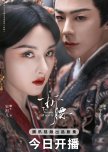
The Prisoner of Beauty Episode 36
0 people found this review helpful
If you decide to watch this drama. know that it will hook you (as it hooked me) with a dark and serious note of political turmoil, explaining the reasons of a deep clash and hatred between two clans, once united in a common vision and a great project of canal constructions. Unfortunatelly, just after the initial 5-6 eps, it will turn into a fluffy beating around the bush romance.C-drama scriptwriters regularly have the following problem: they can't decide a genre in which their story should be set, they can't accept a simple fact that if you open a serious plot, you must keep that "promise" and you can't suddenly turn it into an idol-drama. Personally, I don't disdain a fluffy romance either, if it is true to itself. If I am not in a mood to watch fluffy stuff, I'll pass, if I am, I'll watch it. But what I hate is the BETRAYAL of the initial expectation the author(s) of the story created. Because it means, the author(s) is manipulating me and challenges my intelligence.Actually, this or these poor screen adaptor(s) challenged my intelligence even in those initial episodes, when the FL tries to prevent the main male antagonist (Liu Yan) of flooding (and killing many people) the downstream of a canal by... burning the sulfur bags hidden by the bad guy in the granary (!) of Panyi city and destined to blow up the dam on the canal. Burning sulfur in that granary, doesn't only means: you, a smart FL, will explode yourself, but you will also intoxicate the whole Panyi to the death with sulfur dioxide (SO2) to the death, provoking probably a greater damage than the flooding. I've thought, ok, it's a C-drama, no big deal...But later another "granary plot" didn't make any sense and it regarded the main female antagonist, Su E Huang, who was able to take out of the Wei's granary a resistent wheat seed sent from the FL's clan, cook it and sent it back, in order to force the ML to choose between his (Qiao) wife and his (Wei) cousin, who was supposed to preside over the granary. At this point, I've decided to check if these things happened the original novel, just to know who to blame, the author of the novel or the screenwriter. Neither of these two happened in the novel. The novel isn't great in its narrative but it is well structured in plots, actions and political intrigues. If the screenwriter sticked to it, she (they) would have done a much better job. Instead, she (they) felt smarter, a better artist, able to re-wrote a perfectly logical and rational story, by making it totally illogical just to make an idol drama.Because, very differently from the drama, the novel MADE SENSE ALL THE TIME, its characters and their decisions, plots and motivations were realistic, both on the protagonists' and the antagonists' side. It isn't a great novel but it makes sense, it doesn't offend your basic knowledge and intelligence. Did this dumb scriptwriter ever attend an elementary school? If she did, she would have heard of communicating vessels principle: you can't raise the level of the marsh by DRAINING the downstream and so on.The amount of nonsense is not limited to the actions, the screen adaptation totally unnecessary exaggerated and/or twisted practically all original characters, making them nonsensical as well, Manman is this superpowered and superskilled woman (who would have blowned up herself in reality in the first eps), Daqiao is a woman totally comitted just to one man to make such a dumb decisions, and all the male characters are basically dumbed down.Last but not least, the drama adaptation failed to maintain the atmosphere, the geist of its time, in many episodes.On the positive side, the chemistry between actors is ok, the direction is mainly ok. the artistic department also greatly did its job, horrible wigs aside
Was this review helpful to you?


