
 K-Drama




The river runs on, even after the storm
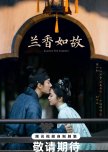
To begin with, a huge round of applause for the team behind this masterpiece. I owe a sincere thank-you to everyone across social media who recommended Against the Current and persuaded me to give it a chance. This woman-centric drama follows Shen Jialan, whose noble life is shattered overnight when her family is massacred under accusations of treason. The sole survivor, she becomes Xu Lanxiang, a maid in the very household she was once meant to enter as its young madam. The irony is almost cruel: a life once filled with privilege is reduced to a struggle for survival, and the woman who should have stood beside Lin Jinqi must instead serve his household. Yet this is not a conventional tale of vengeance. Lanxiang does not devote her life to hunting down those who destroyed her family; she chooses to live, perhaps because she understands that this is what her parents would have wished for her. As long as the green mountains remain, there will be firewood. Sometimes, survival itself is an act of defiance, and living well is a quieter way of honouring those we have lost.
Lanxiang is the heart and soul of this story. Beneath a maid’s uniform, she retains the poise of a noblewoman, distinguished by her intelligence, composure, and quiet courage. She is no damsel waiting to be rescued; more often than not, she is the one who saves herself and the women around her. Yet, for all my admiration, I sometimes wish the drama had allowed her to be a little less perfect and a little more human. She can move mountains for other women, but when it comes to Jinqi, she remains behind an almost impenetrable wall. I understand her resentment: the Lin family is inseparable from the tragedy she endured, and even their marriage forces her to relive wounds that have never truly healed. Her wedding, followed by her return to the old Shen residence, is particularly heartbreaking. Still, after so many years together, I wanted to see how resentment softened into affection and how affection might have grown into love. Their first intimate moment feels less like the culmination of an emotional journey than the fulfilment of an expected duty. And why, after more than sixteen years of marriage, does she never tell Jinqi that she is Shen Jialan? Perhaps she wishes to spare him the guilt, perhaps she cannot bring herself to surrender the last piece of her former life. I can understand her silence, but I cannot help wishing she had let him see more of her heart. The series shows us so beautifully how she changes the lives of others, yet it is far less certain in showing how she changes within herself.
As for Lin Jinqi, I would not call him an unblemished green flag, but neither can I dismiss him as a man undeserving of sympathy. He is the eldest son, raised to place his family’s interests above his own, and he carries the guilt of the Shen family’s downfall despite having tried to warn them of the danger. His grandfather, whom I initially regarded as a cold and calculating man, gradually becomes more understandable, too. Faced with an impossible choice, he prioritises the survival of his own family over power and position. His decision does not absolve him of responsibility, but it reveals the ordinary human fear beneath it. The drama repeatedly reminds us that a person can do wrong without being wholly evil. Jinqi, however, has his own failings: when he finally chooses himself, he does so by forcing Lanxiang into a marriage she never wanted. He reaches for happiness before considering the cost, then spends years asking for affection from a wife who cannot easily give it. His devotion is touching, but it does not erase the harm caused by his choice. I also found myself wondering why he eventually retired rather than remaining in the capital as commander of the Left Army. By the final episodes, Han Liang’s fate offers a possible answer: the pursuit of power and rank can place everything one loves in jeopardy. Perhaps Lanxiang’s wish for Jinqi to retire is not a surrender of ambition, but an invitation to choose a quieter life before it is too late. Sometimes, it is in an ordinary and peaceful life that the truest happiness lies.
What makes this drama especially compelling is its refusal to flatten its characters into simple judgments. Lin Xiuwan and Lin Xiuru undergo meaningful development, while Zhao Xingtang deserves particular mention. She is capable of cruelty and betrayal, and understanding her circumstances does not excuse her actions. Yet she, too, is a woman shaped by an era in which marriage could be little more than a transaction and a woman’s future was often decided by others. Her desperate attempts to secure enough silver to escape and claim a life of her own reveal the tragedy beneath her selfishness. I do not excuse what she does, but I understand why she is so desperate to survive on her own terms. This is what I love about the drama: no one is perfect. Every character carries both virtue and flaw, and the series allows us to understand the person beneath the choices they make. Through these women, Against the Current offers a thoughtful portrait of the lives women were forced to endure and the small spaces in which they struggled to reclaim their agency.
And finally, I really have to appreciate the three elements that gave their all to this work: the actors, the director, and the writer. Liu Xueyi and Tan Songyun breathe life into Lanxiang and Jinqi through the smallest details—subtle glances, restrained expressions, micro-expressions, and all the emotions that remain unspoken. The supporting cast deserves equal praise. Their characters are given enough depth and their own stories are compelling enough that I never found myself complaining about screen time being taken away from the leads; I genuinely wanted to know more about them too. Behind them, the director and writer deserve enormous credit for trusting subtlety rather than constantly explaining what the audience should feel. The cinematography is picturesque, the costumes and accessories are exquisite, and the OST blends beautifully into each moment. My only real frustration is the timeline: after major revelations, the story sometimes jumps six months ahead without allowing us to see the emotional aftermath, which is especially noticeable when Lanxiang’s own inner transformation is already left so understated. Still, Against the Current is a drama I deeply appreciate. It understands that people are rarely entirely good or entirely bad, that survival sometimes matters more than revenge, and that choosing an ordinary life can be its own kind of courage. Lanxiang carries her lost family forward simply by continuing to live. I only wish the drama had allowed us to see, with the same tenderness it gives to everyone around her, what that survival had made of her heart.
Was this review helpful to you?


