



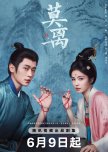
Every petal carried another wound
The First Jasmine has been on my most anticipated list ever since the cast announcement. Bai Lu and Cheng Lei are two actors whose works I genuinely enjoy, so seeing them paired together already felt like a dream. Thankfully, they completely lived up to the hype. Their chemistry is honestly the biggest reason I stayed invested until the end. Both of them are incredible at micro-expressions—the silent yearning, the restrained tears, the heartbreak, the quiet comfort. Sometimes they don't even need dialogue because their eyes are already doing all the acting. Bai Lu especially surprised me with Ye Li. Compared to her previous roles, her eyes here always carried a lingering sadness, perfectly portraying someone who looks healthy on the outside but is quietly battling years of trauma. I also adored Ye Li and Mo Xiuyao's relationship. Instead of the usual over-the-top romance, we got two broken people healing each other. Ye Li slowly heals Mo Xiuyao's leg, while Mo Xiuyao patiently helps Ye Li face the scars left by the destruction of Lishan Academy. He isn't a perfect green-flag husband either—he gets disappointed, says things he regrets, and makes mistakes—but that's exactly what makes him feel so human. He never lets his pride win for long, and watching him choose his wife over his ego every single time made their relationship one of the healthiest I've seen in a historical drama.The first twenty episodes were genuinely my favorite. Ye Li's revenge unfolded like a carefully planned chess match, and I loved watching her quietly outsmart everyone from behind the scenes. That's why I was a little disappointed once the story shifted gears. I kept waiting for Ye Li and Mo Xiuyao to truly combine their intelligence and bring down the villains together, but somehow that payoff never fully arrived. The pacing also became noticeably slower, making the second half feel less engaging. Still, one thing I really appreciate is how this drama refuses to create purely evil characters. Even the Empress Dowager, the mastermind behind almost every tragedy, isn't written as a one-dimensional villain. She was ambitious, intelligent, and probably capable of ruling the nation, but she was trapped in an era where women were never allowed that position. Her lack of empathy ultimately turned her into someone willing to sacrifice innocent lives for power. Prince Li is another example. He's still a villain, but after losing his entire family and being forced to live like a puppet under the Empress Dowager, it's impossible not to understand how he became that way. This drama constantly reminds us that understanding someone's pain doesn't excuse the evil they commit, and I think that's one of its strongest qualities.
Ironically, my biggest disappointment is also the emotional core of the story: the Lishan Academy massacre. We, as viewers, already knew from the beginning that the Empress Dowager massacred nearly fifty innocent people without mercy. That tragedy shaped Ye Li's entire life, so I kept waiting for a massive public reveal where the whole kingdom would finally learn the truth. Instead, it was simply brushed aside as an epidemic. That's it? After building this mystery for dozens of episodes, the payoff felt incredibly underwhelming. The Empress Dowager's ending also felt far too easy considering everything she had done. Then there are plot holes that become harder to ignore toward the end, especially Princess Changbei's arc. The writing definitely isn't perfect, and the soundtrack never left much of an impression on me either. Thankfully, the beautiful directing, strong performances, and emotional chemistry between Bai Lu and Cheng Lei carried the drama through its weaker moments. Despite its flaws, this is still a touching story about grief, healing, and people trying to find light after unimaginable loss. It may not have delivered every payoff I hoped for, but I'll definitely remember it for its heartfelt performances.
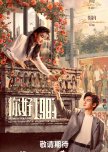
A dream worth living, even if it doesn't last forever
Just me accidentally starting this and ending up this emotionally invested till episode 36, this drama really feels like a dream from start to finish. Xia Xiaolan’s journey from a betrayed 2026 corporate woman to rebuilding her life in 1983 was so satisfying to watch. She didn’t just survive, she thrived—fixing her past, building her career from scratch, and finally giving justice to herself and the original Xiaolan. And honestly, one of the best things about this drama? No unnecessary misunderstandings, no overly dragged villain arcs! everything feels purposeful, and every character gets an ending that matches their actions. What I love most is her hard work—yes, she has future knowledge, but she still puts in the effort every step of the way. From small hustles to building a business and moving toward real estate, her success never feels handed to her. Beyond her individual journey, the family and friendship dynamics are what truly give this drama its heart. After escaping her father’s neglectful and toxic household (honestly still one of the most frustrating parts), Xiaolan finally finds warmth—especially through her mother and the people who genuinely support her. Watching her mom eventually find love again with someone who respects her was incredibly healing. The New Year gathering scenes, the sense of community, the friendships she builds along the way—it all creates this feeling of “home” that Xiaolan never had before. It’s not just about success, it’s about finally belonging somewhere.Zhou Cheng??? still top tier. A gentleman through and through, emotionally stable, respectful, and with a strong moral compass. The way he loved Xiaolan, accepted her truth, and stood by her without making things complicated?? yeah that’s the standard. Their relationship stayed consistent till the end: soft, supportive, and mature. Even the side dynamics, like Du Zhaohui, felt refreshing instead of messy, which made the whole story more enjoyable without unnecessary drama.
BUT… let’s talk about the ending. Xiaolan returning to 2026 makes sense, but it also feels a bit… empty? Like she went through all that in 1983, changed so many lives, built everything—and somehow 2026 doesn’t reflect those changes much. We do get that moment where she meets Zhou Cheng again (thank GOD), but it lacks proper closure. It feels more like a hint than a conclusion, and I was just sitting there like “wait… explain more???”
That’s why the theories actually make it more interesting. The idea that Zhou Cheng might be a time traveler himself—the blurry man appearing in the 2026 scenes, looping through time just to find the timeline where they finally meet—lowkey makes everything hit deeper. It would explain why he was so instantly drawn to her in 1983, like he already knew her somehow. And that final moment where he calls her softly, almost like testing fate?? yeah that theory kinda saved the ending for me. There’s also the idea that they might return to the 90s timeline to live their life fully together, which honestly feels more emotionally satisfying, especially since Xiaolan already closed her chapter in 2026. Overall, the ending may feel a bit open and slightly underwhelming in terms of closure, but the journey itself? Still worth it. This drama is warm, healing, and addictive, with strong characters and meaningful relationships. Even with its imperfect ending, I still genuinely love it and maybe that lingering “what if” feeling is part of its charm. Honestly a 9/10… but the ending really said ‘figure it out yourself,’ so yeah—8.5/10 it is.
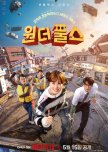
so THIS is why they’re called the wonderfools
we almost got robbed because of cha eun woo’s cases, but gladly netflix still chose to drop this fun-awesome-silly-chaotic banger. well done. the WONDERfools was honestly one of the most unexpected dramas on my watchlist this year. i literally only found out about it because it suddenly appeared on netflix and then my tiktok fyp started calling it “korean stranger things” and well… of course i was gonna be curious because stranger things is one of my favorite series ever. then i saw park eun bin in the cast too and let’s be real, that woman rarely misses, so i gave it a try. and wow… why was this actually so fun?what i really enjoyed about this drama is how refreshing and low-stress it feels. like there’s drama, obviously, but not the exhausting kind that makes your brain work overtime. the storyline is pretty neat, not overly complicated, and everything feels well executed. honestly at first i was a little hesitant because the whole “superpower kdrama” thing usually doesn’t work for me. most of them either take themselves too seriously or just end up messy. but the WONDERfools somehow managed to balance everything really well. also this drama is so unserious please. where else are you gonna find superheroes acting this goofy, chaotic, silly, and straight up yolo-coded? these people have powers and still behave like a bunch of random neighborhood losers trying to survive life together, and somehow that’s exactly what makes it so lovable. and can we please talk about cha eun woo because he genuinely shocked me here. maybe people were right when they said his previous roles just didn’t give him much to work with because with good writing and directing… oh he can act act. meanwhile park eun bin once again reminded everyone why she’s one of the most versatile actresses out there. her microexpressions are insane. she just slips into every character so naturally.
also netflix explain that ending right now because what do you mean the villain came back alive at the very last second because the research apparently succeeded? hello? are we getting season 2 or was that just to mess with us emotionally? because lowkey i actually would love another season. i’d come back immediately for more chaos, more unserious superheroes, and more fun character dynamics. to sum it up, the WONDERfools is genuinely such a good pick if you want something funny, refreshing, easy to binge, and not emotionally draining. this is the type of drama you watch to relax and have fun without needing a whole conspiracy board beside you. and thank god it’s a netflix original because dropping all episodes at once was the best decision ever. this drama was literally made for binge watching.
It had everything going for it, except follow-through.
Starring Hou Ming Hao and Gulnezer, started out as one of those dramas that instantly grabs your attention. For the first half of the series (roughly up to episode 25), it was genuinely interesting, creative, and refreshing in a way that’s rare for historical dramas. The story revolves around the Rong Family, owners of a massive tea plantation that operates almost like a kingdom. What makes this drama stand out is its reverse-gender worldbuilding. In this society, women hold power while men take on roles traditionally assigned to women. The Rong Family is led by women, all major business affairs are handled by women, and the family heir is always the eldest granddaughter.The plot opens with the heir, Rong Shan Bao (The first, eldest granddaughter), searching for a husband. Men from all over the country compete to marry into this powerful family through contests of martial arts, intelligence, and knowledge. Watching men fight for a marriage position — something usually reserved for female characters — was clever, fun, and surprisingly engaging. The drama constantly flips traditional gender norms, and honestly, I loved that about it. It felt fresh and bold. Another aspect I genuinely enjoyed was the internal dynamic of the Rong Family itself. The sisterhood power struggles were interesting to watch — women scheming against each other, setting traps, and fighting for influence felt fitting within this matriarchal setup. Those conflicts added tension and depth to the story and, for the most part, worked well.
That said, the grandmother’s storyline was a completely different experience for me — and not in a good way. She was frustrating, selfish, and honestly nerve-wracking to watch. At one point, she was almost marry her own granddaughter off to a villain. I understand that, as the head of the family, she was making cold, strategic decisions, but that didn’t make her actions any easier to tolerate. Her character crossed a line for me, and I found myself genuinely hating that entire arc.
Unfortunately, things start to fall apart in the second half. Around episode 25, the story loses its momentum and gradually becomes bland, awkward, and uncomfortable to watch. The introduction of Lu Jiang Lai, a highly capable and promising official who loses his memory and ends up in the Rong household, initially worked well. His playful behavior, sincerity, and growing feelings for the cold and reserved Rong Shan Bao felt natural enough. Even their interrupted marriage due to his sudden imperial assignment made sense. But once Lu Jiang Lai regains his memory, his character takes a strange turn. Despite being established as smart, strategic, and competent, he remains stuck in a lovestruck, almost foolish mode. Loving Rong Shan Bao is fine — his feelings are sincere and consistent — but the problem is that Rong Shan Bao gives him very little in return.
Although the story wants us to believe she loves him, she rarely shows it. She hides important information, avoids honest communication, and keeps him emotionally at arm’s length. To be fair, I understand both perspectives. Lu Jiang Lai leaving abruptly before their wedding without explanation was deeply hurtful, and Rong Shan Bao’s anger makes sense. That said, their communication is clearly poor — and ultimately, Rong Shan Bao handles it worse. There are moments when she physically slaps Lu Jiang Lai after he says something out of line, and while I understand the emotions behind those actions, I wasn’t comfortable with how often physical punishment was used instead of conversation. It only deepens the imbalance in their relationship and makes their dynamic harder to sympathize with. The final arc only adds to the disappointment. The Lu Jiang Lai we were first introduced to — brilliant, confident, and capable — never fully returns. Instead, he repeatedly relies on the Rong Family to solve major cases, which directly contradicts his earlier characterization. The drama ends up feeling like a female-centric story that sacrifices logic and balance to push its narrative forward.
To be clear, this isn’t a criticism of the female lead or Gulnezer’s performance. The issue lies entirely with the scriptwriting. A female-centric drama can be powerful and compelling, but it still needs internal logic and emotionally believable character dynamics. Hou Ming Hao, especially, deserved a much stronger and more consistent script. That said, Glory does shine in terms of production. The cinematography is beautiful, with visually pleasing, well-composed shots throughout. The OST is excellent, the acting across the board is solid, and the chemistry between the leads is decent. Almost everything works — except the story’s direction in the second half and its unsatisfying ending.
In the end, Glory feels like a drama with huge wasted potential. What started as a bold, imaginative, and refreshing story slowly turned into a frustrating experience. With such a strong concept, great visuals, and capable actors, it’s disappointing that the writing ultimately couldn’t deliver. On a quieter note, I’m genuinely grateful that this drama took the time to highlight traditional Chinese tea culture. From cultivation and farming to planting, processing, distribution, and finally serving the tea, the story lingers on each step with care. It’s a gentle reminder of how much history, patience, and craftsmanship are poured into something we often take for granted. Watching these scenes felt like a moment of pause — an appreciation of traditions that are still being nurtured and preserved, even as they slip past our everyday attention. It made me admire, once again, how rich and enduring Chinese culture truly is.

A story of finding color within the quietest corners of your own heart.
Spirit Fingers is the kind of drama you enter without expectation, only to find that somewhere along the way, it has quietly painted itself across your heart. Light, warm, and surprisingly tender, it feels like a story told in soft colors, a gentle palette that lingers long after the final scene. Adapted from a beloved webtoon, the drama stands well on its own. I haven’t read the original, yet I never felt lost. Many say it’s a faithful adaptation; all I know is that the journey is easy to embrace, even for someone stepping in with an untouched canvas.At its center is Song U Yeon, a girl who has spent her life shrinking herself. Convinced she lacks beauty, talent, and anything worth admiring, U Yeon moves through her world like someone afraid to disturb the air around her. It isn’t hard to understand why, home, the place meant to soften you, has always been a ground of comparison for her.
With an older brother who shines effortlessly and a younger brother nearly treated as a prodigy, U Yeon walks on thin ice, striving to be good enough for a mother whose affection seems to lean elsewhere. When she confesses that her mother plays favorites (and she is not the favorite) the ache settles deeply. It explains the way she curls inward, the way she doubts the small beauty in herself. But life stirs the moment she steps into the Spirit Fingers drawing club, a place bursting with color, eccentricity, and souls who wear their hearts openly. There, in that mismatched group of dreamers, U Yeon begins to breathe a little deeper. Her growth isn’t grand or dramatic; it’s gentle, like watercolor spreading slowly across paper. And perhaps that is what makes it so real.
And then there is Nam Gi Jeong. Tall, radiant, a little foolish, and unreasonably charming. A boy who looks at U Yeon like she is the only color in a black-and-white world. A boy whose confidence could easily overwhelm, yet whose heart is disarmingly sincere. Standing beside someone like him, it’s only natural that U Yeon feels small. Their push-and-pull is slow at times, but it mirrors her own internal battle: she does not believe she deserves someone as bright as he is. But Gi Jeong has a magic of his own, the ability to win everyone’s heart without even trying. The way he warms U Yeon’s brilliant younger brother, the ease with which he fits into her life, the unshakable honesty he offers… it all feels like sunlight quietly finding a corner that hasn’t seen warmth. Even when U Yeon envies him, envies the clarity with which he has found his dream. Gi Jeong handles her fragility with a kind of childish maturity that is both funny and deeply touching. He never lets her drift too far into self-doubt. He reminds her, again and again, that she is beautiful, unique, and worthy. I adore the chaos-laced love between Gi Jeong and his sister Geu Rin, all physical attacks and noisy affection, a sibling language that only they understand. I love how Gi Jeong turns cold to the world but softens instantly at the sight of U Yeon, how he leaves no room for misunderstandings… except the ones U Yeon creates in her own anxious heart. Thankfully, even that arc resolves like a sigh, brief and quickly soothed.
The drama’s strength lies in its ensemble of colorful souls; Geu Rin and Seon Ho, whose clumsy push-and-pull becomes sweet once their hearts catch up to their actions; Black Finger and Khaki Finger, a bold storm meeting a quiet sky; Pink and Brown Finger, the warmth of a shared laugh. And the unexpected spark between Sera and Tae Seon, a duo whose chemistry deserved a story of its own. Their friendships so sincere, supportive, unwavering, wrap around the drama like a soft scarf on a cold day.
Watching them made me long for a place like the Spirit Fingers club, a safe corner where you can show up once a week and be someone a little braver, a little freer, a little more yourself. A place where strangers hold out a brush and help you rediscover color. In the end, Spirit Fingers is heartwarming not because it’s grand, but because it mirrors the quiet struggles many of us have known: the ache of self-doubt, the weight of comparison, the slow search for who we truly are. It portrays these moments not with heaviness, but with softness, as if assuring us that growth doesn’t need to be loud to be real.
If you’re looking for a drama that feels like a gentle sketch turning into a painting, warm, tender, and quietly meaningful, Spirit Fingers might slip into your heart the way it slipped into mine.
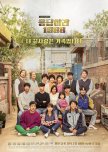
Reply 1988 reminds us how love and family can turn ordinary days into timeless memories
I watched Reply 1988 a long time ago, but it remains one of the most beautiful dramas I’ve ever seen. Set in the late 1980s to early 1990s, this series truly makes you feel like you’re growing up alongside the characters. The way it captures family, friendship, and love feels so real — maybe that’s why it resonates deeply with me as a 90s kid. I could relate to so many moments — the neighborhood vibes, childhood friends, and that strong sense of togetherness we used to have.One scene that always stays with me is when everyone shares food with their neighbors. It’s such a simple moment, yet it reminded me so much of my own childhood — when people genuinely cared for one another. It made me a little emotional every time I watched it.
As the story moves forward and the kids grow from high schoolers into adults, you can really feel that transition. Puberty, first love, dreams, and eventually going separate ways — we’ve all been there. The saddest part for me was when everyone finally moved out of Ssangmundong. I cried so hard watching that scene. It felt like saying goodbye to a piece of my own youth.
For the romance, the love triangle between Deoksun, Junghwan, and Choi Taek kept me wondering until the very end. Deoksun first falls for the cold and aloof Junghwan — that classic tsundere type — and then suddenly, there’s Choi Taek, who surprises everyone with his quiet gentleness. I loved watching how Deoksun slowly begins to fall for Taek and learns to move on from Junghwan.
Still, I felt more pity than sadness for Junghwan — that’s what happens when you hesitate to reach for something right in front of you. At first, he wasn’t sure about his feelings for her, but eventually, it became clear to everyone that he had fallen deeply. Sadly, his hesitation and poor timing cost him his chance.
Meanwhile, Choi Taek was the definition of a true gentleman — always honest about his feelings, never leaving Deoksun confused, and showing his affection through quiet yet sincere actions. That’s what every woman wants: clarity and real emotions, not endless guessing games or mixed signals.
Deoksun’s story as the middle child touched so many hearts — especially for those who know what it feels like to be “in between.” But as the eldest daughter myself, I found myself relating more to Bora (minus her fiery temper, haha). Her sense of responsibility and quiet love really hit home for me.
When I finished this drama, I felt that familiar emptiness — the kind only a truly special show can leave behind. The OST is absolutely top-notch, and even now, I still listen to it from time to time. The setting, costumes, and every little detail perfectly capture the 80s vibe.
In my opinion, Reply 1988 is the best among the Reply series. It’s not just about romance or youth — it’s about family. The people of Ssangmundong share a bond so strong and pure that it makes you miss something you might never have experienced firsthand. It’s a heartwarming drama that reminds us of the warmth of family and community — something that feels rare in this 21st century.
Reply 1988 is more than just a drama — it’s a memory, a feeling, and a reflection of growing up and cherishing the people around us. A true masterpiece of nostalgia and love.
The Prisoner of Beauty reminds us: even in captivity, love can rule a kingdom.
The Prisoner of Beauty is, without a doubt, one of the strongest dramas of 2025 so far. From the very first episode, the story hooks its audience with a perfect blend of tension, elegance, and heart. The enemy-to-lovers trope is executed brilliantly, layered with political intrigue and power struggles that keep you invested until the very end.What makes this drama stand out is not just its romance, but its balance between love and ambition. The characters aren’t reduced to simple archetypes; instead, they feel alive, constantly torn between personal emotions and the greater stakes of survival and power. This complexity elevates the story beyond a typical historical romance—it feels both grand and intimate at once.
The pacing is another strength. Every arc feels purposeful, building toward an ending that is both satisfying and memorable. So many costume C-dramas fall short in the finale with rushed resolutions or unreasonable twists, but The Prisoner of Beauty delivers what fans have long hoped for: a well-written, emotionally resonant conclusion that honors the story and its characters. Impressively, the drama’s storytelling is even more beautifully executed than the original novel itself—something rare and worth praising.
A huge part of the drama’s success comes from the cast. Song Zuer and Liu Yu Ning deliver their best performances yet—the intensity and vulnerability they bring to their roles elevate the entire drama. Their chemistry is beyond saving: raw, magnetic, and utterly convincing, it makes every shared glance and confrontation pulse with emotion. It’s the kind of pairing that lingers with you long after the credits roll.
It’s a drama that leaves you empty in the best way—because you’ve lived and felt so much with its characters that saying goodbye feels bittersweet. With its careful storytelling, standout performances, and powerful ending, The Prisoner of Beauty sets a high standard for 2025 dramas and beyond.
A stunning romance draped in armor — but the “legend” never truly rises.
As someone who adored the original novel, the announcement of The Legend of the Female General adaptation brought me mixed emotions. On one hand, I was thrilled to finally see my favorite story brought to life. But on the other, I was afraid it wouldn’t stay true to the book — and sadly, my fears came true.He Yan has always been one of my favorite heroines — strong, intelligent, calm, and capable. She’s the kind of woman who inspires you with her leadership and heart. But the drama version didn’t quite capture that essence. Maybe my expectations were too high, but this He Yan felt softer, less commanding than the one in my imagination.
However, Zhou Ye was still a great casting choice — she suits He Yan so well, both in grace and presence. And Cheng Lei as Xiao Jue? Absolutely perfect! He’s exactly how I imagined Xiao Jue would be — proud, sharp, and quietly affectionate. His portrayal truly lived up to my vision of the character. It’s just a pity that, because of production troubles, we didn’t get to see more of the grand war scenes they filmed.
The chemistry between Zhou Ye and Cheng Lei carried the drama beautifully, but the writing leaned too heavily into romance, losing much of the "legendary" tone the title promised. The focus on love over leadership made it feel less like a tale of a general’s rise and more like a romantic historical drama.
Chu Zhao’s storyline also went off track. His obsessive love, while intense, became almost illogical by the end — a big deviation from the novel’s version. Still, I loved Song Tao Tao and Cheng Lisu’s subplot; even though it differed a lot from the book, their chemistry was heartwarming and naturally portrayed.
It was also disappointing how He Yan’s comrade’s death was handled. She grieved, but the emotional weight and strong bond they shared in the novel weren’t fully conveyed on screen. The Academy arc too could’ve been executed more smoothly — it had great potential but felt rushed.
Special shoutout to Li Qing as Cheng Lisu — he did a wonderful job, especially knowing he had to re-record and reshoot parts without the original set. Even though the AI face replacement felt awkward at times, his performance stayed solid and genuine.
Despite its flaws, The Legend of the Female General is still visually stunning — from the costumes to the cinematography and soundtrack. It’s a feast for the eyes and a soft romance for the heart. But as a book fan, I can’t help but feel it lost the soul and grandeur that made the original story legendary.
Overall: A beautifully made drama with strong performances and breathtaking visuals — but stripped of the fire, depth, and spirit that once made He Yan’s story unforgettable.
Revenge Served with Style
I started The Double quite casually, without any expectations — but from the very first episode, I was hooked. The opening gave me goosebumps! The story of Xue Fang Fei (XFF), who rises from death after being betrayed and killed by her husband, sets up a powerful and thrilling start. It immediately made me wonder what would happen next.The plot revolves around XFF’s revenge against her treacherous husband, and every episode unfolds her plan step by step in such a satisfying way. The identity swap between the real and fake Xue Fang Fei is written cleverly — logical and believable, especially since the drama avoids the “rebirth” trope that’s often restricted in recent productions.
What I love most is how Duke Xiao, the male lead, supports XFF. His protectiveness feels genuine yet respectful — he trusts her strength, doesn’t interfere with her revenge, and always lends a hand when she needs it. Their relationship feels mature, balanced, and empowering. You can truly feel that XFF can face anything, especially knowing that Duke Xiao has her back.
There was, however, one scene that felt a bit over the top — when XFF played the qin in the middle hall, and the CGI effects suddenly went wild. It felt unnecessary for a historical drama (more fitting for a fantasy one). And while I loved almost everything about this series, the ending left me a bit disappointed. It ended on a cliffhanger, and I couldn’t help but wish for a more episodes.
A special mention goes to Princess Wanning, one of the most complex characters in the show. Despite her tragic past and misfortune, her obsession with Shen Yu Rong (XFF’s ex-husband) leads her down a dark path. While I understood where her pain came from, it still didn’t justify the harm she caused others. Actress Li Meng portrayed her with such depth — you could feel her sorrow, anger, and desperation all at once. Truly an impressive performance!
Overall, The Double is a stunning production. The costumes, set design, lighting, and cinematography are absolutely top-notch, giving the drama a refined and elegant aesthetic. The chemistry between the leads is well-executed, and the age gap between them never feels awkward.
Despite its slightly rushed ending, this drama truly lives up to its reputation — a beautifully crafted revenge story filled with passion, grace, and unforgettable performances.
When Solving Crimes Meets Falling in Love
This drama is everything I’ve ever wanted in a series! It has it all — mystery, murder, thriller, political intrigue, romance, friendship, and family. The story revolves around one big case, but it’s executed so well. Each smaller case builds a strong foundation for the main conspiracy, making the plot feel tightly connected and engaging.I absolutely love the female lead! Shen Wan, played by Li Landi, is brilliant — she’s beautiful, composed, and incredibly smart, with everything under her control. Li Landi as the first female coroner brings such a breath of fresh air to the story! Her performance truly surprised me; she brought so much depth and charm to the role. And her chemistry with Ao Rui Peng? AMAZING. I’ve never found him this charming before! He plays a royal noble prince who would do anything for the woman he loves — even stand against anyone who dares to harm her. I love this trope so much! Their “love at first sight” story is handled beautifully, and honestly, they might be the healthiest couple in dramaland. They communicate openly, respect each other, and always give closure in their conversations.
The production team also deserves huge praise. The costume design, set decoration, and overall aesthetic are stunning. I especially adore the marriage scene — the navy wedding costume is such a bold and elegant choice! The color palette perfectly complements Ao Rui Peng’s charm. The cinematography is also top-notch; every frame feels visually captivating.
If I had to mention one weak spot, it would be the awkward scene where Yan Chi saves Qin Wan in the underground room. The sudden tornado (or whirlwind?) looked like cheap CGI and didn’t make much sense — it pulled me out of the moment a bit. But honestly, after that, their relationship develops so beautifully that I quickly forgot about it.
Overall, I love this show so much! If you’re into thriller romances with strong leads, rich storytelling, and gorgeous visuals, I highly recommend Coroner’s Diary!
let me catch my breath girl, slow down.
i've been waiting for this drama religiously because it stars zhou yiran and chen duling, and honestly, the first episode was so damn good. the drama wasted absolutely no time throwing us into tragedy. in just one episode, we saw chu zhao fall deeply in love with xiao xun, become his queen, watch her clan get wiped out, lose her father because of political schemes, and ultimately get strangled by the very man she loved. that's a crazy amount of plot to fit into one episode, yet somehow it worked. it was heartbreaking, intense, and easy enough to follow despite the speed. what made it even more painful was how flawed chu zhao was in her first life. she wasn't introduced as some hidden genius or future political mastermind. she was emotional, stubborn, romantic, and honestly quite naive. she resented her father for keeping her in the frontier and dreamed of the elegant, glamorous life in the capital. she didn't want to remain a frontier general's daughter surrounded by soldiers and deserts. she wanted the refined life of the capital, and when xiao xun appeared, she fell for him with her whole heart. foolishly, completely, and tragically. one thing that frustrated me throughout those flashbacks was how she never really tried to understand her father. girl, please. sit down and have one proper conversation with that man. ask him why he opposes your relationship so strongly. ask him what he sees that you don't. instead, she kept pushing against him without truly trying to understand him. and that's what makes the tragedy hurt even more, because in the end her father was right. every scene between them just made me want to hug that poor man. he spent years protecting the border, trying to protect his daughter, warning her about danger, only to watch everything he feared come true. poor father was fighting enemies at the frontier, court politics in the capital, and his daughter's terrible taste in men all at the same time.that's why my relationship with the reborn chu zhao becomes a little complicated. i completely understand why she changes after her rebirth. if i got betrayed, watched my family die, lost my father, and got murdered by the man i loved, i would change too. emotionally and psychologically, i can absolutely buy it. what i struggle with is how immediate and complete the transformation feels. the drama actually did something i really liked when chu zhao tried to outmaneuver xiao xun and failed. that failure reminded us that having memories from a previous life doesn't automatically make someone a political mastermind. she knew what would happen, but she still lacked the experience to navigate power struggles perfectly. that was interesting. that felt human. but after that, it sometimes feels like one night of dying unlocked every skill tree available. suddenly chu zhao is predicting everything, directing discussions, and offering military strategies while experienced generals and veteran warriors are standing right there in the same room. her uncle is literally an experienced warrior, yet there are moments when it feels like everyone is waiting for chu zhao to tell them what to do. the issue isn't that she's intelligent. the issue is that everyone around her seems to become less intelligent whenever the plot wants to remind us how intelligent she is. if her rebirth gives her knowledge of future events, hidden relationships, and who will betray whom, i'm completely on board. but military expertise? battlefield command? strategic warfare knowledge? that's where i start struggling. ironically, i think chu zhao becomes much more compelling when she fails than when she succeeds. and honestly, if i were xiao xun, i would be a little suspicious too. the woman you knew yesterday was a lovestruck noble lady, and suddenly today she's reading people, predicting events, and strategizing like she's been preparing for the throne her entire life.
another thing i can't stop thinking about is the palace intrigue. maybe i've watched too many historical dramas, but where are my old men? seriously. why is every grand tutor, prime minister, strategist, and important court official around twenty or thirty years old? visually, i'm absolutely not complaining because everyone is beautiful, but politically it makes the court feel a little hollow. i'm used to watching old ministers who survived multiple emperors, accumulated decades of influence, and can destroy their enemies with a few carefully chosen words. those men are terrifying. those men make palace dramas fun. here, the political arena is filled with attractive young men scheming against each other, which looks great but doesn't always feel as dangerous or layered as it should. thankfully, the production side is carrying a lot of my enjoyment. this drama is gorgeous. and red. so unbelievably red. for several episodes it felt like every costume, curtain, lantern, and decoration was competing to become the reddest object in the kingdom. thankfully, the cinematography is beautiful enough to make it work. the camera movements are elegant, the palace feels grand, and every frame looks expensive. the music is also fantastic, and having liu yuning on the ost is always a blessing. and of course, there's zhou yiran. historical costume zhou yiran should honestly become a permanent genre. that ear piercing has no business looking that good. every time fu jiu appears on screen, i suddenly remember why i'm still watching this drama.
at episode 11, i'm in a very weird position. i don't dislike this drama at all. in fact, i can clearly see why so many people are enjoying it. the acting is solid, the production quality is high, the revenge premise is compelling, and the opening episodes were incredibly strong. but i also feel like the drama keeps rushing through character development that should have taken more time to earn. before i can process one emotional moment, we're already moving on to the next plot point. before i can become attached to someone, the story is introducing another conflict. i understand what's happening, but i'm not always feeling it as deeply as i want to. i want to spend more time with these people. i want to understand them better. i want the story to breathe. because right now, ashes to crown feels like it's constantly sprinting ahead while i'm still trying to catch up. for now, i'll keep watching because i'm curious where chu zhao's revenge journey leads, but also because zhou yiran keeps appearing on my screen.
I pressed play and now I’m mentally buffering
I’m not exaggerating when I say after finishing Can This Love Be Translated?, I just… stared into space. Zoned out. Empty. Emotionally vacant. You know that post-drama void where your soul hasn’t caught up yet? Yeah. That one. This drama is genuinely so good. Not perfect, but wow—it hits. First of all, the production??? Beautiful. Clean. Expensive-looking. And the casting??? INSANE. Go Youn Jung and Kim Seon Ho fit Cha Mu Hee and Ju Ho Jin like they were custom-made for these roles. I especially loved their acting, both of them are crazy good at microexpressions. Like, half the emotions are in their eyes, their pauses, the way they breathe before speaking. No overacting, just vibes and pain.The first half of the drama had me LOCKED IN. From episode one, I was curious, invested, and fully seated. And that says a lot because lately I’ve been so bored with dramas, I drop them left and right. But this one? Nope. Had my full attention. The story is about Cha Mu Hee, an unknown actress who travels to Japan and somehow ends up meeting Ju Ho Jin, an interpreter assigned to help her. From there, their lives get slowly but messily entangled. I won’t lie, the writing isn’t always tight. Sometimes it feels a bit loose, and there were moments where I was like, “Wait… did I miss something or is the translation just bad?” There are SO many misunderstandings and miscommunications (like sir please just TALK). I was honestly thankful all 12 episodes dropped at once, because if this was weekly, I would’ve been confused and annoyed fr.
Ju Ho Jin though??? Green flag. Green forest. Photosynthesis level green. He’s rich rich, old-money rich, but somehow still kind, gentle, and emotionally respectful. At first, he comes off avoidant—classic guy who ran away from his first love and never confessed. But when he falls for Mu Hee, even while confused, he never plays with her feelings. I loved how he accepts all of her past, gives her space, and lets her heal instead of trying to “fix” her. We love a SECURE man. Cha Mu Hee is lively, bubbly, and ridiculously pretty, but emotionally shattered inside. She wants love so badly, but the moment she gets it, she’s terrified it’ll disappear. Very real. Very “ouch that’s me.” Her fear shows up as her alter ego, Do Ra Mi, whenever she wants to run. Do Ra Mi is bold, free, outspoken, everything Mu Hee wishes she could be. She’s basically Mu Hee’s inner voice with courage unlocked. Honestly, Do Ra Mi felt like Mu Hee’s interpreter, the one who understands what Mu Hee can’t say out loud. Her confession to Ju Ho Jin? Brave as hell.
BUT. This is where I started feeling kinda mad. When the drama revealed that Do Ra Mi is actually Mu Hee’s mother… yeah, that didn’t sit right with me. I feel like sometimes we don’t need answers spoon-fed to us. The alter ego worked so well as a symbolic thing... something deep inside Mu Hee. Making it literal lowkey ruined the emotional build-up. And don’t even get me started on the parents. Finding out both of Mu Hee’s parents are alive and NEVER tried to find her after the accident that traumatized her for life??? That’s actually insane. So cruel. And the drama just kind of… moved on from that??? I hated that. Also, considering how close this story is to psychological trauma, I wish there were more professional perspectives. I know it’s not the main focus, but when you’re dealing with dissociation and deep trauma, a little grounding from professionals wouldn’t hurt. The second male lead, Hiro, surprised me a lot. At first he’s childish and annoying, but his character development goes crazy. Watching him slowly fall for Mu Hee was sad in a quiet way, especially with the language barrier. Him learning Korean just to talk to her directly??? Pain. Even though we all knew he’d get rejected, it still hurt.
Now let’s talk visuals. Because WOW. The scenery is insane. Canada, Italy, Japan I was ready to book flights I CAN'T afford. Every shot is gorgeous. The OSTs too??? Finally some music that actually sticks. Lately, K-drama OSTs have been so bland and forgettable, but this one? No. The songs linger. Costumes, settings, cinematography, everything ATE. And honestly? What I loved most is how natural this drama feels. I’ve been so tired of childhood connections and fate-overload theories in K-dramas. I just want strangers meeting, traveling, and falling in love naturally. And this drama DELIVERED.
At its core, Can This Love Be Translated? is really about language. Everyone speaks differently. Sometimes we don’t even understand what we’re trying to say ourselves. Translating feelings is exhausting. This drama made me hope that one day, we’ll find someone who speaks our language, so we don’t have to spend a lifetime translating our soul.
cha se gye is the definition of "i love whatever wrong with her"
i think one of the biggest achievements of this drama is making me completely understand why shin seo ri and cha se gye fell for each other. and honestly? cha se gye is THAT man. handsome, hot, rich, smart, devoted, emotionally available when it matters, and somehow still willing to embarrass himself repeatedly in the name of love. while seo ri rejected him over and over again, this man simply decided rejection was a suggestion, not a conclusion. what i loved most about him wasn't his chaebol status or perfect face, but the fact that he trusted his own feelings. he never played games, never pretended not to care, and always chose honesty. meanwhile, i couldn't blame seo ri for being cautious. after living as kang da shim, getting betrayed, falsely accused, and sentenced to death, i'd probably avoid catching feelings too. but watching cha se gye slowly wear down those walls with nothing but sincerity, patience, and absurd levels of yearning was honestly one of the most satisfying parts of the drama. this man truly became the president, founder, CEO, and sole shareholder of the "i love whatever is wrong with her" club.the finale left me with mixed feelings. not bad feelings—just the kind where you're sitting there staring at the credits thinking, "hmm... i'm not sure about that one." i understood the reveal that the real seo ri had been sent back to joseon, lived through that life, and eventually returned to her original body without remembering her origins. it was an interesting twist, but i kept wondering if we really needed another round of sacrifice and tragedy. maybe it's just me, but knowing your beloved sacrificed themselves for you feels less romantic and more like the beginning of a lifelong therapy bill. i also thought the goodbye scene with seo ri's grandmother went on a little too long. by episode 13, i was already nervously checking the clock because there were still a hundred loose ends floating around, and somehow the drama kept introducing new emotional problems instead of solving the old ones.
my biggest disappointment, however, was choi mun do. for twelve episodes, this man was serving premium villain behavior. manipulative, calculating, powerful, annoying in the most effective way possible—he was genuinely someone i loved to hate. so imagine my disappointment when his downfall arrived and it felt like the drama suddenly remembered there was only one episode left. after spending weeks patiently waiting for karma to hit him like a truck, everything wrapped up so quickly that i was left sitting there like, "that's it?" for a villain who caused this much suffering across two timelines, i expected something far more dramatic. let me be petty. let me celebrate. let me enjoy the downfall properly.
despite all of that, i genuinely loved this. this drama feels like the result of a writer, director, and cast all understanding exactly what kind of story they wanted to tell. heo nam jun and lim ji yeon were absolutely fantastic. the yearning? exquisite. the chemistry? delicious. every emotional stare, every almost-confession, every heartbreak, every reunion—they sold all of it. and the supporting cast was just as strong. and can we talk about the OST too? because wow. it's been such a long time since i've watched a drama where the music elevated every emotional scene this well. every yearning moment hit harder, every heartbreak lingered longer, and every romantic scene felt more magical because the soundtrack knew exactly when to step in. a good romcom is already hard to find. a good romcom with a genuinely memorable OST? even harder.
if i were rating this purely as a romcom, i would honestly give it a 9/10. cha se gye alone deserves several bonus points for carrying the entire nation's yearning on his shoulders. unfortunately, the way the drama wrapped up some of its final arcs, especially the sacrifice storyline and choi mun do's downfall, left me a little disappointed. not enough to ruin the experience, but enough that i'd settle on an 8.5/10 overall.
No crown leaves the palace uncursed
I had been patiently waiting for The East Palace ever since the casting announcement. I mean... Cho Seung Woo and Nam Joo Hyuk leading a Joseon mystery-horror drama? There was no way I was going to miss that. Thankfully, it completely lived up to my expectations. From the very first episode, this drama had me hooked. Seriously, within the opening ten minutes we're already thrown into a horrifying tragedy inside the palace. We don't even have enough time to learn everyone's names before the crown princes start dying one after another under a mysterious curse. It immediately establishes an unsettling atmosphere that never really lets go. I totally understand why people keep calling this "Stranger Things, but make it Korean historical." The comparison isn't only because of the monsters or the supernatural elements—it's the way this drama builds another terrifying world beneath reality. The Realm of Gwi, with its upside-down palace, is genuinely creepy. Every trip into that world feels unsettling thanks to the incredible production, eerie cinematography, haunting score, and sound design. You can literally see where the budget went, and every single episode benefits from it.At first, I honestly thought this would be a straightforward ghost-hunting drama. Gu Cheon, a man who can see ghosts and cross into the spirit realm, is ordered to investigate the mysterious deaths surrounding the royal family. Alongside him is Saeng Gang, whose overwhelming yang energy allows her to hear and communicate with spirits. Together, they slowly uncover the truth behind the curse surrounding the palace. Sounds simple enough, right? Well... not at all. What completely addicted me wasn't the ghosts themselves—it was the mystery. Every time Gu Cheon and Saeng Gang believed they had found the answer, the drama would pull the rug out from under them with another revelation. Twist after twist kept exposing tragedies buried deep within the palace walls, making me question everything I thought I knew. For much of its runtime, the investigation unfolds with remarkable confidence, balancing horror, suspense, and mystery almost perfectly.
One thing I really appreciated was Gu Cheon himself. I've seen some people say Nam Joo Hyuk looked too expressionless or emotionally flat, and honestly... I don't entirely disagree—but I also don't think that's necessarily a flaw. Have people actually looked at Gu Cheon's background? This is someone whose yang energy is so weak that simply existing around spirits slowly drains his life away. He's constantly exhausted, sarcastic, emotionally unavailable, and would rather walk away than risk his own life for strangers. That isn't a fearless hero—it's a very human reaction. He values his own survival above everything else, and that made him feel refreshingly realistic. His chemistry with Saeng Gang works because they're complete opposites. While Gu Cheon is overwhelmed by yin energy, Saeng Gang almost overflows with yang energy, making them naturally complement one another throughout the investigation. I also have to give a huge shoutout to Nam Joo Hyuk, Roh Yoon Seo, and of course Cho Seung Woo. They completely sold their characters, and Cho Seung Woo once again proves why he's one of Korea's finest actors.
The biggest surprise, though, is realizing that The East Palace isn't really about ghosts. At the beginning, the drama convinces us that everything started because of the Pond Spirit. Long ago, there was a favored concubine who became the object of the queen's jealousy because she was carrying the king's child. Unable to bear losing both her position and the chance to produce an heir, the queen drove the concubine into despair until she eventually took her own life by drowning herself in the palace pond. From that moment on, she became the infamous Pond Spirit, and everyone inside the palace believed she was the one who cursed the royal bloodline. Every crown prince who inherited the throne would eventually die. Naturally, both the audience and Gu Cheon begin their investigation believing this vengeful spirit is the root of every tragedy. But this drama keeps asking one question: What if the ghost was never the beginning?
As Gu Cheon and Saeng Gang continue their investigation, every answer only opens another wound buried thirty years deeper. We learn that the king himself is not as innocent as he appears. He was born to Suk Bin, a concubine so obsessed with making her own son king that she secretly poisoned every prince standing in his way. The current king didn't choose that bloody path himself—he inherited it from his mother's ambition. In many ways, he is a victim too. He ascended the throne built on corpses he never personally created, carrying guilt that never truly belonged to him. That's what makes Cho Seung Woo's character so fascinating. You understand him. You sympathize with him. Yet you can never completely forgive him. The tragedy doesn't end there. Thirty years later, history repeats itself. The king has four sons. The first and second princes die, leaving the third prince to become Crown Prince. Like Saeng Gang, he possesses the rare ability to hear spirits. During his investigation, he uncovers the horrifying truth about how his own father became king—that the throne he is destined to inherit was built upon poison, betrayal, and countless innocent deaths. Instead of breaking the cycle, he embraces it. Believing power can only be preserved through bloodshed, he murders his own brothers to secure the throne, repeating the exact sins committed by the previous generation. When the king discovers what his son has done, he's forced into an impossible position. As a father, he desperately wants to save his child. As the king, he knows allowing another ruler like this would only condemn the kingdom to another generation of bloodshed. In the end, he chooses the kingdom over his own son and poisons the Crown Prince himself. The prince dies consumed by hatred and regret, returning as a vengeful spirit whose curse is terrifyingly simple: no one who seeks the throne shall ever truly become king. Even the youngest prince eventually becomes another victim of that endless cycle.
And that's the moment everything clicks. The Pond Spirit was never the true villain. She was simply another victim. The curse that haunted the palace for decades wasn't born from ghosts—it was born from people. Every generation blamed spirits for their suffering while refusing to acknowledge that every tragedy originated from human greed, jealousy, obsession, and ambition. Suk Bin poisoned princes out of maternal ambition. The queen destroyed an innocent woman because of jealousy. The Crown Prince murdered his own brothers because he feared losing power. Even the king, despite carrying endless guilt, eventually became capable of ordering the annihilation of an entire village simply because disease threatened his kingdom. That moment completely shattered any sympathy I had left for him. I understood why he became the person he was, but understanding someone is not the same as justifying their actions. That's why I think this drama is so much more than a horror drama. The ghosts are frightening, yes. The folklore creatures are creepy, the Realm of Gwi is beautifully terrifying, and the palace itself feels haunted in every frame. But none of those things are the real horror. The real horror is watching history repeat itself because human desire refuses to die. Long before ghosts began haunting the palace, greed had already made it a cursed place.
To sum it up, The East Palace exceeded every expectation I had. It delivers horror without relying on cheap jump scares, mystery that constantly keeps you guessing, gorgeous cinematography, phenomenal production design, and a haunting atmosphere that lingers long after each episode ends. More importantly, beneath all the ghosts, monsters, and folklore, it's a story about how human greed creates tragedies that no curse ever could. Sometimes the scariest thing inside the palace wasn't the spirits lurking in the Realm of Gwi—it was the people wearing crowns.
a drama so fun i didn't want it to end
i found the legend of kitchen soldier completely by accident. i didn't even know this drama existed until i saw people on a forum saying it was hilariously funny. after watching a few clips, i immediately understood the hype. the story follows kang seong jae, a young man who enlists in the military and ends up working in the kitchen, where he slowly learns to cook through a mysterious virtual quest system. the premise is simple, but the way the drama executes it is absolutely brilliant. the funniest part is how it visualizes people's reactions to seong jae's food—one bad dish makes you feel like you're drowning, another throws you into the middle of a battlefield, and one meal is so good they literally give us a three-minute music video. every dish comes with its own ridiculous and creative reaction sequence, and somehow it never stops being funny.what surprised me most is how comforting this drama feels. i never felt pressured to know what would happen next because every episode was simply enjoyable on its own. this is comedy done right. the character development is genuinely good, and the cinematography is wildly imaginative. one moment you're watching soldiers eat lunch, and the next you're transported into a completely unexpected visual adventure. i even got emotionally invested in the puppy treat arc—something i never thought i would say about a military cooking drama. and yes, this show will absolutely make you crave food while watching.
by the end, i found myself hoping for a second season, not because the story feels unfinished, but because i enjoyed spending time with these characters so much. i still laugh thinking about seong jae winning first place against actual five-star military chefs. maybe his food reminded everyone of childhood, home, and their mothers while they were stuck in military service—but professionally speaking, losing to a guy whose greatest weapon is homemade comfort food must have hurt a little. then again, drama is still drama


