



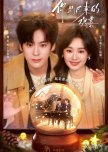
When Unrequited Love Was Never One-Sided
Overall, You Are My Fateful Love is a light, warm, and enjoyable romance drama. The drama does have some pacing issues, especially in the middle, where some conflicts seem to go nowhere and are filled with scenes that could have easily been cut. However, these shortcomings are still tolerable because the relationship between Ruan Yu and Xu Huaisong remains the main attraction throughout the series.I also really like how the drama portrays a love that never truly ended, but was simply delayed for many years. They both had feelings for each other in the past, but due to various circumstances, they never got the chance to be together. When they finally meet again after ten years, they are no longer the same two teenagers they once were, but two adults who have grown with their own lives, careers, and perspectives. This is what makes their relationship feel somewhat different from typical romance stories.
The chemistry between Wei Zheming and Zheng Hehuizi also helps keep the drama engaging. Their interactions feel natural, sweet, and never overly forced. Along with the entertaining supporting characters, especially Liu Mao, the drama manages to maintain its lighthearted atmosphere even when dealing with more serious conflicts.
Although it is far from a perfect story, You Are My Fateful Love is still a romance drama that I find very enjoyable and one that I can see myself rewatching from time to time. Especially when I'm in the mood for something light, romantic, funny, and not emotionally exhausting.
Ultimately, this drama is not about two people falling in love for the first time, but about two people finally getting the chance to pursue the feelings they never had the opportunity to act on before.
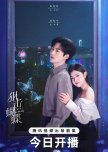
When Love Is Not Just About Feelings, But About Timing and Self Worth
1. Story Premise: Brutal Reality, Not a FairytaleThe drama raises its curtain not with blossoming romance, but with the brutal reality of life. The audience is immediately confronted with Cen Jin, a career woman at the nadir of her life. The narrative is built with immense strength: a miscarriage, toxic marital arguments, and the looming threat of divorce create a "perfect storm" that crumbles her identity.
This is where the script’s strength lies. Cen Jin is not portrayed as a weak female protagonist in need of saving by a man, but rather as a woman who is "wounded" and has lost her way. The arrival of Li Wu serves as the antithesis to this chaos a symbol of pure hope from the past. Cen Jin’s decision to "save" Li Wu’s education is, in reality, a subconscious defense mechanism: by fixing someone else's life, she slowly finds a reason to fix her own.
2. Plot Analysis & Character Development
The drama employs a non-linear narrative, blending the present timeline with strategically placed flashbacks. This technique effectively builds emotional depth without confusing the audience, peeling back the layers of the characters' motivations one by one.
A Mutually Restorative Bond: The narrative’s inception expertly illustrates a constructive mentorship dynamic. Cen Jin’s transformation is evident when she finds the courage to leave her cheating husband and her old company proof of her reclaiming her agency. Meanwhile, Li Wu grows from a desperate village boy into a bright university student. This character growth feels organic, not instantaneous.
Emotional Transition: A Delicate Slow Burn The shift in Li Wu’s feelings from respect and gratitude to love is executed with a very subtle slow burn. Small details like his gaze and a desire to protect that exceeds normal boundaries mark this change. On the other hand, Cen Jin’s internal conflict is portrayed realistically. Her rejection of Li Wu isn't just "playing hard to get," but a form of moral responsibility, as she is acutely aware of the disparity in their life experiences and age.
Peak Conflict: Logic vs. Emotion This is the most crucial and "mature" segment of the drama. When Li Wu rejects a scholarship abroad for the sake of love, the story avoids the cliché of "love is blind." Instead, Cen Jin takes on the role of the "villain" for the greater good. Psychologically, Cen Jin is traumatized by wasted sacrifices. She refuses to let Li Wu repeat her mistake of sacrificing a future for a partner. Her decision to sever ties is her highest form of love: letting go so the loved one can fly.
The Reunion: A Meeting of Two Equals The six-year time skip is a key element. Li Wu returns not as a "little brother" seeking validation, but as an established man who is equal to Cen Jin financially, emotionally, and socially. The dynamics of this reunion are compelling because the power dynamic is now balanced. Li Wu no longer looks up to Cen Jin; he stands beside her.
3. Technical Aspects & Chemistry
Cast Chemistry: Despite the significant real-life age difference between Michelle Chen and Zhou Keyu, their chemistry feels incredibly natural and emotional. Their interactions are far from stiff, successfully convincing the audience that their bond is built on a deep soulful connection, not just fan service.
Visuals & Audio: The cinematography is a feast for the eyes, utilizing warm and soft tones that perfectly support the healing theme. The soundtrack (OST) is placed with precision, amplifying the emotion in both sorrowful and romantic scenes.
Minimal Clichés: Viewers tired of third-party conflicts (homewreckers) or ridiculous misunderstandings will appreciate this drama. The main conflicts are internal: making peace with failure and proving one's maturity.
4. Major Drawbacks to Consider
While the character arcs are strong, the storytelling method presents significant hurdles.
Exhausting Narrative Structure: Unfortunately, the execution of the non-linear storytelling (flashbacks) proves to be the drama's biggest weakness. The transitions between the past and present often feel abrupt, breaking the emotional momentum being built. For viewers who prefer a linear and clean narrative, this jumping structure makes the story feel fragmented and difficult to fully enjoy.
Slow Pacing: Additionally, the drama moves slowly, mirroring the themes of healing. If you prefer fast-paced dramas full of sharp intrigue or explosive revenge, the mid-section might feel tedious.
Final Verdict
"Sniper Butterfly" is not your average lighthearted rom-com. It is a character study on how two "broken" individuals can heal each other, but must be brave enough to separate and grow individually before finally uniting as the best versions of themselves.
The drama delivers a profound message that love alone is not enough; it requires the right timing, mental readiness, and self-worth to build a solid relationship. For fans of stories that prioritize logic, mature character development, and realistic romance, this drama is a must-watch.
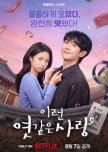
From Gangster Trouble to a Heartwarming Romance
Our Sticky Love may not be a drama with major twists or a revolutionary storyline, but that is precisely where its charm lies. Honestly, from the beginning, I never expected this drama to feel like a serious crime drama, even though it has a criminal backdrop. As a rom-com, I actually expected it to have plenty of jokes and entertaining moments. However, I felt that the humor in the early episodes was somewhat lacking. It was only toward the final episodes that I found the comedy more effective and genuinely funny.Jung Hae-in and Ha Young truly brought their characters to life. Every glance, small touch, and piece of dialogue between them felt natural and sincere. Their chemistry is one of the drama’s biggest strengths and makes their relationship enjoyable to watch.
The village ladies and Tae-ha’s grandmother are also the heart and soul of this drama. They bring plenty of laughter and warmth, which help balance out the darker side of the crime storyline.
The depiction of Candy Village, with its beautiful and cozy atmosphere, is also visually soothing. The simple countryside setting makes the drama feel comfortable and relaxing to watch. The background music also complements the atmosphere well, although I don’t think there was any particularly iconic or memorable soundtrack.
I was somewhat frustrated with Dr. An’s character. At the beginning, as a psychiatrist, I felt that he was too foolish and naive when it came to understanding the situation. He didn’t really understand what his partner wanted and sometimes acted recklessly without considering the patient’s guardian’s consent. Thankfully, as the story progressed, his character developed and he was no longer portrayed as being quite that foolish.
In the middle of the drama, there were several episodes where the pacing felt rather slow. I became a little bored and found myself wanting the story to move on to the main conflict. Fortunately, the final episodes made up for it with a fairly satisfying climax.
Overall, I don’t think Our Sticky Love is a drama filled with iconic scenes or moments that would make me want to immediately rewatch it. However, it is still an enjoyable drama to watch. The story is light, the chemistry between the leads is fun to watch, the comedy becomes more entertaining toward the end, and the warm village setting adds a comforting atmosphere. It may not be a drama that will stay with me for a long time, but it is still a pleasant and enjoyable watch.
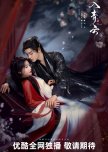
Love in the Clouds: Where Hidden Identities Lead to Genuine Hearts
Drama Love in the Clouds presents a captivating story about Ming Xian, a goddess of war brilliantly portrayed by Lu Yuxiao. To win the Tournament of the Six Realms of Hexu, she disguised herself as a man for seven years, only for fate to lead her to defeat at the hands of Ji Bozai, played by Hou Minghao, a former prisoner of the Jixing Abyss. This defeat becomes a crucial turning point as Ming Xian is forced to adopt a new identity a dancer named Ming Yi to get close to Ji Bozai and obtain the antidote for a lethal poison threatening her life.The main strength of this drama lies in the extraordinary chemistry between Hou Minghao and Lu Yuxiao, who successfully bring a natural and subtle "cat and mouse" dynamic to life. Their interaction is filled with delicate romantic tension, conveyed through lingering gazes, small gestures, and light dialogue that build a deep emotional connection. Ji Bozai delivers a stunning performance as an intelligent and calm figure; behind his composure lies a meticulously planned strategy to avenge the teacher who once saved his life. Despite a dark past that makes it difficult for him to trust others, Ming Yi’s presence slowly melts his defenses, leading him to choose to protect and forgive her even after being lied to repeatedly.
On the other hand, Lu Yuxiao demonstrates an incredible acting range through her character's transition from a cold goddess of war to a seductive and cunning dancer. Ming Yi is depicted as a selfless protagonist; she is able to distinguish between personal matters and the greater good, even sincerely helping Ji Bozai protect the Jixing Abyss from various threats. Their relationship, which initially began with a mission to find an antidote and a fake marriage to protect her identity, gradually transforms into genuine love after facing various life and death obstacles together.
Technically, the drama is a feast for the eyes with its elegant cinematography and dreamy visuals. The use of CGI to build the xianxia world appears seamless and not over the top, creating a stunning yet grounded aesthetic. The detailed, luxurious, and aesthetic costumes, combined with an emotional soundtrack, successfully heighten the atmosphere in every romantic scene and battle. The combination of these elements ensures high and consistent production quality throughout the story.
Although it tackles heavy themes of revenge and power struggles, the narrative of Love in the Clouds remains light and entertaining thanks to well placed humorous scenes. While the final episodes feel slightly rushed toward the resolution, the solid acting performances from the cast compensate for this flaw. With a satisfying happy ending, this drama is a must-watch for fans of the costume genre even for those who previously found xianxia too magical or unrealistic as it perfectly balances action and emotion.
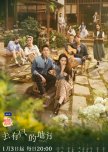
A Love Letter to Slow Living: Yunnan’s Scenery and Quiet Narrative in Meet Yourself
In a world that celebrates the hustle, 'Meet Yourself' invites us to do the unthinkable: to stop, breathe, and simply be. It is more than just a drama; it is a cinematic sanctuary for the weary soul.1. Narrative: Deconstruction of Rhythm and Authenticity of Conflict
Meet Yourself stands out through a calm, humanistic, and grounded storytelling approach, presenting slices of daily life that resonate with the reality of viewers especially those experiencing emotional exhaustion due to the pressures of modern living.
Rhythm and the Antithesis of Modernity: The plot develops slowly yet consistently, providing space for the audience to reflect. The writers boldly adopt a slow pace, featuring silent scenes without dialogue such as cooking or taking a leisurely walk as integral parts of the narrative process. This serves as an antithesis to the tendency of modern dramas to be fast-paced and sensational.
Authenticity of Conflict: Conflict is not built through extreme antagonism, but rather through humane issues such as loss, anxiety about the future, and the economic constraints of village life.
Healthy Relationship: The relationship between Xu Hongdou and Xie Zhiyao represents a mature bond where both individuals respect each other's private space. This portrays a healthy relationship dynamic that is rare yet powerful in contemporary Chinese dramas.
2. Cast Performance: Depth of Character and Subtle Acting
The quality of acting is a primary strength that supports the entire narrative:
Liu Yifei (Xu Hongdou): Delivers a very subtle and controlled performance. She utilizes blank stares, silent pauses, and slight smiles as mediums to express grief, making Hongdou’s burden of loss feel tangible without the need for excessive emotion.
Li Xian (Xie Zhiyao): Successfully sheds his "idol" image to transform into a convincing local youth. His relaxed body language and use of local dialect build an authentic impression, as if the character truly grew up and lived in Yun Miao Village.
Wu Yanshu (Xie A-nai): Provides a significant emotional contribution. Her role as the grandmother brings a warmth that anchors the narrative and serves as a symbolic representation of "home."
Supporting Cast: The residents of Youfeng Xiaoyuan are written with fully realized character dimensions. They are not mere plot fillers but individuals with their own life journeys and personal conflicts, enriching the community theme.
3. Audio-Visual Aesthetics: Synergy of Nature and Music
Technically, Meet Yourself is a cinematic achievement where the natural visuals of Dali, Yunnan, function not just as a backdrop, but as a storytelling subject.
Musical Minimalism: The music is subtle and harmonious. The compositions are dominated by acoustic guitar, soft piano, and folk instruments that blend naturally with environmental sounds like the wind, the lake's ripples, and birdsong.
Audio Therapy: The opening theme, "Go to a Windy Place" by Yisa Yu, provides a calming effect with its poetic lyrics.
The Power of Silence: The director understands when silence is more meaningful than a musical score, allowing the actors' expressions to speak for themselves.
4. Rewatch Value: Emotional Security
Meet Yourself possesses a very high rewatch value because it does not rely on plot twists or intense conflict.
Sense of Security: The absence of major tragedies provides emotional safety (low stress), making it ideal to revisit without psychological burden.
Hidden Details: Upon rewatching, viewers can discover micro-expressions and visual details that were previously missed due to the slow pace.
Mood Booster: The drama functions as a way to "return" to Yun Miao Village to rest from the exhaustion of daily reality. The combination of a warm story and soothing visuals makes it a comfort show with strong, sustainable rewatchability.
Conclusion
Overall, Meet Yourself is not merely an entertainment product, but a cultural text reflecting the modern society's need for a pause, human connection, and psychological healing. Through its slow narrative, subtle acting, harmonious audio-visual aesthetics, and high rewatch value, this drama offers a cinematic experience that is both calming and reflective. As such, Meet Yourself can be viewed as one of the most complete representations of the slow living philosophy in contemporary Chinese drama, highly recommended for anyone wishing to momentarily step away from the hustle and bustle of daily life to enjoy a story that is warm, humane, and deeply meaningful.
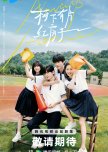
A Story of Youth, Family, and the Journey to Finding Oneself
Always Home (2025) is a drama that goes beyond the ups and downs of adolescence, while also portraying warm and meaningful family dynamics. Starring four main characters, Chen Huan Er, Jing Xi Chi, Song Cong, and Qi Qi, the drama takes viewers through their lives from high school and university to the early stages of adulthood.The story begins when Chen Huan Er moves to a big city with her parents, where they live in the same neighborhood as the families of Jing Xi Chi and Song Cong. One of the drama's unique aspects is the close relationship between their parents, who have been friends since college. This creates a strong sense of family between the households. They help take care of each other's children when work keeps them busy and support one another whenever one of the families faces difficulties. This element adds something special that sets Always Home apart from typical school dramas.
Character Portrayals
Chen Huan Er
At the beginning of the story, Huan Er is portrayed as shy, insecure, and someone who does not have any close friends. After transferring to a new school, she begins trying to socialize despite her worries. Slowly, she finds true friends and comes to deeply value those friendships.
She tends to put other people's feelings before her own and is even willing to sacrifice her own happiness for the people she cares about. Although she is not an academically outstanding student, she becomes a source of motivation for her friends, encouraging them to be more courageous and continue growing.
Her tendency to always give in may stem from the loneliness she experienced in the past, making her extremely afraid of losing the people around her.
Jing Xi Chi
Xi Chi is an ambitious young man whose life revolves around soccer. Everyone believes that he is destined to succeed in the sport, but fate has other plans. An injury, along with his father's departure, forces him to give up on his biggest dream.
However, instead of remaining trapped in his disappointment, Xi Chi eventually finds a new path. From being the student ranked last in his class, he transforms into a hardworking and determined student who refuses to give up.
His character arc shows that failure is not necessarily the end. Sometimes, it can become the beginning of a new journey that is just as meaningful.
Song Cong
Unlike Xi Chi, Song Cong is a genius student who consistently ranks first in his class. However, university gives him a major reality check.
He has to accept the fact that his efforts to reclaim the top position only lead him to second place, defeated by a remarkably intelligent 15-year-old student who rarely even attends class.
Eventually, Song Cong learns to make peace with the situation. This does not mean giving up, but rather accepting that he cannot always be number one.
His character teaches an important lesson about humility and self-acceptance.
Qi Qi
Of the four main characters, Qi Qi is probably the most controversial. Many viewers may see her as selfish, while her mother may also come across as someone who constantly forces her own wishes onto her daughter.
However, from another perspective, Qi Qi's mother genuinely wants what is best for her daughter. She encourages Qi Qi to choose the humanities track because she believes Qi Qi's talent for writing is better suited to that path, and later pushes her toward studying law at university.
Even after Qi Qi rebels and switches to literature, her mother continues to support her by offering her the opportunity to study abroad.
Unfortunately, the conflict is not portrayed subtly enough. As a result, her mother's good intentions are often overshadowed by the impression that she is simply being controlling.
The Drama's Weaknesses
Despite its many strengths, Always Home also has several noticeable shortcomings.
Some conversations between the main group of characters feel stiff and unnatural, as if there is a certain awkwardness in the delivery of the dialogue.
Qi Qi is portrayed as someone who is selfish enough to distance herself from Huan Er simply because of Huan Er's closeness to Song Cong, which eventually causes Huan Er to distance herself from Song Cong as well. This feels excessive and makes it harder for viewers to sympathize with Qi Qi.
Qi Qi frequently forces her own wishes onto others, including pressuring Song Cong to become part of her social circle without properly considering his feelings.
There is a moment when Qi Qi claims that she changed herself for Song Cong, even though no one ever asked her to change. This makes her character come across as somewhat immature.
Qi Qi's mother is often portrayed as someone who imposes her wishes on her daughter. The characterization feels too black-and-white, which unfortunately prevents her genuine concern and desire to do what is best for Qi Qi from coming across clearly.
Although Qi Qi is presented as one of the main characters, her presence often feels forced, especially when compared to the other three leads. Personally, I felt that her position as a main character seemed to be driven more by her agency background than by the actual needs of the story, considering that her popularity was still relatively limited early in her career.
Conclusion
Always Home (2025) offers more than just a story about teenage romance. It successfully incorporates themes of family, friendship, and the struggle to face the harsh realities of life.
The main characters experience meaningful development, although the balance between them is not always consistent and some characters receive more attention than they perhaps deserve.
With its beautiful cinematography and touching storyline, this drama is worth watching for fans of school and family dramas. However, viewers who are particularly sensitive to unnatural dialogue or uneven character development may find certain aspects somewhat frustrating.
Overall, Always Home is a warm and heartwarming watch. It reminds us that home is not simply a place, but also the people who are always there for us.
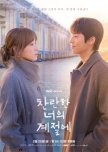
When Two Wounded Hearts Heal Each Other
In Your Radiant Season is, in my opinion, a drama that successfully delivers a warm and emotional healing romance. The story does not focus solely on the romantic relationship between Sunwoo Chan and Ha Ran, but also explores past wounds, loss, guilt, family, and how someone tries to rediscover happiness after going through painful experiences. For me, the drama’s greatest strength lies in the emotional development of its two main characters and how they gradually influence each other’s lives.One of the things I liked most is Sunwoo Chan’s characterization. At first, Chan is a quiet person because of the pressure from his father, who prevents him from pursuing the dream he truly wants. However, after surviving an explosion and losing part of his memory, Chan becomes a much more cheerful person. His cheerful personality is actually his way of leaving the past behind and trying to forget the painful events he experienced. Because of this, the more we learn about Chan, the more we realize that his smile does not mean he is free from pain. Rather, it is one of the ways he chooses to cope with his wounds.
Meanwhile, Ha Ran also has an interesting character development. At first, she becomes cheerful again after regaining her sense of happiness through her conversations with Sunwoo Chan, whom she believes is Heyokchan. However, as the story progresses, Ha Ran becomes depressed again because she begins to believe that whenever she feels happy, that happiness will eventually disappear. I think this is one of the more emotional aspects of the drama because it shows how experiences of loss can change the way someone views happiness. Ha Ran is not simply a character who is sad because she lost someone; she is someone who has become afraid of being happy because she believes happiness will always be followed by loss.
The relationship between Chan and Ha Ran becomes even more interesting because they gradually heal each other. Chan manages to bring Ha Ran’s happiness back and helps her experience the joy she had once become afraid of. This moment feels important because it shows how their relationship develops. Chan is not simply Ha Ran’s romantic partner, but also someone who helps her change the way she views happiness and her own life.
Towards the end, their relationship faces another conflict when Chan still has not fully regained his memories and continues to believe that Heyokchan’s death happened because of him. His guilt leads him to distance himself from Ha Ran. In my opinion, this decision makes sense given Chan’s emotional state. He is not simply running away from Ha Ran, but also trying to escape from his past and the guilt he has not yet been able to confront.
What I liked is that the drama does not end with Chan simply leaving. Ha Ran’s determination eventually brings them back together. If Chan was previously the one who helped Ha Ran rediscover her happiness, this time Ha Ran is the one who refuses to give up on Chan when he is at his lowest point. This makes the healing theme of the drama feel even stronger. Their relationship is not simply about one character saving the other, but about two wounded people gradually learning to face their pain together.
Aside from the main couple, the supporting characters are also one of the drama’s strengths. One character I particularly liked is Hayeong. She always tries to remain strong within her family and continues to hold herself together whenever problems arise. However, when she is alone, we can see that Hayeong is actually quite vulnerable as well. She may appear strong in front of her family, but she still becomes tired and needs someone to lean on when no one else is watching. This contrast makes Hayeong feel very human. I like how the drama shows that someone who appears to be the strongest person in a family may not actually be doing okay.
The other supporting characters also have their own stories that are quite interesting. Some of their relationships are even very entertaining and provide variety amid the emotional main storyline. Their presence prevents the drama from revolving entirely around Chan and Ha Ran, while also showing that every character has their own wounds and struggles.
Visually, In Your Radiant Season is also very well done. The cinematography is soft and beautiful, with the atmosphere and changing seasons being used effectively to reflect the characters’ emotional development. The visuals fit the healing concept of the drama very well. The music also supports the overall atmosphere, particularly during emotional scenes, although I would say it is not as prominent as the acting and cinematography.
Speaking of the acting, Lee Sung Kyung and Chae Jong Hyeop are among the biggest reasons why the drama remains engaging. They manage to make Chan and Ha Ran’s relationship feel natural. Their emotional transitions are also portrayed convincingly, particularly when they have to shift from warm and lighthearted scenes to more emotional moments. In my opinion, the chemistry between the two leads is one of the best aspects of the drama.
That said, I still feel that there are some parts of the drama that could have been stronger. Some developments and conflicts do not have quite as much impact as their potential suggests. There are also moments where the emotional aspect feels stronger than the plot itself. However, I can still accept these shortcomings because the drama places greater emphasis on emotional journeys and character development rather than presenting an extremely complex plot.
Overall, I enjoyed In Your Radiant Season because of its acting, chemistry between the leads, characterization, supporting characters, visuals, and healing theme. The drama may not be perfect in every aspect, but it succeeds in delivering many warm and emotional moments. What I especially liked was how Chan and Ha Ran’s relationship developed from two people carrying their own wounds into two people who gradually helped each other rediscover happiness. Characters like Hayeong also reinforce the idea that facing life does not always mean having to appear strong all the time.
I give this drama 8.5/10. For me, In Your Radiant Season is suitable for viewers who enjoy romance with emotional storytelling, strong character development, and themes of loss and rediscovering happiness. It is not a perfect drama, but the emotional journey of Chan and Ha Ran, combined with the strong supporting characters, makes it a memorable drama to watch.
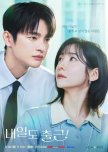
See You at Work Tomorrow!: Great Potential, Rushed Execution
See You at Work Tomorrow! is an interesting drama because it explores the lives of office workers and the various problems they face. It touches on workplace pressure, relationships with colleagues, the exhaustion that comes after years of working, dealing with manipulative bosses, and office politics. In my opinion, the themes are quite relatable and have the potential to make for an engaging workplace drama.However, the biggest problem with this drama lies in its execution. The story moves too quickly once it enters the main conflict, while at the same time, some episodes feel like they are moving forward without much actually happening. Conflicts that could have been developed into something more complex are instead resolved too quickly. The revenge aspect also feels somewhat unsatisfying because the buildup is not strong enough. I wish the drama had explored workplace politics, competition among employees, and the main character's struggle against a manipulative boss in greater depth. Unfortunately, the office environment sometimes feels more like a backdrop for the romance rather than an important part of the story itself.
This is particularly disappointing because the drama has plenty of interesting material to work with. The lives of office workers, pressure from superiors, relationships with colleagues, and the exhaustion that comes from years of working could have provided a strong foundation for more serious conflicts. Instead, most of the conflicts feel safe and predictable. There are not many rivalries or workplace conflicts that truly leave an impression, and after a few episodes, the story starts to feel like it is going in circles.
As for the romance, I also feel that something is missing. The relationship between the two leads does develop gradually, but their emotional progression never feels particularly strong. Their chemistry is there, but in my opinion, it is not enough to make their relationship feel special. Some moments that should have been important milestones in their relationship end up feeling rather ordinary.
I also found the male lead too stiff and passive to carry a romance-centered story. Being calm and mature is not necessarily a problem, but a character like this still needs a certain personality or another side that makes the audience interested in him. Here, I sometimes felt that his appeal relied more on his looks than on the development of his personality. As a result, when their relationship began to develop, I never really felt excited about seeing them become a couple.
The same issue applies to the second couple. They actually have an interesting foundation for conflict because they hold very different views on relationships and love. However, the drama does not give us enough reason to understand why they are ultimately compatible. Their relationship feels like something that has to happen because the script says so, rather than something that develops naturally.
The comedy also does not work particularly well for me. The drama is marketed as a romantic comedy, but most of its comedic moments feel rather flat. There are situations that could have been funny, but they are not strong enough to actually make me laugh. In the end, the drama feels more like a workplace romance with a bit of comedy than a genuinely lighthearted and entertaining romantic comedy.
That said, I would not consider See You at Work Tomorrow! a bad drama. The production is fairly polished, and the actors are capable of portraying their characters well. In my opinion, the problem is not with the actors themselves, but with the writing, characterization, dialogue, and the way the conflicts are handled. The drama has plenty of interesting ideas, but it too often chooses the safest route, which ultimately makes it lose some of its own identity.
Ultimately, See You at Work Tomorrow! is a drama with an interesting premise that fails to fully realize its potential. I enjoyed its portrayal of office life because it feels quite relatable, but I wish the workplace conflicts had been handled more seriously and developed with greater depth. The romance also needed stronger chemistry and more emotional development for the relationship between the leads to truly leave an impression.
For me, this drama is still worth watching, but it feels more like a drama that is “good enough to follow” rather than one that truly leaves a lasting impression. The workplace theme is interesting, but the conflicts and revenge storyline feel rushed, while the romance lacks the emotional payoff I was hoping for. By the time I finished watching it, I was still left feeling that there was so much more potential that could have been explored.
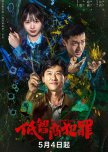
Born with Luck: A Crime Drama Where Stupidity Solves the Case
Born with Luck is a Chinese crime drama with a strong comedic touch. Unlike typical crime dramas that focus on serious investigations, intense tension, and intellectual battles between the police and criminals, this drama takes a more absurd and entertaining approach.The story centers on Zhang Yi'ang, a police officer who left the criminal investigation division several years ago after experiencing a series of unfortunate events that left him traumatized. Since then, he has chosen to distance himself from investigative work.
One day, Zhang Yi'ang accidentally comes across a piece of paper containing an anonymous report. This discovery eventually brings him back into the world of criminal investigations. He is assigned to work with Li Qian to investigate a case in Sanjiangkou.
Zhang Yi'ang's arrival is not exactly welcomed by the local police. They tend to underestimate him and are concerned that his presence could threaten their positions. However, the situation takes a turn when the deputy chief of the criminal investigation unit is found murdered. The case then becomes the beginning of an increasingly complicated investigation.
What sets Born with Luck apart is the way its cases are solved. The drama does not always rely on the police systematically finding clues or using brilliant analytical skills. Instead, many developments occur through coincidence, mistakes, accidents, and even the sheer stupidity of the criminals themselves.
This approach is actually reflected in the drama's original Chinese title, 低智商犯罪 (Low IQ Crime), which can roughly be interpreted as "crime with a low IQ." The criminals are not portrayed as masterminds who are always one step ahead of the police. Instead, their mistakes often become the very clues that help Zhang Yi'ang and his team uncover the truth.
That is where much of the drama's appeal lies. The audience is not only left wondering how each case will be solved, but also gets to laugh at how a series of absurd and unexpected events eventually brings the police closer to the truth.
However, this approach also means that Born with Luck may not be suitable for viewers looking for a serious crime drama with realistic investigations, intense action sequences, or constant gunfights. The drama places greater emphasis on humor, characters, absurd situations, and coincidence rather than conventional crime-drama tension.
On the other hand, if you are looking for a lighthearted, entertaining, and less serious crime drama, Born with Luck is definitely worth considering. Its combination of crime mystery and comedy gives it a distinctive charm that sets it apart from many other Chinese crime dramas.

Love as a Sanctuary: Finding Safety and Stability in 'The Best Thing
The Best Thing (爱你) is a modern romance drama that presents love as a mature, serene, and realistic emotional process. Its plot moves linearly without excessive conflict, allowing interpersonal relationships to develop logically and naturally. The story focuses on internal struggles that mirror the reality of adult life, such as past trauma, fear of commitment, as well as career pressures and social expectations.The characters are portrayed humanely and consistently with clear emotional arcs, where love does not happen instantly but grows alongside self-awareness, emotional maturity, and the ability to build trust. The drama's main strength lies in the highly natural and captivating chemistry between Zhang Linghe and Xu Ruohan; Zhang Linghe convincingly plays a gentle and gentlemanly Traditional Chinese Medicine doctor, while Xu Ruohan successfully brings to life a dynamic career woman who harbors emotional vulnerability, making their interactions feel authentic and touching.
From a psychological perspective, The Best Thing aligns with attachment theory and the concept of emotional maturity, portraying a romantic relationship as a space for emotional healing rather than a source of conflict. This nuance is further reinforced by the subtle presentation of emotions and cinematography that carries a soft and reflective tone. Overall, the drama conveys the message that the best love is not the most dramatic one, but rather one that provides a sense of safety, emotional stability, and mutual growth, making it relevant and meaningful for adult viewers who appreciate realism and emotional depth in romantic stories.
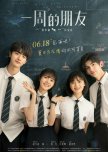
Between Forgetting and Holding On: The Emotional Journey of One Week Friends
One Week Friends is a Chinese coming-of-age drama that explores themes of friendship and romance through a quiet, emotional lens. The film presents a compelling premise: a condition where memory resets once a week. Theoretically, this concept holds immense potential for delivering complex psychological conflict and profound emotional depth.On the positive side, the film’s primary strength lies in its unique and meaningful narrative idea. The fragility of memory serves as a symbol for the importance of sincerity and effort in maintaining human relationships. The film successfully conveys the message that friendship and love do not rely solely on past memories, but on present commitment and patience. These values are delivered subtly, remaining relevant to the teenage experience.
The acting is another significant asset. Zhao Jinmai delivers a natural performance as Lin Xiangzhi, portraying a character who is guarded yet internally wounded with nuance. Meanwhile, Lin Yi brings warmth and consistency to the role of Xu Youshu, making their dynamic feel realistic and grounded. Visually, the cinematography is polished, utilizing a soft color palette and school settings that enhance the film’s intimate and sentimental atmosphere.
However, despite these strengths, the film suffers from significant weaknesses. Notably, the storyline tends to be repetitive. The cyclical pattern of building a relationship only to have memories reset makes the conflict predictable, diminishing the dramatic tension. The slow pacing in certain sections also leads to a drop in emotional intensity, particularly during the middle of the film.
Furthermore, the development of supporting characters is lackluster. Characters outside the main duo lack strong background exploration, rendering their roles as mere narrative fillers. Logically, the medical condition causing the memory loss is not explained in depth, making it feel like a convenient plot device rather than a seriously explored psychological conflict.
The romance aspect is also relatively safe and conventional. Several scenes feel cliché, and the chemistry between the leads does not always succeed in building strong emotion, leaving pivotal moments that should be poignant feeling somewhat flat for some viewers.
Overall, One Week Friends is a warm and emotional film, yet it is limited by its execution of conflict and character development. It is well-suited for viewers who enjoy teen dramas with a gentle pace and soft moral messages, but it may be unsatisfying for those expecting sharper conflict and deeper psychological exploration.
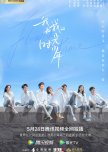
Healing a Broken Heart: How 'Flourish in Time' Redefines Love, Guilt, and Family
The drama "Flourish in Time" chronicles the intertwined destinies of Jiang Haoyue and Lu Miao, which began with a tragic accident. When Lu Miao’s father accidentally struck a young Haoyue, it resulted in the permanent loss of one of his legs. Driven by profound guilt and a sense of moral responsibility, the Lu family moved into the apartment above Haoyue’s to better care for him, allowing Lu Miao and Haoyue to grow up with a bond as close as siblings. Over time, this relationship shifts toward romance, particularly after the arrival of a third party sparks jealousy and a new wave of emotional awareness.The Protector and the Genius Lu Miao grows into a cheerful, courageous girl with a fierce sense of justice. Although she is not academically gifted, she consistently serves as Haoyue’s protector against social stigma and bullying. To Haoyue, Lu Miao is more than just a friend; she is his primary source of emotional strength, making him feel truly valued despite his circumstances.
Conversely, Jiang Haoyue evolves into a genius student with brilliant academic achievements, yet he possesses an introverted personality haunted by inner wounds. He must navigate life with a physical disability, the trauma of being abandoned by his mother, and a toxic biological father plagued by alcoholism and gambling. Amidst the harshness of his reality, Lu Miao’s presence becomes Haoyue’s only true safe haven.
The Cracks in the Family Foundation Beneath the surface of family harmony, Lin Wen Fang (Lu Miao’s mother) endures significant mental strain due to career setbacks and her husband’s tendency to prioritize Haoyue as a form of lifelong atonement. This imbalance of attention and emotional neglect nearly shatters their marriage, highlighting the complex price of guilt within a household.
The Turning Point Overwhelmed by the feeling of being a burden, Haoyue at one point intends to move abroad to rejoin his mother. However, the unwavering support of those around him and a newfound realization of his own self-worth eventually lead him to choose to stay, finding his true home with those who genuinely love him.
A Supportive Circle of Friends Their circle of friends provides a vital emotional balance to the story. Shi Che emerges as an honest and sporty romantic rival; Chen Guo Guo plays the role of the vibrant and supportive best friend; Xie Ziye serves as Lu Miao’s trusted confidante; while Qu Wei undergoes a journey from being an academic competitor to one of Haoyue’s closest companions.
The Path to Redemption The most significant transformation is seen in Jiang Yi, Haoyue’s biological father. Starting as a toxic figure who exploited the Lu family's guilt, he slowly changes after confronting his own failures. Through deep reflection, Jiang Yi eventually abandons his destructive habits and begins building a new life as a form of moral redemption, finally allowing his son the freedom to be happy.
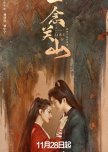
A Journey to Love: Stunning Visuals, Deep Emotion, and a Perfect Cast
In my opinion, this drama is absolutely stunning. The plot is strong and well-structured. Every episode feels alive, thanks to a perfect blend of exciting missions, tense political intrigues, and gradual character development.The chemistry between the characters feels incredibly natural. It isn’t just about the romance, which grows through trust and sacrifice, but also about the heartwarming camaraderie of the team. They evolve from strangers into a true family who would die for one another. This shared journey and the genuine brotherhood they form are what make their bonds feel so emotional and profound.
The production quality also deserves high praise. The costumes are a feast for the eyes, especially the elegant purple uniforms of the Six Realms Hall of Wu State, and Liu Shishi, whose aura shines even brighter whenever she wears red. The OST is equally memorable; it isn’t just background music, but an integral part of the story. Just hearing it brings all the emotions of the drama back to life in my memory.
I enjoyed every single second. There were moments of laughter and happiness, as well as heartbreaking sorrow as the characters fell one by one. The sense of loss felt genuine because their care for one another was so sincere.
Many label this as a 'sad ending,' but I feel quite the opposite. The drama leaves a warm impression, especially seeing them happy in the afterlife in the final episode. For anyone who hasn't watched it yet, A Journey to Love is truly worth your time. Ignore the 'sad ending' tag, because it would be a huge shame to miss out on this drama.


