
 Editorials

 3
3




Joy of Life is a political thriller that never pretended otherwise. My Journey to You made the mistake of dressing as a romance. Strip that away and you find the same DNA: a chess game inside a sophisticated world, layered characters whose every move carries weight, and love that is real but never the point.


If WDBTD left you wanting more, Love Beyond the Grave is your next watch.
• Arthur Chen plays the ML in both, and watching him inhabit two completely different broken men is its own kind of experience
• Both leads carry centuries of isolation, just on opposite sides: Sima Jiao sealed away for 500 years, He Si Mu sovereign of a world that left her equally alone for 400
• In both, what draws the ML in is that the FL simply refuses to be what he expected. Liao Tingyan’s total lack of ambition fascinates Sima Jiao. He Si Mu’s steadfastness is what Duan Xu cannot walk away from.
• Both MLs were made into weapons by the very world they were meant to serve, never given the choice to simply exist
• The angst is relentless in both, but the tenderness always finds a way to breathe through it
• When the powerful one falls, they fall completely. No half measures, no retreat.
• The OSTs are haunting in both, the kind that attach themselves to specific scenes and refuse to leave your memory
• Arthur Chen plays the ML in both, and watching him inhabit two completely different broken men is its own kind of experience
• Both leads carry centuries of isolation, just on opposite sides: Sima Jiao sealed away for 500 years, He Si Mu sovereign of a world that left her equally alone for 400
• In both, what draws the ML in is that the FL simply refuses to be what he expected. Liao Tingyan’s total lack of ambition fascinates Sima Jiao. He Si Mu’s steadfastness is what Duan Xu cannot walk away from.
• Both MLs were made into weapons by the very world they were meant to serve, never given the choice to simply exist
• The angst is relentless in both, but the tenderness always finds a way to breathe through it
• When the powerful one falls, they fall completely. No half measures, no retreat.
• The OSTs are haunting in both, the kind that attach themselves to specific scenes and refuse to leave your memory

TTEOM broke you? Good. Love Beyond the Grave is here to finish the job.
• Same suffocating, otherworldly atmosphere, you never quite feel like you’re standing on solid ground
• FL Si Mu, like Tantai Jin, is almighty and terrifying on the surface, and devastatingly lonely underneath
• The plot is labyrinthine by design: chaotic, overstuffed, everything and nothing happening all at once, and somehow you can’t look away
• No matter what timeline they’re in, you feel their love is doomed. You watch anyway.
• The acting carries what the script sometimes can’t. Both casts earn every tear.
• The aesthetics and costumes are immaculate. The costume team said go big and absolutely did not go home.
• The OST is haunting, almost mystical
• Same suffocating, otherworldly atmosphere, you never quite feel like you’re standing on solid ground
• FL Si Mu, like Tantai Jin, is almighty and terrifying on the surface, and devastatingly lonely underneath
• The plot is labyrinthine by design: chaotic, overstuffed, everything and nothing happening all at once, and somehow you can’t look away
• No matter what timeline they’re in, you feel their love is doomed. You watch anyway.
• The acting carries what the script sometimes can’t. Both casts earn every tear.
• The aesthetics and costumes are immaculate. The costume team said go big and absolutely did not go home.
• The OST is haunting, almost mystical


If TLOTFG left you wanting more of the same energy, Pursuit of Jade is your next watch !
- Strong FL who owns her story
- ML just as strong if not more, who actually has the emotional intelligence to show up for her without making it weird
- Feminist undercurrent that trusts you to feel it rather than spelling it out
- The romance is well paced and the chemistry convincing
- The antagonists are fleshed out enough to occasionally steal the whole show. And by occasionally I mean consistently.
- Strong FL who owns her story
- ML just as strong if not more, who actually has the emotional intelligence to show up for her without making it weird
- Feminist undercurrent that trusts you to feel it rather than spelling it out
- The romance is well paced and the chemistry convincing
- The antagonists are fleshed out enough to occasionally steal the whole show. And by occasionally I mean consistently.

If you enjoyed The Legend of the Female General, then Love in the Clouds will feel familiar in the way it builds its story around a powerful female lead navigating both duty and love. At their core, both dramas are driven by women who start from a place of strength, lose their footing, and are forced to rebuild themselves while carrying emotional and external pressures.
They blend action, romance, and personal identity in a similar way, where the heroine is constantly balancing who she is with what the world expects of her. And in both stories, the romance is deeply tied to that journey, not just as a side plot, but as something that shapes and challenges the heroine’s path just as much as the battles she fights.
They blend action, romance, and personal identity in a similar way, where the heroine is constantly balancing who she is with what the world expects of her. And in both stories, the romance is deeply tied to that journey, not just as a side plot, but as something that shapes and challenges the heroine’s path just as much as the battles she fights.

If you found yourself drawn to The Legend of ShenLi for its balance between power and tenderness, then The Legend of the Female General will feel like a natural next step. Both dramas understand something a lot of others miss: strength and femininity are not opposites to reconcile, but qualities that can exist effortlessly side by side. Shen Li and He Yan are cut from the same cloth, women who lead, fight, endure, and still allow themselves to love without diminishing who they are.
And just like Xingzhi, Xiao Jue does not fall in love despite her strength, but because of it. In both stories, the romance does not weaken the heroine, it meets her where she stands.
Strip away the different settings, one celestial, one grounded in military politics, and what remains is the same emotional core: two people standing shoulder to shoulder, equally capable, equally devoted, and entirely unwilling to ask the other to become smaller for the sake of love.
And just like Xingzhi, Xiao Jue does not fall in love despite her strength, but because of it. In both stories, the romance does not weaken the heroine, it meets her where she stands.
Strip away the different settings, one celestial, one grounded in military politics, and what remains is the same emotional core: two people standing shoulder to shoulder, equally capable, equally devoted, and entirely unwilling to ask the other to become smaller for the sake of love.

Love in the Clouds and Feud both take their romance with a side of heartbreak and moral chaos — the kind of shows where trust is fragile, emotions are weapons, and everyone’s one secret away from ruin. They share that intoxicating xianxia-meets-melodrama energy: powerful leads bound by fate and pride, love tangled up in betrayal, and tension so thick it could shatter the heavens. Both dramas flirt with the idea that love can heal, but spend most of their runtime proving how easily it can destroy. If Love in the Clouds is about miscommunication dressed as destiny, Feud is about revenge disguised as passion — and in both, the chemistry burns bright enough to make you question all your standards while you yell, “Just talk to each other!”

Both Love Between Fairy and Devil and Love in the Clouds are cut from the same addictively chaotic xianxia cloth — enemies to lovers, god-tier male leads, and heroines who somehow turn divine destruction into emotional education. In both, the “almighty” man falls first (and harder) for the woman he once underestimated, and suddenly world-ending power looks small next to a single act of compassion.
Each story wraps heartbreak, reincarnation, and destiny in gorgeous costumes and devastating eye contact, making you yell at your screen one minute and clutch your chest the next. Sure, one nails communication better than the other, but at their core, both are about what happens when immortals learn that love might just be the greatest power of all.
Each story wraps heartbreak, reincarnation, and destiny in gorgeous costumes and devastating eye contact, making you yell at your screen one minute and clutch your chest the next. Sure, one nails communication better than the other, but at their core, both are about what happens when immortals learn that love might just be the greatest power of all.


If you enjoyed King the Land, you’ll probably love Bon Appétit, Your Majesty for the same reason — Lim Yoon-A. She brings that same warmth and sparkle that made Gu Won’s hotel glow, only this time she’s running the royal kitchen instead of the reception desk. While King the Land offered a breezy, modern romance, Bon Appétit, Your Majesty leans into deeper emotions. Yi Heon is far more intense and dramatic — a king who feels everything too much for his own good. Framed through a historical lens that never really gives him the redemption he deserves (at least not in his own time), it’s a different flavor of romance — richer, messier, and just as addictive.


Both dramas follow a couple hanging by a thread — somewhere between love and divorce — clinging to each other through pride, pain, and way too many misunderstandings. They’re about two people who keep getting it wrong but still can’t stop finding their way back to each other. What makes them similar is how both shows strip away the power games and leave you with raw, messy love that somehow survives the chaos. It’s the kind of story that makes you yell, “just talk to each other!” …and then cry five minutes later because they finally do.

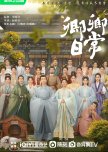
Both New Life Begins and Blossom in Adversity celebrate women carving out their own paths in rigid, hierarchical worlds — wrapped in beautiful costumes, humor, and just enough heart to keep you smiling through the palace politics.
They both center around female leads who are spirited, clever, and quietly rebellious, navigating arranged marriages, family expectations, and the pressure to conform. In both dramas, the tone is light and cozy on the surface, yet they carry an undercurrent of commentary about female resilience and independence.
You’ll find sisterhood, self-discovery, and a refreshing sense that these women’s lives are not defined solely by romance — even if there’s a charming man in the mix.
They both center around female leads who are spirited, clever, and quietly rebellious, navigating arranged marriages, family expectations, and the pressure to conform. In both dramas, the tone is light and cozy on the surface, yet they carry an undercurrent of commentary about female resilience and independence.
You’ll find sisterhood, self-discovery, and a refreshing sense that these women’s lives are not defined solely by romance — even if there’s a charming man in the mix.

Both Love’s Ambition and Only for Love thrive on chaos — couples who bicker like it’s a full-time job, burn with chemistry hotter than their misunderstandings, and communicate mostly through smoldering eye contact and emotional damage. Both start with the female lead’s little deception — a lie, a trick, or a plan that backfires spectacularly — and the male lead finding out (of course he does). Yet instead of walking away, he falls even harder. Because apparently, emotional turmoil is their love language. Whether it’s business deals, fake dates, or public power plays, you can expect constant tension, sharp banter, and chemistry so steamy it’s basically a workplace hazard.
Both dramas give you that classic “love as a battlefield” energy: pride versus vulnerability, attraction versus reason, ambition versus surrender. These couples don’t just fall in love — they crash, burn, and rebuild, all while outsmarting and out-loving each other. It’s messy, addictive, and proof that when it comes to romance, honesty might not be the best policy… but it sure makes great television.
Both dramas give you that classic “love as a battlefield” energy: pride versus vulnerability, attraction versus reason, ambition versus surrender. These couples don’t just fall in love — they crash, burn, and rebuild, all while outsmarting and out-loving each other. It’s messy, addictive, and proof that when it comes to romance, honesty might not be the best policy… but it sure makes great television.


