
 Editorials


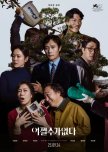
Park Chan-wook — a name I will never forget
Every time I watch one of his films, I’m reminded why he stands in a league of his own. No Other Choice is no exception. It feels fresh and unpredictable, yet it unmistakably carries that classic “Chan-wook touch” — stylish, sharp, morally complex, and darkly funny.
What struck me first was how unique the film felt. It doesn’t move in a conventional way, and just when you think you understand its direction, it shifts — sometimes subtly, sometimes brutally. That unpredictability is part of what makes it so compelling. Park has always had a gift for blending tones, and here he balances genuine humor with some very heavy themes in a way that never feels forced. The humor often comes wrapped in discomfort — you laugh, then immediately question why you’re laughing.
At its core, the film dives deep into the idea of the “man of the family.” What does that role actually mean? Provider? Protector? Decision-maker? The movie challenges the traditional image of the ideal family and exposes the pressure cooker beneath it. The expectation to be perfect, stable, successful — especially in a capitalist system — becomes suffocating. There’s also an undercurrent of commentary that feels tied to capitalism and possibly even AI, as if the characters are trapped in a system that reduces human worth to productivity and replaceability.
One of the most disturbing ideas in the film is how evil can disguise itself as good intentions. The belief that you’re doing something “better” for your family can slowly justify darker and darker choices. That moral spiral — where love, pride, fear, and ego intertwine — is handled in a way that feels both intimate and unsettling. Park doesn’t present villains in a simple way; instead, he shows how ordinary people can become destructive when cornered by expectations and systems.
What struck me first was how unique the film felt. It doesn’t move in a conventional way, and just when you think you understand its direction, it shifts — sometimes subtly, sometimes brutally. That unpredictability is part of what makes it so compelling. Park has always had a gift for blending tones, and here he balances genuine humor with some very heavy themes in a way that never feels forced. The humor often comes wrapped in discomfort — you laugh, then immediately question why you’re laughing.
At its core, the film dives deep into the idea of the “man of the family.” What does that role actually mean? Provider? Protector? Decision-maker? The movie challenges the traditional image of the ideal family and exposes the pressure cooker beneath it. The expectation to be perfect, stable, successful — especially in a capitalist system — becomes suffocating. There’s also an undercurrent of commentary that feels tied to capitalism and possibly even AI, as if the characters are trapped in a system that reduces human worth to productivity and replaceability.
One of the most disturbing ideas in the film is how evil can disguise itself as good intentions. The belief that you’re doing something “better” for your family can slowly justify darker and darker choices. That moral spiral — where love, pride, fear, and ego intertwine — is handled in a way that feels both intimate and unsettling. Park doesn’t present villains in a simple way; instead, he shows how ordinary people can become destructive when cornered by expectations and systems.
Was this review helpful to you?


