
 Editorials

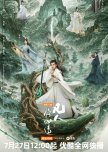
A Mortal’s Teardrop in an Immortal’s Eternity
This show’s portrayal of Han Li’s transcendent journey is nothing short of breathtaking, a saga so brilliantly executed that it lingers in the soul long after the screen fades. Yang Yang doesn’t merely play the role; he becomes Han Li, with a performance so effortless it feels ordained by destiny itself. And then there’s "瞬间" (Moment), the ending song that haunts like a whispered confession. Its melody is pure magic, leaving me teary-eyed with every listen, yet I can’t help but yearn for the soaring cry of a lead violin to elevate its poignancy, to drown it in even deeper, more cinematic emotion.But the true revelation is Zhao Qing’s Mo Cai Huan, a character who embodies mortality’s cruel beauty against Han Li’s ageless existence. She is the mayfly drawn to an undying flame, her love laced with the quiet agony of knowing her lifetime is but a fleeting sigh to him. Yet without her fragile humanity, the story would lose its heartbeat. She is the mirror that forces Han Li, and the audience, to confront what immortality cannot grasp: the exquisite weight of transience. I never expected to champion Zhao Qing, yet here I am, utterly disarmed. She delivers a performance of raw, quiet devastation, a storm of emotions that elevates the entire narrative into something transcendent.
This show has its hooks in me, its blend of epic scale and intimate sorrow leaving me aching for more. We need a Season 2, not just to continue Han Li’s journey, but to honor the fragile, human echoes Mo Cai Huan left behind.
Was this review helpful to you?
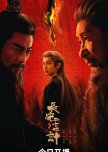
The Vendetta of Boredom
"The Vendetta of An" is a political revenge drama that squanders its intriguing premise through slow, plodding storytelling and a lack of narrative tension. Despite promising courtly intrigue, the plot unfolds at a tedious pace, burying key developments under excessive detail and repetitive scenes. This isn't a sophisticated slow burn, but a boring execution that fails to make its central vendetta feel urgent or compelling.The drama ultimately feels tailored only for the domestic Chinese market, leaning heavily on familiar tropes without the sharp writing or universal emotional stakes needed for wider appeal. Its failure highlights a risk for the industry: without opening creative horizons and prioritizing tight, globally-resonant storytelling—as seen in many Korean dramas—Chinese productions may remain insular and artistically stagnant.
Verdict: A missed opportunity that confuses slowness with depth. It serves as a case study in how to drain all excitement from a promising premise.
Was this review helpful to you?


