


This review may contain spoilers
Excellent comedic timing, cohesive storytelling, and clever cultural callbacks.
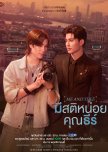
Me and Thee is dialogue-driven comedy, where the humor stems purely from what the characters say. And I LOVE character-driven comedy, where characters are unintentionally funny due to their personalities, not because of manufactured "gags."The first episode functions as an anti-romance, a parody of power, and a psychological character study, all wrapped in the aesthetic packaging of a prestige BL drama and a mafia-lakorn satire. It simultaneously lampoons traditional lakorn tropes (like melodrama, the possessive mafia lover, exaggerated speech, and opulent gestures) while building a genuinely vulnerable emotional core beneath all the spectacle.
The use of two distinct POVs—Peach’s quiet, grounded introspection versus Thee’s dramatic internal world (borrowed straight from the conventions of lakorns)—allows the episode to achieve a unique fusion of tones: comedy, dramatic tension, and genuine emotion.
Pond Naravit is so skilled at delivering those over-the-top, cringey lines. His performance as Khun Thee gives me the same feeling as Jun Matsumoto’s Domyouji Tsukasa. Both characters genuinely think their own exaggerated behavior and manner of speaking are normal. As a viewer, it’s like I’m watching them live their ordinary lives as their character. That's how you bring an iconic character to life.
It takes real skill to deliver highly dramatic lines that rely on formal language an actor wouldn't use in real life. The performer must make those lines sound effortless, as if they are simply speaking naturally, without any hint of overacting or falseness. And the real standout is how clearly articulated his Thai is, hitting every syllable perfectly.
Since Khun Thee learned Thai primarily by mimicking the language used in lakorns, his speech is naturally as flawless and eloquent as the TV actors—a detail Pond masterfully captures. While others often mumble or rush their words in modern Thai, Khun Thee speaks clearly and slowly, yet his face doesn’t look like he’s putting on a performance. I get chills every time he pronounces Peach's full name.
The way he delivers “Peachayarat” outside Peach's house is loaded with subtext. His exact tone, specific expression, and the ensuing silence communicate his internal struggle: “Why did being reprimanded sting? Why am I upset that he’s mad? Why do I care about his opinion? This is a completely new reaction for me.”
When it comes to Phuwin, the Moo Krata scene where Peach is eating the meat is likely the most striking example of his performance. With his eyes closed, it shows how deeply conflicted he is, a state beautifully conveyed by Phuwin’s subtle micro-expressions, even though the big dramatic scene that follows steals the focus. He enjoys the good food, but Thee’s show of opulence rubs him the wrong way because it goes against his values.
And P'X is a walking encyclopedia of references—he absolutely knows his stuff.
In creating Me and Thee, he pulled directly from the pop culture of his youth: everything from songs and movies to books and old lakorns. These influences were strategically woven into the series' structure. This, along with his strong directorial hand, clear vision, and the highly effective screenplay adaptation (credit VANGVELA), made Me and Thee an instant viral success based on its merit: it featured excellent comedic timing, cohesive storytelling, and clever cultural callbacks.
Was this review helpful to you?


