

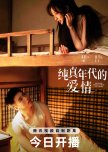
At first, I watched this show just for fun, but i gradually started to really get into it.The strongest feeling from beginning to end was a warm, positive, and uplifting attitude towards life.
I believe the essence of this time the drama showed is the courage to choose to live passionately amidst the torrents of time.Both the Fang and Fei families have continuously adapted to the changing times.Some people grit their teeth and persevere for their ideals, some people lower themselves for their loved ones, some people hold on to their principles in adversity, and some people learn to be self-consistent with gains and losses.Different pairings have different appeals, & Different characters create different chemistry when they collide.
some of my favorite shots:
The first one is the rapeseed flower field that got me hooked. It was quite good in terms of artistic conception and symbolism.From the photography and setting to the composition and meaning, everything is just right. There is no deliberate use of filters; only the most natural rural atmosphere and youthful thoughts.In my view, the rapeseed flower field represents the future, the construction of our shared home begins here, and the struggle and hope for the future also begin to extend from the rapeseed flower field. This may also be the reason why the voices of the innocent era began to emerge , the voices of hope breaking through the soil, the voices of hearts sprouting.
The second scene is the one at the guesthouse where the two of them sketched their new home with their fingers. The director's cinematography is truly excellent. The entire scene uses only two hands and hand-drawing, yet it perfectly captures the young couple's longing for their new home and their dreams for the future. The easel, the desk, the two single beds—and the way they express their love with their hands is incredibly sweet. There are no explicit confessions, no passionate embraces, only the touch of fingertips conveying affection. It's restrained yet perfectly sweet, a subtle romance characteristic of that era, more moving than any romantic words.
The third was repainting the mural of the rapeseed field together in our new home; it was very warm and comforting. I remember a description here: " The golden rapeseed field is like a postmark imprinted by the sunlight; wildflowers bloom and green grass carpets the ground; the whole spring blossoms for me."
It's not just about capturing that sudden wedding invitation and the beginning of their life together, but also about freezing sunshine and longing for the future within their small home. From then on, no matter how turbulent the outside world became, this home always had its own "spring," and the confidence to withstand any storm.
Of course, there are also many other scenes, such as silhouette photos on rooftops, two people riding bicycles through mountains and fields, and Nini running to the epicenter to search for Fang muyang out of concern for his safety... These scenes piece together the most authentic everyday life and give this love a heavy weight.
This drama feels incredibly pure, even using the guise of a love story to wrap up a heavy historical backdrop such as the Cultural Revolution, the Down to the Countryside Movement, and the college entrance examination reform. It doesn't deliberately exaggerate the suffering of the era, nor does it shy away from the hardships of those years. Instead, it blends the changes of the era into the mundane details of daily life and into the companionship and devotion of lovers.
I think "pure" love is different from unrealistic idol dramas; it's the everyday life that grows out of the folds of time .
Two people married first and then fell in love; one initially did it for the house, and the other for math and a job.
But the "marriage of convenience" between Fang Muyang and Nini began with a fake marriage.Through the mundane realities of the era's housing, and being schemed against,Struggles of everyday & even a natural disaster, their "living together as a couple" gradually transformed into "I can't live without you" & Nini's courage in preparing for the college entrance exams ultimately turned into the solid feeling of both of them getting into university together and walking side by side on campus.
The "marriage of convenience that blossomed into love" between Fang Mujing and Dr. Qu Hua is more like a sober game between adults, evolving from a utilitarian marriage to a mutual commitment, the underlying tension and emotional changes between them all developed gradually through mutual turmoil, longing, and companionship.
Not only is it one of the best romantic dramas I've watched this year, but it's also a love letter to everyone who holds fast to sincerity in life. It makes us believe that no matter how times change, no matter how difficult life is, there will always be a pure love that can weather the storms and reach the depths of our hearts; there will always be a way of life that allows us to hold onto our own warmth and light amidst the torrents of life.
Most importantly, I still don't think it had a rushed ending or felt like it was too convoluted. Everyone experienced their due lows and highs in their own storylines, and the outcome of the story felt quite natural to me.
I believe the essence of this time the drama showed is the courage to choose to live passionately amidst the torrents of time.Both the Fang and Fei families have continuously adapted to the changing times.Some people grit their teeth and persevere for their ideals, some people lower themselves for their loved ones, some people hold on to their principles in adversity, and some people learn to be self-consistent with gains and losses.Different pairings have different appeals, & Different characters create different chemistry when they collide.
some of my favorite shots:
The first one is the rapeseed flower field that got me hooked. It was quite good in terms of artistic conception and symbolism.From the photography and setting to the composition and meaning, everything is just right. There is no deliberate use of filters; only the most natural rural atmosphere and youthful thoughts.In my view, the rapeseed flower field represents the future, the construction of our shared home begins here, and the struggle and hope for the future also begin to extend from the rapeseed flower field. This may also be the reason why the voices of the innocent era began to emerge , the voices of hope breaking through the soil, the voices of hearts sprouting.
The second scene is the one at the guesthouse where the two of them sketched their new home with their fingers. The director's cinematography is truly excellent. The entire scene uses only two hands and hand-drawing, yet it perfectly captures the young couple's longing for their new home and their dreams for the future. The easel, the desk, the two single beds—and the way they express their love with their hands is incredibly sweet. There are no explicit confessions, no passionate embraces, only the touch of fingertips conveying affection. It's restrained yet perfectly sweet, a subtle romance characteristic of that era, more moving than any romantic words.
The third was repainting the mural of the rapeseed field together in our new home; it was very warm and comforting. I remember a description here: " The golden rapeseed field is like a postmark imprinted by the sunlight; wildflowers bloom and green grass carpets the ground; the whole spring blossoms for me."
It's not just about capturing that sudden wedding invitation and the beginning of their life together, but also about freezing sunshine and longing for the future within their small home. From then on, no matter how turbulent the outside world became, this home always had its own "spring," and the confidence to withstand any storm.
Of course, there are also many other scenes, such as silhouette photos on rooftops, two people riding bicycles through mountains and fields, and Nini running to the epicenter to search for Fang muyang out of concern for his safety... These scenes piece together the most authentic everyday life and give this love a heavy weight.
This drama feels incredibly pure, even using the guise of a love story to wrap up a heavy historical backdrop such as the Cultural Revolution, the Down to the Countryside Movement, and the college entrance examination reform. It doesn't deliberately exaggerate the suffering of the era, nor does it shy away from the hardships of those years. Instead, it blends the changes of the era into the mundane details of daily life and into the companionship and devotion of lovers.
I think "pure" love is different from unrealistic idol dramas; it's the everyday life that grows out of the folds of time .
Two people married first and then fell in love; one initially did it for the house, and the other for math and a job.
But the "marriage of convenience" between Fang Muyang and Nini began with a fake marriage.Through the mundane realities of the era's housing, and being schemed against,Struggles of everyday & even a natural disaster, their "living together as a couple" gradually transformed into "I can't live without you" & Nini's courage in preparing for the college entrance exams ultimately turned into the solid feeling of both of them getting into university together and walking side by side on campus.
The "marriage of convenience that blossomed into love" between Fang Mujing and Dr. Qu Hua is more like a sober game between adults, evolving from a utilitarian marriage to a mutual commitment, the underlying tension and emotional changes between them all developed gradually through mutual turmoil, longing, and companionship.
Not only is it one of the best romantic dramas I've watched this year, but it's also a love letter to everyone who holds fast to sincerity in life. It makes us believe that no matter how times change, no matter how difficult life is, there will always be a pure love that can weather the storms and reach the depths of our hearts; there will always be a way of life that allows us to hold onto our own warmth and light amidst the torrents of life.
Most importantly, I still don't think it had a rushed ending or felt like it was too convoluted. Everyone experienced their due lows and highs in their own storylines, and the outcome of the story felt quite natural to me.
Was this review helpful to you?


