




This review may contain spoilers
Smart, ambitious and just chaotic enough
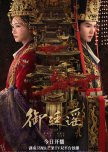
Meng Tinghui is an orphan who refuses to accept the life society has decided for her. Her goal is to enter officialdom through the imperial examinations and prove that a woman can stand among the most educated and powerful men in the court. Along the way, she crosses paths with Ying Gua, the young emperor travelling incognito. What begins as an unusual encounter gradually develops into a relationship built on mutual respect, political cooperation, friendship and, eventually, something much more personal.
The premise itself isn't revolutionary, but I really enjoyed the way the drama approached it.
Meng Tinghui isn't waiting around for someone to change her life. She is already determined to change it herself.
And that's probably what I liked most about her. She's intelligent, ambitious, stubborn and occasionally so confident in her own plans. She knows what she wants and, more importantly, she knows exactly how difficult it will be for a woman to achieve it in the world she's living in.
She doesn't suddenly become powerful because the male lead decides to help her. She earns her position through her intelligence, persistence and ability to solve problems. The fact that she becomes one of the first women to enter the Hanlin Academy gives her journey an additional layer, because her ambition isn't simply about personal success. She genuinely wants to challenge a system that has never been designed with women like her in mind.
I also enjoyed how the drama mixed different types of conflicts. We get court politics, investigations, corruption, power struggles, questions surrounding the imperial examination, criminal organizations and eventually a much larger conspiracy.
The relationship between Meng Tinghui and Ying Gua was another major highlight. I particularly liked that their relationship didn't immediately become a typical romance. They first develop an understanding as two people who recognize each other's intelligence. Ying Gua sees that Meng Tinghui is capable of much more than the position society would normally allow her, while she gradually realizes that the apparently carefree young man she met is hiding something considerably more important. Their dynamic works because neither of them completely dominates the other.
They're both stubborn.
They're both clever.
And they're both very used to having their own way.
Which, naturally, means watching them interact can be hilarious.
One of the relationships I unexpectedly enjoyed was Yan Fuzhi and Shen Zhishu. Their interactions brought some much-needed lighter moments to the drama, and I found myself looking forward to their scenes. The secondary characters in general help make the world feel more populated, rather than existing solely to move Meng Tinghui and Ying Gua's story forward.
For a large part of the drama, I was very invested in the political storyline and especially in Meng Tinghui's journey as a female scholar and official. Then the story introduces larger revelations surrounding her identity and the Blood Moon Society, and while I understand why those twists were included, I wasn't always convinced that they were the strongest direction for the story.
The drama sometimes feels like it has too much story and not quite enough time to properly explore all of it. Several conflicts take a long time to develop, only for the final resolution to happen much faster than expected. The last part especially feels like it could have benefited from more breathing room.
It's one of those dramas where I can recognize the flaws while still having a very good time watching it. The first half in particular had me completely invested, and even when the story became less consistent toward the end, I never reached the point where I wanted to abandon it. Not a new historical-drama masterpiece, but a genuinely entertaining watch with a smart and ambitious female lead, an interesting emperor, plenty of court intrigue and a romance that takes its time developing.
The premise itself isn't revolutionary, but I really enjoyed the way the drama approached it.
Meng Tinghui isn't waiting around for someone to change her life. She is already determined to change it herself.
And that's probably what I liked most about her. She's intelligent, ambitious, stubborn and occasionally so confident in her own plans. She knows what she wants and, more importantly, she knows exactly how difficult it will be for a woman to achieve it in the world she's living in.
She doesn't suddenly become powerful because the male lead decides to help her. She earns her position through her intelligence, persistence and ability to solve problems. The fact that she becomes one of the first women to enter the Hanlin Academy gives her journey an additional layer, because her ambition isn't simply about personal success. She genuinely wants to challenge a system that has never been designed with women like her in mind.
I also enjoyed how the drama mixed different types of conflicts. We get court politics, investigations, corruption, power struggles, questions surrounding the imperial examination, criminal organizations and eventually a much larger conspiracy.
The relationship between Meng Tinghui and Ying Gua was another major highlight. I particularly liked that their relationship didn't immediately become a typical romance. They first develop an understanding as two people who recognize each other's intelligence. Ying Gua sees that Meng Tinghui is capable of much more than the position society would normally allow her, while she gradually realizes that the apparently carefree young man she met is hiding something considerably more important. Their dynamic works because neither of them completely dominates the other.
They're both stubborn.
They're both clever.
And they're both very used to having their own way.
Which, naturally, means watching them interact can be hilarious.
One of the relationships I unexpectedly enjoyed was Yan Fuzhi and Shen Zhishu. Their interactions brought some much-needed lighter moments to the drama, and I found myself looking forward to their scenes. The secondary characters in general help make the world feel more populated, rather than existing solely to move Meng Tinghui and Ying Gua's story forward.
For a large part of the drama, I was very invested in the political storyline and especially in Meng Tinghui's journey as a female scholar and official. Then the story introduces larger revelations surrounding her identity and the Blood Moon Society, and while I understand why those twists were included, I wasn't always convinced that they were the strongest direction for the story.
The drama sometimes feels like it has too much story and not quite enough time to properly explore all of it. Several conflicts take a long time to develop, only for the final resolution to happen much faster than expected. The last part especially feels like it could have benefited from more breathing room.
It's one of those dramas where I can recognize the flaws while still having a very good time watching it. The first half in particular had me completely invested, and even when the story became less consistent toward the end, I never reached the point where I wanted to abandon it. Not a new historical-drama masterpiece, but a genuinely entertaining watch with a smart and ambitious female lead, an interesting emperor, plenty of court intrigue and a romance that takes its time developing.
Was this review helpful to you?


