
 News
News 




More Than Fame: The Emotional Layers of I Wanna Be Sup’tar
I Wanna Be Sup’tar is a Thai GL series that stands out by combining GL romance with show business, instead of just focusing on everyday routines. It shows not only the relationship between characters but also the pressures of the industry, the challenges of being a star, and the cost of success. However, in many moments, viewers can predict what will happen next. This lack of unexpected twists makes the emotions not fully engaging.The foundation of the series is the contrast between the characters. Wanneung (Belle Jiratchaya Kittavornsakul) ambitious and energetic, is a perfect counterpoint to Win (Lilly Ladapa Thongkham) who is experienced but more distant. This difference generates amazing tension that smoothly moves from comedic to deeply touching moments. Their relationship is not only a romance but also a fascinating conflict between youthful dreams and the harsh realities of show business. This is a rare example of a GL series where the development of the relationship is strongly rooted in the realities of a challenging industry.
An interesting element is the portrayal of Wanneung overcoming her fear. As an aspiring actress, she has to face not only industry pressure and her own limitations, but also constant rejection and lack of belief from others. Despite this, she does not give up. She continues attending castings, keeps trying, and gradually steps out of her comfort zone. These moments highlight her growth the most: from an insecure girl to someone who begins to believe in herself and her abilities. Her journey shows that success in show business is not only about talent, but also about persistence and the ability to deal with failure. At the same time, Win’s transformation is also clearly visible. At the beginning, she appears closed-off, distant, and disillusioned with the world of show business. Over time, under Wanneung’s influence, she begins to open up, gradually breaking down her emotional barriers and regaining faith both in people and in herself. Her development is not sudden, but subtle and spread over time, which makes it feel more realistic. The contrast between these two character arcs: Wanneung overcoming fear and Win slowly opening up, creates one of the most compelling emotional layers of the entire series.
Although some side plots could have been better resolved, supporting characters do a great job. Friends and industry rivals bring humor, drama, and extra dynamics to the story. Thanks to them, the world does not revolve solely around the main pair. Unfortunately, supporting characters are not fully developed, and many side plots end episodically or unfinished, giving a sense of an underdeveloped story. A major strength of the series is its dialogues: witty, full of sharp irony, and incredibly light. Even in conflict scenes, conversations remain fresh and natural. At the same time, dialogues can occasionally feel artificial, which weakens the drama of some scenes. Despite show business themes and personal frustrations, the series relieves tension with humor and comedic situations. Watching it is entertaining, light, and romantic, fitting the GL rom‑com genre. However, some comedic scenes contrast awkwardly with serious moments, and sometimes humor feels forced. Although the ending leaves viewers room for interpretation, in practice it can be frustrating. Key plot points remain unresolved, and the characters’ fates are not clearly closed. The open ending may frustrate viewers expecting full satisfaction or resolution.
Scenes are often skipped, and lack of continuation further weakens narrative cohesion. Supporting characters have potential, but their storylines are often episodic or unfinished, giving a flat impression of the series’ world
Despite these shortcomings, I Wanna Be Sup’tar remains appealing for GL and light romantic comedy fans. It combines a colorful, visually dynamic aesthetic with engaging character relationships, offering viewers a pleasant, lighthearted experience with a touch of reflection on the cost of fame and show business challenges.
+ If you want more information, reviews, and updates about Thai GL series, feel free to visit SAWADEE GL on social media.
Was this review helpful to you?

A Childhood Promise That Changed Everything
The Earth is the most grounded story in 4 Elements, but don’t let that fool you. This series is packed with tension, secrets, slow-burning romance, dynamic action sequences and intriguing plot twists that keep viewers engaged.Din (Apple) and Rose (Mim) are childhood friends and their shared history forms the heart of The Earth. As a child, Din promised Rose that she would always stay strong and protect her-a simple vow, innocent in its weight, yet one that drives the entire story.
Every choice Din makes, every quiet sacrifice, every moment of protection stems from that promise. Apple portrays Din with restrained strength, letting emotion live in glances, pauses and subtle gestures. Mim’s Rose is fiery, stubborn and emotional, yet never weak. This was Mim’s first project and she handles it impressively, bringing depth and authenticity to her role (supported by Apple, who helped guide her throughout the process). Together, they feel authentic and deeply human.
Din is stability. Rose is movement. One grounds the other. And their chemistry? Magnetic. Even in quiet, ordinary scenes, their bond feels lived-in, earned and decades in the making.
The series also benefits from memorable supporting characters. Nam (Engfa), Lom (Freen), Fai (Milin) and Motdaeng (Min) bring humor, lightness and warmth to the story. Their interactions often break the tension of heavier moments and give the audience space to smile, making the world of the series feel richer and more alive.
The Earth impresses with its realistic world, stunning Thai landscapes and consistent tone. The show also features dynamic action sequences- from tense confrontations to fast-paced moments that add excitement and energy to the narrative. The directing and script balance action with emotion beautifully, while the soundtrack subtly enhances every scene.
The finale is emotionally satisfying. There’s no over-the-top dramatization, no forced resolutions. Instead, the story returns to the childhood promise: the moment when Din and Rose consciously choose each other. It’s subtle yet deeply fulfilling, lingering in the mind long after the credits roll.
The Earth is a story about the power of promises, loyalty and emotional growth. Apple and Mim prove that chemistry and subtle acting can sometimes achieve more than dramatic plot twists- and that’s why this story stays in the heart.
Was this review helpful to you?

The Emotional Depth of “Broken of Love”
Broken of Love is not another formulaic GL (Girls’ Love) series, but an exceptionally refined and multilayered Thai production that skillfully combines themes of revenge with psychological drama and emotional romance. From the very first minutes, the viewer is drawn into a world where the past is not merely a painful memory — it becomes a force that shapes the characters’ present and influences every decision they make. The screenplay deserves special recognition for avoiding cheap plot devices and unjustified twists. The story unfolds gradually, with great attention paid to emotional tension and character psychology. The creators deliberately choose a slower narrative pace, allowing the atmosphere to become increasingly heavy, suffocating, and filled with unspoken emotions. It is precisely this carefully built intensity that makes Broken of Love so deeply engaging.At the same time, the series never turns into an overwhelmingly bleak drama focused solely on suffering. The production maintains an excellent balance between dramatic scenes, romance, moments of tension, and action. Because of this, the story feels alive, and the emotions never seem forced. There are conflicts, painful conversations, family disputes, and psychological burdens, yet everything is portrayed naturally, without excessive theatricality. It is evident that Faye Peraya Malisorn — both as an actress and producer — understood exactly how much emotion should be shown at any given moment so the audience would never feel emotionally exhausted. That balance makes the series incredibly immersive to watch.
The central figure of the story is Arisa (Faye Peraya Malisorn) — a mysterious, cold, and emotionally distant woman. She operates within a ruthless corporate world while hiding the trauma of her parents’ deaths beneath a mask of professionalism, along with a desire for revenge that drives her entire life. However, Arisa is far from one-dimensional. Beneath her silence, glances, and carefully controlled reactions lies an enormous emotional weight, which Faye portrays with remarkable subtlety.
Arisa’s path crosses with Lalin (Atom Pariya Piyapanopas), who is her complete opposite — open, spontaneous, and expressive, yet trapped within the expectations of her dominant and controlling mother, Welling. The relationship between Arisa and Lalin develops slowly, yet incredibly naturally. This is where the series reveals its greatest strength. The trope of seeking revenge against the enemy’s family has appeared countless times in Asian dramas, but here it gains a fresher and far more emotional dimension thanks to its placement within a complicated GL relationship. Their growing feelings gradually clash with family loyalty, duty, and the pain of the past.
+ Full review on our Instagram, X and Tik-Tok @SawadeeGL
Was this review helpful to you?
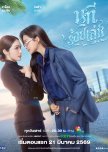
Love beneath the surface: Why The Water is more just another GL drama?
The Water is part of the 4 Elements project, where each series represents one of the elements and tells a different love story. In the story connected to the element of water, the main character is Apo “Nam” Wathinwanit - the cold and distant heiress of the luxurious Wathin Group hotel empire. Her life appears perfectly organized, but beneath the surface lie loneliness, and immense pressure tied to maintaining the family business. Everything begins to change when she meets Chonlada “Lada” Kunanon a new receptionist who brings spontaneity, honesty, and emotion into her carefully controlled world. What makes The Water stand out from other GL productions is undoubtedly the duo of Engfa Waraha and Charlotte Austin. The actresses elevate on-screen chemistry to an entirely different level- and a huge part of that comes from the fact that they have worked together for years, know each other well, and feel genuinely comfortable around one another. Because of this, their interactions feel natural, authentic, and emotionally effortless. Watching the series feels less like seeing a scripted romance and more like watching two people genuinely learning and understanding each other.Their performances are built on subtle details: trembling hands, prolonged eye contact, and delicate shifts in tone of voice. Engfa masterfully portrays Nam as an elegant, composed woman who is used to controlling everything around her. Her character often says very little, yet a single glance conveys more than long dialogues ever could. At the same time, Engfa perfectly captures Nam’s emotional fracture: on one side, the powerful “Empress” of a hotel empire, and on the other, a lonely woman overwhelmed by pressure and expectations. Charlotte Austin beautifully balances that energy as Lada- warm, professional, spontaneous, and emotionally open. Beneath her gentle nature, however, there is also visible uncertainty and inner conflict. Charlotte naturally portrays Lada’s attempts to understand Nam and slowly break down the emotional walls she has built around herself over the years. The relationship between Nam and Lada is far from a typical sweet romance. There is immediate tension between them, but it is a chemistry fueled by distrust, manipulation, and hidden intentions. Nam is not a morally pure heroine- she is intelligent, calculating. Meanwhile, although Lada works as a spy, she remains sympathetic as someone trapped by her father’s ambitions and toxic family loyalty. One of the strongest moments in the series is when Nam realizes that Lada has been lying, yet instead of exposing or dismissing her, she simply smiles and allows her to stay. That scene instantly establishes the show’s central intrigue: who is truly controlling whom?
Visually, the series feels like an extension of Nam herself. The direction relies on a cold, almost sterile color palette dominated by blues and grays, reflecting the symbolism of water. In romantic scenes, however, the colors become warmer, mirroring the emotional intimacy growing between the characters. The cinematography is symmetrical and restrained, emphasizing the power of the hotel empire and Nam’s emotional isolation. Even the costumes carry symbolic meaning: Nam’s perfectly tailored suits act as armor, while Lada’s receptionist uniform becomes a form of safety and concealment.
The Water is ultimately a story about the cost of success and how difficult it is to find truth in a world where lies function as currency. The series explores themes of loneliness in power, family trauma, and toxic loyalty. It constantly asks one important question: Can love ever be truly genuine if manipulation was part of its foundation from the very beginning?
Was this review helpful to you?

A story about accepting yourself, accepting others, and personal growth.
Hometown Romance is without a doubt one of the most refreshing Thai GL series in recent years. In a genre that is often built around heavy drama, suffering, and toxic relationships, this series goes in a completely different direction. Instead of building its story around pain and endless conflict, it chooses warmth, humor, romance, and character growth, making it feel more like a story about maturity, change, and self-discovery than a classic melodrama. The series follows Si, a spoiled heiress from a wealthy family who, after losing her chance to become company president, ends up in the countryside because of a land dispute involving Klao’s family. It is there that she meets the girl who will completely change the way she sees the world. The “rich city girl ends up in the countryside” trope is not new, but the execution gives the story its own identity and a lot of heart. The series does not use this contrast only as romantic scenery — it turns it into the foundation of the characters’ development.The series does a very good job introducing the world, the conflict, and its characters. From the beginning, it is clear who Si is, why she behaves the way she does, and that her problems do not come only from her personality. The story immediately suggests that behind her impulsiveness, selfishness, and superficial view of people are past experiences, relationships, and the way she was treated by her family. The pilot also builds the contrast between Si’s world and Klao’s world extremely well — on one side there is Bangkok, full of pressure, responsibilities, and expectations, and on the other there is the peaceful countryside, built more around relationships and everyday life. The pacing is very well balanced. The story never drags, but it never rushes either. There is always something happening, while still leaving room for ordinary daily moments, character development, and relationship building. Those quieter scenes give the series its unique atmosphere and make the world feel alive. The dialogue also works very well. Especially in lighter scenes and moments of teasing between the leads, the conversations feel natural and memorable. The humor never feels forced, while the series still includes more emotional storylines when needed.
IF you want to read more of this review check our social media.
Was this review helpful to you?

Heart Code masters the art of subtlety
Some series you watch. Others stay with you long after the final episode. Heart Code is definitely the second kind.The story reminds us that sometimes the smallest symbols carry the greatest meaning: like the little frog plush that Thara receives from Vicky during their childhood goodbye. One small gift, one moment and feelings that never truly disappeared.
One of the strongest aspects of Heart Code is how much the series relies on its characters and how brilliantly those characters are portrayed. At the center of it all are the two leads: Pattarawadee Laosaas Thara and Natsiya Prommart as Vicky.
Their chemistry doesn’t rely on dramatic declarations or grand gestures. Instead, it lives in the silences, the glances, and the subtle tension between them. Tungpang plays Thara with a calm, controlled strength that occasionally cracks just enough to reveal her vulnerability. Meanwhile, Jessie brings remarkable emotional depth to Vicky, making every internal conflict feel real and deeply human. This is the kind of acting that makes you truly believe in the relationship between the characters.
And maybe that’s one of the most beautiful things about Heart Code: it reminds us that some of the most powerful performances come from actors we haven’t seen everywhere yet. It’s a reminder that giving new and lesser-known actresses a chance can sometimes bring the most authentic and refreshing stories to life.
The series is also elevated by the care put into its production. Heart Code doesn’t rely solely on the romance between its main characters. The creators clearly aimed to build a world that feels both visually and emotionally cohesive. The production quality is genuinely impressive. The cinematography, pacing and balance between action sequences and quiet emotional moments feel very intentional. Nothing feels random. The camera often lingers just a little longer than expected, allowing the audience to notice small gestures, lingering tension and unspoken emotions.
Because of that, even the quietest scenes: when the characters simply stand next to each other or exchange glances carry a surprising amount of emotional weight. And it’s in those moments that Heart Code truly shows how powerful a carefully told story can be.
Was this review helpful to you?

This review may contain spoilers
Can Love Rewrite Destiny?
Love Beyond Dreams uses time travel and a murder mystery framework, but at its core it is a story about love, grief, trauma, and people trying to resist fate. It is a tale of a second chance, but also of how easily someone can be hurt even when love is deeply real. What truly elevates the series is its extraordinary attention to detail. The creators treat no scene, object, or line of dialogue as accidental. In Love Beyond Dreams, everything carries meaning, and attentive viewers are rewarded with layers of interpretation that unfold gradually over time.Symbolism and meaningful details
The most important symbol in the entire story is the necklace with the red thread. In the original timeline, Rann dies holding it tightly in her hand after an attack that occurs shortly after Lene’s funeral. That same red thread becomes the catalyst that sends her five years into the past. When she wakes up again, the thread is still in her hand. It is therefore not only proof that the future she remembers truly happened, but also a symbol of fate and determination to change destiny. Red gerberas also serve as a recurring symbol throughout the series. Early on, Lene tells Rann that red gerberas are meant for someone special and compares the flowers to her. What seems like a simple romantic gesture gradually becomes a quiet expression of Lene’s love. Since she struggles to express her feelings openly, the flowers become one of the many ways she shows her affection and tenderness. Equally important is the handwritten letter. After five years apart, Rann recognizes Lene’s handwriting and immediately returns to Thailand. Instead of finding her lover, she arrives at her funeral. Only later does the viewer understand that the letter was a final expression of love that Lene never stopped feeling. She pushed Rann away not because she stopped loving her, but because “she wanted to give her a life she could not provide herself”. There are many more subtle details like this. Lene remembers Rann’s dreams even when they are separated. This includes having a car, home, the opportunity to study in the United Kingdom and Lene in her life. Over time, it becomes clear that what Rann initially interpreted as rejection was actually an attempt to secure her happiness and safety. The series quietly shows that love is not always expressed through presence, but sometimes through sacrifice.
Story, screenplay, and originality
Although time travel is not a new concept, Love Beyond Dreams uses it in a deeply emotional way. The fantasy element never dominates the narrative; instead, it serves as a mechanism to explore grief, guilt, and the desire to undo irreversible mistakes. The mystery aspect is equally strong. Together with Rann, the audience tries to uncover not only Lene’s killer but also the person responsible for Rann’s death in the original timeline. The screenplay skillfully plants misleading clues, making nearly every character seem suspicious at some point. One of the most interesting aspects is the way the series engaged its audience beyond the episodes themselves. The official production account (MeMindY Official) regularly released “case files” about suspects — including photos, descriptions, and hints connected to the investigation. This blurred the line between fiction and reality, allowing viewers to actively participate in solving the mystery. It was a clever narrative extension that kept the story alive between episodes.
Acting
Aya Orapan Phongmaykin as Rann convincingly portrays a character moving from grief and guilt to an almost desperate determination to save the person she loves. Her performance is built around strong emotional impact, as Rann carries many of the series most intense scenes involving crying, loss, and longing. From the very beginning she experiences deep personal tragedy, starting with the death of her… more on our social media @sawadeeGL
Was this review helpful to you?


