
 Editorials


Refreshing, Unshakeable Slow-Burn Built on Mutual Respect
Set against rigid class expectations, Lighter & Princess rejects the submissive heroine trope by refusing to let parental control break Zhu Yun’s spirit. There are no exhausting misunderstandings where she acts as a helpless pawn to her mother’s demands. Her journey boldly proves that a woman's path belongs to her alone, as she actively chooses to step out of her sheltered cage to conquer her own destiny.## 👑 Li Xun: The Raw, Authentic Genius
He is a refreshing departure from standard, high-handed male leads. Behind his prickly, defensive armor lies an absolute, secure confidence that never seeks to stifle or change Zhu Yun. Chen Feiyu brilliantly uses micro-expressions—a subtle softening of his eyes, a tight jaw—to convey a lifetime of hidden grief and fierce devotion. He respects her intellect entirely, making her his equal partner in the cutthroat tech industry rather than treating her like a fragile accessory.
## 💻 Zhu Yun: The Awakening of Independence
Her arc marks an incredible psychological evolution. She transforms from a suffocated, obedient daughter into a fearless, unshakeable force. Her emotional growth transitions beautifully from a lost girl looking for a spark into a fierce protector who stands as Li Xun’s ultimate shield. She heals his deep-seated trauma by stubbornly choosing to stay by his side, proving her loyalty is an act of profound strength.
## 🏛️ The Paradox of Controlling Parents & Envious Men
The drama exposes how high-minded principles can mask severe psychological cruelty. Zhu Yun’s mother is an elite educator who acts out of deep-seated prejudice, turning her protective instincts into a toxic, unreasonable obsession. In contrast to Li Xun’s secure masculinity, the antagonists are masterclasses in fragile egos. Gao Jianhong is a bitter, insecure friend who resort to corporate sabotage because he lacks the raw genius to stand on his own merit.
## 💻 The Masterful Slow-Burn & Digital Bond
Their connection deepens from fierce campus rivals to an unbreakable, elite coding duo. Romance here is defined by silent, everyday loyalty rather than dramatic declarations—seen when she instantly returns to rebuild his company from scratch after his release from prison. Li Xun's cool composure entirely shatters whenever her safety is threatened. Their partnership becomes a brilliant, transparent front against corporate backstabbing, anchored by his absolute devotion to her happiness.
------------------------------
⚖️ P.S. On the "Obsessive Lover" MisconceptionCritics who dismiss Zhu Yun as an "obsessive lover" completely miss her true psychological depth. Her relentless devotion to Li Xun is not a toxic, blind infatuation; rather, it stems from a profound sense of personal accountability. Because she inherently blames herself whenever she fails to protect the people she cares about, her protective actions are driven by a fierce desire to heal, safeguard, and stand as an unyielding shield for those who have been deeply wronged by the world.
Was this review helpful to you?
The Tragic Vacuum of a Demon Lord: A Millennium of Despair Lost to Script Bloat
Fangs of Fortune is a visual feast that delivers one of the absolute best works of Hou Minghao's career. He completely transforms for this role, managing to even age his eyes to perfectly look the part of a 1,000-year-old, frustrated demon. The core story is highly engaging, and the chemistry between the two Male Leads is almost sizzling hot to the point of a BL series—even though the plot strictly features heterosexual couples! 😉😂 It is actually incredibly refreshing to see these sweet dynamics, providing a much-needed lighter contrast to an otherwise very deep, emotional narrative.The Mid-Series Narrative Bloat & Character Oversaturation:
However, viewers must navigate massive narrative structural issues, especially in the middle of the show. The production team frequently halts the central plot progression to inject an onslaught of 5 to 6 newly introduced side characters. It becomes blatantly obvious that the show was used as a promotional launchpad for lesser-known actors at the direct expense of the main leads. Consequently, the Male Lead’s screen time is severely diluted. Adding to the frustration, the second Male Lead’s scenes are noticeably better written and granted far more immediate emotional intensity than the actual protagonist's arc.
The Tragic Narrative Vacuum:
This skewed writing creates a massive flaw in the show’s emotional center. A 1,000-year-old demon who actively seeks his own demise—yet slowly develops vulnerable romantic feelings toward the Female Lead and genuine bonds of friendship with others—inherently possesses incredible character depth and tragic layers. This complex arc could have been developed into something profound. Instead, the writing leaves a total emotional vacuum around the Male Lead's millennial isolation. The audience is manipulationally steered into feeling sorry for the human second Male Lead and the Female Lead, completely sidelining the quiet tragedy of someone who has spent a thousand years entirely alone.
Production Disrespect & Audio Choices:
This structural sideline extends directly to the audio production. The team went as far as pulling an official character soundtrack recorded by Hou Minghao, giving the song's primary placement to other actors instead. This choice disrupts the artistic coherence of his character's themes. Structurally, the cinematography and editing are heavily stylized, feeling much like an impressionistic painting. While beautiful, this artistic choice results in an excessive use of slow-motion sequences that drag out the runtime.
In spite of every production hurdle thrown its way, the undeniable brilliance of the cast still turned this show into a massive hit. With a Heat Index surpassing 8,500+ on IQIYI. If you have the patience to navigate through the mid-show padding and slow editing, the phenomenal character dynamics and Hou Minghao's stellar acting make this masterpiece absolutely worth a watch!
Was this review helpful to you?
A Masterclass Performance Trapped in Sabotaged Production
The first 12 episodes are a flawless 10/10, easily ranking among the best fantasy dramas in C-ent. Having watched favorites like The Double, The Untamed, Love You Seven Times, Love in the Clouds, and Fated Hearts, I was blown away by the initial execution. The early episodes deliver a tight script, amazing fight choreography, high production value, and stunning cinematography. Even the quieter, simple interactions between the ML and FL feel incredibly natural and deeply woven into the narrative, moving the story forward without needing loud, forced tropes. Unfortunately, after episode 18, the production completely loses its grip. By episode 20, the narrative dissolves into heavy bloat, and the Male Lead—who is undeniably the star of the show—suddenly feels like a guest in his own drama.The Mid-Section Breakdown (Episodes 19–32):
The plot becomes highly fragmented, but recovers from episode 33 onward, episode 34 showing a glimpse of his acting genius which we all saw in Vendetta of An, without the camera or make-up flaws of that series. If you want to bypass the heavy padding and stick strictly to the main plot, fast-forward and only watch episodes 19, 24, 25, 26, parts of 29, 30, 31 and 32. Note that many of these scenes were frantic, late-stage additions; the editing is noticeably choppy, and Cheng Yi looks visibly exhausted due to the chaotic filming conditions.
The Behind-the-Scenes Reality:
This narrative collapse wasn't the actors' fault. Industry news confirms that Cheng Yi was approaching the end of his contract with Huanrui Century (H&R) with no intention to renew. In response, the production house purposefully diluted his character to launch or elevate other actors. When Cheng Yi openly fought back against these illogical script and character changes, management retaliated by cutting his scenes and creating immense on-site friction. Industry veterans like Tan Kai have openly defended Cheng Yi, proving that the drama’s flaws lie entirely on a vindictive production crew and incompetent management.
Watch it for Cheng Yi's spectacular acting and the phenomenal first half, but keep your fast-forward button ready for the middle.
Was this review helpful to you?
A Gripping, High-Stakes Political Chess Match Marred by Logic Gaps and Missed Romantic Chemistry
Introduction: An Addictive, Binge-Worthy Court Thriller👍🎬*The Shadow Sovereign* is an incredibly addictive, fast-paced political drama that keeps you glued to the screen from start to finish. Boasting high production value, crisp editing, cinematic camera angles, and phenomenal acting, the show delivers a beautifully paced thriller. While the overarching story is somewhat predictable, the superb direction and the cast's expressive performances make it a genuinely thrilling, binge-worthy ride that easily earns an **8/10**.
🧩 The Core Flaw: Script Armour and Inconsistent Backstory🏹
The most glaring issue lies in the lazy writing surrounding the Male Lead’s rapid power scaling. We are asked to believe that Shen Xiao—a humble, common-born scholar and the son of a low-ranking official—somehow mastered elite, military-grade swordsmanship and exceptional archery in a mere three-year revenge window. By failing to utilize a logical from the original story, or organic "border-camp prodigy" arc—where he could passively absorb these high-level skills over a lifetime through observation and daily discipline—the script relies on cheap "Gary Stu" armor. It completely strips away the narrative integrity of his combat skills when forced to stand toe-to-toe with a battle-tested military veteran.
👑 The Modern Voldemort Parallel: Pure Sadistic Malice 👿
What makes the antagonist dynamics uniquely haunting is how the Crown Prince is written. Unlike the Second Prince, who operates as a calculating, transactional political chess player, the Crown Prince represents pure, unhinged narcissism and systemic rot. His willingness to inflict personal domestic terror, abuse his own sister, and target his family mirrors the terrifying reality of certain modern global leaders. He completely lacks a moral code, an ideological baseline, or basic human empathy, leaving the viewer with an intensely uncomfortable, visceral feeling that hits far too close to home.
🫂 The Chemistry Paradox: Intrigued by the Wrong Dynamic? 💔
While Li Hongyi and Kong Xue'er possess undeniably good on-screen chemistry, the script frustratingly fails to develop their romantic trajectory deeply enough. Ironically, the complex, tense, and subtext-heavy interactions between the Female Lead and the Second Lead end up feeling far more intriguing and magnetically charged than the primary love story. The show simply didn't give the main couple's relationship the narrative room it needed to truly blossom.
Final Verdict 🌟
Despite its script inconsistencies and a romance that leaves you wanting more, *The Shadow Sovereign* is a phenomenal political drama. The stellar production values, perfect pacing, and the intense battle of wits against a truly repulsive villain make it an absolute must-watch. and highly expressive acting that makes it perfect for binge-watching! 😍👍
Was this review helpful to you?
Spectacular Cinematography and Lead Brilliance Dragged Down by an Overcrowded Cast
Introduction: Visually Stunning but Overcrowded 👍👎Dashing Youth suffers heavily from having way too many characters cluttering the narrative. Honestly, I would have dropped this drama entirely if not for the truly awesome, 10/10 cinematography and the deeply emotional arc of Ye Dingzhi. As a first-time watcher of Neo, Hou Minghao gave such a flawless execution of a happy-go-lucky drunk that it actually masked how brilliant of an actor he is; I found myself so enamoured by He Yu's performance instead because the script ultimately failed to deeply explore Baili's immense potential.
🎭 Squandered Character Potential & The Action Slump
The lack of exploration into Baili is incredibly frustrating given his early trajectory. This is a person who boldly went against the norm to save a girl from a forced marriage in the first three episodes, and even stood against his own family to protect his two friends from the Crown Prince—only backing down when his family faced the literal risk of treason. Instead of expanding on this grit, the script dragged out his confinement arc, wasting time that should have been spent exploring the deep brotherhood between Baili and Ye Dingzhi. The Female Lead's character was also denied development, missing the chance to showcase her and Ye Dingzhi as the story's righteous anchors. Additionally, the last battle dragged on; shortening it by 5 minutes for a tighter, back-and-forth physical exchange would have been far better.
👑 The Paradox of the Princes
The royal conflict leaves a bad taste. The Crown Prince commits horrific acts of forced marriage and rape while the 9th Prince remains a passive spectator, hiding behind excuses of "peace" and "brotherly love" to fight for his monstrous brother. Yet, the narrative suddenly expects us to buy his hyper-active stance when he fights to destroys his father's royal decree naming him king. This obsession of keeping peace and brotherly love over right vs wrong and country makes his trajectory highly frustrating.
🪶 The Real Culprit: Author Deficit & Yi Wenjun’s Passive Logic
Yi Wenjun’s late-stage passivity makes zero structural sense. Raised in the dark, bloody underbelly of the Shadow Sect alongside martial artists and assassins, she was no sheltered princess. She previously showed terrifying grit: violently protesting her wedding, attempting suicide, drawing a sword on the groom, weaponising her pregnancy to force palace boundaries, and successfully escaping to live as a fugitive for years. For a woman with that much survival training and willpower to quietly return to the palace after Ye Dingzhi’s death—without even attempting to assassinate the Emperor—is a massive failure of character logic.
Final Verdict 🎬
Watch this for the breathtaking 10/10 cinematography, Hou Minghao’s incredibly natural acting, and the beautiful, tragic brilliance of He Yu’s Ye Dingzhi. Just be prepared to navigate through a bloated cast list and an ending that completely insults the intelligence of its primary female character.
Was this review helpful to you?
Carried by He Yu’s Brilliance, Dragged Down by a Rushed, Emotionally Disconnected Finale
Introduction: The Power of Personal Bias 👍👎Blossoms of Power (百花杀) had all the ingredients to be an absolute 9/10 political masterpiece. Honestly, if not for the phenomenal performance of He Yu—who is my absolute personal bias—this script would have scored closer to a 7/10. While the early court strategy and character dynamics are incredibly addictive, the execution completely unravels in the final episodes, turning what should have been an epic conclusion into a frustratingly rushed sprint.
🎬 The Chemistry Paradox: Script vs. Actor Dynamic 🫂
The personal dynamics between He Yu and Ming Zhi are fantastic, and their behind-the-scenes (BTS) chemistry is an absolute 10/10. However, the drama itself suffers from a frustrating execution gap. The script rigidly forces her character to remain so cold that it leaves her looking almost wooden onscreen. Ming Zhi is a genuinely good actress, so the blame lies entirely on the stifling writing and direction rather than her capability; the show simply refused to let their natural, vibrant chemistry break through the stiff character constraints.
🧩 The Core Flaw: The Complete Emotional Disconnect
The heaviest critique lies in the Prince Ding rebellion plotline and the total emotional failure of the climax. All through the drama, we see a Male Lead who is deeply, shamelessly smitten by the Female Lead. Yet, when he goes missing, the script creates a massive disconnect: she is left to suffer entirely alone, while he gets zero redemption arc. Springing his survival on us at the last minute with a boring verbal narrative that "he also suffered" is a total cop-out. The script robs us of his struggle; showing just 5–10 minutes of the Prince fighting for his life, waking up after four years, and struggling to walk again would have provided the vital emotional weight this love story deserved.
⏳ The Epilogue Disconnect
Instead of seamlessly delivering a complete story, the production locked essential resolutions away. The separate bonus episode felt entirely rushed and should have been integrated into the final episode. Forcing viewers to watch an optional, detached epilogue just to find closure severely disrupts the narrative flow.
Final Verdict 🎬
Despite an aggressively messy final arc, this is a must-watch purely for He Yu’s masterful acting, his magnetic bad-boy aura, and his delightfully naughty, shamelessly smitten lover act! He absolutely steals every scene. Come for the political mind games, but stay to watch him be hopelessly whipped for the Female Lead.
Was this review helpful to you?

Great Chemistry and Fun Screentime Marred by a Rushed, Sidelines-Heavy Script
Introduction: A Compromise of Quality Over Quantity 👍👎Blossoms in Adversity (惜花芷) features a genuinely nice script with highly entertaining lead chemistry and fantastic comic timing. The shared screentime between Hu Yitian and Zhang Jingyi adds immense fun and intrigue to the early narrative. However, the production heavily compromised on quality in favour of quantity, resulting in a narrative flow that drags in places only to deliver an incredibly fast, sprinted ending.
💔 Lacking Emotional Dynamics & A Flat BreakupWhile the everyday bantering and romantic chemistry are strong, the deeper emotional dynamics between the main leads severely falter when high angst is required. This is especially evident during their breakup arc, which completely lacked emotional gravitas and felt rushed right through. Instead of lingering on the painful weight of the separation, the script just rolls along to the next plot point, draining the relationship of its emotional stakes.
🕵️♂️ Sidelined Trajectories: The Weather Bureau Spy ArcThe heaviest flaw lies in the late-stage plot structure. The espionage portions set within the Weather Bureau become so aggressively Female Lead-centric that the story structure breaks down. Not only is the Male Lead frustratingly sidelined and underutilised despite his immense potential, but the main villain is completely pushed to the margins as well. This complete erasure of the antagonists eliminates the potential for a thrilling, high-stakes cat-and-mouse game, leaving the final conflict feeling incredibly flat.
Final Verdict ⏳A highly engaging historical watch with great comedy and an easy-to-love main duo, but held back from an 8+ score by its rushed finale and poorly balanced character focus. Any future re-watch for me will target specific chunks of their shared screentime just to enjoy the leads' fun chemistry and early intrigue, skipping the deflated spy arcs and final sprint entirely.
Was this review helpful to you?
An Intriguing Rebirth Story Broken by Inconsistent Execution
Introduction: A Tale of Two Halves 👍👎Ashes to Crown (翘楚) opens with a gripping, tightly-paced political revenge script [🖨️]. The first half is exceptionally strong, balancing sharp court maneuvering with fantastic cinematography. In fact, if not for the intriguing story and Zhou Yiran’s strong performance, this drama would have scored lower, as the editing becomes incredibly bad in the later episodes 😕. Unfortunately, this flawed second half and flat execution severely drag down its high potential.
⚔️ The Action: Crisp Beginnings vs. Artificial Warfare
The early-game martial arts choreography is a huge highlight, showcasing crisp and authentic swordplay by the Male Lead. However, the realism crumbles during the later battle scenes. The Female Lead enters open warfare without body armor, executing fights that look entirely artificial with no physical power or weight behind them, severely breaking immersion.
💔 The Romance & Character Underutilisation
The palpable chemistry between Chen Duling and Zhou Yiran is undeniably good, but their relationship logic falters. It is highly implausible for a heavily scrutinised court Regent to publicly indulge in a slow-burn romance surrounded by observant ministers and guards. Furthermore, poor final-arc editing completely wastes Zhou Yiran’s momentum, leaving his deeply capable character underutilised and his late-game scenes feeling flat.
Final Verdict ⏳
A fast-paced and entertaining watch with great lead chemistry, but be prepared for a weaker second half that leaves you wanting more. Any future re-watch for me will likely be around 15 episodes, focusing purely on the excellent first-half intrigue, lead chemistry, Zhou Yiran's crisp early battle scenes, their later slow-burn romance, and the swordplay training for the female lead.
Was this review helpful to you?
This review may contain spoilers
A Good One-time Watch
The Synopsis of FrustrationThe Last Immortal (Shen Yin) had all the ingredients to be a modern Xianxia masterpiece. It features a powerhouse cast led by actors who possess distinct, brilliant niches, and it is backed by the rich lore of the Ancient Love Poetry universe. But it doesn't just stumble in its final arc—it completely defies the established logic of its own parent universe.
In trying to force a visual tragedy, the writers completely nerfed the divinity of its characters. It trades high-stakes mythic fantasy for a rushed, illogical, and emotionally exhausting soap opera. Instead of giving us powerful, decisive deities who command the screen, the script turns a True God into a helpless, self-centred, love struck, weeping wimp, reducing a mythic fantasy into a cheap soap opera that insults the intelligence of its characters and its viewers.
1. The Breakdown of True God Logic
The script completely shatters the operational rules established by Ancient Love Poetry.
Irresponsible Divinity: A True God, once omnipotent, would never destabilize the world order and universal law by resurrecting an entire dead sect in their original bodies using 90% of his Chaos power—and spending the rest on saving his love, thereby severely endangering his own physical and spiritual body—especially with the threat of an impending Devil War looming. It makes his cosmic power look utterly reckless and self-centred.
Blindness to Cosmic Energy: As a supreme being, if he did try to inject his divine power into someone or something, he would naturally know if that power completely disappeared or if it was actively being circulated somewhere in the realms. The fact that he remains entirely clueless about his own life force violates standard cultivation logic.
The Soul-Saving Double Standard: If a regular Emperor like Aoge can effortlessly house his brother’s shattered soul, there is zero logical reason why Feng Yin—the supreme Phoenix carrying True God essence—is written as completely helpless to save Gu Jin.
The Sobbing Sacrifice: Instead of going out with a heroic, reassuring smile, Gu Jin spends his final moments sobbing like a baby. It turns an act of cosmic salvation into an exhausting, pathetic defeat.
2. The Emperor’s Seal Battle: A Chiung Yao Melodrama Fiasco (🤦🏻♀️😅)
The final confrontation completely lacks tactical fantasy majesty, playing out like an old-school Chiung Yao melodrama (think Romance in the Rain yelling matches) rather than high-stakes Xianxia:
The Gossip Circle: Instead of an earth-shattering reveal, the high deities literally stand around in a quiet circle, loudly trading emotional back-and-forth dialogue while dramatic background music swells.
Glaring Plot Holes: When the Demon Gathering Banner exposes Hua Mo as a murderer, everyone stays bizarrely silent about him killing the Immortal King, Lan Feng, too. Furthermore, the bodies of the Immortal King and Demon King are never given proper burials; their forms are treated like forgotten stage props while everyone speaks in a rushed, fast-forward edit.
The Out-of-Character Repentance: To make matters worse, the show forces the main female vamp into a sudden, unearned change of heart right at the end. After episodes of calculating, cold-blooded selfishness, her sudden shift into a weeping penitent completely defies her established true nature, making her character arc feel entirely unconvincing.
The Missing Epic Scale: The power scaling here is utterly laughable. We are expected to believe that the Devil is so overwhelmingly strong that a True God (even with diminishing power), the Ghost Lord, a Demi God Phoenix Queen, a near-Demigod Demon King, and a powerful Eagle Queen combined are completely unable to control him? Really? Where were the other Devils? Why couldn’t they show a grand, sweeping war with actual armies involved like in Ancient Love Poetry, Immortal Samsara, or Love and Redemption? Confining a cosmic crisis to a tiny, low-budget studio floor completely breaks the genre’s immersion.
3. The Saving Grace: Watch it for Hong YiDespite the writing mess, the show is worth watching for Hong Yi (Li Yunrui). While the main lead remains trapped in a weeping martyr loop, Hong Yi emerges as a genuinely strong, protective, and deeply responsible character. He grows significantly throughout the journey, showing true maturity and an unyielding sense of duty. His performance and character arc provide a refreshing contrast, anchoring the emotional weight of the secondary plotline when the main divine order falls apart.
Final Verdict
By prioritizing a mindless "delayed reveal," uncharacteristic character redemptions, and endless, passive misery over consistent universe logic, The Last Immortal reduced its supreme beings into weak, incompetent characters who can't put two and two together. Watch it for the attractive cast, but be prepared to rewrite the final two episodes in your head to save your sanity
Was this review helpful to you?
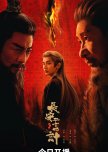
Raw Realism or Lazy Planning? How Cinematography Failed an Acting Genius
The Vendetta of An features some of the best acting I have ever seen in the C-drama industry. Cheng Yi completely sheds his usual roles to turn into a lethal, patient schemer, sometimes cruel. A glimpse of the genius we had seen in Sword and Beloved episode 34. His silent look was so dangerous at times that, as an audience, I could literally feel the chill seep through my body. His screen presence and restrained intensity are unmatched here.What sets this protagonist apart is his incredible psychological duality. He is capable of unleashing moments of extreme, calculated violence, yet he is simultaneously grounded by an acute moral understanding and the heavy guilt of right versus wrong. Unlike other massive, highly-anticipated historical revenge thrillers that rush through rapid-fire plot twists, this narrative purposely slows down to expose the agonizing, frustrated wait of a strategist biding his time. This deliberate change in pace serves a purpose: it anchors the profound human cost of vengeance. His deep-seated bonds with his childhood friend and his sister—culminating in a raw, devastating emotional breakdown—felt incredibly real and heartbreaking to witness.
Imagine Vendetta of An without the wide angle gritty feel, see Ep 34 of Sword and Beloved and re-watch Vendetta again... This project was an absolute blockbuster in the making, but it suffered from what "seemed like" another deliberate production sabotage. May not be!! A big flaw was the use of wide-angle anamorphic camera lenses and poorly designed costume headwear and no base make-up. Rather than using the typical flattering face-lights to brighten up the actors' complexions, the crew used highly dramatic, harsh, naturalistic shadowing, for an actor who is a master at micro expressions. Feel raw realism" is often a lazy excuse for poor technical planning!! 😡
A sharp contrast exists between the seamless, tight execution of global hits like The Untamed or The Double and the fragmented pacing seen in The Vendetta of An. In the latter, the overarching structure often falls apart, leaving Cheng Yi forced to carry the entire weight of a production that seemed actively designed to slow him down. First rather than action you have conversations between the two protagonists and then you use wide angle camera, basically you are asking the ML to do magic!! Which he did... The data heavily reflects this massive tug-of-war between brilliant acting and flawed production execution. On one hand, the show was undeniably a massive commercial hit, surpassing a peak popularity index of 10,000 on Youku and topping the Maoyan charts during its run. However, blatant structural flaws deeply divided the audience, resulting in a criminally low initial Douban score of 6.9 that fails to reflect Cheng Yi's elite performance.
Watch it for a phenomenal, spine-chilling character study and authentic emotional depth, but be prepared for the production’s structural and aesthetic flaws.
Was this review helpful to you?
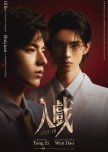
When Method Acting Shatters Reality: A Rare Partnership of Equals
One of the few BLs that features a true partnership of equals, rather than a standard "weak vs. strong" trope. Physically, they are almost equally matched. Both are actors, with the famous one having far more to lose, and both start out as seemingly real-world straight men with official girlfriends. The only other BLs I've seen with this kind of equal footing are KinnPorsche and Dare You to Death.Both actors are good-looking with decent acting skills. Ollie, in particular, is exceptional at micro-expressions, displaying a brilliant capability of conveying deep emotions without words or even actions.
I love how "Deep In" captures a chaotic gay awakening brought on by extreme method acting, where both leads genuinely believe they are straight until their off-screen realities completely unravel because of their on-screen chemistry.
Was this review helpful to you?

Addictive Palace Fun driven by Brilliant Comedic Chemistry & Stellar Acting!!
😅 Introduction: The Hidden Weight Under Fun & Fluff🤩The Legendary Life of Queen Lau sells itself as a lighthearted, comforting slice-of-life palace comedy. The bickering ministers, the rustic charm of Xianpa village, and the vibrant, untamed energy of the Empress provide immediate, addictive fun. 🤩 However, when you peel back the bright colors, it actually addresses serious underlying issues like abandonment, palace toxicity, deep trust issues, the undermining of authority, a total lack of respect towards children's intelligence, and crippling exam phobia. 📚📝⏰ Unfortunately, it ultimately falls short of providing a more detailed analysis of the reasons and solutions.
🎬 The Romance Core: Earned Trust vs. Nostalgic Companionship 🫂
Where the drama succeeds completely is in its contrast between true adult love and empty companionship. One rival suitor claims to love the Empress, yet his affection is rigidly frozen in childhood nostalgia, shallowly focusing on physical appearance and changing her to fit a beauty mold. Conversely, the Emperor offers an authentic foundation of love built on earned trust, because they started from a place of friction and mutual dislike.
🧩 The Critical Failure: The Protection of Toxic Adults 🧠
The most striking narrative flaw lies in the show's complete lack of accountability for parental trauma.
While the script introduces severe issues like the Emperor’s performance anxiety, it treats overbearing psychological abuse of his tutor and constant parental underestimation as acceptable forms of "tough love" and by refusing to confront the very adults who caused them in the first place. The show relies entirely on the Empress to act as an emotional bandage, while this highlights her beautiful soul, it shields the others from mistake realisation. A simple, script tweak could have fixed this with the Empress confronting her father.
🏥 The Geopolitical Mess: A 10-Minute Finale Rewrite 👑
The logical disconnect peaks during a late-game village medical crisis, where the writers completely abandon political common sense for a cheap romantic trope. Two sovereigns recklessly stepping directly into an active quarantine zone is an irresponsible nightmare that invites foreign invasion and civil war.
💡My Tweak💡🤩
A seamless 10-minute adjustment to the finale would have saved the show's statecraft logic:
The sovereigns face off as political equals, they discuss how one of them has to stay safe, acting as a macro-leader to command resources, and they combine their respective intelligence and resource power to solve the epidemiological mystery.
Final Verdict 🎬
The Legendary Life of Queen Lau is an incredibly addictive, heartwarming watch, but it remains a series of missed storytelling opportunities. It builds a fortress of intense psychological and political conflict but paints over it with comfortable comedy. Come for the exceptional romantic chemistry and the Emperor becoming hopelessly, beautifully whipped for his unique Empress—but keep your script-doctoring pen ready, 😅🤫 because the narrative logic fails in places!!
Was this review helpful to you?
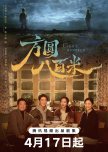
Watch for a thrilling story and Xu Kai
Introduction: The Illusions of Love and Duty 💔This drama easily deserved a solid 8/10 for its gripping suspense, phenomenal acting by Xu Kai, and thrilling plot, if not for the deeply unsettling, toxic relationship dynamics masquerading as love. I am giving it an overall 7/10 because the sheer toxicity leaves a bitter aftertaste.
In most crime thrillers, crime is driven by pure malice. But in Eight Hundred, the tragedy is born from a far more insidious poison: the suffocating selfishness of people who believe they are doing the right thing. At the center of this web is Chen Hui, a young man utterly hollowed out and destroyed. He is not a victim of criminal masterminds, but the casualty of a structural tug-of-war between his father’s self-righteous "justice" and his girlfriend’s desperate "will to live." Neither side ever truly loved Chen Hui; they loved what he could provide for their own narratives.
1. The Father (Chen Hongbing): The Self-Obsession of Righteousness 😇
Chen Hongbing is wrapped so tightly in the armor of a "righteous police officer" and the legacy of a heroic family that his morality has become performance art.
The Ego of the Paradigm: He is obsessed with his identity as the unyielding protector of the law. This rigid adherence to righteousness is less about protecting the town and more about maintaining his own pristine self-image.
Weaponizing Justice Against Family: When he begins to suspect his own son, his investigation becomes an exercise in psychological cat-and-mouse rather than a father trying to pull his son back from the brink. His "righteousness" demands a villain to conquer, even if that villain is the child his family failed to emotionally support. By choosing the role of the infallible cop over the messy, protective duties of a father, he seals Chen Hui's fate under the guise of legal duty.
2. The Girlfriend (Gao Songge): The Obsession with Living 🫂🌵
Gao Songge’s struggle with uremia is tragic, but it breeds a claustrophobic, devouring obsession with survival.
The Black Hole of Survival: Songge’s "love" for Chen Hui is entirely conditional on his ability to keep her alive. She watches him descend into a dark, illicit drug ring to fund her medical bills, accepting the fruits of his moral decay because her desire to live overrides her care for his soul.
The Parasitic Devotion: Her self-preservation manifests as a terrifying silence. Despite holding the intimate knowledge and connections of the operation—details that could clarify Chen Hui's exact, compromised role and potentially shield him from the absolute worst legal consequences—she refuses to step forward to take the full blame, even when an ex-Police officer hands her the opportunity.
The Silent Spectator: Rather than executing a grand, selfless sacrifice to save him, she chooses to live. She allows Chen Hui to take the entire brunt of the legal fallout, quietly watching him bear the ultimate weight of the consequences. Her love was fundamentally parasitic; it required Chen Hui to destroy his moral compass and lay down his own future so that she could continue to have one.
Conclusion: The True Meaning of the "800-Meter" Radius 😓
The "eight hundred meters" of the title isn't just a geographical boundary of a mining town; it represents the suffocating psychological boundary drawn by the people around Chen Hui. He ruined his life to buy more time for a girlfriend who was too obsessed with living to care about his destruction, only to be hunted down by a father too obsessed with being a saint to save his own son. In the end, Chen Hui’s tragic fate is the only authentic thing in the entire series—a stark reminder that when love is weaponized by ego, it becomes the most lethal trap of all.
Was this review helpful to you?
This review may contain spoilers
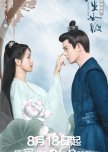
Crown to Coffin A Shakespearean Downfall: The Feudal Reality of Flawed Heroes
Set against the cruel backdrop of palace politics, *One and Only* suffers from deep moral hypocrisy. While it tries to sell a tragic romance, the reality is darker: a cornered, legitimate prince is emotionally starved by a passive-aggressive main couple who completely ignore feudal rules.### 👑 Liu Zixing: The Psychological Masterpiece of a Rightful King
Passed over for the throne after his parents died because his toxic stepmother used his illness as an excuse, Zixing was the legitimate oldest son. Shiyi was his childhood fiancée through Imperial decree, becoming his ultimate life anchor and obsession. When her family selfishly called off the engagement the moment he lost the Crown Prince title, the devastating loss shattered his stability and directly forced him to escalate his brutal struggle for power. Trapped in a violent palace, a teenage Wang Xingyue—gives a masterclass performance. He uses devastating body language—shifting from an anxious abuse victim to a heavy, sad monarch—to show a prince hardening to survive and claim his birthright.
### 💔 Cui Shiyi: The Cruelty of Emotional Starvation
Shiyi belonged to a powerful noble household where her mother and aunt had already sacrificed their love lives for family duty. Yet, she acts with cold entitlement, treating the Prince's genuine love like baggage. The fact that she was never honest with her fiancé—unlike her own brother and his wife who were honest—is a massive blot on her character. By refusing to talk, she leaves Zixing completely blindfolded. Blindsided by his own devotion, he naively believed that once they married, his love would make her forget everything. Instead, he was left fighting a ghost, entirely unaware of her love for her master. Her cold rejections validate his deepest psychological scars, stripping away the warmth that could have kept him humane.
### 🏛️ The Paradox of Toxic Matriarchs & Arrogant Vows
The drama shows that internal greed, not outside invasion, destroys this empire. The Empress Dowager is a monster who uses Zixing as a public whipping boy while completely emptying the imperial coffers to live a lavish lifestyle. She leaves the running of the state to a violent, corrupt noble family—a disastrous reality both royal sons openly call out on at least two occasions. In contrast, the main couple acts with supreme arrogance. Zhou Shengchen vows lifelong celibacy, yet breaks all rules of propriety by carrying Shiyi piggyback in public and taking her to his bedroom at night. Their reckless behavior creates nationwide rumors of a military coup, forcing a fragile court into a lethal fight for survival.
### ⚔️ The Trapped Regent & The Macbethian Downfall
Zixing’s story is a classic Shakespearean tragedy. He orders a necessary political strike to stop a powerful military threat, but he underestimates the brutal violence of his ally, Jin Rong. His mind breaks the night he watches Jin Rong slaughter his own uncles; he immediately compromises to stop the bloodshed. Later when his ministers are slaughtered, though he wins the throne but seems to be losing his sanity. Even then, he shows humanity by letting Shiyi visit the temple, letting her mother meet her—a kindness she repays with a public suicide that leaves him to rot in total isolation.
⚖️ **P.S. On the "Villainous Rival" Misconception**
Labeling Liu Zixing as a basic "villain" ignores the harsh reality of feudal history. Eliminating an overly powerful army general who threatens central control has always been the standard, historical norm for monarchs all over the real world and in dramas alike. By medieval standards, Zixing is incredibly patient. In a world where nationwide rumors and breaking royal boundaries meant high treason, a proud prince would have executed Shiyi’s entire clan. Zixing was a deeply traumatized survivor who was punished, broken, and driven to madness for a crime he didn't even realize he had committed.
Was this review helpful to you?

The drama rejects the trope of a fragile wife dragged into court politics. Yan Shing uses her legal expertise to carve out her own authority. The narrative never treats her career as a liability or belittles her youth, boldly establishing that a woman's value lies entirely in her intellect and moral spine.
Shen Du: From High-Handed Commander to Loyal Shield
He initially presents as a terrifying, high-handed He initially presents as a terrifying, controlling commander—a sharp contrast to Duke Su’s immediate confidence. However, once he witnesses Yan Shing’s extraordinary deduction skills, his rigid walls crumble. While Duke Su operates as a shadow assassin in the dark, Shen Du acts as a formal judicial shield. He actively legitimizes her investigations, using his official guard rank to ensure she can safely hunt down clues without court interference
♟️ Yan Zhenjing: The Expansion of Justice
Her journey marks a profound transition from a cautious scribe caught in a forced marriage into a fearless defender of the law. Her empathy expands past personal survival to seek justice for innocent victims of political conspiracies. She heals Shen Du’s deep-seated familial grief through her moral clarity, evolving from a terrified pawn into an indispensable partner in truth.
🏛️ Fragile Cowards vs. Judicial Integrity
The court's corruption is driven by insecure, weak-willed officials who orchestrate brutal conspiracies purely to preserve their official ranks. In sharp contrast stands the secure masculinity of Shen Du. He completely abandons the arrogant demands of a typical ancient husband, choosing to risk his own military position to champion and protect a female officer's career and safety.🔍 Courtroom Evolution & Bruised VulnerabilityTheir connection deepens through shared blood and high-stakes trials rather than empty words. Shen Du’s icy composure completely shatters during dangerous ambushes, revealing a desperate panic underneath his terrifying reputation. Their emotional peak hits a beautiful turning point when he swerves from an authoritarian husband to an emotionally vulnerable partner, asking out of a deeply bruised heart: "Why am I the last person you think of when in need?"
❤️❤️❤️ Why this is perfect for rewatching:Every rewatch uncovers new nuances in Shen Du’s micro-expressions as his demeanor shifts from cold suspicion to fierce devotion. Whether it is her utilizing the empire's legal codes to defend his honor, or his desperate physical maneuvers to shield her during assassination attempts, every viewing reveals brilliant psychological layers. An absolute masterpiece.
Was this review helpful to you?


