

This review may contain spoilers
When the Student Becomes the Author of Everyone's Fate
I went into Notes from the Last Row expecting a psychological mystery, but what I got was a disturbing character study about obsession, power, and the dangerous desire to control another person's story.
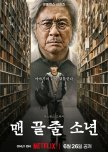
The drama's greatest strength is its two leads. Choi Min Sik gives one of his most emotionally complex performances as Heo Mun Oh. You can see every crack forming in his confidence until he completely unravels. Meanwhile, Choi Hyun Wook is mesmerizing as Lee Kang. He rarely reveals what he's thinking, which makes every interaction with him feel tense and unpredictable.
What I loved most is that there are no true heroes here. Everyone crosses moral lines. Kang isn't simply an innocent genius, and Mun Oh isn't just a victim. Their relationship constantly shifts between admiration, manipulation, dependence, and rivalry, making it impossible to choose a side.
The final episodes completely changed how I viewed the entire story. Looking back, the clues were always there, but I was just as trapped in Kang's narrative as Mun Oh was. Watching Mun Oh lose everything while Kang quietly walks away is both frustrating and brilliant because it feels like Kang has written the ending exactly the way he wanted.
I also appreciate that the series doesn't rely on cheap twists or excessive action. Instead, it builds tension through conversations, silence, and the growing uncertainty about what's true and what's fiction. It's a faithful reinterpretation of The Boy in the Last Row (El chico de la última fila), while still feeling like its own story.
This isn't a comforting drama, and it doesn't offer easy answers. But that's exactly why it stayed with me long after it ended. It's unsettling, intelligent, and brilliantly acted from beginning to end.
The drama's greatest strength is its two leads. Choi Min Sik gives one of his most emotionally complex performances as Heo Mun Oh. You can see every crack forming in his confidence until he completely unravels. Meanwhile, Choi Hyun Wook is mesmerizing as Lee Kang. He rarely reveals what he's thinking, which makes every interaction with him feel tense and unpredictable.
What I loved most is that there are no true heroes here. Everyone crosses moral lines. Kang isn't simply an innocent genius, and Mun Oh isn't just a victim. Their relationship constantly shifts between admiration, manipulation, dependence, and rivalry, making it impossible to choose a side.
The final episodes completely changed how I viewed the entire story. Looking back, the clues were always there, but I was just as trapped in Kang's narrative as Mun Oh was. Watching Mun Oh lose everything while Kang quietly walks away is both frustrating and brilliant because it feels like Kang has written the ending exactly the way he wanted.
I also appreciate that the series doesn't rely on cheap twists or excessive action. Instead, it builds tension through conversations, silence, and the growing uncertainty about what's true and what's fiction. It's a faithful reinterpretation of The Boy in the Last Row (El chico de la última fila), while still feeling like its own story.
This isn't a comforting drama, and it doesn't offer easy answers. But that's exactly why it stayed with me long after it ended. It's unsettling, intelligent, and brilliantly acted from beginning to end.
Was this review helpful to you?


