
 News
News 


I had high hopes for this series, but unfortunately it never lived up to them.
The premise felt familiar yet promising, with the exploration of mental health setting it apart from other costume dramas. Bai Lu's character was introduced as mysterious, ambitious, and morally grey—exactly the kind of heroine I enjoy. However, I found her performance surprisingly underwhelming. While the larger emotional moments were somewhat handled adequately, the subtle micro-expressions and quieter emotional beats often felt absent, making it difficult for me to fully connect with her character.Cheng Lei made a strong first impression as a ruthless, emotionally detached male lead. For the first couple of episodes, he embodied that persona convincingly. But the transition from cold strategist to soft romantic happened so abruptly that it felt unearned. Instead of watching his walls gradually come down, it seemed as though his personality simply changed overnight.
Another disappointment was the lack of action. The teasers hinted at larger conflicts and capable fighters, yet there were very few memorable fight sequences. More importantly, the chemistry between the two leads never convinced me. Their romance felt more like something the script insisted upon than a relationship that developed naturally on screen.
The mental health storyline, which initially seemed like the show's defining feature, gradually faded into the background. Considering the complexity and persistence of such struggles, its treatment felt overly convenient rather than authentic.
Ironically, I found myself far more invested in the supporting cast. The villain's relationship carried far more emotional weight than the central romance. Li Fei Bai, Han Ming Xei, the Cangbei princess, the Emperor, and the Dowager Empress all had stronger screen presence and were simply more engaging to watch.
Given that Bai Lu and Cheng Lei are both highly sought-after actors known for their performances, I expected much more. Instead, The First Jasmine ended up being one of the biggest disappointments I've watched this year.
Was this review helpful to you?
No doubt you should NOT watch this
The whole series was hilarious—not in a funny way, but in an “OMG, what have they made, and why am I still watching this?” way.I’ll say this again: C-dramas are not built for 24 episodes. It works for K-dramas and even urban C-dramas, but trying to wrap up a period C-drama in 24 episodes? No way. There simply isn’t enough time to develop the characters, relationships, politics, misunderstandings and everything else these dramas usually throw at us.
The plot itself is the same old body-swap story: a couple who are actually devoted to each other but are kept apart by misunderstandings. Nothing particularly new there.
The male lead was awful. His acting was over-the-top that even when he was supposed to be the dignified king, I struggled to take him seriously. The actress, however, is solemn and restrained when playing the male lead and switches effortlessly to being playful and expressive when she is herself. The Grand Preceptor is decent too, but the entire storyline feels rushed. Things happen, conflicts appear and disappear, and before the characters have enough time to properly develop, the drama is already moving on to the next thing.
If you have absolutely nothing better to do, don't particularly care about thinking through the plot, and just want something playing on your screen, this will do.
But my recommendation?
NO.
Was this review helpful to you?
Its villains are unforgettable—it's just a shame the rest of the drama isn't.
A 24-episode historical C-drama is a rarity, especially one led by a female protagonist. What could possibly go wrong?As it turns out, quite a lot.
The drama opens with an intriguing premise that keeps you hooked. A kind-hearted and innocent Chu Zhao, betrayed by the prince Xiao Xun she loved, is given a second chance at life. This time, she returns not as a victim but as a brilliant strategist—sweet on the surface, venomous underneath, an excellent judge of character, quick on her feet, and determined to exact her revenge. Alongside her is Yanlai, a prodigious swordsman who has sworn to protect the Chu family.
Unfortunately, that's where the strength of their relationship ends.
Despite the amount of screen time devoted to them, their emotional connection was not convincing. The plot surrounding them also begins to lose coherence, with several developments feeling more convenient than earned.
Ironically, the rivalry between Deng Yi and Xie Yanfang became the highlight of the series for me. Both actors deliver wonderful performances, creating characters who are calm, calculating, and quietly dangerous. Every encounter between them—whether in court or beyond—felt like a battle of wits, with each conversation and calculated move an attempt to outmaneuver the other. While Deng Yi is driven by ambition and survival, Xie Yanfang is consumed by the pursuit of power and family prestige. Their scenes carried far more tension and intrigue than the central romance ever did.
I only wish the story had trusted these strengths. There was genuine potential here. With sharper writing and a more intricately crafted plot, Ashes to Crown could have been a standout historical drama. Instead, by the final two episodes, the series managed to destroy the goodwill built by its opening. I would rewatch it only for Deng Yi and Xie Yanfang. 3 stars for the villains.
Was this review helpful to you?
Too serious to be fun, too silly to be taken seriously.
Nancheng Banquet starts with an engaging premise. The martial arts sequences are entertaining, unfortunately, that's where the drama peaks before losing its footing.The biggest disappointment is the female lead. A deadly assassin suffering from amnesia is a familiar trope, but somehow she loses not only her memories but also every ounce of intelligence and composure that supposedly made her formidable. Rather than feeling like a dangerous warrior adapting to a new reality, she spends much of the series causing chaos, acting overly cute, and stumbling through her disguise as a eunuch. I know realism isn't the goal here, but even fantasy needs some internal believability.
The male lead and the emperor have stronger screen presence, better-written dialogue, and far more compelling interactions. I also appreciated the friendship between the emperor and the female lead. Instead of turning him into a resentful third wheel, the story allows him to step aside with maturity when he realizes where everyone's feelings lie. The empress also deserves praise—her sincerity and unwavering dedication make her one of the more grounded characters in the drama.
What primarily didn't work for me was the inconsistency in tone. The martial arts lacked impact, the female lead never convinced me as an elite assassin, and her exaggerated baby voice often felt annoying rather than charming. The emperor, despite his charisma, could have benefited from a more serious portrayal during key moments.
The drama struggles to balance its identity. It presents an increasingly serious political plot, only to interrupt it with exaggerated comedy and romantic antics from the female lead. Instead of complementing each other, these extremes constantly compete for attention, forcing the audience to switch emotional gears every few minutes which becomes exhausting after a while.
Overall, I think Nancheng Banquet would have worked much better had it fully embraced being a lighthearted romantic comedy. Instead, it tries to combine high-stakes political intrigue with cartoonish humor, and the result never quite finds its balance. Add in the female lead, overly idealized romance, and it became more frustrating than charming.
Was this review helpful to you?
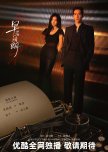
The C-Drama version of Fifty Shades of Grey
I like how the story has been adapted so far to fit the cultural nuances of a C-drama. It retains some of the basic flavour of the original premise while reshaping it enough to feel at home in its new setting.The acting is good, but the standout for me is the Music. The OST does a lot of the heavy lifting in creating the romantic tension and atmosphere.
Everything else? Same old, same old.
A fresh graduate falls for her cold, seemingly unyielding highly efficient boss, who is secretly head over heels in love with her but is far too emotionally guarded to express it. Throw in a couple of love triangles to stretch the story across more episodes, and you pretty much know what you're getting.
There isn't much here that feels particularly fresh or surprising, but it's not a bad watch either.
If you have time to spare and enjoy this particular brand of emotionally unavailable boss romance genre, this does the job.
Was this review helpful to you?

Not for the weak-hearted!
Loving it so far! It’s not the storyline that sets this drama apart, but rather the dialogues, music, and acting. Who would have thought our Flower General could be so devious, ruthless, and cunning in both the roles she portrays? The Duke, meanwhile, embodies his cold yet wavering persona remarkably well. The dynamic between the leads is fascinating—a meeting of two clever minds, each trying to outsmart the other. Every time they are in close proximity, I find myself restless with anticipation. Will he uncover her secret, or will she manage to stay one step ahead in this game?What I particularly love is that A’chou is a morally grey character. This isn't your typical evil twin meets innocent twin trope. One is ruthless, entitled, and stubborn to the point of self-destruction, while the other is headstrong, resourceful, and willing to do whatever it takes to survive. She is brimming with clever ideas, trusts no one, is constantly thinking on her feet, moving her chess pieces around just to survive.
The entire cast has done an excellent job of bringing their characters to life. The pacing is engaging, the dialogues are sharp, and the music is simply outstanding. Everything comes together beautifully to create an atmosphere of melancholy, intrigue and suspense.
It’s been a while since a series has left me feeling this satiated. I'm eagerly looking forward to seeing how the rest of the story unfolds.
Was this review helpful to you?
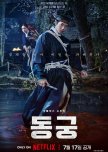
A kingdom haunted by the people who rule it.
This series had me hooked, every episode was packed with action, intrigue, and meaningful plot progression. Most historical dramas revolve around palace politics and manipulation, but The East Palace takes it a step further. Nearly every character is morally grey. Everyone has blood on their hands, and the series doesn't shy away from exposing the darkest aspects of royalty and the pursuit of power. Ironically, the ghosts are better than the living, whose greed, ambition, and hunger for power is far more terrifying.Every actor, from the leads to the supporting cast, villains, and even minor characters, delivered memorable performances. The King was one of the highlights for me—a complex character who remained more mysterious than the plot itself. The Queen Dowager was one of the most compelling antagonists I have watched recently- narcissistic, power-hungry, and utterly ruthless.
Another refreshing aspect was the romance—or rather, the restraint shown in portraying it. The relationship never overshadowed the story. Both leads were emotionally guarded, naturally mistrustful, yet it was obvious through their actions that they deeply cared for one another. Their partnership and camaraderie felt mature, believable, and far more compelling than an overly dramatic romance.
The CGI was also well done. The supernatural world, particularly in the earlier episodes, gave me strong Stranger Things vibes. More importantly, the series knew when to rely on visual effects and when to let the writing, action choreography, and talented cast carry the story. It never felt excessive. Also the Korean mythological creatures were explained earlier on, which helped me keep up with the story. The ending leaves the door open for a sequel. While I would love to see one, I also appreciate that the series ended on such a strong note rather than overstaying its welcome.
If you're looking for a period drama that has mystery, ghosts, shady characters, and a genuinely engaging story over clichéd love tropes, this one is absolutely worth your time.
Was this review helpful to you?
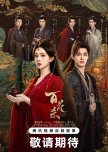
She was already dangerous before she died.
Zoey Meng is back in another leading role in a series named Blossoms. Coincidence? I think not. At this point, she's the Queen of Blossom dramas in my books.The series has only just begun, but I'm already overly optimistic and hoping it lives up to its promising start.
The premise itself isn't new: a woman's clan is massacred, she dies, and is given another chance at life. What immediately caught my attention, however, was the character reversal.
Rebirth dramas often begin with a kind-hearted, naive heroine who returns determined to seek revenge. Here, it's the complete opposite. The woman who dies is already calm, composed, intelligent, and calculating. She deliberately uses her own death as part of a larger plan to avenge those she loves. The person she later inhabits, on the other hand, is the innocent and sheltered one. It's a refreshing twist that I haven't come across in the dramas I've watched so far.
Zoey Meng does complete justice to the role. She portrays a woman who is cold, calculating, and remarkably composed, with an uncanny ability to read people and anticipate their motives and actions several steps ahead.
What I'm most curious about is why she was brought back. Who gave her this second chance, and for what purpose? That's the mystery I'm most eager to see unfold.
The romance has also been handled surprisingly well in these opening episodes. Although the Crown Prince is clearly and hopelessly in love with her, he doesn't allow those feelings to cloud his judgment or distract him from his responsibilities. He steps in only when absolutely necessary, making him feel calm and dependable rather than obsessive. He Yu has captured that balance beautifully so far.
The other character who has piqued my interest is the Fifth Prince, Xiao Changqing. On the surface, he appears to be a man devoted to his departed wife, but I don't think it's that straightforward. The series has already hinted that he is ambitious, meticulous, and decisive. I have a feeling there's a much larger scheme unfolding around him, and I'm looking forward to discovering where his story leads.
Was this review helpful to you?
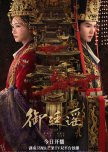
A engaging story that deserved more time
What makes this drama different is that both leads are driven by duty rather than romance. Their lives don't revolve around falling in love; they are people with ambitions, responsibilities and causes much larger than themselves. This makes their relationship feel purposeful rather than manufactured.Wu Jinyan is perfectly cast as Meng Tinghui, a clever, calculating official who is unafraid to bend the rules in pursuit of her goals. It's a role that plays to her strengths and builds naturally on the intelligent, resilient characters she portrayed in *Kill Me Love Me* and *The Double*.
Chen Zheyuan is equally impressive as Ying Gua, a ruthless and cunning emperor who projects strength and authority while quietly carrying a genuine desire to improve the lives of his people. Having previously watched him in *Hidden Love*, the contrast between these two performances is remarkable. He is completely believable in both roles, which demonstrates his range as an actor.
One thing I particularly loved was the emphasis on both male and female friendships. Dramas often portray highly intelligent protagonists as almost standalone characters who outsmart everyone around them. Here, both Meng Tinghui and Ying Gua have their own herd—the people who anchor them, root for them, believe in them and are willing to put aside their own interests for them.
Yan Fuzhi and Shen Zhishu represent this particularly well. Despite being supporting characters, both have great screen presence and enough of their own story to make you care about them. I especially enjoyed Shen Zhishu's growth from a flamboyant playboy into a prominent and capable official. His development felt natural rather than forced.
Unfortunately, this is also where my biggest problem with the drama begins. -------It was in too much of a hurry to end.
The drama rushes towards its conclusion and leaves us to fill in far too many emotional blanks. Some choices don't even fit the relationships the drama itself spent so much time establishing.
Take Yan Fuzhi and Meng Tinghui.
How did Yan Fuzhi simply let Meng Tinghui go?
Meng Tinghui was her ultimate confidante—a friend closer than family. Even when Meng Tinghui was on the enemy side, Yan Fuzhi followed the soldiers trying to find a way to reach her, seemingly without even considering that her devotion to her friend could make her appear treasonous.
This woman would walk straight into danger for Meng Tinghui.
And then she just...lets her leave?
She doesn't follow her?
I had a problem with the reverse side of this friendship too. Yan Fuzhi places Meng Tinghui on a pedestal, yet I rarely felt that Meng Tinghui returned that love with the same intensity. We see it when Yan Fuzhi is on her deathbed, but I would have loved to see Meng Tinghui demonstrate that devotion more consistently. For a drama that did such a good job portraying female friendship, their relationship deserved more reciprocity.
Then there is Shen Zhili.
There was an entire character arc waiting to be explored here. I wanted to see her rise from the disaster of her relationship with her teacher and continue pursuing officialdom. Her relationship with Di Nian could have been part of that growth rather than a replacement for it. The series could have shown more of how he was her rock who held her together in a world were a scandal on a woman destroys questions her values and undermines her morals. Instead towards the end, the drama reduces her into something resembling a delicate dove.
That wasn't the Shen Zhili I wanted.
Yan Fuzhi suffered from a different problem. At times the drama turned her into an exaggerated, screaming woman, and I found it rather annoying. Don't get me wrong—I thoroughly enjoyed the romantic trope between her and Shen Zhishu. Their banter and relationship were among the most entertaining parts of the drama. But sometimes her reactions became so over-the-top that they felt performed rather than true to the character.
Perhaps their popularity with the audience contributed to the amount of attention they received, but other supporting characters desperately needed that screen time.
Huang Bo is a perfect example. His story, romance and ending are practically wrapped up in one episode. At that point it started feeling as though supporting romances were being inserted to give everyone their "moment" rather than because the story had actually earned them. It felt manufactured.
But the biggest wasted opportunity was - Yin Qing and the people of Zhongwan
Who exactly were these people? What happened all those years ago? Why were they killed? How did the survivors live all this time? What had they endured? What happened to them on the eve of the final battle?
We are given pieces, but never enough time to truly understand these people or become emotionally invested in their struggle.
Even the deaths of Yin Qing and Situ Xue didn't land the way they should have for me. These were events that should have been devastating, yet the story had rushed through so much of the groundwork that their endings didn't carry the emotional weight they deserved.
The drama didn't run out of story. It ran out of patience to tell it. And I genuinely don't understand why. C-dramas can run up to 40. This wasn't a series desperately stretching a thin story that needed to be shortened—it had legitimate content to justify those additional episodes.
Was this review helpful to you?


