
 K-Drama


This review may contain spoilers
Women finding the space and freedom to decide how they want to live their own lives.
One of the things I love most about Against the Current is how deeply it portrays its female characters. Every woman here has her own story, choices, wounds, and ways of surviving. They’re strong and independent in their own ways, but they’re never written as perfect characters who always have to be strong just to prove that they’re strong women.It’s really satisfying to see Lan Xiang’s character development. She goes from being a highly educated noble girl to becoming a third-class servant, and then slowly rises until she becomes the lady of the Lin household. At first, her only goal is to survive and support her adoptive parents. But as her social status changes, so do her ambitions. She doesn’t just want to live a good life anymore, she also wants to help the people around her have a better life.
What I love is that the strength of the women in this drama isn’t only shown through their courage to stand up against others. At the end of the day, they’re women trying to survive and protect their families in a patriarchal society where women are often expected to put their husbands and families before themselves. That’s why their struggles feel so human.
Lan Xiang isn’t fighting the system just for herself. She uses her intelligence and abilities to find a way forward, while also showing that women can help each other and become a “light” for one another. There’s one line of hers that really stayed with me: “One light can only illuminate a few meters. But if I light one lamp and you light another, even the gathered glow of fireflies can illuminate a long road… Let the women walking through the dark night see their way clearly.”
That’s what makes this story feel like more than just a story about one woman trying to change her fate. It’s a story about women fighting injustice, surviving, building families, and supporting each other in a system that was never on their side to begin with.
Even the characters who stand on the opposite side aren’t written as simply good or evil. Some of them weren’t bad people from the beginning. They’re people who got trapped by their circumstances, lost something, or became so consumed by their ambitions that they ended up making the wrong choices. Some of them still have a chance to change and make amends, while others only go further down the wrong path because they choose to get what they want at the expense of others. Like Lan Xiang reminds us, it’s understandable for someone to want a better life, but not at the expense of someone else.
Lan Xiang’s relationship with her adoptive parents is also one of the most touching parts for me. At first, they saved her out of gratitude and to keep the memory of their late daughter alive. But over time, their relationship slowly turns into a family that genuinely loves and cares for each other. They take care of Lan Xiang without expecting anything in return, while Lan Xiang helps them escape poverty and servitude and find a sense of purpose again. Their bond feels warm because it’s built through actions, not just words.
That’s also why I really love the Lin family. In so many dramas, families are often portrayed as places full of rivalry, jealousy, backstabbing, or blaming each other, but the Lin family feels different. Whenever one of them has a problem, the others step in to help and support each other. They don’t waste their time looking for someone to blame or treating each other like competition. There’s such a strong sense of togetherness between them, and honestly, that’s what makes the Lin family so warm and enjoyable to watch.
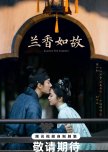
I also really love the slow-burn chemistry between Lin Jinqi and Xu Lanxiang. Their trust doesn’t appear out of nowhere, but is built little by little until it becomes something really strong. And what I love most about Jin Qi is how genuinely he respects and admires Lan Xiang. His admiration isn’t just about her beauty. He sees her intelligence, kindness, grace, courage, and abilities. He appreciates Lan Xiang for who she is, and that’s exactly what makes their relationship feel more meaningful.
That said, Jinqi isn’t always right when it comes to understanding her feelings or the situations around them. Sometimes, he’s a little too naive when it comes to expressing his affection. His perspective and actions are also sometimes influenced by what he personally thinks is right, so what he sees as care or protection isn’t always what Lan Xiang actually needs. Lan Xiang isn’t perfect in their relationship either. She can be stubborn at times, is used to carrying everything on her own, and tends to make decisions based on her own judgment without always explaining what she’s actually feeling to Jinqi. They both have their flaws and different ways of thinking, so their relationship feels more like a process of learning to understand each other, rather than one where one person always knows what’s best for the other. And honestly, I think that’s what makes their relationship feel more human.
Tan Song Yun and Liu Xue Yi also do a great job bringing the everyday moments between these two characters to life through their subtle expressions and natural chemistry. Their interactions aren’t always overly dramatic, and that’s exactly what makes them feel warm and believable.
What makes this drama even more special to me is its focus on the lives of ordinary people during that time. The story doesn’t only revolve around nobles and wealthy people, but also shows how ordinary people lived, worked, survived, and dealt with the social hierarchy. Almost every episode brings something new, so the story never feels boring.
Aside from the story, I also really love how beautiful and carefully planned the settings and cinematography are. The Lin family courtyard is one of my favorite visual elements in the drama. Every view through the windows feels like a piece of art framed on purpose, with such beautiful composition and balance. What I love is that these views aren’t just there to look pretty. They often seem to carry their own meaning and help reflect the mood and the characters’ journeys. Details like these make the world of the drama feel more alive and make it even more enjoyable to watch.
That’s why I don’t think it’s quite right to see this drama as just a romance. This isn’t a story about a female lead who is made strong from the very beginning, only to slowly become dependent on her husband or the male lead to build the romance. Lan Xiang continues to rely on her own skills, knowledge, and abilities without having to put others down or diminish herself.
The drama also doesn’t try to say that women have to be “strong” in one specific way. Instead, it shows different forms of women’s struggles and how social circumstances, family, marriage, and hierarchy shape the choices they make.
There’s one line from Xing Tang that I find especially powerful:
“When will there be a world where women can be like men, go to school to learn, take the imperial examinations, do business and make money, not be bound by their husbands, not be bound by their sons, and simply be themselves?”
That line feels relevant not only to women living in that time, but also to many things we still see today.
In the end, to me, Against the Current is a story about survival, family, hierarchy, sisterhood, and above all, women trying to find the freedom to decide how they want to live their own lives. So I hope people don’t watch this drama only looking for romance and then get disappointed when they realize that the love story isn’t the main focus. The drama already made its direction clear from the very first episode.
That’s exactly why I hope more people will watch it with an open mind. Not just looking for a main couple to ship, but actually paying attention to the characters’ journeys and maybe taking away a lesson or two from the story.
For me, that’s what makes Against the Current so memorable.
Was this review helpful to you?


