
 K-Drama


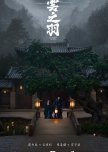
She Escaped Her Chains, But Never Found Her Freedom
This drama is exceptionally well-made, from the cast and acting to the setting, storyline, and world-building. Even the pacing feels perfectly suited to the kind of story being told. What I love most is how different this drama is from many others. It doesn’t focus exclusively on the main leads; instead, it gives the other important characters room to contribute to the story.
The main leads are the heart of the drama, but the supporting characters are its arms and legs. They work together to move the plot forward, making the world feel alive rather than existing solely for the protagonists. The main villain is powerful enough to keep the story engaging, but what makes the conflict even more interesting is that not every character who opposes the protagonists is necessarily on the villain’s side. Some characters stand against the main villain while also opposing the protagonists and their moral principles. This creates a much more complicated world in which being against the villain doesn’t automatically make someone an ally.
At its core, the story follows Gong Ziyu’s growth from an underestimated, seemingly useless son into the heir of his family, with Yun Weishan playing a crucial role in his development. However, I would argue that Yun Weishan is much more than a female lead who helps the male protagonist grow. She is also the catalyst of the story, the character who connects different parts of the plot and keeps the narrative moving.
As a double-agent assassin, she must navigate the dangerous world of Wufeng, deal with other assassins, and gain the trust of the very person she is supposed to target. Her mission forces her to constantly question the people and circumstances around her. Yet, as she helps Gong Ziyu grow, she also grows herself. Their relationship becomes a process of mutual development, even if their journeys and motivations are different.
Although Gong Ziyu might be the protagonist of the main storyline, Yun Weishan feels like the author’s protagonist to me. She is the character through whom so many of the drama’s deeper themes are explored. The author seems to care deeply about her, yet also puts her through so much suffering. It almost feels as though this character is the reason the story exists in the first place.
What makes Yun Weishan so compelling is the limited world she has known since childhood. Having been confined within Wufeng, her understanding of life, relationships, and the outside world has developed within the boundaries imposed on her. Yet she is intelligent, observant, and emotionally perceptive. She questions almost everything around her, and when she enters Gong’s residence, many of those doubts begin to make sense.
More than anything, she longs for freedom. At first, she seems to associate freedom with physically escaping Wufeng and no longer being under someone else’s control. She knows what she wants to escape from, but she has had little opportunity to imagine what she wants her life to become beyond that.
This is why her relationship with Gong Ziyu is so important to her development. In the beginning, most of her actions are driven by her mission, her plans to obtain freedom, and her instincts for survival. Even when she helps Gong Ziyu, her choices are often connected to the circumstances she has been placed in. There is a difference between helping someone because the situation demands it and choosing to help because it is genuinely what you want to do.
After returning and continuing to help Gong Ziyu, she eventually reaches a point where her decision to stand by him becomes her own. She is no longer acting only according to her mission or doing whatever is necessary to secure her freedom. She makes a conscious choice based on her own will.
For someone who has spent her entire life following orders, this is a significant change. She begins to understand that freedom is not only about escaping Wufeng or being physically outside someone else’s authority. It is also about having the ability to choose whom to trust, whom to help, and what kind of person she wants to be. Her external circumstances remain uncertain, but she is beginning to exercise agency over her own life.
This makes her character more complex than simply an assassin who falls in love and changes sides. Gong Ziyu may be central to her growth, but her journey is ultimately about discovering herself through the choices she makes.
And this is precisely why I find the author’s treatment of her character so cruel.
The author gives Yun Weishan hope, depth, intelligence, and resilience. She is willing to face danger and endure uncertainty for the possibility of a different life. She begins to question the world she has been taught to accept and gradually develops the ability to make choices of her own. Yet the story never fully gives her the answers she deserves. We don’t get a complete understanding of her origins, and her ultimate fate remains unresolved.
The cruelest part is that the story leaves her greatest desire, freedom, unfulfilled or at least unconfirmed.
It is not simply a matter of whether she receives a happy or tragic ending. Even a tragic ending could have given her story a sense of closure. An open ending could have left room for hope or interpretation. But Yun Weishan’s ending feels different because it leaves the central question of her character unanswered: Will she ever truly be free?
By this point, freedom should mean more to her than simply escaping Wufeng. She has begun to discover the importance of making her own choices, but we never get to see what she ultimately chooses for herself. We don’t know whether she will have the opportunity to live according to her own will, beyond the demands of Wufeng and the circumstances that have shaped her life.
Think about how the story begins and ends. She enters Gong’s residence by taking the identity of the real bride, only to discover that the girl whose identity she has taken is actually her twin sister. And Wufeng is waiting for her to arrive.
That’s where the story ends.
After everything she has endured, everything she has learned, and all the growth she has experienced, we are left without a clear answer about her future. The story brings her back to the very world she has spent her life trying to escape, leaving us to wonder whether she has ever had a real chance at freedom at all.
What makes this ending especially frustrating is that Yun Weishan has already begun to move beyond the simple desire to escape. Her choice to help Gong Ziyu shows that she is learning to act according to her own will, even when her circumstances remain complicated. But we never get to see what happens after that realization.
Will she eventually have the freedom to choose her own path? Will she be able to decide what kind of life she wants without organizing every decision around survival, a mission, or someone else’s expectations? Will she finally get to discover the world beyond the walls that have confined her since childhood?
The drama leaves all these questions unanswered.
Perhaps that is why her ending feels different from a conventional tragic or open ending. It is an unresolved, circular ending that denies her narrative closure. The story returns her to a situation that echoes its beginning, but her character has changed. She is no longer exactly the same person who entered Gong’s residence under a stolen identity. She has questioned her beliefs and begun to understand that freedom involves more than physical escape. Yet the narrative gives us no resolution to match that development.
The story comes full circle, but Yun Weishan’s journey does not feel complete.
And perhaps that is the tragedy of her character: the story gives her the desire for freedom, the courage to pursue it, and the beginnings of the ability to choose for herself, but never tells us whether she will ever be allowed to live freely.
To me, Yun Weishan is not just a character who helps the male lead grow. She is a woman who spends her life trying to escape the world that has controlled her, only to begin discovering the deeper meaning of freedom just as her story comes to an end.
She deserves a story that allows her to discover what freedom means on her own terms. Instead, we are left wondering whether she will ever get that chance.
Maybe that is why she feels like the author’s true protagonist to me. The story gives her so much depth and makes us care so much about her desire for freedom, yet it withholds the one thing that could bring her journey to a meaningful conclusion: the chance to see her make a life of her own.
She begins by entering a house under a stolen identity, and she ends by discovering a truth that ties her even more closely to the world she is trying to escape.
The story comes full circle, but the question of her freedom remains unanswered.
And that is what makes Yun Weishan’s story so haunting to me. She begins by wanting to escape control, gradually learns that freedom also means having the power to choose, and ends before we can find out what she will choose for herself.
She finally begins to understand that freedom is more than escaping the walls around her. But the story ends before we can see whether she will ever get to live beyond them.
Was this review helpful to you?


